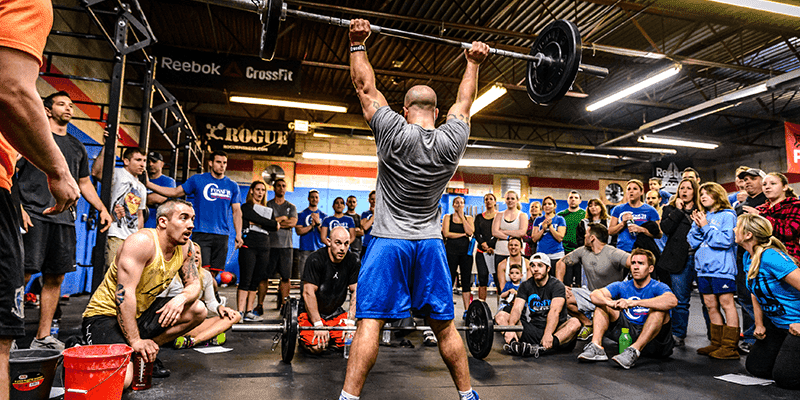


The CrossFit Open is one of the most demanding fitness events on the planet. It combines high-intensity intervals, heavy lifting, gymnastics skill, and repeat efforts under fatigue. To perform well, you need more than grit. You need a smart strategy rooted in science.
This guide breaks down 10 practical, research-backed tips to help you maximize your performance in the 2026 CrossFit Open. Each recommendation is supported by peer-reviewed evidence in exercise physiology, sports nutrition, and sports psychology. No fluff. Just what works.
1. Build a Bigger Aerobic Base Than You Think You Need
Why Aerobic Fitness Drives Open Performance
Even though CrossFit workouts often look anaerobic, research shows that repeated high-intensity efforts rely heavily on aerobic metabolism. A well-developed aerobic system improves recovery between efforts and helps maintain power output across rounds.
Studies on high-intensity interval training demonstrate that aerobic capacity (VO2 max) strongly predicts repeated sprint ability and fatigue resistance. A higher VO2 max allows for faster phosphocreatine resynthesis between bouts and better lactate clearance, both of which are critical in workouts with short rest intervals.
Research on repeated sprint performance confirms that aerobic fitness significantly contributes to recovery between sprints and total work output.
Practical Application
In the months before the Open:
- Include 2–3 longer aerobic sessions per week (30–60 minutes at moderate intensity).
- Add threshold intervals (e.g., 3–5 efforts of 8–12 minutes near lactate threshold).
- Use nasal breathing or conversational pace to stay aerobic.
The goal is not to turn into a marathoner. It is to increase mitochondrial density and cardiac output so that your engine supports your high-intensity output.
2. Train at Competition Intensity — But Control Volume
The Power of Specificity
The principle of specificity is foundational in sports science. Adaptations are specific to the intensity, movement pattern, and energy system trained.
Research shows that training at or near competition intensity improves neuromuscular efficiency and performance more than submaximal training alone. However, high-intensity training volume must be carefully managed to prevent overtraining and performance decline.
Studies on overreaching demonstrate that excessive intensity without adequate recovery leads to impaired strength, hormonal disruption, and reduced performance.
Practical Application
In the final 6–8 weeks before the Open:
- Perform at least one Open-style workout per week.
- Replicate time domains commonly seen in the Open (6–15 minutes).
- Keep total weekly high-intensity sessions to 2–4.
Intensity drives adaptation. Excess volume drives burnout.
3. Improve Movement Efficiency Before Adding Load
Economy Equals Performance
Movement economy refers to the energy cost of performing a task. In endurance sports, better economy means lower oxygen consumption at a given workload. The same concept applies in CrossFit.
Research shows that improved technique reduces metabolic cost and delays fatigue. Efficient movement lowers energy expenditure, preserves glycogen, and reduces unnecessary muscular fatigue.
Strength training studies also show that increased neuromuscular coordination improves force production efficiency.
Practical Application
Before the Open:
- Refine barbell cycling technique at moderate loads.
- Practice kipping efficiency on pull-ups and toes-to-bar.
- Film workouts to identify wasted movement.
A more efficient thruster or burpee may save seconds per rep. Over 100 reps, that becomes minutes.
4. Prioritize Relative Strength
Strength-to-Bodyweight Ratio Matters
Many Open workouts include gymnastics movements: pull-ups, muscle-ups, handstand push-ups, and pistols. Performance in these movements depends heavily on relative strength.
Research consistently shows that improvements in maximal strength enhance power output and performance in explosive tasks. Increased maximal strength improves rate of force development and muscular endurance at submaximal loads.
Athletes with higher relative strength can perform more repetitions before fatigue when working at a percentage of their max.
Practical Application
Focus on:
- Heavy compound lifts (squats, deadlifts, presses) 2–3 times per week.
- Low-rep strength work (3–5 reps at 80–90 percent 1RM).
- Maintaining body composition that supports power-to-weight ratio.
Stronger athletes move submaximal loads more easily. That translates directly into faster Open scores.
5. Taper Intelligently Before Each Workout
Why Tapering Works
Tapering reduces training load before competition to allow full recovery and peak performance. Research shows that tapering can improve endurance performance by 2–3 percent and strength/power by similar margins.
Reducing volume while maintaining intensity allows glycogen restoration, hormonal balance, and neuromuscular recovery without detraining.
Even small performance improvements matter in leaderboard rankings.
Practical Application
Before each Open workout:
- Reduce training volume 48–72 hours prior.
- Keep some short, sharp intensity work to stay primed.
- Prioritize sleep and carbohydrate intake.
Do not test yourself hard midweek if you plan to perform on Friday.
6. Fuel for High-Intensity Performance
Carbohydrates Are Not Optional
High-intensity functional training relies heavily on muscle glycogen. Research shows that glycogen depletion significantly impairs power output and repeated high-intensity performance.
Carbohydrate intake before competition enhances performance in events lasting longer than 60 seconds and involving repeated bursts of effort.
Low glycogen reduces training intensity, increases fatigue, and impairs recovery.
Practical Application
In the 24–36 hours before an Open workout:
- Consume 5–7 grams of carbohydrate per kilogram of bodyweight.
- Include easily digestible carbs 2–3 hours before competing.
- Avoid drastically changing diet on competition day.
Protein intake should remain at approximately 1.6–2.2 grams per kilogram daily to support recovery and muscle maintenance.
7. Sleep Is a Performance Multiplier
The Science of Sleep and Athletic Output
Sleep restriction significantly reduces strength, reaction time, accuracy, and anaerobic performance. Research shows that even partial sleep deprivation impairs maximal power output and increases perceived exertion.
Sleep extension studies demonstrate improvements in sprint performance and mood in athletes who increase nightly sleep duration.
Sleep also regulates testosterone, cortisol, and growth hormone, all critical for recovery.
Practical Application
- Aim for 7–9 hours per night.
- Maintain consistent sleep and wake times.
- Reduce screen exposure before bed.
- Use a cool, dark environment.
One poor night may not ruin performance. Chronic sleep restriction will.
8. Warm Up to Enhance Power and Reduce Injury Risk
Physiological Effects of a Proper Warm-Up
A structured warm-up increases muscle temperature, nerve conduction velocity, and oxygen delivery. Research shows that dynamic warm-ups improve power output and sprint performance.
Post-activation potentiation (PAP) strategies, such as performing heavy lifts before explosive work, can enhance short-term power production.
Warm-ups also reduce injury risk by improving joint range of motion and neuromuscular activation.
Practical Application
Before your Open workout:
- 5–10 minutes of light aerobic work.
- Dynamic mobility for hips, shoulders, and ankles.
- Movement-specific ramp-up sets.
- 1–3 short rehearsal bursts at near competition intensity.
Finish warm-up 5–10 minutes before your attempt.
9. Use Smart Pacing Strategies
Pacing Improves Total Output
Research in high-intensity exercise shows that starting too fast leads to early lactate accumulation and greater fatigue. Athletes who pace effectively maintain higher average power output.
Even in short events, a controlled start often results in better finishing performance.
Perceived exertion correlates strongly with physiological strain, and experienced athletes use pacing to distribute effort efficiently.
Practical Application
- Break workouts into manageable chunks.
- Avoid sprinting the first minute unless strategy demands it.
- Monitor breathing as a pacing indicator.
Negative splits or steady pacing usually outperform an early redline.
10. Train Your Mind as Well as Your Muscles
Psychological Skills Matter
Mental fatigue reduces endurance performance even when physiological markers remain stable. Research shows that cognitive strain impairs time-to-exhaustion.
Techniques such as visualization, self-talk, and goal setting improve athletic performance. Structured psychological skills training enhances confidence and reduces competitive anxiety.
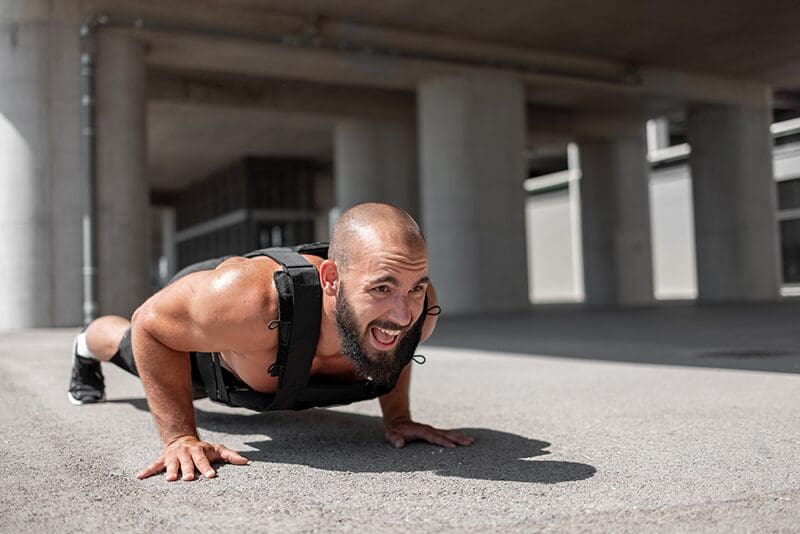
Confidence improves motor performance and resilience under stress.
Practical Application
- Visualize the workout in detail before performing it.
- Use short cue phrases during effort.
- Set process goals (e.g., steady breathing) rather than outcome goals.
Mental preparation is not optional at higher levels of competition.
Bonus: Manage Recovery Between Weekly Attempts
The Open allows repeated attempts. Recovery science becomes critical.
Cold water immersion has been shown to reduce muscle soreness and perceived fatigue following high-intensity exercise. Active recovery improves blood flow and metabolic clearance.
Light aerobic work the day after an attempt can reduce soreness without impairing adaptation.
Hydration should replace 150 percent of fluid lost during exercise.
Do not turn retests into ego battles. Recover first, then reassess.
Final Thoughts
The CrossFit Open rewards preparation, not panic. Success depends on aerobic capacity, relative strength, movement efficiency, intelligent tapering, proper fueling, sleep quality, structured warm-ups, smart pacing, and psychological readiness.
Each of these areas is supported by robust scientific evidence. None are flashy. All are effective.
If you apply even half of these strategies consistently in the lead-up to the 2026 CrossFit Open, you will not just feel fitter. You will perform better when it counts.
References
- Bishop, D., Girard, O. and Mendez-Villanueva, A. (2011) ‘Repeated-sprint ability – part II: recommendations for training’, Sports Medicine, 41(9), pp. 741–756.
- Bosquet, L., Montpetit, J., Arvisais, D. and Mujika, I. (2007) ‘Effects of tapering on performance: a meta-analysis’, Medicine & Science in Sports & Exercise, 39(8), pp. 1358–1365.
- Buysse, D.J. (2014) ‘Sleep health: can we define it? Does it matter?’, Sleep, 37(1), pp. 9–17.
- Chtourou, H. and Souissi, N. (2012) ‘The effect of training at a specific time of day: a review’, Journal of Strength and Conditioning Research, 26(7), pp. 1984–2005.
- Driller, M.W. and Halson, S.L. (2013) ‘The effects of cold water immersion on recovery following high-intensity exercise’, International Journal of Sports Physiology and Performance, 8(3), pp. 254–260.
- Fullagar, H.H.K. et al. (2015) ‘Sleep and athletic performance: the effects of sleep loss on exercise performance’, Sports Medicine, 45(2), pp. 161–186.
- Halson, S.L. (2014) ‘Monitoring training load to understand fatigue in athletes’, Sports Medicine, 44(Suppl 2), pp. S139–S147.
- Haff, G.G. and Nimphius, S. (2012) ‘Training principles for power’, Strength and Conditioning Journal, 34(6), pp. 2–12.
- Jeukendrup, A.E. (2014) ‘A step towards personalized sports nutrition: carbohydrate intake during exercise’, Sports Medicine, 44(Suppl 1), pp. S25–S33.
- McMorris, T. et al. (2018) ‘Mental fatigue effects on physical performance: a systematic review’, Sports Medicine, 48(7), pp. 1571–1588.