


Functional fitness athletes rely on a unique blend of strength, endurance, power, and resilience. Unlike athletes in single discipline sports, they must perform well across multiple energy systems while maintaining high levels of technical skill under fatigue. Training methods that develop these qualities simultaneously are therefore extremely valuable.
Interval workouts have become one of the most widely used training strategies in functional fitness. They involve repeated bouts of high effort exercise separated by structured recovery periods.

These workouts can vary widely in duration, intensity, and exercise selection, but they all share a key principle. Short bursts of challenging work followed by partial recovery.
Scientific research consistently shows that interval training produces significant physiological adaptations across cardiovascular, metabolic, and neuromuscular systems. These adaptations align closely with the demands of functional fitness competition and training.
This article explains three major benefits of interval workouts for functional fitness athletes, supported by scientific research and practical training insights.
What Are Interval Workouts?
Interval workouts involve alternating periods of work and recovery. During the work phase, athletes perform exercise at moderate to very high intensity. The recovery phase allows partial rest before the next effort.
Work intervals can last anywhere from a few seconds to several minutes depending on the training goal. Recovery periods may involve complete rest or low intensity movement.
For functional fitness athletes, interval workouts often combine conditioning with functional movements such as squats, pulls, presses, carries, and gymnastic skills. This combination creates training sessions that challenge multiple physical capacities at once.
Interval training is commonly categorized into several types.
High Intensity Interval Training
High intensity interval training involves repeated efforts performed near maximal intensity, often above ninety percent of maximal heart rate. These sessions typically use short work periods followed by short recovery.
Aerobic Interval Training
Aerobic intervals involve longer efforts performed at high but sustainable intensity. Work periods typically last two to five minutes and target improvements in aerobic capacity.
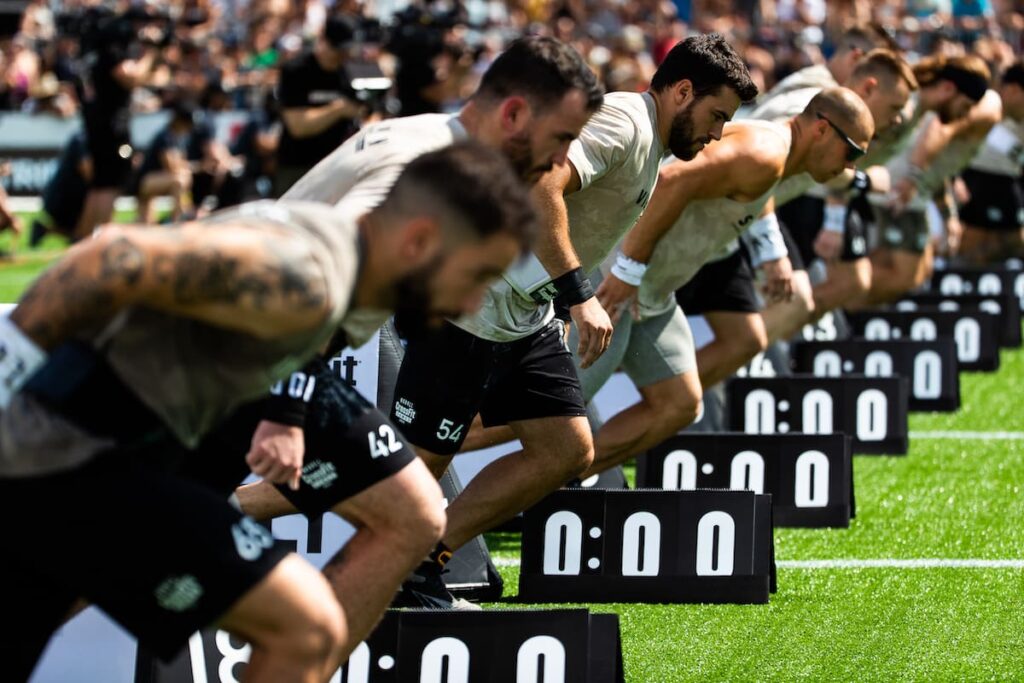
Mixed Modal Interval Training
Mixed modal intervals combine multiple exercises within each interval. This approach is particularly relevant to functional fitness because it integrates strength and conditioning simultaneously.
Each of these interval formats stimulates adaptations that improve performance across a wide range of functional fitness tasks.
Why Functional Fitness Athletes Benefit From Interval Training
Functional fitness competitions demand rapid transitions between movements, repeated high intensity efforts, and sustained work capacity across long workouts.
Athletes often face combinations of lifting, gymnastics, sprinting, rowing, and other modalities within the same event. The ability to repeatedly produce power while recovering quickly between efforts is essential.
Interval workouts mirror these demands very closely. They train the body to perform hard efforts repeatedly while managing fatigue.
Research shows that interval training stimulates improvements in aerobic capacity, anaerobic power, metabolic efficiency, and muscular endurance. These qualities form the foundation of successful functional fitness performance.
The following sections explain three key benefits supported by scientific evidence.
Benefit 1: Dramatically Improves Aerobic Capacity
Aerobic capacity is one of the most important physiological traits for functional fitness athletes. It determines how effectively the body can deliver oxygen to working muscles during exercise.
The most common measure of aerobic capacity is VO2 max. This represents the maximum rate at which the body can use oxygen during intense exercise.
Higher VO2 max values are associated with better endurance, faster recovery between efforts, and improved work output.
Interval Training Is Highly Effective for Increasing VO2 Max
Research consistently shows that interval workouts can increase VO2 max significantly in both trained and untrained individuals.
One well known study compared traditional steady state endurance training with high intensity interval training. The interval group performed repeated four minute work intervals at high intensity. After several weeks, the interval group experienced larger improvements in VO2 max than the steady state group.
Another study found that short sprint intervals lasting thirty seconds also produced significant improvements in aerobic capacity despite much lower overall training time.
These findings suggest that interval workouts can stimulate strong cardiovascular adaptations even when the total training volume is relatively low.
Why VO2 Max Matters in Functional Fitness
Functional fitness workouts often involve sustained efforts lasting from several minutes to over half an hour. Athletes with higher aerobic capacity can maintain faster paces with lower relative effort.
A strong aerobic system also accelerates recovery between intense efforts. This allows athletes to perform repeated high intensity bouts within the same workout.
For example, an athlete with well developed aerobic fitness can recover faster after heavy lifts or sprint efforts, allowing them to maintain higher work output throughout the entire workout.
Physiological Adaptations Behind Aerobic Improvements
Interval training improves aerobic capacity through several physiological mechanisms.
One important adaptation is increased stroke volume. Stroke volume refers to the amount of blood pumped by the heart with each beat. A larger stroke volume means more oxygen can be delivered to working muscles.
Interval training also increases mitochondrial density within muscle cells. Mitochondria are responsible for producing energy using oxygen. Higher mitochondrial density improves the muscles’ ability to generate energy efficiently during sustained work.
Capillary density within muscles also increases. This allows more oxygen and nutrients to reach working muscle fibers.
Together, these adaptations significantly enhance endurance performance.
Benefit 2: Enhances Anaerobic Power and Work Capacity
Functional fitness workouts often include explosive movements such as Olympic lifts, jumps, sprinting, and fast gymnastics movements. These activities rely heavily on the anaerobic energy systems.
The anaerobic system produces energy rapidly but cannot sustain output for long durations. Improving anaerobic power allows athletes to produce higher force and speed during short bursts of effort.
Interval workouts are extremely effective for developing these capabilities.
Interval Training Targets the Anaerobic Energy Systems
Short high intensity intervals place significant demand on the phosphagen and glycolytic energy systems.
The phosphagen system fuels very short maximal efforts such as heavy lifts or short sprints. The glycolytic system supports high intensity exercise lasting from about ten seconds to two minutes.
Research shows that sprint interval training can significantly increase anaerobic power and glycolytic enzyme activity. These enzymes play a critical role in rapid energy production during high intensity exercise.
Repeated exposure to high intensity intervals teaches the body to produce energy quickly and tolerate the metabolic stress that accompanies intense work.
Improved Lactate Tolerance
During intense exercise, the body produces lactate and hydrogen ions as byproducts of energy production. Accumulation of these substances contributes to fatigue and muscle burning.
Interval workouts train the body to tolerate and buffer these byproducts more effectively.
Studies show that high intensity interval training increases the activity of buffering systems that regulate muscle acidity. This helps delay fatigue during repeated high intensity efforts.
Athletes who develop strong lactate tolerance can maintain high intensity work for longer periods without performance decline.
Why Anaerobic Power Matters in Functional Fitness
Many functional fitness workouts include explosive elements that determine overall performance.
Heavy lifts, rapid cycling of barbell movements, and fast gymnastic repetitions all depend on high levels of anaerobic power.

Athletes who can generate more power during short efforts often create decisive advantages during workouts. For example, they may complete barbell cycling faster or sprint through the final portion of a workout.
Interval training specifically develops this ability by repeatedly exposing the body to high intensity output.
Benefit 3: Improves Metabolic Efficiency and Fatigue Resistance
Functional fitness athletes must sustain high work rates across long workouts while managing fatigue. Metabolic efficiency plays a key role in achieving this.
Metabolic efficiency refers to the body’s ability to produce energy with minimal waste and fatigue.
Interval workouts improve metabolic efficiency by enhancing the coordination between energy systems and improving the muscles’ ability to use fuel effectively.
Increased Mitochondrial Biogenesis
One of the most important adaptations from interval training is increased mitochondrial biogenesis.
Mitochondrial biogenesis refers to the creation of new mitochondria within muscle cells. More mitochondria allow muscles to produce energy more efficiently.
Research shows that even short sprint interval programs can trigger significant increases in mitochondrial content within skeletal muscle.
This adaptation improves endurance and delays fatigue during prolonged exercise.
Improved Glucose Regulation
Interval training also improves the body’s ability to regulate blood glucose levels.
Studies show that high intensity intervals enhance insulin sensitivity and glucose transport into muscle cells. This improves the muscles’ ability to use carbohydrates as fuel during exercise.
Efficient carbohydrate utilization allows athletes to maintain higher power output during demanding workouts.
Greater Fat Oxidation Capacity
Interval training can also increase the body’s ability to oxidize fat during exercise.
Improved fat oxidation helps preserve glycogen stores, which are critical for high intensity efforts. When glycogen depletion occurs, performance declines rapidly.
By improving fat utilization, interval workouts allow athletes to sustain energy levels longer during extended workouts.
Enhanced Neuromuscular Fatigue Resistance
Interval training also strengthens the neuromuscular system.
Repeated high intensity efforts train the nervous system to maintain efficient motor unit recruitment even under fatigue.
This improves movement quality during demanding workouts. Functional fitness athletes benefit because they must maintain technical precision during complex lifts and gymnastic movements.
Practical Applications for Functional Fitness Athletes
Understanding the science behind interval training is helpful, but applying it effectively in training is equally important.
Functional fitness athletes can structure interval workouts in several ways depending on their goals.
Short Power Intervals
Short intervals lasting ten to thirty seconds are ideal for developing anaerobic power.
Examples include sprint rowing, sled pushes, bike sprints, or explosive barbell movements performed at high intensity.
Recovery periods should be long enough to maintain high quality output in each interval.
Moderate Length Conditioning Intervals
Intervals lasting one to three minutes challenge both anaerobic and aerobic systems.
These sessions often include mixed modal combinations such as kettlebell swings, burpees, box jumps, and rowing.
Moderate recovery periods allow partial recovery while maintaining metabolic stress.
Longer Aerobic Intervals
Intervals lasting three to five minutes primarily target aerobic development.
These workouts may include cyclical machines, running, or moderate weight barbell cycling.
Athletes should aim to sustain a challenging but consistent pace throughout each interval.
Balancing Intensity and Recovery
Recovery periods are an essential component of interval training.
Insufficient recovery can lead to reduced output and excessive fatigue, while overly long recovery periods may reduce the stimulus for adaptation.
Athletes should adjust rest intervals based on training goals and overall fatigue levels.
Common Mistakes When Using Interval Workouts
Despite their effectiveness, interval workouts can be misused if athletes do not structure them properly.
Too Much High Intensity Volume

Excessive high intensity training can increase injury risk and impair recovery. Functional fitness athletes already perform demanding sessions, so interval workouts should be programmed carefully.
Lack of Movement Quality
Maintaining proper technique during intervals is critical. Fatigue can compromise movement patterns, particularly during complex lifts.
Athletes should choose movements that allow safe execution even under fatigue.
Poor Progression
Interval workouts should evolve over time. Progression may include increasing intensity, extending work intervals, or reducing recovery time.
Gradual progression ensures continuous adaptation without excessive stress.
Conclusion
Interval workouts provide powerful physiological benefits that align closely with the demands of functional fitness.
Scientific research demonstrates that interval training improves aerobic capacity, increases anaerobic power, and enhances metabolic efficiency. These adaptations allow athletes to sustain higher work output, recover faster between efforts, and maintain performance during demanding workouts.
Functional fitness athletes who incorporate well structured interval training into their programs can significantly improve their conditioning and overall competitive performance.
When programmed carefully, interval workouts develop the energy systems and fatigue resistance necessary to excel in high intensity functional training.
References
• Burgomaster, K.A., Howarth, K.R., Phillips, S.M., Rakobowchuk, M., Macdonald, M.J., McGee, S.L. and Gibala, M.J., 2008. Similar metabolic adaptations during exercise after low volume sprint interval and traditional endurance training in humans. Journal of Physiology.
• Gibala, M.J., Little, J.P., Macdonald, M.J. and Hawley, J.A., 2012. Physiological adaptations to low volume high intensity interval training in health and disease. Journal of Physiology.
• Helgerud, J., Høydal, K., Wang, E., Karlsen, T., Berg, P., Bjerkaas, M., Simonsen, T., Helgesen, C., Hjorth, N., Bach, R. and Hoff, J., 2007. Aerobic high intensity intervals improve VO2 max more than moderate training. Medicine and Science in Sports and Exercise.
• Laursen, P.B. and Jenkins, D.G., 2002. The scientific basis for high intensity interval training. Sports Medicine.
• MacInnis, M.J. and Gibala, M.J., 2017. Physiological adaptations to interval training and the role of exercise intensity. Journal of Physiology.
• Weston, M., Taylor, K.L., Batterham, A.M. and Hopkins, W.G., 2014. Effects of low volume high intensity interval training on fitness in adults. British Journal of Sports Medicine.