

Strong legs are the foundation of athletic performance, long-term health, and resilience against injury. Whether you sprint, jump, lift, hike, or simply want to move better in daily life, leg strength plays a central role. Research consistently shows that lower-body strength is associated with improved sports performance, enhanced metabolic health, better balance, and reduced injury risk.
Functional fitness takes this further. Instead of isolating muscles in fixed machines, functional exercises train movement patterns that carry over directly into real-world tasks and athletic demands. When it comes to building stronger legs that are powerful, stable, and durable, three exercises stand above the rest:
- The Barbell Back Squat
- The Romanian Deadlift
- The Walking Lunge
Each of these movements trains multiple joints, large muscle groups, and essential coordination patterns. Together, they target the quadriceps, hamstrings, glutes, adductors, calves, and core in ways that translate directly to performance and everyday life.
What Makes an Exercise “Functional”?
Functional exercises share several characteristics:
- They involve multiple joints.
- They recruit large amounts of muscle mass.
- They require stabilization and coordination.
- They transfer to real-world movement patterns.
Research shows that multi-joint resistance exercises stimulate greater hormonal responses and muscle activation than single-joint exercises, contributing to greater overall strength development. They also demand higher neuromuscular coordination, improving movement efficiency and motor control.
Lower-body functional training typically emphasizes:
- Squatting
- Hip hinging
- Lunging
- Stepping
- Jumping
These patterns mirror daily and athletic movements such as sitting, standing, lifting, sprinting, cutting, and climbing stairs.
Let’s look at the three most effective exercises within these categories.
1. The Barbell Back Squat
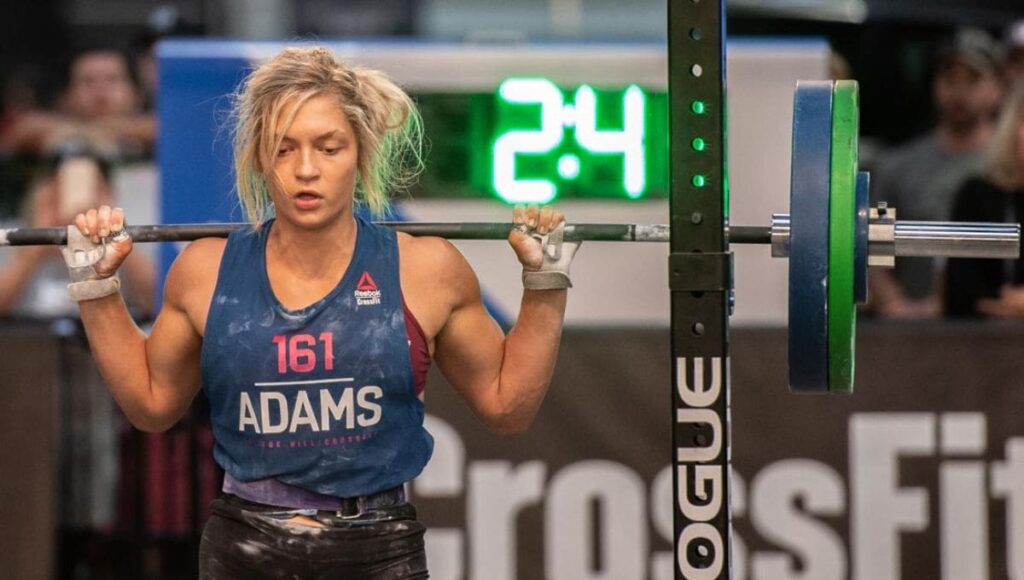
If you had to choose one lower-body movement to build strength, power, and resilience, the squat would be it.
Why the Squat Is So Effective
The back squat trains knee and hip extension simultaneously, making it one of the most comprehensive lower-body exercises available.
Primary muscles trained:
- Quadriceps
- Gluteus maximus
- Hamstrings
- Adductors
- Erector spinae
- Core stabilizers
Electromyography (EMG) research shows high activation of both the quadriceps and gluteus maximus during loaded squats, confirming its effectiveness for developing these key muscles.
The squat also allows for substantial loading, which is crucial. Progressive overload is one of the primary drivers of strength and hypertrophy. Studies consistently show that higher mechanical tension — achieved through progressively heavier loads — stimulates muscle growth and neural adaptations.
Squats and Athletic Performance
Lower-body maximal strength is strongly correlated with sprint speed, jump height, and change-of-direction ability. Research on trained athletes has demonstrated significant relationships between squat strength and vertical jump performance.
In other words: get stronger in the squat, and your ability to produce force improves.
Heavy squatting improves rate of force development, which is critical for explosive sports. Strength training that includes squats has been shown to increase jump performance and sprint acceleration.
Squats and Injury Prevention
Strong quadriceps and glutes contribute to better knee stability. Weakness in these muscles is associated with increased risk of knee injuries, including ACL injuries.
Strength training programs that include squats have been shown to reduce injury rates in athletes. Systematic reviews and meta-analyses confirm that resistance training significantly decreases sports-related injuries.
Squats also improve bone mineral density. Weight-bearing exercises that load the hips and spine stimulate bone remodeling, which is crucial for long-term skeletal health.
How to Perform the Barbell Back Squat
- Place the barbell across the upper traps.
- Stand with feet shoulder-width apart.
- Brace your core.
- Sit down and back while keeping your chest tall.
- Descend until the hip crease drops below the top of the knee (if mobility allows).
- Drive through the mid-foot to stand.
Depth matters. Research shows that deeper squats lead to greater glute activation and may produce superior strength gains across the full range of motion.
Programming Guidelines
For strength:
- 3–6 sets
- 3–6 reps
- 80–90% of one-rep max
For hypertrophy:
- 3–5 sets
- 6–12 reps
- 60–80% of one-rep max
Rest periods of 2–3 minutes allow sufficient recovery for high-force production.
2. The Romanian Deadlift (RDL)
While squats emphasize knee extension, the Romanian deadlift emphasizes hip hinging — a critical movement pattern often neglected.

Why the Hip Hinge Matters
The RDL primarily targets:
- Hamstrings
- Gluteus maximus
- Adductors
- Erector spinae
The hamstrings are essential for sprinting speed and deceleration control. They also play a crucial role in protecting the knee joint by counteracting anterior tibial translation.
EMG studies show high hamstring activation during Romanian deadlifts, often exceeding that of many leg curl variations.
Hamstring Strength and Injury Prevention
Hamstring strains are one of the most common injuries in field and court sports. Research demonstrates that eccentric hamstring strength is a major protective factor.
Hip hinge exercises like the RDL develop eccentric hamstring strength because the hamstrings lengthen under load during the lowering phase.
Strength training programs that target the posterior chain significantly reduce hamstring injury rates. Stronger hamstrings also contribute to improved sprint performance.
RDLs and Athletic Power
The gluteus maximus is the largest and most powerful muscle in the body. It is a primary driver of hip extension during sprinting and jumping.
Strengthening the posterior chain improves horizontal force production, which is essential for acceleration.
Research shows that athletes with stronger hip extensors demonstrate better sprint acceleration.
How to Perform the Romanian Deadlift
- Stand holding a barbell at hip level.
- Soften the knees slightly.
- Push your hips back while keeping the spine neutral.
- Lower the bar along your thighs.
- Descend until you feel a stretch in the hamstrings.
- Drive the hips forward to return to standing.
The key is controlled eccentric lowering. Studies show that slower eccentric tempos can enhance muscle activation and hypertrophy.
Programming Guidelines
For strength:
- 3–5 sets
- 4–8 reps
- Moderate to heavy loads
For hypertrophy and injury prevention:
- 3–4 sets
- 6–10 reps
- Controlled eccentric phase (2–4 seconds down)
Because the RDL places significant tension on the hamstrings, adequate recovery between sessions is important.
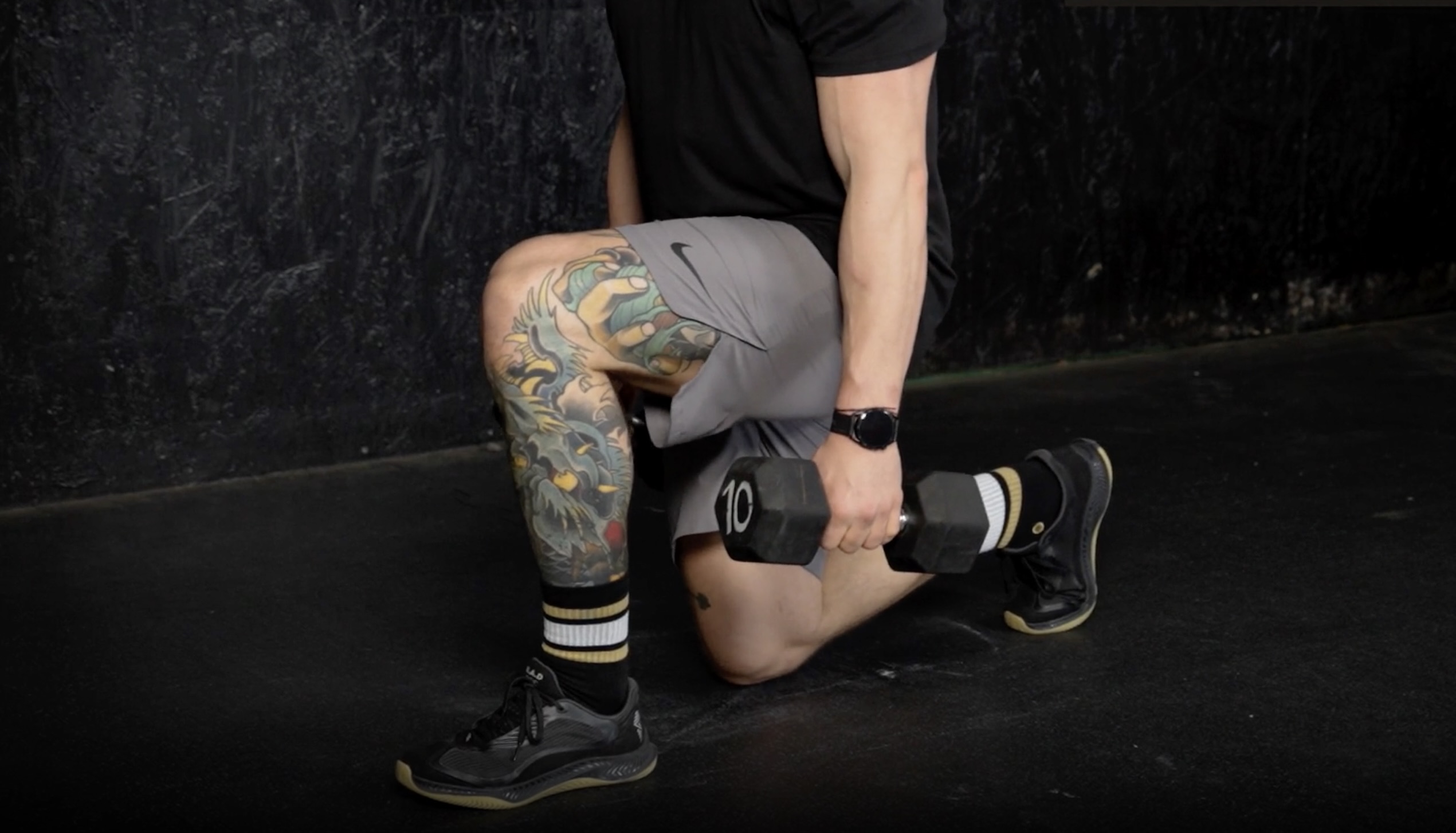
3. The Walking Lunge
Unilateral strength is often the missing piece in lower-body training.
Why Single-Leg Strength Matters
Most athletic movements — sprinting, cutting, climbing stairs — happen one leg at a time.
Walking lunges train:
- Quadriceps
- Glutes
- Hamstrings
- Adductors
- Core stabilizers
Research shows that unilateral exercises improve balance, coordination, and intermuscular control.
Unilateral training also reduces bilateral strength asymmetries, which are associated with increased injury risk.
Lunges and Functional Transfer
Walking lunges closely mimic gait mechanics. They require dynamic balance, coordination, and force absorption.
Studies demonstrate that single-leg strength correlates with performance in activities like sprinting and jumping. Improving unilateral strength enhances movement efficiency and stability.
Lunges also challenge frontal-plane stability. The gluteus medius, which plays a key role in hip stability, is activated significantly during lunge variations.
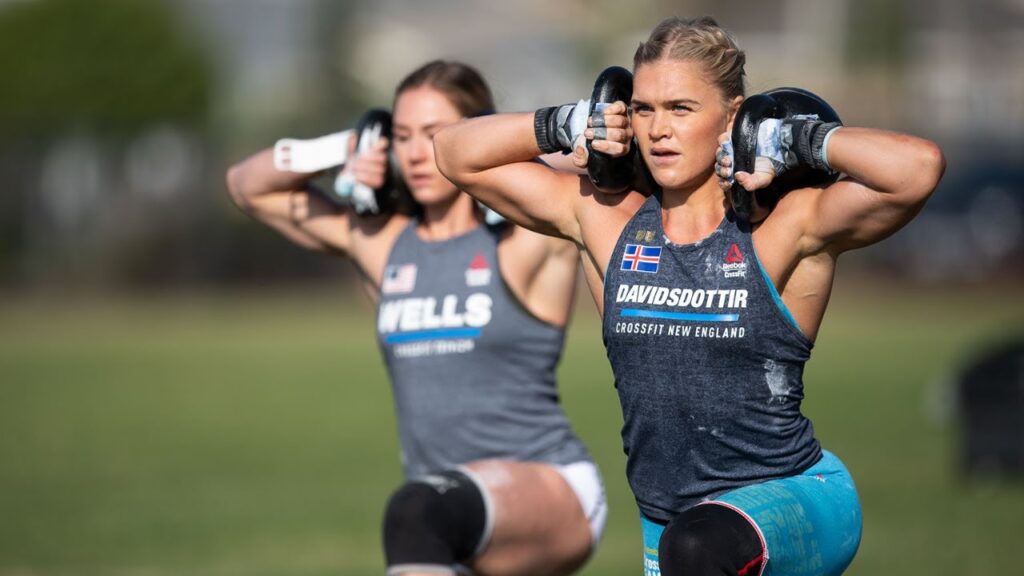
Weak hip abductors are linked to knee valgus, which increases ACL injury risk. Strengthening these muscles improves knee alignment.
Metabolic and Muscle-Building Benefits
Because lunges use large muscle groups and can be performed continuously, they also create a strong metabolic stimulus.
Research indicates that exercises involving large muscle mass lead to higher acute hormonal responses, which may support hypertrophy.
Walking lunges also provide substantial mechanical tension when loaded with dumbbells or a barbell.
How to Perform the Walking Lunge
- Stand tall with dumbbells or a barbell.
- Step forward into a lunge.
- Lower until the back knee nearly touches the floor.
- Keep the front knee tracking over the toes.
- Push through the front heel.
- Bring the back leg forward into the next step.
Maintain an upright torso to emphasize quadriceps, or a slight forward lean to increase glute activation.
Programming Guidelines
For strength:
- 3–4 sets
- 6–8 reps per leg
For hypertrophy:
- 3–4 sets
- 8–15 reps per leg
Shorter rest periods increase metabolic stress, while longer rest supports heavier loading.
Why These Three Exercises Work Best Together
Each movement emphasizes a different functional pattern:
- Squat: Bilateral knee-dominant strength
- Romanian deadlift: Bilateral hip-dominant strength
- Walking lunge: Unilateral strength and stability
Together, they develop complete lower-body strength.
Research on resistance training shows that combining multi-joint movements produces superior strength gains compared to isolation-only programs.
Training both hip and knee extension patterns ensures balanced development of the quadriceps and posterior chain.
Unilateral work addresses asymmetries and improves neuromuscular control.
This balanced approach improves:
- Maximal strength
- Power output
- Sprint performance
- Jump performance
- Injury resilience
- Bone density
- Metabolic health
Weekly Sample Leg Session
Day 1:
Back Squat – 5 x 5
Romanian Deadlift – 4 x 6
Walking Lunges – 3 x 10 per leg
Day 2:
Back Squat (lighter) – 4 x 8
Romanian Deadlift – 3 x 8
Walking Lunges – 3 x 12 per leg
Train legs 1–2 times per week depending on experience and recovery.
Final Thoughts
Stronger legs are not built through endless machine work or random high-rep circuits. They are built through progressive overload on fundamental movement patterns.
The back squat builds maximal lower-body strength and power.
The Romanian deadlift strengthens the posterior chain and protects against injury.
The walking lunge builds unilateral strength, balance, and athletic resilience.
These three exercises are not trendy. They are not flashy. But they are supported by decades of biomechanical and physiological research.
If your goal is stronger, more powerful, and more injury-resistant legs, build your training around these movements — and progressively get stronger over time.
Consistency and progressive overload remain the most powerful tools in functional fitness.
Key Takeaways
| Exercise | Primary Focus | Main Benefits | Why It Matters |
|---|---|---|---|
| Barbell Back Squat | Bilateral knee + hip extension | Max strength, power, bone density | Foundation of lower-body force production |
| Romanian Deadlift | Hip hinge / posterior chain | Hamstring strength, sprint speed, injury prevention | Protects knees and boosts acceleration |
| Walking Lunge | Unilateral strength | Balance, asymmetry correction, stability | Improves real-world and athletic movement |
References
- Behm, D.G., Drinkwater, E.J., Willardson, J.M. and Cowley, P.M., 2010. The use of instability to train the core musculature. Applied Physiology, Nutrition, and Metabolism, 35(1), pp.91–108.
- Borde, R., Hortobágyi, T. and Granacher, U., 2015. Dose–response relationships of resistance training in healthy old adults. Sports Medicine, 45(12), pp.1693–1720.
- Chelly, M.S. et al., 2009. Relationships between strength and sprint performance in elite soccer players. Journal of Strength and Conditioning Research, 23(4), pp.1285–1291.
- Clark, M.A. and Lucett, S.C., 2011. NASM essentials of corrective exercise training. Lippincott Williams & Wilkins.
- DeForest, B.A., Cantrell, G.S. and Schilling, B.K., 2014. Muscle activation during squatting exercises. Journal of Strength and Conditioning Research, 28(3), pp. 631–639.
- Faigenbaum, A.D. and Myer, G.D., 2010. Resistance training among young athletes. British Journal of Sports Medicine, 44(1), pp.56–63.
- Fyfe, J.J., Bishop, D.J. and Stepto, N.K., 2014. Interference between concurrent resistance and endurance exercise. Sports Medicine, 44(6), pp.743–762.