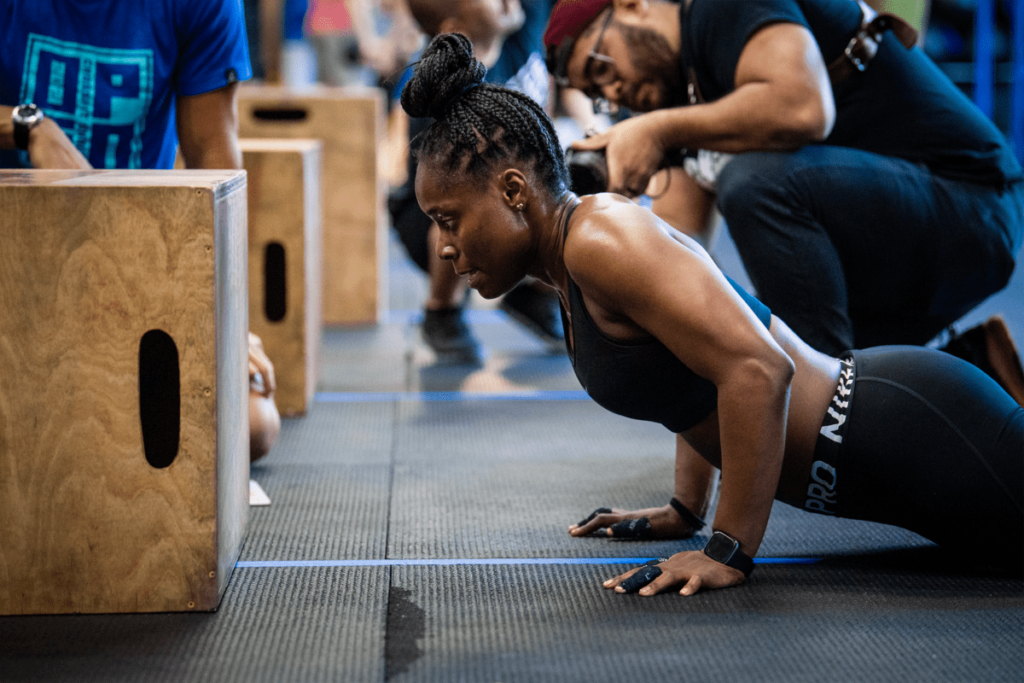
Training your chest at home without equipment is not a compromise. When bodyweight exercises are programmed correctly, they can produce high levels of muscle activation, mechanical tension, and metabolic stress—the three primary drivers of muscle hypertrophy and strength development.
Multiple laboratory studies have shown that push-up variations can activate the pectoralis major to a degree comparable to traditional bench press exercises when intensity and technique are properly managed.
This article presents three complete bodyweight-only chest workouts designed for home gyms. Each workout targets the chest from slightly different angles and loading strategies while remaining grounded in current exercise science. You will also learn why each exercise works, how to progress without weights, and how to structure volume, tempo, and rest for maximum results.
No fluff. No gimmicks. Just evidence-based training you can apply immediately.
Understanding Chest Training Without Weights
The Role of Mechanical Tension and Muscle Activation
Muscle growth is primarily driven by mechanical tension placed on muscle fibers. Bodyweight movements can generate sufficient tension if leverage, range of motion, and time under tension are manipulated correctly. Electromyography (EMG) studies show that standard push-ups can activate the pectoralis major at levels comparable to the barbell bench press when load is matched to relative intensity.

Calatayud et al. demonstrated that push-ups performed with appropriate technique elicited similar pectoral activation to bench press at 70 percent of one-repetition maximum. This directly supports the use of bodyweight pushing movements for chest development.
Training to Near Failure Matters More Than Load
Research consistently shows that muscle hypertrophy can occur across a wide range of loads, provided sets are taken close to muscular failure. Schoenfeld et al. found that low-load training (as low as 30 percent of one-repetition maximum) produced similar hypertrophy to heavy training when sets were performed to failure.
This is crucial for home workouts. Bodyweight exercises become effective when you reduce mechanical advantage, slow down tempo, or increase volume to push sets close to failure.
Range of Motion and Shoulder Health
Full range of motion increases muscle fiber recruitment and long-term hypertrophy. Push-up variations that allow deep shoulder extension and controlled scapular movement have been shown to improve muscle activation and shoulder stability.
Exercises like deficit push-ups and push-up plus movements improve serratus anterior engagement, which supports shoulder health and pressing performance.
Workout 1: Classic Bodyweight Chest Builder
This workout focuses on fundamental push-up patterns using tempo and volume to increase mechanical tension. It is ideal for beginners through intermediate trainees.
Workout Structure
Perform this workout two to three times per week with at least 48 hours between sessions.
Exercise 1: Standard Push-Up
Perform 4 sets of 12–20 repetitions
Tempo: 3 seconds down, 1 second pause, 1 second up
Rest: 90 seconds between sets
Standard push-ups are a closed-chain exercise that heavily recruit the pectoralis major, anterior deltoids, and triceps. EMG analysis by Cogley et al. showed that hand placement slightly wider than shoulder-width increases pectoral activation without increasing shoulder stress.
Slowing the eccentric phase increases time under tension, which has been shown to enhance hypertrophic stimulus when total volume is controlled.
Exercise 2: Wide-Grip Push-Up
Perform 3 sets of 10–15 repetitions
Tempo: 2 seconds down, 1 second up
Rest: 90 seconds
Wider hand placement shifts demand toward horizontal shoulder adduction, increasing pectoral involvement relative to triceps. Studies confirm greater chest activation with wider hand spacing compared to narrow push-up variations.
Maintain scapular control and avoid excessive elbow flare to protect the shoulder joint.
Exercise 3: Push-Up Plus
Perform 3 sets of 12–15 repetitions
Tempo: Controlled
Rest: 60 seconds
At the top of each repetition, actively protract the shoulder blades. This movement increases activation of the serratus anterior, which improves scapular stability and pressing efficiency.
Decker et al. demonstrated that push-up plus variations significantly increase serratus anterior activation compared to standard push-ups.
Exercise 4: Isometric Push-Up Hold
Perform 3 sets of 20–40 seconds
Rest: 60 seconds
Isometric holds near the bottom position increase intramuscular tension and metabolic stress. Isometric contractions have been shown to improve strength at joint-specific angles and enhance muscle activation when combined with dynamic training.
Workout 2: Advanced Chest Activation and Angle Emphasis
This workout manipulates body position and leverage to increase intensity without external load. It is best suited for intermediate to advanced trainees.
Workout Structure
Perform this workout one to two times per week. It pairs well with Workout 1.

Exercise 1: Decline Push-Up
Perform 4 sets of 8–15 repetitions
Tempo: 3 seconds down, explosive up
Rest: 120 seconds
Elevating the feet increases the percentage of bodyweight loaded onto the upper body. EMG data from Youdas et al. shows increased activation of the upper pectoralis and anterior deltoids during decline push-ups.
Focus on maintaining a rigid torso to prevent lumbar extension.
Exercise 2: Deficit Push-Up
Perform 3 sets of 10–14 repetitions
Tempo: Slow and controlled
Rest: 90 seconds
Perform push-ups with hands elevated on blocks, books, or parallettes to increase range of motion. Increased range of motion has been associated with greater hypertrophy due to higher muscle fiber recruitment.
Research supports that deeper pressing movements stimulate greater pectoral stretch-mediated hypertrophy.
Exercise 3: Archer Push-Up
Perform 3 sets of 6–10 repetitions per side
Tempo: Controlled
Rest: 120 seconds
Archer push-ups shift a higher percentage of load to one side, increasing unilateral chest activation. This mimics the loading pattern of single-arm pressing exercises.
Unilateral training has been shown to increase neural drive and correct strength imbalances.
Exercise 4: Slow Eccentric Push-Up
Perform 2–3 sets of 6–8 repetitions
Tempo: 5 seconds down, normal up
Rest: 120 seconds
Eccentric-focused training increases muscle damage and tension. Schoenfeld et al. reported that slower eccentric tempos can increase hypertrophy when total volume is equated.
Stop each set just short of technical failure to preserve form.
Workout 3: High-Volume Metabolic Chest Session
This workout emphasizes metabolic stress and fatigue accumulation, both of which contribute to muscle hypertrophy when combined with sufficient mechanical tension.
Workout Structure
Perform this workout once per week. It is demanding and should not be combined with other high-volume pressing sessions on the same day.
Exercise 1: Push-Up Density Set
Perform as many repetitions as possible in 5 minutes
Rest only as needed
Density training increases total volume and metabolic stress. High-volume protocols have been shown to increase muscle cross-sectional area when recovery is adequate.
Maintain consistent form and stop sets when technique breaks down.
Exercise 2: Narrow Push-Up
Perform 3 sets of 12–20 repetitions
Tempo: Controlled
Rest: 60 seconds
Narrow hand placement increases triceps involvement but still maintains significant chest activation. EMG data shows that the pectoralis major remains highly active even during close-grip push-ups.
This variation also increases elbow extension demands, improving pressing strength carryover.
Exercise 3: Plyometric Push-Up
Perform 5 sets of 3–6 repetitions
Rest: 90 seconds
Explosive push-ups improve rate of force development and neural efficiency. Power-focused movements enhance fast-twitch fiber recruitment, which contributes to long-term hypertrophy.
Plyometric training has been shown to improve upper-body power without negatively affecting muscle growth.
Exercise 4: Mechanical Drop Set Push-Ups
Perform one extended set using the following sequence:
Decline push-ups to failure
Standard push-ups to failure
Knee push-ups to failure
Mechanical drop sets reduce leverage rather than load, allowing continued muscular effort. This method increases metabolic stress and time under tension, both associated with hypertrophy.
Programming, Progression, and Recovery
Weekly Volume and Frequency
Research suggests that 10–20 weekly sets per muscle group is effective for hypertrophy. Bodyweight training often requires higher repetitions, but sets still count toward total volume.
Training the chest two to three times per week has been shown to produce superior hypertrophy compared to once-weekly training when volume is equated.
Progressive Overload Without Weights
Progression can be achieved by:
Increasing repetitions
Slowing tempo
Increasing range of motion
Reducing rest intervals
Advancing to more difficult variations
Mechanical tension must increase over time to continue stimulating adaptation.
Rest Intervals Matter
Longer rest periods (90–120 seconds) allow greater force output and volume. Schoenfeld et al. demonstrated superior hypertrophy outcomes with longer rest compared to short rest during resistance training.

Recovery and Adaptation
Muscle growth occurs during recovery, not training. Adequate sleep, protein intake, and rest days are essential for progress. Bodyweight training still imposes significant neuromuscular stress and should be respected accordingly.
References
- Calatayud, J., Borreani, S., Colado, J.C., Martin, F. and Rogers, M.E. (2014) Muscle activation during push-ups with different suspension training systems. Journal of Sports Sciences, 32(11), pp. 1005–1012.
- Schoenfeld, B.J. (2010) The mechanisms of muscle hypertrophy and their application to resistance training. Journal of Strength and Conditioning Research, 24(10), pp. 2857–2872.
- Schoenfeld, B.J., Grgic, J., Ogborn, D. and Krieger, J.W. (2017) Strength and hypertrophy adaptations between low- vs. high-load resistance training. Journal of Strength and Conditioning Research, 31(12), pp. 3508–3523.
- Cogley, R.M., Archambault, T.A., Fibeger, J.F., Koverman, M.M., Youdas, J.W. and Hollman, J.H. (2005) Comparison of muscle activation using various hand positions during the push-up exercise. Journal of Strength and Conditioning Research, 19(3), pp. 628–633.
- Decker, M.J., Hintermeister, R.A., Faber, K.J. and Hawkins, R.J. (1999) Serratus anterior muscle activity during selected rehabilitation exercises. American Journal of Sports Medicine, 27(6), pp. 784–791.