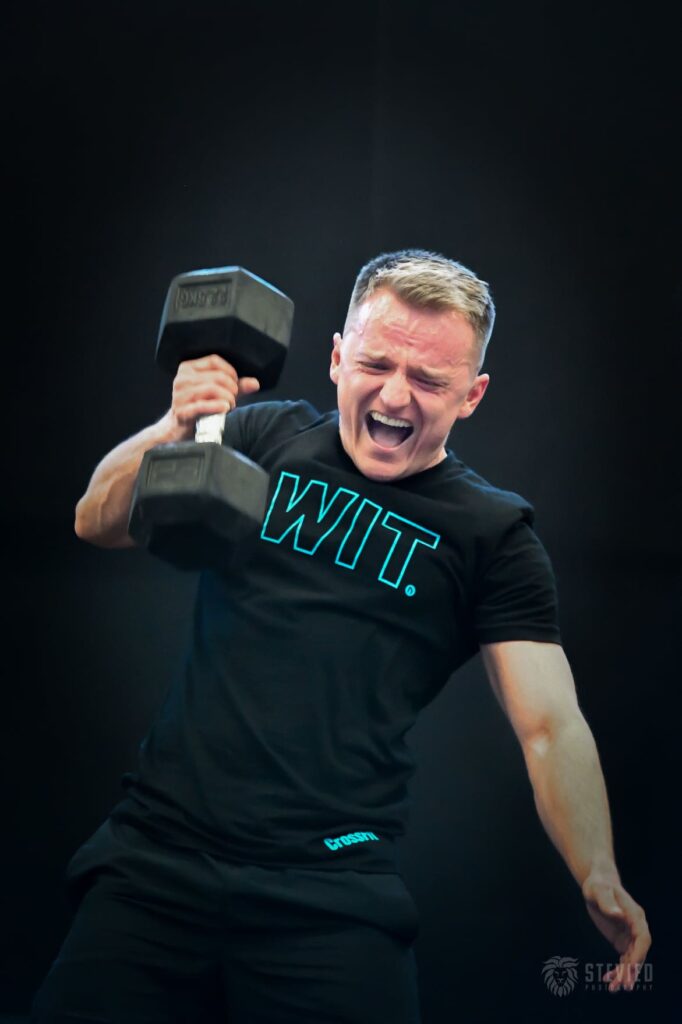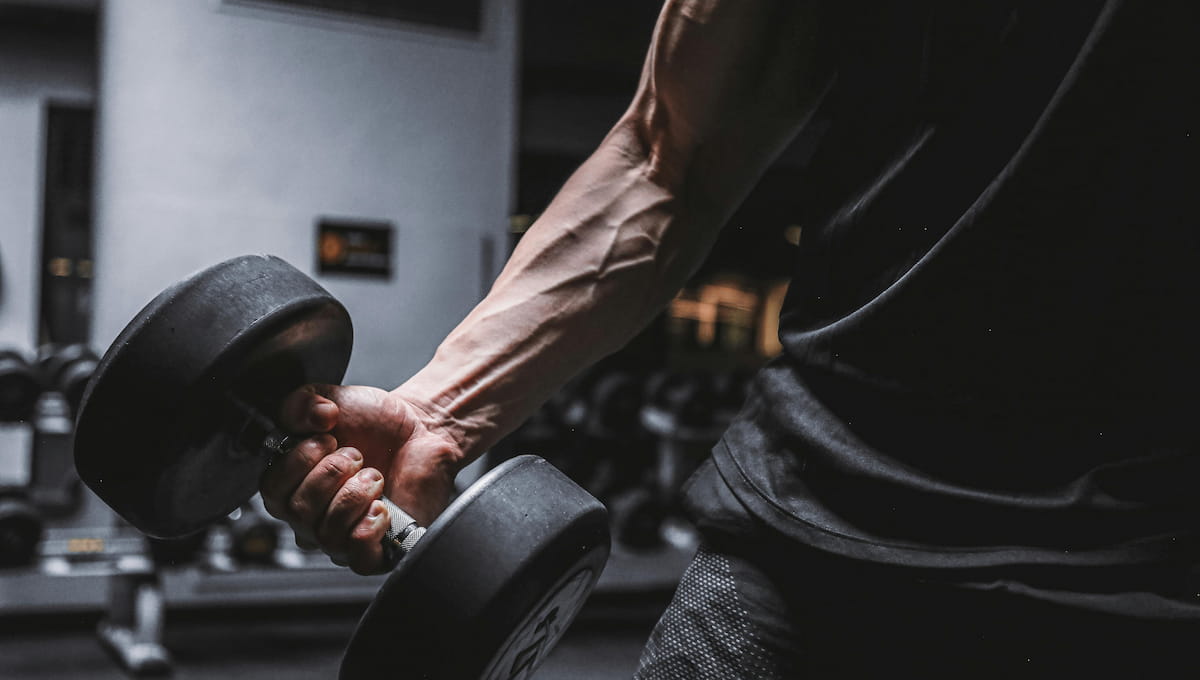


Forearms are one of the most visible muscle groups in the body, yet they are also among the most misunderstood and undertrained. Thick, powerful forearms are not just about aesthetics. They play a critical role in grip strength, lifting performance, injury prevention, and even long-term joint health.
Whether you are a CrossFit athlete, bodybuilder, powerlifter, or recreational gym-goer, stronger forearms directly translate to better performance in pulling movements, Olympic lifts, carries, and daily tasks.
This article breaks down three of the most effective dumbbell exercises for building forearm thickness and power. Every recommendation is grounded in peer-reviewed research on muscle activation, biomechanics, hypertrophy, and neuromuscular adaptation. You will also learn why these movements work, how to perform them correctly, and how to program them for real results.
Why Forearm Training Matters More Than You Think

Forearm Anatomy and Function
The forearm contains more than 20 muscles, broadly divided into flexors and extensors. These muscles originate from the humerus and insert into the wrist, hand, and fingers. Their primary roles include wrist flexion, wrist extension, radial and ulnar deviation, pronation, supination, and grip force production.
The flexor muscles, such as flexor digitorum superficialis and flexor carpi radialis, are heavily involved in gripping and pulling tasks. The extensor muscles, including extensor carpi radialis longus and extensor digitorum, stabilize the wrist and counterbalance flexor dominance.
Electromyography (EMG) research shows that many compound lifts heavily rely on forearm activation to maintain grip and wrist stability, even when forearms are not the prime movers. This constant involvement explains why forearms respond well to high-frequency, high-tension training when programmed correctly.
Grip Strength and Performance
Grip strength is a limiting factor in many lifts. Studies have demonstrated that grip fatigue can reduce force output in exercises like deadlifts, rows, and pull-ups, even when larger muscle groups are not fully fatigued. Improving forearm strength can delay grip failure and allow greater loading of the primary muscles.
Research has also linked grip strength to overall health outcomes. Large-scale epidemiological studies show that grip strength is a strong predictor of all-cause mortality, cardiovascular health, and functional capacity, independent of body mass or general fitness level.
Hypertrophy Principles Applied to Forearms
Muscle hypertrophy occurs when mechanical tension, metabolic stress, and muscle damage are sufficient to stimulate protein synthesis. Forearm muscles are predominantly composed of a mix of slow-twitch and fast-twitch fibers, with a relatively high endurance capacity due to their postural and stabilizing roles.
This means forearms respond well to:
- High time under tension
- Moderate to high repetitions
- Heavy isometric loading
- Frequent exposure to mechanical stress
Dumbbells are particularly effective because they allow free wrist movement, unilateral loading, and natural adjustments in joint angles, all of which increase muscle activation compared to fixed machines.
Exercise Selection Criteria
The three exercises selected in this article meet the following evidence-based criteria:
- High forearm muscle activation confirmed by EMG research
- Ability to progressively overload using dumbbells
- Low equipment requirement
- Direct carryover to grip strength and functional performance
Each exercise targets different functions of the forearm, ensuring balanced development, thickness, and power.
Dumbbell Hammer Curl with Controlled Eccentric

Why This Exercise Works
The dumbbell hammer curl is often thought of as a biceps or brachialis exercise, but research shows it heavily activates the brachioradialis, one of the largest and most visible forearm muscles. The brachioradialis contributes significantly to elbow flexion when the forearm is in a neutral position.
EMG studies comparing supinated curls, pronated curls, and neutral-grip curls consistently show higher brachioradialis activation during hammer curls. The controlled eccentric phase further increases mechanical tension, which is a primary driver of hypertrophy.
Muscle Activation and Thickness
The brachioradialis runs along the lateral side of the forearm and contributes significantly to overall forearm size. Because it crosses the elbow joint, it can be loaded heavier than many wrist-focused movements, making it ideal for building thickness.
Slow eccentric contractions have been shown to produce greater muscle damage and subsequent hypertrophy compared to concentric-only training. This makes tempo control especially valuable for forearm development.
How to Perform the Movement
Hold a dumbbell in each hand with a neutral grip, palms facing each other. Stand tall with shoulders set and elbows close to your sides. Curl the dumbbells upward without rotating the wrists. At the top, briefly pause, then lower the dumbbells slowly over three to five seconds.
Avoid swinging the weights or allowing the elbows to drift forward. Keep tension on the forearms throughout the movement.
Programming for Power and Size
To build thickness and power, perform this exercise with moderate to heavy loads for 6 to 10 repetitions per set. Use three to five sets. Rest periods of 90 to 120 seconds allow sufficient recovery for high-quality reps.
Progressive overload can be achieved by increasing load, slowing the eccentric further, or adding pauses at the midpoint of the descent.
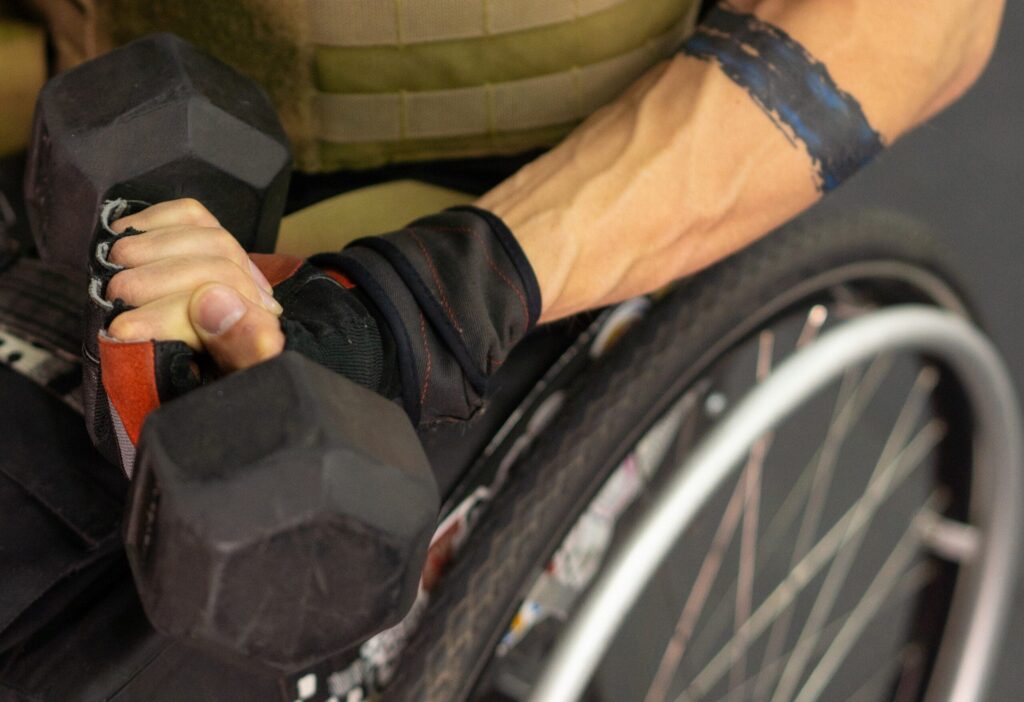
Dumbbell Wrist Curl and Reverse Wrist Curl Superset
Why Wrist Flexion and Extension Matter
Many lifters overdevelop wrist flexors while neglecting extensors, leading to imbalances that increase injury risk. Balanced development of both muscle groups is essential for wrist stability, force transfer, and long-term joint health.
Research shows that wrist extensors play a crucial role in grip endurance by stabilizing the wrist during sustained contractions. When extensors fatigue, grip strength drops even if flexors are still capable of producing force.
EMG Evidence and Muscle Recruitment
Studies using surface EMG demonstrate high activation of flexor carpi radialis and flexor digitorum during wrist curls, while reverse wrist curls strongly activate extensor carpi radialis and extensor digitorum. Performing both movements in a superset increases metabolic stress and time under tension, enhancing hypertrophic signaling.
How to Perform Wrist Curls
Sit on a bench and rest your forearms on your thighs or a bench, palms facing upward. Hold dumbbells with your wrists hanging over the edge. Curl the dumbbells upward by flexing the wrists, then lower them slowly through a full range of motion.
How to Perform Reverse Wrist Curls
Flip your forearms so palms face downward. Using lighter dumbbells, extend the wrists upward and then lower slowly. Maintain strict control throughout the movement.
Programming for Forearm Density
Perform wrist curls for 12 to 20 repetitions immediately followed by reverse wrist curls for 12 to 20 repetitions. This counts as one superset. Complete three to four supersets with 60 to 90 seconds of rest between rounds.
Higher repetitions are supported by research showing that forearm muscles respond well to metabolic stress due to their endurance-oriented fiber composition.
Dumbbell Farmer’s Carry
Why Carries Build Real-World Power
Farmer’s carries are one of the most effective exercises for developing grip strength, forearm thickness, and full-body stability. Unlike isolated movements, carries require sustained isometric contraction of the forearm muscles under heavy load.
Isometric contractions have been shown to produce significant neural adaptations and strength gains, particularly in grip-intensive tasks.
Grip Strength and Neural Adaptation
Research indicates that heavy loaded carries improve maximal voluntary contraction of the forearm flexors and increase motor unit recruitment. This translates directly to improved performance in pulling exercises and Olympic lifts.
Farmer’s carries also increase co-contraction of wrist flexors and extensors, improving joint stability and reducing injury risk.
How to Perform the Carry
Hold a heavy dumbbell in each hand. Stand tall with shoulders retracted and core braced. Walk slowly and deliberately for a set distance or time while maintaining a strong grip and neutral wrist position.
Avoid leaning, shrugging excessively, or allowing the dumbbells to swing.
Programming for Power
Perform carries for 20 to 60 seconds per set or 20 to 40 meters per set. Use heavy loads that challenge your grip without compromising posture. Complete three to five sets with two minutes of rest between sets.
Progression can be achieved by increasing load, distance, or time under tension.
How These Three Exercises Work Together
Each of these movements targets the forearms in a distinct yet complementary way:
- Hammer curls emphasize dynamic elbow flexion and brachioradialis hypertrophy
- Wrist curls and reverse wrist curls target isolated wrist flexors and extensors
- Farmer’s carries develop isometric strength, grip endurance, and neural efficiency
Combining all three ensures comprehensive development of size, strength, and functional power.
Frequency, Recovery, and Injury Prevention
Forearms can tolerate frequent training due to their high endurance capacity. Research supports training them two to four times per week, provided volume is managed and pain-free ranges of motion are used.

Proper warm-up, gradual progression, and balanced flexor-extensor work significantly reduce the risk of tendinopathies such as golfer’s elbow and tennis elbow.
Common Mistakes to Avoid
Using excessive weight with poor wrist control reduces muscle activation and increases injury risk. Bouncing through repetitions eliminates time under tension, which is critical for hypertrophy. Neglecting extensors leads to imbalance and reduced grip performance.
Final Thoughts
Building thick, powerful forearms does not require endless gimmicks or extreme volumes. Strategic use of dumbbells, grounded in biomechanics and exercise science, delivers consistent and measurable results. These three exercises provide a simple, effective, and evidence-based approach to forearm training that supports both performance and longevity.
References
- Aagaard, P., Simonsen, E.B., Andersen, J.L., Magnusson, P. and Dyhre-Poulsen, P. (2002). Increased rate of force development and neural drive of human skeletal muscle following resistance training. Journal of Applied Physiology, 93(4), pp.1318–1326.
- Andersen, L.L., Magnusson, S.P., Nielsen, M., Haleem, J., Poulsen, K. and Aagaard, P. (2006). Neuromuscular activation in conventional therapeutic exercises and heavy resistance exercises: implications for rehabilitation. Physical Therapy, 86(5), pp.683–697.
- Bojsen-Møller, J., Magnusson, S.P., Rasmussen, L.R., Kjaer, M. and Aagaard, P. (2005). Muscle performance during maximal isometric and dynamic contractions is influenced by the stiffness of the tendinous structures. Journal of Applied Physiology, 99(3), pp.986–994.
- Folland, J.P. and Williams, A.G. (2007). The adaptations to strength training: morphological and neurological contributions to increased strength. Sports Medicine, 37(2), pp.145–168.
- Hermens, H.J., Freriks, B., Disselhorst-Klug, C. and Rau, G. (2000). Development of recommendations for SEMG sensors and sensor placement procedures. Journal of Electromyography and Kinesiology, 10(5), pp.361–374.