

Muscular weaknesses and imbalances are far more common than most people realize. Even highly trained athletes often have side-to-side strength differences, underdeveloped stabilizers, or dominant muscle groups that compensate for weaker ones.
These issues do not just limit performance. Over time, they increase injury risk, reduce movement efficiency, and make long-term progress harder.
Research consistently shows that strength imbalances are associated with higher rates of musculoskeletal injury, poorer motor control, and reduced force production. The good news is that these issues are not permanent. With the right strategies, you can identify weaknesses early and correct them before they become chronic problems.
This article outlines three science-backed hacks that consistently help counter muscular weaknesses and imbalances. These methods are practical, evidence-based, and suitable for both everyday gym-goers and competitive athletes.

Understanding Muscular Weaknesses and Imbalances
Before diving into solutions, it is important to understand what muscular imbalances actually are and why they develop.
What Counts as a Muscular Imbalance?
A muscular imbalance occurs when one muscle or muscle group is significantly stronger, tighter, or more neurologically dominant than its opposing or supporting muscles. This can happen between:
- Left and right sides of the body
- Agonist and antagonist muscle groups
- Prime movers and stabilizers
- Upper and lower body regions
For example, stronger quadriceps relative to hamstrings, dominant pushing muscles compared to pulling muscles, or one leg consistently producing more force than the other.
Research suggests that side-to-side strength differences greater than 10–15 percent may increase injury risk, particularly in the lower limbs (Croisier et al., 2008; Knapik et al., 1991).
Why Imbalances Develop
Muscular imbalances rarely appear randomly. Common contributing factors include:
- Repetitive daily tasks that favor one side of the body
- Sport-specific movement patterns
- Poor exercise selection or programming
- Inadequate recovery after injury
- Limited mobility or joint restrictions
Over time, the nervous system adapts to these patterns. Stronger muscles become more efficient at producing force, while weaker muscles contribute less and less. This process, known as altered neuromuscular activation, is well documented in the scientific literature (Sahrmann, 2002).
Correcting imbalances requires more than just “training harder.” It requires targeted strategies that address strength, coordination, and motor control.
Hack 1: Prioritize Unilateral Training to Expose and Correct Asymmetries
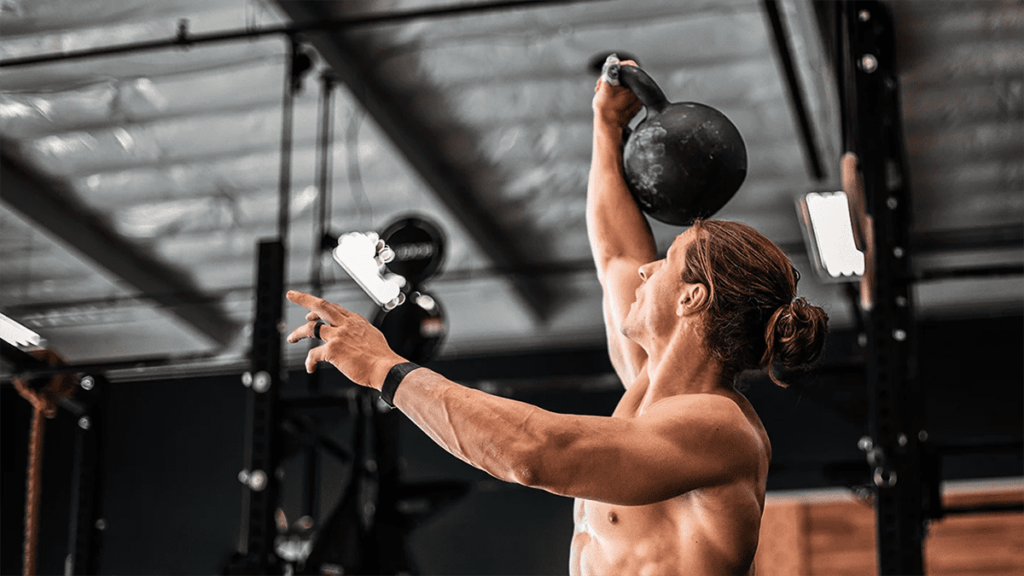
Unilateral training refers to exercises that work one limb at a time, such as single-leg squats or single-arm presses. This approach is one of the most effective ways to identify and correct muscular imbalances.
Why Unilateral Training Works
When both limbs work together, the stronger side often compensates for the weaker one. Bilateral exercises like back squats or bench presses can mask deficits because the body distributes load unevenly without you realizing it.
Unilateral exercises remove this safety net. Each limb must produce force independently, making weaknesses immediately obvious.
Studies comparing unilateral and bilateral training show that unilateral exercises improve strength symmetry and reduce side-to-side differences more effectively than bilateral training alone (McCurdy et al., 2005; Bishop et al., 2018).
Neuromuscular Benefits
Unilateral training increases neural drive to the working limb. This means the nervous system sends stronger, more focused signals to the active muscles.
Research using electromyography has demonstrated higher muscle activation in unilateral movements compared to bilateral equivalents at similar relative loads (Behm et al., 2005). This increased activation helps weaker muscles “relearn” how to contract forcefully and efficiently.
Best Unilateral Exercises for Balance
The following movements have strong evidence for improving strength symmetry:
- Split squats and rear-foot-elevated split squats
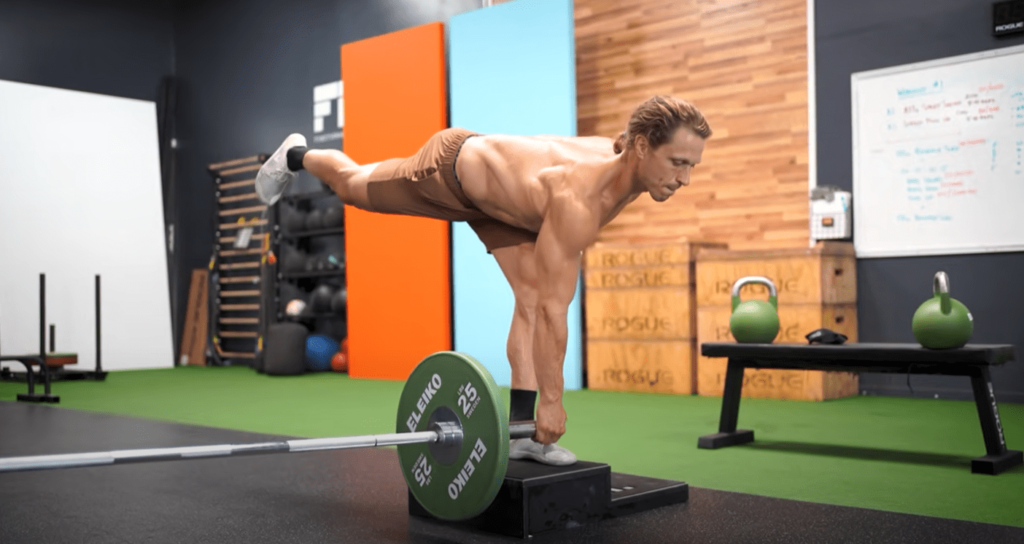
- Single-leg Romanian deadlifts
- Step-ups
- Single-arm rows and presses
- Single-arm carries
Lower-body unilateral exercises are particularly important. Lower-limb asymmetries are strongly linked to knee and hip injuries, especially in running and jumping sports (Hewett et al., 2005).
Programming Guidelines
To correct imbalances, start every unilateral set with the weaker side and match the reps with the stronger side. Do not add extra volume to the stronger limb.
A common mistake is pushing the stronger side harder because it feels easier. This reinforces the imbalance rather than fixing it.
Research supports equalizing volume while allowing intensity to be self-limited by the weaker side (Madruga-Parera et al., 2020).
Transfer to Bilateral Strength
Unilateral training does not reduce bilateral strength gains. In fact, studies show that combining unilateral and bilateral training improves overall strength and movement quality more than bilateral training alone (Appleby et al., 2019).
This makes unilateral training a powerful corrective tool without sacrificing performance.
Hack 2: Strengthen the Weak Link, Not the Prime Mover
Many muscular imbalances persist because training focuses too heavily on large, visible muscles while neglecting stabilizers and synergists. This creates a situation where the prime mover is strong, but the system as a whole is unstable.
Understanding the Weak Link Principle
Every movement relies on a chain of muscles working together. If one link in that chain is weak, the entire movement pattern suffers.
For example:
- Strong quadriceps with weak gluteus medius can lead to knee valgus.
- Strong pecs with weak scapular stabilizers can cause shoulder pain.
- Strong spinal extensors with weak deep core muscles can reduce spinal stability.
Research consistently shows that poor activation of stabilizing muscles alters joint mechanics and increases injury risk (Hodges and Richardson, 1996; Powers, 2010).
Why Isolation Work Matters
Isolation exercises often get a bad reputation, but science does not support eliminating them. Targeted isolation work is essential when specific muscles fail to contribute adequately to compound movements.
Electromyography studies show that certain stabilizing muscles are underactivated during compound lifts unless specifically trained (Ekstrom et al., 2003). This means relying solely on big lifts may leave critical weaknesses unaddressed.
Key Muscle Groups Often Neglected
Some of the most commonly undertrained muscles include:
- Gluteus medius and minimus
- Deep external rotators of the hip
- Lower trapezius and serratus anterior
- Rotator cuff muscles
- Deep abdominal muscles (transversus abdominis)
Weakness in these muscles has been linked to lower back pain, knee injuries, and shoulder dysfunction in multiple populations (Kibler et al., 2006; Willson et al., 2005).
Evidence-Based Isolation Exercises
Research-supported exercises for strengthening common weak links include:
- Side-lying hip abductions and banded walks for glute medius
- Prone Y and T raises for lower trapezius
- Push-up plus for serratus anterior
- External rotation exercises for rotator cuff
- Dead bugs and bird dogs for deep core activation

These exercises improve muscle activation patterns and joint stability when integrated consistently into training programs (McGill, 2010).
How Much Isolation Is Enough?
You do not need endless accessory work. Studies suggest that 2–4 sets per week per weak muscle group can significantly improve activation and strength when performed with proper technique (Schoenfeld et al., 2017).
The key is precision. Use controlled tempos, moderate loads, and strict form. The goal is quality of contraction, not fatigue for its own sake.
Hack 3: Use Tempo, Pauses, and Range Control to Rewire Movement Patterns
Muscular imbalances are not purely about strength. They are also about timing, coordination, and motor control. Changing how you move can be just as important as increasing load.
Why Tempo Training Works
Tempo refers to the speed of each phase of a lift. Slowing down movements increases time under tension and enhances proprioceptive feedback.
Research shows that slower tempos increase muscle activation and improve motor control, particularly in weaker or less coordinated muscles (Tanimoto and Ishii, 2006).
This is especially valuable for correcting imbalances, because the nervous system has more time to “feel” and adjust movement patterns.
Paused Repetitions and Isometrics
Paused repetitions involve holding a specific position, usually at the point of greatest mechanical disadvantage. This reinforces strength and stability where it is most needed.
Isometric training has been shown to improve joint stability, reduce pain, and increase neural drive without excessive joint stress (Oranchuk et al., 2019).
For example:
- Paused split squats at the bottom position improve hip and knee control.
- Paused rows enhance scapular stability.
- Isometric holds in single-leg positions improve balance and force symmetry.
Range of Motion Control
Limited or uneven range of motion often accompanies muscular imbalances. Training through full, controlled ranges helps restore symmetry and joint health.
Multiple studies show that full-range resistance training produces greater hypertrophy and strength gains than partial-range training, particularly in underdeveloped muscles (Pinto et al., 2012).
However, range must be pain-free and controlled. Forcing range without stability can worsen imbalances rather than fix them.
Integrating Tempo Work Without Overloading
Tempo and pause work increases difficulty without increasing load. This reduces joint stress while increasing muscular demand.
This is particularly useful during rehabilitation phases or deload weeks. Research supports using slower tempos to maintain strength and muscle mass when heavy loading is not appropriate (Keogh et al., 1999).
A simple guideline is to use slower tempos and pauses on corrective exercises, while maintaining normal tempos on primary lifts.
Putting the Three Hacks Together
Correcting muscular weaknesses and imbalances is not about chasing perfection. Small asymmetries are normal. The goal is to reduce meaningful deficits that affect performance and increase injury risk.
Combining unilateral training, targeted weak-link strengthening, and tempo-based control creates a comprehensive approach. Each method addresses a different aspect of imbalance: force production, stability, and coordination.
Long-term studies show that integrated programs focusing on these principles reduce injury rates and improve movement quality across athletic and general populations (Lauersen et al., 2014).
Consistency matters more than intensity. Small, repeated exposures produce lasting neural and muscular adaptations.
References
- Appleby, B.B., Cormack, S.J., Newton, R.U. and Triplett, N.T. (2019) ‘Effects of unilateral and bilateral resistance training on strength and power’, Journal of Strength and Conditioning Research, 33(6), pp. 1585–1594.
- Behm, D.G., Power, K.E. and Drinkwater, E.J. (2005) ‘Muscle activation is enhanced with unstable resistance training’, Journal of Strength and Conditioning Research, 19(4), pp. 827–835.
- Bishop, C., Read, P., Lake, J., Chavda, S. and Turner, A. (2018) ‘Interlimb asymmetries: Understanding how to calculate differences’, Strength and Conditioning Journal, 40(4), pp. 1–6.
- Croisier, J.L., Ganteaume, S., Binet, J., Genty, M. and Ferret, J.M. (2008) ‘Strength imbalances and prevention of hamstring injury in professional soccer players’, American Journal of Sports Medicine, 36(8), pp. 1469–1475.
- Ekstrom, R.A., Donatelli, R.A. and Carp, K.C. (2003) ‘Electromyographic analysis of core trunk, hip, and thigh muscles during 9 rehabilitation exercises’, Journal of Orthopaedic and Sports Physical Therapy, 33(12), pp. 754–764.
- Hewett, T.E., Myer, G.D. and Ford, K.R. (2005) ‘Biomechanical measures of neuromuscular control and valgus loading of the knee predict ACL injury risk’, American Journal of Sports Medicine, 33(4), pp. 492–501.
- Hodges, P.W. and Richardson, C.A. (1996) ‘Inefficient muscular stabilization of the lumbar spine associated with low back pain’, Spine, 21(22), pp. 2640–2650.
- Keogh, J.W.L., Wilson, G.J. and Weatherby, R.P. (1999) ‘A cross-sectional comparison of different resistance training techniques in the bench press’, Journal of Strength and Conditioning Research, 13(3), pp. 247–258.
- Kibler, W.B., Press, J. and Sciascia, A. (2006) ‘The role of core stability in athletic function’, Sports Medicine, 36(3), pp. 189–198.
- Knapik, J.J., Bauman, C.L., Jones, B.H., Harris, J.M. and Vaughan, L. (1991) ‘Preseason strength and flexibility imbalances associated with athletic injuries’, American Journal of Sports Medicine, 19(1), pp. 76–81.