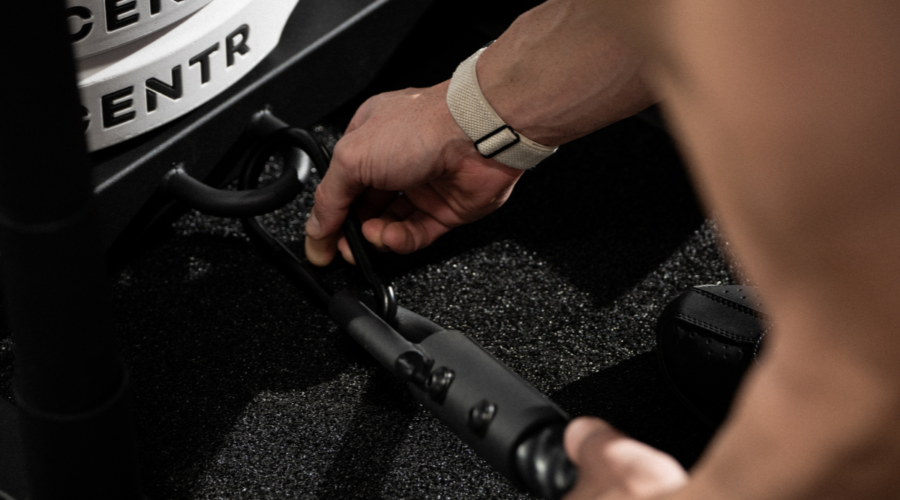


HYROX is a unique test of strength and endurance. It combines running with functional workouts that place a heavy demand on the posterior chain, especially the back. From sled pulls to farmers carries and wall balls, a strong back is not optional. It is essential for performance, injury prevention, and efficiency.
The good news is that building a stronger back for HYROX does not require complicated programs or hours in the gym. A few focused strategies can deliver meaningful improvements if they are applied consistently and with intent.
Why Back Strength Matters in HYROX
Before diving into the hacks, it is important to understand why the back is so critical in HYROX.
The back is not just one muscle. It is a system that includes the lats, traps, rhomboids, erector spinae, and deeper stabilizers. These muscles work together to stabilize the spine, transfer force, and support posture under fatigue.
In HYROX, your back is heavily involved in:
- Sled pulls and pushes
- Farmers carries
- Rowing
- Burpee broad jumps
- Wall balls
Fatigue in the back often leads to compensations. These compensations increase injury risk and reduce efficiency. Research shows that spinal stability and posterior chain strength are strongly linked to improved performance and reduced injury rates in athletic populations.
A stronger back allows you to:
- Maintain posture under fatigue
- Transfer force more efficiently
- Reduce energy leaks during movement
- Protect your spine under load
With that foundation in mind, let’s get into the three hacks.
Hack 1: Train the Back Through Full Range Pulling Patterns
Why Full Range Pulling Matters
Many athletes train their back with partial movements or momentum driven reps. This limits muscle activation and reduces the transfer to real world tasks like sled pulling.
Research shows that training muscles through a full range of motion leads to greater hypertrophy and strength gains compared to partial range training. This is especially true for pulling movements where scapular control and shoulder extension are critical.
Full range pulling also improves joint health. It enhances mobility in the shoulder and thoracic spine, both of which are essential for efficient HYROX performance.
Key Movements to Prioritize
Focus on exercises that challenge the back through a complete movement pattern.
- Pull ups or assisted pull ups
- Lat pulldowns with controlled tempo
- Seated cable rows with full stretch and contraction
- Single arm dumbbell rows with full extension at the bottom
The key is not just the exercise selection. It is how you perform each rep.
How to Execute Properly
To get the most out of each rep:
- Start from a fully stretched position
- Initiate the movement by pulling the shoulder blades down and back
- Control the tempo on both the concentric and eccentric phases
- Avoid using momentum or swinging
Slowing down the eccentric phase has been shown to increase muscle activation and time under tension. This leads to greater strength and hypertrophy over time.
Practical Application for HYROX
A stronger and more coordinated pulling pattern directly improves sled pulls and rowing efficiency.

For example, during a sled pull, the lats play a key role in generating force. If your lats are weak or poorly coordinated, you will rely more on your arms and fatigue faster.
Sample Mini Session
You can add this to your weekly training:
- Pull ups: 3 sets of 6 to 10 reps
- Seated rows: 3 sets of 10 to 12 reps
- Lat pulldowns: 3 sets of 10 to 12 reps
Focus on quality over quantity. Rest 60 to 90 seconds between sets.
Hack 2: Build Isometric Strength for Postural Endurance
Why Isometric Strength Is Critical
HYROX is not just about producing force. It is about sustaining it under fatigue. This is where isometric strength comes in.
Isometric contractions occur when a muscle generates force without changing length. In HYROX, your back often works isometrically to stabilize the spine and maintain posture during movements like farmers carries and wall balls.
Research shows that isometric training improves muscular endurance and joint stability. It also enhances neuromuscular coordination, which is crucial for maintaining technique under fatigue.
The Role of Posture
Poor posture leads to energy leaks and increased strain on passive structures like ligaments and discs. Over time, this can result in pain or injury.
A strong back helps you maintain a neutral spine and optimal alignment. This reduces unnecessary stress and allows you to move more efficiently.
Key Isometric Exercises
Incorporate exercises that challenge your ability to hold strong positions.
- Plank variations
- Dead hangs
- Isometric rows
- Back extensions with hold at the top
These exercises train your back to resist fatigue and maintain stability.
How to Progress
Start with shorter holds and gradually increase duration.
- Beginner: 20 to 30 seconds
- Intermediate: 30 to 45 seconds
- Advanced: 45 to 60 seconds or more
You can also increase difficulty by adding load or instability.
Practical Application for HYROX
Consider the farmers carry. Your back must stay engaged to prevent rounding. If your isometric strength is lacking, your posture will collapse as fatigue sets in.
Improving isometric strength helps you:
- Maintain upright posture during carries
- Reduce lower back strain
- Improve breathing efficiency
Sample Mini Session
Add this after your main workout:
- Dead hang: 3 sets of 30 to 60 seconds
- Plank: 3 sets of 30 to 60 seconds
- Back extension hold: 3 sets of 20 to 40 seconds
Focus on maintaining perfect alignment.
Hack 3: Train the Posterior Chain as a System

Why Isolation Is Not Enough
The back does not work in isolation. It is part of the posterior chain, which includes the glutes and hamstrings.
Research consistently shows that coordinated activation of the posterior chain is essential for force production and injury prevention. Weakness in one area can lead to compensation in another.
For example, if your glutes are weak, your lower back may take on more load during movements like deadlifts or sled pushes.
Compound Movements Are Key
To build a strong posterior chain, prioritize compound exercises.
- Deadlifts
- Romanian deadlifts
- Hip thrusts
- Good mornings
These movements train the back in conjunction with the hips and legs.
The Importance of Technique
Proper technique ensures that the load is distributed correctly across the posterior chain.
Key cues:
- Keep a neutral spine
- Hinge at the hips, not the lower back
- Engage the core throughout the movement
- Drive through the heels
Research shows that proper hip hinge mechanics reduce spinal loading and improve force output.
Load and Volume Considerations
You do not need to lift extremely heavy to see benefits. Moderate loads with good form are highly effective.
Aim for:
- 3 to 4 sets
- 6 to 12 reps per set
Focus on controlled execution rather than maximal weight.
Practical Application for HYROX
A strong posterior chain improves performance in multiple events:
- Sled pushes become more efficient
- Running economy improves due to better force transfer
- Burpee broad jumps feel more powerful
Sample Mini Session
Include this once or twice per week:
- Romanian deadlift: 4 sets of 8 reps
- Hip thrust: 3 sets of 10 reps
- Good morning: 3 sets of 10 reps
Rest 90 seconds between sets.
Putting It All Together
These three hacks are simple but powerful when combined.
- Train full range pulling patterns to build strength and control
- Develop isometric strength to improve endurance and posture
- Strengthen the entire posterior chain for better force production
Consistency is the most important factor. You do not need a perfect program. You need to apply these principles regularly.
A well structured week might include:
- Two sessions focused on pulling strength
- Two sessions that include posterior chain work
- Short isometric sessions added to the end of workouts
Over time, you will notice improvements in both performance and resilience.
Common Mistakes to Avoid
Even with the right exercises, mistakes can limit progress.
Using Too Much Momentum
Swinging or jerking reduces muscle activation and increases injury risk. Focus on controlled movements.
Neglecting the Eccentric Phase
The lowering phase is critical for strength and hypertrophy. Do not rush it.
Ignoring Fatigue
Training to failure all the time can lead to poor technique. Leave one or two reps in reserve on most sets.
Skipping Warm Up
A proper warm up improves performance and reduces injury risk. Include mobility work for the shoulders and thoracic spine.
Recovery and Nutrition Considerations
Building a stronger back is not just about training. Recovery plays a key role.
Protein Intake
Adequate protein supports muscle repair and growth. Research suggests that active individuals benefit from higher protein intake compared to sedentary populations.

Sleep
Sleep is essential for recovery and performance. Poor sleep has been linked to reduced strength and increased injury risk.
Mobility Work
Regular mobility work helps maintain joint health and movement quality. Focus on the thoracic spine and shoulders.
Final Thoughts
A stronger back is one of the best investments you can make for HYROX performance. It improves efficiency, reduces injury risk, and helps you maintain form under fatigue.
The three hacks in this article are simple, practical, and backed by science. You do not need complicated routines or endless exercises. You need focused effort and consistency.
Apply these principles, track your progress, and adjust as needed. Over time, you will build a back that can handle the demands of HYROX and beyond.
Key Takeaways
| Hack | What to Do | Why It Works | HYROX Benefit |
|---|---|---|---|
| Full Range Pulling | Train pull ups, rows, and pulldowns with full stretch and control | Increases muscle activation and strength across full movement | Better sled pulls and rowing efficiency |
| Isometric Strength | Add planks, dead hangs, and static holds | Improves endurance and spinal stability | Maintains posture during carries and wall balls |
| Posterior Chain Training | Use deadlifts, hip hinges, and compound lifts | Enhances coordinated force production | Stronger pushes, better running economy |
References
- Aagaard, P., Simonsen, E.B., Andersen, J.L., Magnusson, P. and Dyhre Poulsen, P. (2002) ‘Increased rate of force development and neural drive of human skeletal muscle following resistance training’, Journal of Applied Physiology, 93(4), pp. 1318 to 1326.
- Behm, D.G., Drinkwater, E.J., Willardson, J.M. and Cowley, P.M. (2010) ‘The use of instability to train the core musculature’, Applied Physiology, Nutrition, and Metabolism, 35(1), pp. 91 to 108.
- McGill, S.M. (2007) ‘Low back disorders: Evidence based prevention and rehabilitation’, Human Kinetics, pp. 45 to 78.
- Schoenfeld, B.J. (2010) ‘The mechanisms of muscle hypertrophy and their application to resistance training’, Journal of Strength and Conditioning Research, 24(10), pp. 2857 to 2872.
- Schoenfeld, B.J. and Grgic, J. (2020) ‘Effects of range of motion on muscle development during resistance training interventions’, Sports Medicine, 50(1), pp. 169 to 180.