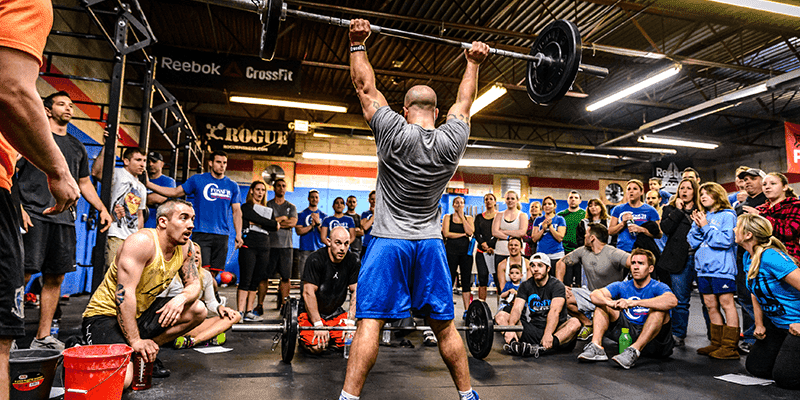
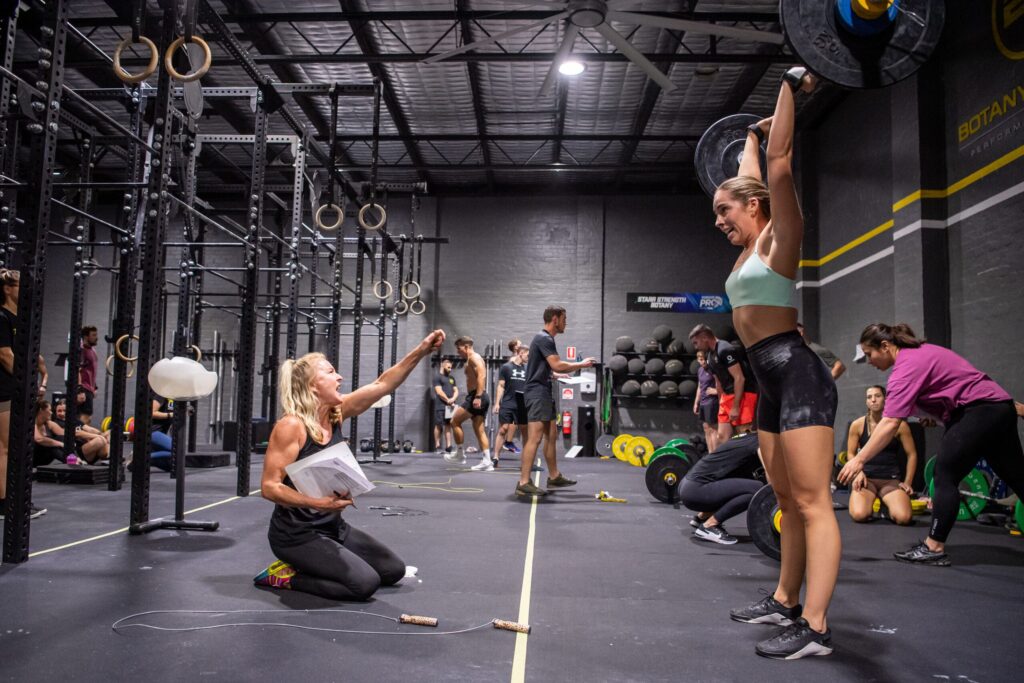
The CrossFit Open is one of the most exciting times of the year. It is also one of the most stressful.
For five weeks, athletes around the world repeat the same workouts, submit their scores, and compare themselves on a global leaderboard. Whether you are aiming for the Games or just trying to beat last year’s performance, the Open has a unique way of turning even the calmest athlete into a bundle of nerves.
Your heart rate climbs before the clock even starts. Your hands sweat. Your breathing feels shallow. Thoughts race: “What if I blow up?” “What if I no-rep?” “What if I finish last in my gym?”
This reaction is completely normal. It is also highly trainable.
Sports psychology research shows that how you interpret and regulate stress has a measurable impact on performance. The good news? You do not need complicated mental tricks. You need simple, evidence-based tools that you can practice before and during each Open workout.
Understanding What Is Happening: The Physiology of Nerves
Before we dive into the strategies, it helps to understand what nerves actually are.
When you step onto the competition floor, your body activates the sympathetic nervous system. Adrenaline and noradrenaline increase. Cortisol rises. Heart rate and blood pressure go up. Blood is redirected to working muscles. Reaction time improves.
This is your fight-or-flight response.
Research shows that acute stress responses can improve strength, power, and reaction speed in the short term. However, when stress becomes excessive, performance can deteriorate, especially in complex or skill-heavy tasks. This relationship is often described by the Yerkes-Dodson law, which suggests that performance increases with arousal up to a point, but declines when arousal becomes too high.

In CrossFit, where workouts often combine heavy lifts, gymnastics skill, pacing strategy, and pain tolerance, too much arousal can lead to rushed reps, technical errors, and poor pacing decisions.
Importantly, research also shows that how you interpret your physiological stress response matters. If you interpret a racing heart as “I am ready,” performance outcomes are better than if you interpret it as “I am panicking.”
That means your goal is not to eliminate nerves. It is to regulate and channel them.
Now let’s look at three proven strategies to do exactly that.
Tip 1: Control Your Breathing to Control Your Nervous System
Breathing is the fastest and most reliable way to influence your physiological state.
Why Breathing Works
Slow, controlled breathing stimulates the parasympathetic nervous system, particularly through vagal nerve activation. This reduces heart rate, lowers blood pressure, and helps bring your body back toward balance.
Research has shown that slow breathing techniques can increase heart rate variability (HRV), a marker of parasympathetic activity and stress resilience. Higher HRV is associated with better emotional regulation and improved performance under pressure.
Studies on athletes and military personnel demonstrate that paced breathing can reduce anxiety and improve marksmanship and fine motor performance under stress. Other research has shown that slow diaphragmatic breathing reduces cortisol and perceived stress levels.
In short, your breath is a performance lever.
How to Use Breathing Before an Open Workout
The most practical protocol is simple:
- Inhale through your nose for 4 seconds
- Pause for 1–2 seconds
- Exhale slowly through your mouth for 6–8 seconds
- Repeat for 2–5 minutes
The longer exhale is key. Extended exhalation enhances parasympathetic activation and helps lower heart rate more effectively than equal inhale-exhale patterns.
You can do this:
- During your warm-up
- Right before the clock starts
- Between sets during the workout
Breathing During the Workout
Breathing is not just for before the event. It is critical during it.
Under stress, many athletes shift to shallow chest breathing. This increases perceived exertion and contributes to early fatigue.
Research on respiratory muscle training shows that improving breathing efficiency can delay fatigue and reduce the sensation of breathlessness during high-intensity exercise.
During the Open:
- Focus on nasal breathing in early rounds when possible.
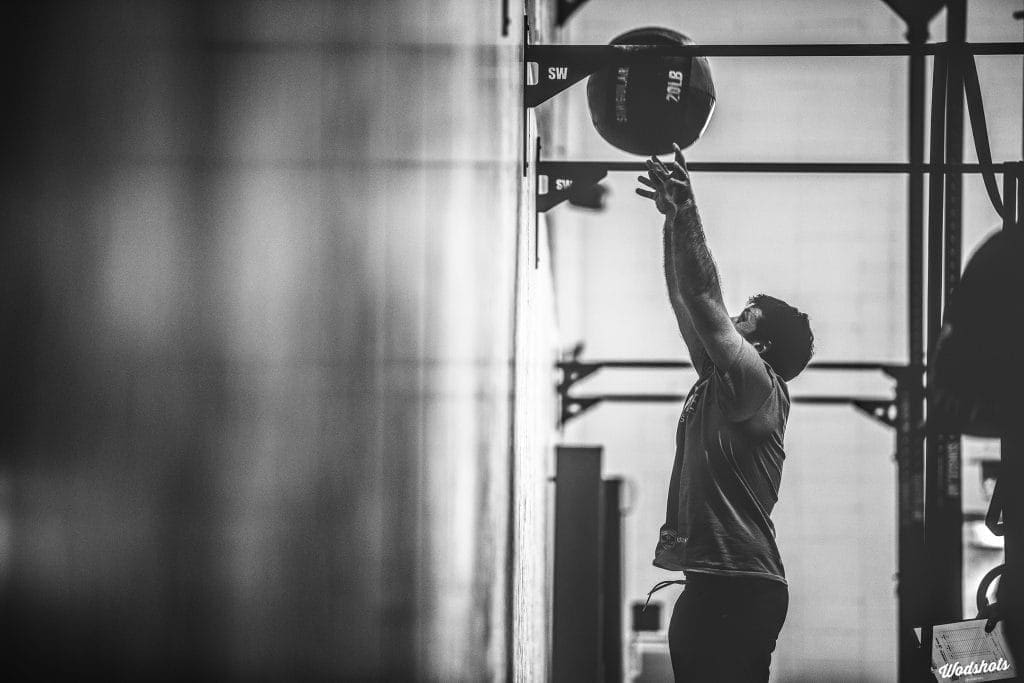
- Match your breath to movement during cyclical work (for example, one breath per wall ball).
- Between movements, take one deliberate slow exhale before picking up the bar or jumping to the rig.
That one slow breath can prevent panic pacing and technical breakdown.
Reframe the Sensation
When your heart is pounding before “3-2-1-Go,” remind yourself:
“This is my body preparing me to perform.”
Research on stress reappraisal shows that interpreting arousal as helpful rather than harmful improves performance in high-pressure situations.
Your elevated heart rate is not a weakness. It is fuel. Use breathing to steer it, not suppress it.
Tip 2: Build a Pre-Performance Routine That Locks You In
Elite athletes across sports rely on structured pre-performance routines. These routines reduce uncertainty, increase focus, and improve consistency.
In the Open, uncertainty is high. You do not know the workout until Thursday. You may only get one shot. Judges are watching. People are filming.
A consistent routine gives you something stable in an unstable environment.
The Science Behind Pre-Performance Routines
Research in sport psychology shows that pre-performance routines improve accuracy and consistency in sports ranging from golf to basketball to gymnastics.
These routines work by:
- Narrowing attentional focus
- Reducing cognitive load
- Enhancing automaticity
- Lowering anxiety
When anxiety increases, attention can become either too broad (distracted by everything) or too narrow (hyper-focused on one mistake). A structured routine helps maintain optimal attentional control.
Studies also show that routines enhance self-efficacy, or belief in one’s ability to perform. Higher self-efficacy is consistently associated with better performance outcomes in sport.
What a CrossFit Pre-Performance Routine Looks Like
Your routine does not need to be complicated. It should be short, repeatable, and specific.
Here is a simple framework:
- Physical cue
- Breathing sequence
- Performance cue
For example:
- Shake out arms and legs
- Two slow 4-in, 8-out breaths
- One simple cue word: “Smooth” or “Strong”
The key is repetition. Practice this routine in training sessions before hard workouts. Use it before mock Open attempts. Make it automatic.
By the time the Open arrives, your brain will associate this sequence with readiness and control.
The Power of Cue Words
Short cue words are powerful because they direct attention externally.
Research on attentional focus shows that an external focus (for example, “drive the floor away” during a deadlift) enhances motor performance more than an internal focus (for example, “extend your knees”).
During the Open, your cue words might be:
- “Tall” for wall balls
- “Snap” for cleans
- “Breathe” for burpees
- “Relax” for double-unders
Simple. Direct. Action-oriented.
Avoid outcome-focused cues like “Don’t fail” or “Don’t no-rep.” These increase anxiety and promote overthinking.
Your routine should shift you from worrying about results to executing the next rep.
Reduce Decision Fatigue
The Open already demands strategy decisions. Remove unnecessary choices.
- Wear familiar gear.
- Use the same warm-up structure each week.
- Eat foods you know work for you.
Decision fatigue is real. Research in cognitive psychology shows that repeated decision-making depletes mental resources and impairs performance on subsequent tasks.
Save your mental energy for the workout itself.
Tip 3: Reframe Pressure as a Challenge, Not a Threat
The way you interpret pressure fundamentally shapes your performance.
Two athletes can experience the same physiological arousal but perform very differently depending on their mindset.
The Challenge vs. Threat Response
Research on the biopsychosocial model of challenge and threat shows that when individuals perceive a situation as a challenge (resources exceed demands), their cardiovascular response is more adaptive. When they perceive it as a threat (demands exceed resources), performance tends to suffer.
A challenge state is associated with:
- Higher cardiac output
- Lower vascular resistance
- More efficient blood flow
A threat state is associated with:
- Constricted blood vessels
- Increased anxiety
- Reduced cognitive flexibility
In simple terms: challenge improves performance; threat undermines it.
How to Shift Into a Challenge Mindset
First, acknowledge that nerves mean the situation matters to you. That is not weakness. That is investment.
Second, take inventory of your resources:
- You have trained all year.
- You have completed similar workouts.
- You have survived worse pain in training.
- You have community support.
Research shows that reflecting on personal strengths before a stressful task increases confidence and performance.
Before each Open workout, ask:
“What skills and preparation do I bring into this?”
Make a short list. This shifts your focus from uncertainty to capability.
Normalize Discomfort
CrossFit is uncomfortable by design.

Studies on endurance performance demonstrate that perception of effort is a major limiter of output. Athletes who reinterpret discomfort as information rather than danger can sustain higher intensities.
Instead of thinking:
“This hurts, I need to slow down.”
Try:
“This sensation means I am working at the right intensity.”
This is not blind toughness. It is cognitive reframing.
Research on cognitive appraisal in sport shows that athletes who view stress as facilitative rather than debilitative perform better under pressure.
Pain in the Open is expected. It is not a sign that you are failing. It is a sign that you are competing.
Focus on Process, Not the Leaderboard
The leaderboard is psychologically powerful. It can also derail your performance.
Outcome fixation increases anxiety and reduces present-moment focus. Studies in sport psychology consistently show that process-oriented goals are more effective for performance than outcome-oriented goals.
Instead of:
“I need to finish in the top 10 percent.”
Use:
“I will keep transitions under five seconds.”
“I will break sets before failure.”
“I will breathe every rep on wall balls.”
Process goals are controllable. Outcomes are not fully controllable.
Control what you can.
Bonus: Use Simulation to Desensitize Nerves
One additional tool deserves mention: exposure.
Research on stress inoculation shows that repeated exposure to stress in controlled environments builds resilience.
If you only perform high-pressure workouts during the Open, your nervous system will treat them as rare threats.
Instead:
- Run mock Open workouts with a judge.
- Invite people to watch.
- Film yourself.
- Create time caps and public scoreboards in training.
The more familiar the stress feels, the less disruptive it becomes.
Studies on competitive anxiety indicate that athletes with more competition experience show lower somatic anxiety and greater emotional control.
Pressure is a skill. Train it.
Putting It All Together on Game Day
Here is how these strategies can work in a real Open scenario.
You arrive at the gym. The workout is a 12-minute AMRAP with gymnastics and moderate-weight barbell cycling.
Your heart rate is elevated.
Step one: breathe. Two to five minutes of slow, extended exhales.
Step two: run your routine. Shake out arms. Two breaths. Cue word: “Smooth.”
Step three: reframe. “This is a challenge. I have trained for this. I am ready.”
During the workout:
- Breathe deliberately in early rounds.
- Stick to your process goals.
- Between movements, one slow exhale before starting.
- When discomfort rises, interpret it as expected and manageable.
Afterward, regardless of the score, evaluate your execution, not your worth.
Performance fluctuates. Identity should not.
Final Thoughts
Nerves during the CrossFit Open are not a problem to eliminate. They are a signal that you care.
Science is clear: performance under pressure is not just about physical preparation. It is about regulating arousal, directing attention, and interpreting stress effectively.
To recap:
- Use slow, controlled breathing to regulate your nervous system.
- Develop a consistent pre-performance routine with clear cue words.
- Reframe pressure as a challenge and focus on process over outcome.
These are not hacks. They are trainable skills grounded in decades of research.
The Open will always bring adrenaline. That is part of what makes it special.
Your job is not to silence your nerves.
Your job is to lead them.
References
- Blascovich, J. and Mendes, W.B. (2000) ‘Challenge and threat appraisals: The role of affective cues’, Psychological Science, 11(6), pp. 429–433.
- Jones, G., Hanton, S. and Swain, A.B.J. (1994) ‘Intensity and interpretation of anxiety symptoms in elite and non-elite sports performers’, Personality and Individual Differences, 17(5), pp. 657–663.
- Lehrer, P.M. et al. (2000) ‘Respiratory sinus arrhythmia biofeedback therapy for asthma: A report of 20 unmedicated pediatric cases using the Smetankin method’, Applied Psychophysiology and Biofeedback, 25(3), pp. 193–200.
- Mesagno, C. and Mullane-Grant, T. (2010) ‘A comparison of different pre-performance routines as possible choking interventions’, Journal of Applied Sport Psychology, 22(3), pp. 343–360.
- Oudejans, R.R.D. and Pijpers, J.R. (2009) ‘Training with anxiety: Short- and long-term effects on police officers’ shooting behavior under pressure’, Cognitive Processing, 10(1), pp. 31–37.
- Park, S.H. and Thayer, J.F. (2014) ‘From the heart to the mind: Cardiac vagal tone modulates top-down and bottom-up visual perception and attention to emotional stimuli’, Frontiers in Psychology, 5, pp. 278.
- Renshaw, I., Davids, K., Shuttleworth, R. and Chow, J.Y. (2009) ‘Insights from ecological psychology and dynamical systems theory can underpin a philosophy of coaching’, International Journal of Sport Psychology, 40(4), pp. 580–602.