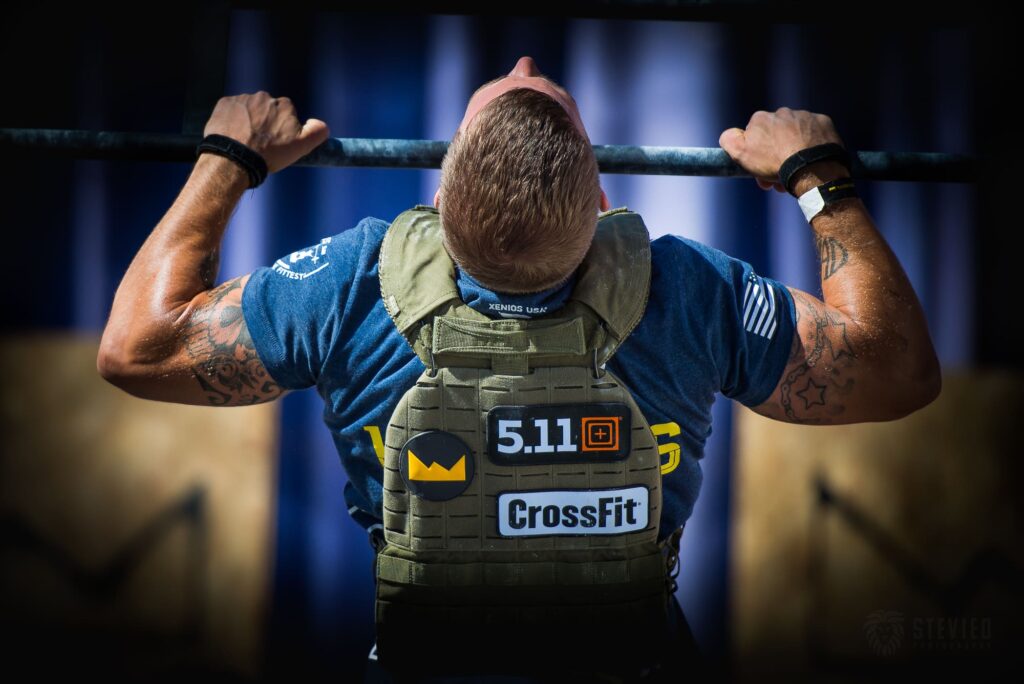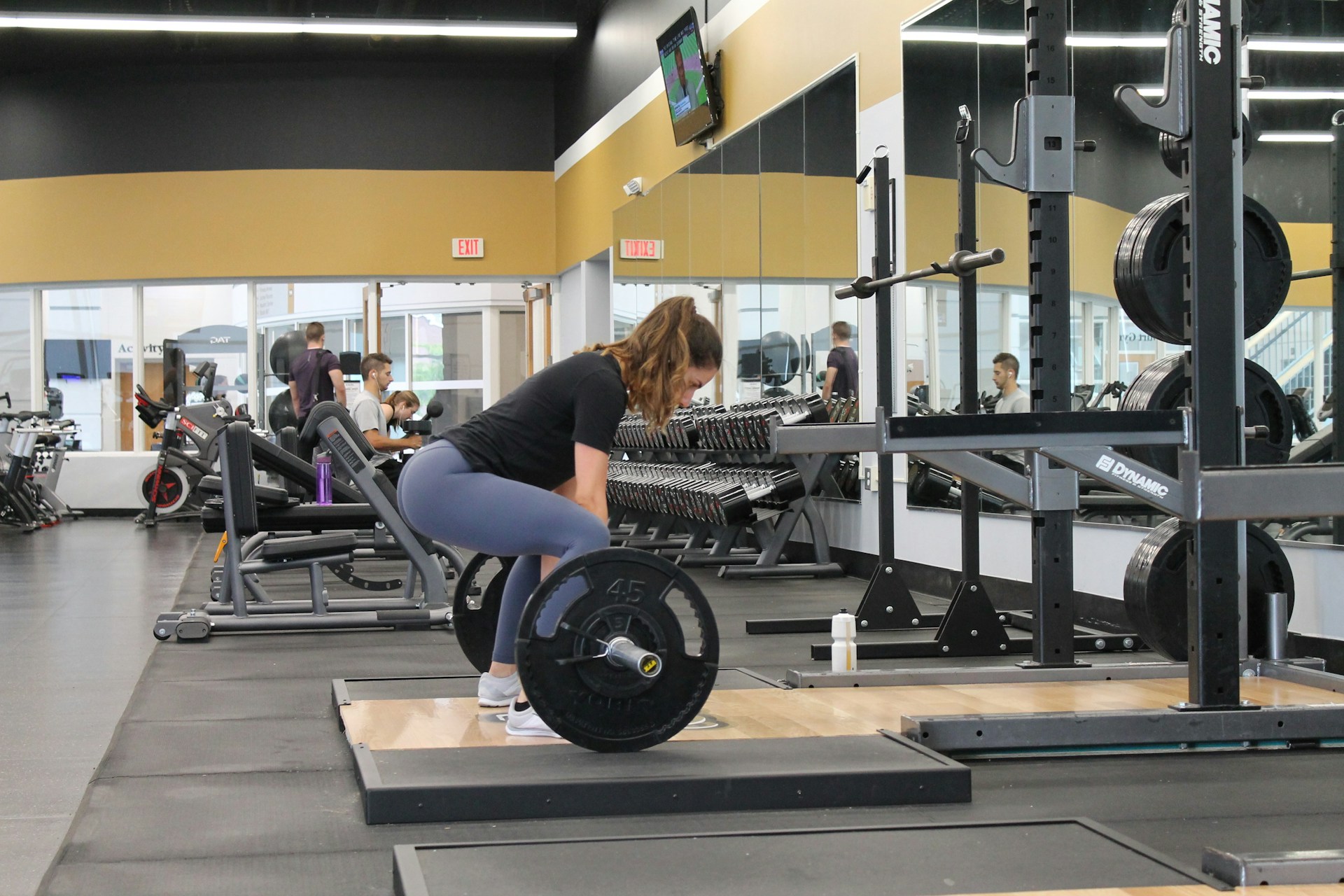


Hybrid training — combining strength work with endurance training — is one of the most rewarding approaches to fitness. You build muscle and strength while improving cardiovascular capacity, resilience, and overall work capacity. You can deadlift heavy and run far. You can handle intensity and duration. You become capable in multiple domains.
But hybrid training also comes with a unique challenge: motivation.
You are juggling different physical qualities, competing recovery demands, and sometimes conflicting goals. Strength gains can slow when mileage increases. Running performance can stall during hypertrophy phases. Fatigue accumulates. Progress is rarely linear.
Staying motivated in this environment requires more than hype. It requires understanding how human motivation works — and applying that science directly to your training structure.
Below are three science-backed strategies that will help you stay motivated for hybrid training long term. No fluff. Just evidence-based tools you can apply immediately.
Tip 1: Anchor Your Training in Autonomy, Competence, and Purpose
Motivation is not just about willpower. Decades of psychological research show that sustainable motivation depends on fulfilling three core psychological needs: autonomy, competence, and relatedness. This framework, known as Self-Determination Theory, has been extensively studied in sport and exercise settings.

When these needs are satisfied, motivation becomes more intrinsic. You train because you want to, not because you feel pressured.
Hybrid athletes often lose motivation when training feels chaotic, overwhelming, or externally driven. The solution is to deliberately structure your program so that it reinforces these three psychological drivers.
Autonomy: Choose the Structure That Fits Your Life
Autonomy means feeling that your actions are self-directed. Research consistently shows that autonomous motivation predicts higher exercise adherence, greater persistence, and better long-term outcomes.
If your hybrid program feels forced — copied blindly from someone else’s template — motivation fades quickly.
To increase autonomy:
- Decide which quality is your priority right now: strength, endurance, or equal balance.
- Choose conditioning modalities you genuinely enjoy (trail running, rowing, cycling, sled pushes).
- Structure your week around your schedule, not someone else’s.
Studies in exercise psychology show that individuals who perceive greater choice in their training experience higher intrinsic motivation and are more likely to stick with their program over time.
In hybrid training, this might mean alternating phases of emphasis. For example, eight weeks prioritizing aerobic base, followed by eight weeks emphasizing maximal strength. When you choose the focus intentionally, rather than reacting emotionally to short-term performance fluctuations, you maintain ownership.
Ownership fuels consistency.
Competence: Track the Right Metrics
Hybrid training can feel discouraging because improvements are not always obvious. Strength may plateau when mileage increases. Running pace may stagnate during a hypertrophy block.
Perceived competence — the feeling that you are improving — is a major predictor of continued exercise participation.
Research shows that progress feedback enhances intrinsic motivation and effort persistence. The key is tracking metrics that reflect your current training focus rather than expecting simultaneous peak progress in every quality.
Examples:
- During a strength-emphasis block, track bar speed, total volume, or technical improvements — not just one-rep maxes.
- During aerobic phases, track heart rate at a fixed pace or pace at a fixed heart rate.
- Monitor recovery markers like resting heart rate or perceived fatigue to reinforce smart decision-making.
Research on self-efficacy — your belief in your ability to succeed — shows that small, measurable wins increase confidence and long-term persistence. When hybrid athletes fail to define what “progress” looks like in a given phase, they feel stuck. When progress is clearly defined, motivation rises.
Competence is built, not assumed.
Purpose: Connect Training to Identity
Purpose extends beyond performance metrics. Why are you doing hybrid training?
Research in behavioral science shows that identity-based motivation is more durable than outcome-based motivation. Training to “run a faster 10K” is less powerful than training because you see yourself as a resilient, capable hybrid athlete.

Studies on exercise adherence show that when physical activity becomes part of a person’s identity, long-term commitment increases significantly.
Instead of asking, “Did I PR today?” ask:
- Am I becoming more well-rounded?
- Am I building long-term durability?
- Am I reinforcing the identity of someone who does hard things consistently?
Hybrid training is not about being the best powerlifter or the best marathoner. It is about expanding capacity. When that becomes part of your self-concept, motivation becomes more stable.
Tip 2: Build Habits, Not Just Goals
Motivation fluctuates. Habits reduce reliance on motivation.
One of the most consistent findings in behavioral science is that repeated behaviors in stable contexts become automatic over time. Habit formation research shows that automaticity increases gradually with consistent repetition, reducing the cognitive effort required to initiate a behavior.
Hybrid training demands consistency. You cannot rely on feeling motivated five or six days per week.
Instead of obsessing over distant outcomes, focus on making your training automatic.
Use Implementation Intentions
Implementation intentions are simple “if-then” plans that link a cue to an action. Research shows they significantly increase the likelihood of follow-through.
Examples:
- If it is 6 a.m., I put on my running shoes immediately.
- If I finish work, I go directly to the gym.
- If I miss a morning session, I perform a 20-minute minimum session in the evening.
This reduces decision fatigue. You do not debate whether to train. The cue triggers the behavior.
In hybrid training, decision fatigue can be amplified by complexity. “Should I lift or run today?” “Should I push through fatigue?” Pre-deciding your schedule removes friction.
Make Sessions Easier to Start
Research in behavioral economics shows that reducing friction increases adherence. The easier a behavior is to initiate, the more likely it is to occur.
Practical strategies:
- Prepare your gym bag the night before.
- Lay out your running gear in advance.
- Program your workout in your app before arriving at the gym.
These small environmental adjustments significantly increase consistency.
Hybrid training already demands energy. Do not waste mental bandwidth on avoidable decisions.
Focus on Streaks and Process Goals
Goal-setting research shows that process goals — focusing on behaviors you control — are more effective for sustained engagement than outcome-only goals.
Instead of:
- “I want to deadlift 500 pounds.”
- “I want to run a sub-40 10K.”
Use:
- “I complete all programmed sessions this week.”
- “I hit my target aerobic heart rate zone three times.”
Research on exercise adherence shows that consistency is the strongest predictor of long-term progress. A streak-based mindset reinforces consistency.
You are not chasing perfection. You are chasing repetition.
Expect Motivation Dips
A meta-analysis on self-control suggests that reliance on willpower alone is unreliable. Motivation fluctuates with stress, sleep, and life demands.
Hybrid athletes are particularly vulnerable to dips because total training volume is often higher.
Instead of interpreting a dip as failure, interpret it as normal physiology.
Build deload weeks.
Rotate intensity.
Schedule recovery days intentionally.
Studies on overreaching and recovery show that planned variation improves long-term adherence and performance. When fatigue accumulates without structured recovery, both performance and motivation decline.
Habit-based training combined with planned variation protects motivation from burnout.
Tip 3: Protect Enjoyment and Perceived Progress
Enjoyment is not a luxury. It is a predictor of long-term exercise behavior.
Research consistently shows that positive affect during exercise increases the likelihood of future participation. When sessions feel punishing every day, adherence drops.
Hybrid training can easily become excessively intense if every session is treated like a competition.
To stay motivated long term, you must manage intensity, perception, and progress strategically.
Keep Most Conditioning Truly Aerobic
Research in exercise psychology shows that perceived exertion strongly influences affective responses. When intensity is too high, enjoyment decreases.
Studies on endurance training indicate that moderate-intensity aerobic work is associated with more positive emotional responses compared to high-intensity intervals performed too frequently.
Hybrid athletes often sabotage motivation by turning every run into a time trial.
Instead:
- Keep most conditioning in a conversational zone.
- Reserve high-intensity intervals for 1–2 sessions per week.
- Monitor heart rate or RPE to stay controlled.
When aerobic work feels sustainable, you finish sessions feeling accomplished rather than drained.
That positive emotional association strengthens future motivation.
Use Strength Training to Reinforce Mastery
Resistance training has been shown to increase self-efficacy and perceived competence. Improvements in strength — even small ones — provide tangible evidence of progress.
Hybrid athletes should leverage this.
Even during endurance-emphasis phases:
- Maintain at least two structured strength sessions per week.
- Track volume or technique improvements.
- Celebrate non-maximal improvements.
Research shows that mastery experiences — successfully performing challenging tasks — are the most powerful source of self-efficacy.
Strength training offers frequent mastery opportunities. Use them intentionally to support overall motivation.
Manage Interference Expectations
Concurrent training research shows that combining strength and endurance can lead to some interference effects, particularly when high volumes are performed simultaneously.
If you expect maximal strength and maximal endurance to peak at the same time, frustration is inevitable.
Instead:
- Periodize emphasis.
- Separate high-intensity endurance and heavy lifting sessions when possible.
- Accept that trade-offs are part of the process.
Psychological research shows that unrealistic expectations reduce motivation. When expectations align with physiology, frustration decreases.

Hybrid training is about long-term capacity, not simultaneous specialization.
Train with Others When Possible
Relatedness — feeling connected to others — is another pillar of intrinsic motivation.
Group training environments and social support have been shown to improve exercise adherence and perceived enjoyment.
Hybrid athletes often train alone because of varied schedules. But even partial social exposure helps:
- Join a weekend long run group.
- Train heavy lifts with a partner.
- Share weekly goals with a community.
Research shows that social accountability increases consistency and effort.
You do not have to train every session with others. But strategic social reinforcement strengthens motivation.
Reframe Plateaus as Adaptation Phases
Performance plateaus are common in hybrid training due to accumulated fatigue and competing adaptations.
Studies on mindset suggest that individuals who view challenges as part of growth maintain higher persistence than those who interpret setbacks as personal failure.
Instead of:
“I am not improving.”
Try:
“My body is adapting to a new workload.”
Hybrid training produces slower, broader adaptations. You are building multiple systems at once.
When you reframe plateaus as part of the process, motivation remains stable.
Putting It All Together
Staying motivated for hybrid training is not about hype videos or discipline slogans. It is about designing your training environment around how human motivation actually works.
To recap:
- Build autonomy, competence, and purpose into your structure.
- Reduce reliance on willpower by building habits.
- Protect enjoyment and manage expectations.
Hybrid training is demanding. But it is also deeply rewarding.
You are not just training for performance. You are building resilience across multiple domains.
Motivation follows structure.
If you design the structure well, motivation becomes far easier to sustain.
References
- Bandura, A. (1997) Self-efficacy: Toward a unifying theory of behavioral change. Psychological Review, 84(2), pp. 191–215.
- Burke, S.M., Carron, A.V. and Eys, M.A. (2006) Physical activity context and social support: A review. International Review of Sport and Exercise Psychology, 1(1), pp. 1–21.
- Deci, E.L. and Ryan, R.M. (2000) The “what” and “why” of goal pursuits: Human needs and the self-determination of behavior. Psychological Inquiry, 11(4), pp. 227–268.
- Duckworth, A.L., Peterson, C., Matthews, M.D. and Kelly, D.R. (2007) Grit: Perseverance and passion for long-term goals. Journal of Personality and Social Psychology, 92(6), pp. 1087–1101.
- Ekkekakis, P. (2013) The measurement of affect, mood, and emotion during exercise: A guide for health-behavior research. International Review of Sport and Exercise Psychology, 6(1), pp. 73–100.