

Travel has a way of quietly dismantling even the most disciplined nutrition habits. Airports are designed around ultra-processed convenience foods, hotel breakfasts skew toward sugar and refined carbohydrates, and time zone changes disrupt hunger cues.
Add social pressure, alcohol, and irregular sleep, and it is no surprise that many people return from trips feeling bloated, tired, and “off.”
This does not mean healthy eating while traveling requires perfection or rigid food rules. Research consistently shows that flexibility, planning, and strategic choices are far more effective than restriction. The goal is not to eat “clean” at all times, but to minimize physiological stress, maintain energy, and return home without undoing months of progress.
This article outlines five evidence-based hacks that make healthy eating while traveling realistic, sustainable, and effective. Each strategy is grounded in nutrition science, metabolism research, and behavioral psychology, with practical applications you can use immediately.
Hack 1: Anchor Every Day With Protein and Fiber
Why Protein and Fiber Matter More When You Travel
Protein and fiber are the two most consistently supported dietary components for appetite control, metabolic health, and body composition. When routines break down during travel, these nutrients act as physiological anchors.

Protein increases satiety by stimulating hormones such as peptide YY and glucagon-like peptide-1 while suppressing ghrelin, the hormone that drives hunger. Controlled feeding studies repeatedly show that higher-protein meals reduce overall daily energy intake, even when calories are not consciously restricted (Weigle et al., 2005).
Fiber slows gastric emptying, blunts blood glucose spikes, and supports gut microbiota diversity. High-fiber diets are associated with improved insulin sensitivity and lower body weight across populations (Slavin, 2013).
When traveling, meals are often lower in both protein and fiber and higher in refined carbohydrates and fats. This combination promotes rapid blood sugar fluctuations, increased hunger, and overeating later in the day.
The “Anchor Meal” Concept
An anchor meal is a meal that reliably delivers sufficient protein and fiber regardless of location. Research on dietary consistency shows that stabilizing even one daily meal can improve overall nutrient intake and reduce decision fatigue (Raynor et al., 2012).
For most travelers, breakfast or the first meal of the day is the easiest anchor point. Even if later meals are unpredictable, starting the day with adequate protein and fiber improves appetite regulation for hours.

How Much Protein and Fiber Is Enough?
Evidence suggests that approximately 25–40 grams of protein per meal maximally stimulates muscle protein synthesis and satiety in adults (Moore et al., 2012). For fiber, daily intakes of at least 25 grams for women and 38 grams for men are associated with metabolic benefits, though most people fall well short (Slavin, 2013).
While traveling, hitting daily fiber targets may be difficult, but including at least 8–12 grams of fiber in your anchor meal meaningfully improves glycemic control and fullness.
Practical Travel-Friendly Protein and Fiber Sources
Research on dietary adherence emphasizes convenience as a primary determinant of food choices (Lappalainen et al., 2007). Portable, minimally processed options are most effective:
- Greek yogurt or skyr with nuts and berries
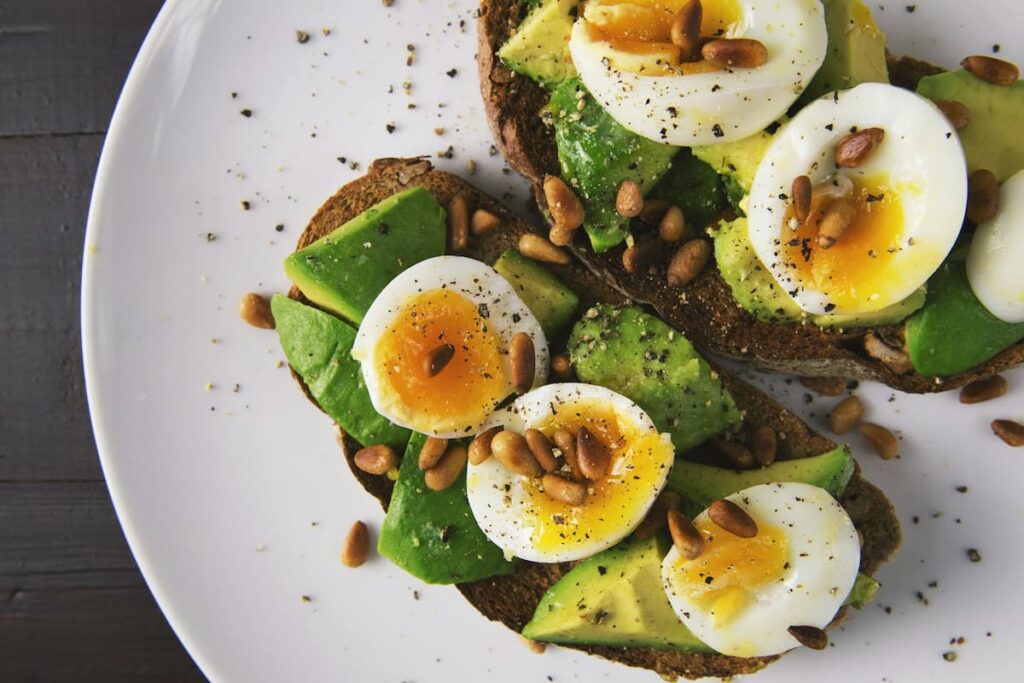
- Eggs with vegetables at hotel breakfasts
- Protein shakes paired with fruit
- Legume-based soups or salads
- Jerky paired with whole fruit
Even in airports, combining a protein source with a fiber-rich carbohydrate improves post-meal blood glucose compared to refined options alone (Wolever et al., 1995).
Why This Hack Works Long-Term
Rather than micromanaging every meal, anchoring the day with protein and fiber creates metabolic stability. This reduces cravings, improves energy, and lowers the likelihood of overeating later, even when food choices are limited or social meals are unavoidable.
Hack 2: Plan for “Good Enough,” Not Perfect
The Psychology of Dietary Perfectionism
Perfectionism is one of the strongest predictors of diet abandonment. Behavioral research shows that individuals who view dietary lapses as failures are more likely to overeat afterward, a phenomenon known as the “what-the-hell effect” (Polivy and Herman, 1985).

Travel creates unavoidable deviations from routine. Expecting perfect adherence increases cognitive stress and paradoxically worsens outcomes.
Flexible Restraint Beats Rigid Control
Nutrition psychology distinguishes between rigid and flexible dietary restraint. Rigid restraint involves strict rules and black-and-white thinking, while flexible restraint allows for adaptation. Multiple studies show that flexible restraint is associated with better long-term weight management and fewer binge-eating behaviors (Westenhoefer et al., 1999).
When traveling, flexible restraint is not a compromise; it is a strategy.
The “Minimum Effective Standard” Approach
Rather than aiming for ideal meals, define a minimum effective standard for eating while traveling. Research on habit formation suggests that lowering the activation energy of behaviors increases consistency (Lally et al., 2010).
A minimum standard might include:
- Including protein at every meal
- Eating at least one serving of fruits or vegetables daily
- Stopping when comfortably full
Meeting these criteria preserves metabolic health even if food quality is not optimal.
Evidence From Energy Balance Research
Short-term dietary deviations do not meaningfully impact body composition when overall energy balance is maintained. Studies on holiday weight gain show that most increases are small and reversible, provided normal habits resume afterward (Yanovski et al., 2000).
This means that strategic indulgence does not derail progress unless it becomes chronic.
Applying This Hack in Real Life
If dinner is pizza and drinks with colleagues, prioritize protein earlier in the day and eat mindfully at night. If breakfast options are limited to pastries, balance the day with higher-protein meals later.
Consistency over time matters more than precision on any single day.
Hack 3: Use Circadian Biology to Your Advantage
How Travel Disrupts Appetite Regulation
Travel often disrupts circadian rhythms, which regulate hunger hormones, glucose metabolism, and digestion. Circadian misalignment has been shown to impair insulin sensitivity and increase hunger independent of calorie intake (Scheer et al., 2009).
Jet lag, irregular meal timing, and late-night eating all contribute to metabolic dysregulation.
Meal Timing Matters More Than You Think
Emerging research in chrononutrition shows that when you eat may be nearly as important as what you eat. Studies consistently demonstrate that eating earlier in the day improves glucose control and lipid metabolism compared to late eating, even when calories are matched (Sutton et al., 2018).
Late-night meals are associated with higher postprandial glucose and reduced fat oxidation, which can contribute to fat gain over time (McHill et al., 2017).
Practical Meal Timing Strategies While Traveling
You do not need to fast or follow rigid schedules. Instead, focus on three evidence-based principles:
- Eat your largest meals earlier in the day when possible
- Avoid heavy meals within two to three hours of sleep
- Maintain consistent meal timing across days
Even partial alignment with these principles improves metabolic markers.
Managing Jet Lag and Time Zone Changes
Studies on circadian adaptation suggest that meal timing is a powerful cue for resetting biological clocks (Johnston, 2014). Eating according to local daytime hours helps synchronize peripheral clocks in the liver and gut.

Hydration, daylight exposure, and lighter evening meals further support circadian adjustment.
Why This Hack Protects Energy and Digestion
By aligning eating patterns with circadian biology, travelers experience fewer digestive issues, better energy levels, and more stable appetite control. This reduces reliance on snacks and ultra-processed foods driven by fatigue rather than hunger.
Hack 4: Build a Portable Nutrition Safety Net
The Role of Food Availability in Dietary Choices
Food choice is heavily influenced by availability and proximity. Classic behavioral studies show that people consume more calories when energy-dense foods are readily accessible (Wansink et al., 2006).
When traveling, the default environment promotes ultra-processed foods high in sugar, refined starch, and sodium. Having a personal safety net shifts the default.
What the Research Says About Ultra-Processed Foods
High intake of ultra-processed foods is associated with increased calorie consumption, weight gain, and cardiometabolic risk (Hall et al., 2019). These foods are engineered to maximize palatability while minimizing satiety.
Reducing exposure, even temporarily, improves appetite regulation.
The Most Effective Portable Nutrition Options
A safety net does not mean carrying full meals. Research on satiety shows that small protein- and fiber-rich snacks can meaningfully reduce hunger and improve meal choices later (Leidy et al., 2015).
Effective options include:
- Protein bars with moderate sugar
- Nuts and seeds
- Shelf-stable protein shakes
- Dried chickpeas or edamame
- Whole fruit
These foods reduce the likelihood of arriving at meals excessively hungry, which is a major driver of overeating.
Sodium, Bloating, and Travel
Travel foods are often high in sodium, contributing to water retention and bloating. While sodium does not cause fat gain, it can distort perceived weight changes and increase discomfort (He and MacGregor, 2009).
Balancing sodium intake with potassium-rich foods like fruits and vegetables supports fluid balance.
Why This Hack Works in Any Environment
By controlling even a small part of the food environment, travelers regain agency. This reduces stress, improves consistency, and supports better decision-making when options are limited.
Hack 5: Eat Mindfully, Especially During Social Meals
Mindless Eating Is the Hidden Problem of Travel
Social meals, buffets, and eating on the go increase distracted eating. Research shows that eating while distracted leads to higher calorie intake and reduced memory of the meal, increasing subsequent hunger (Higgs and Woodward, 2009).
Travel amplifies this effect through novelty and stimulation.
What Mindful Eating Really Means
Mindful eating is not slow eating for its own sake. It involves paying attention to hunger, fullness, taste, and satisfaction. Clinical trials show that mindful eating interventions reduce binge eating, emotional eating, and overall calorie intake without explicit restriction (Kristeller and Wolever, 2011).
Simple Mindfulness Cues That Actually Work

You do not need meditation or silence. Evidence-based cues include:
- Pausing before eating to assess hunger
- Eating without screens when possible
- Noticing when food stops tasting good
- Stopping at comfortable fullness
Even brief pauses improve satiety signaling.
Alcohol and Appetite Regulation
Alcohol consumption is common during travel and social events. Alcohol increases appetite and reduces inhibitory control, leading to higher calorie intake (Yeomans, 2010).
Strategies supported by research include alternating alcoholic drinks with water and eating protein-rich foods beforehand to blunt appetite stimulation.
Why This Hack Preserves Enjoyment Without Excess
Mindful eating allows enjoyment of local cuisine and social meals without overeating. It supports autonomy and satisfaction, which are critical for long-term adherence.
Bringing It All Together
Healthy eating while traveling does not require rigid rules or deprivation. The most effective strategies are grounded in physiology and behavior, not willpower. By anchoring meals with protein and fiber, planning for flexibility, aligning with circadian rhythms, building a portable safety net, and eating mindfully, travelers can maintain health, energy, and consistency in any environment.
These hacks are not temporary travel tricks. They are scalable habits that improve nutrition resilience for real life.
References
- Hall, K.D. et al. (2019) ‘Ultra-processed diets cause excess calorie intake and weight gain: An inpatient randomized controlled trial’, Cell Metabolism, 30(1), pp. 67–77.
- He, F.J. and MacGregor, G.A. (2009) ‘A comprehensive review on salt and health and current experience of worldwide salt reduction programmes’, Journal of Human Hypertension, 23(6), pp. 363–384.
- Higgs, S. and Woodward, M. (2009) ‘Television watching during lunch increases afternoon snack intake’, Appetite, 52(1), pp. 39–43.
- Johnston, J.D. (2014) ‘Physiological responses to food intake throughout the day’, Nutrition Research Reviews, 27(1), pp. 107–118.
- Kristeller, J.L. and Wolever, R.Q. (2011) ‘Mindfulness-based eating awareness training for treating binge eating disorder’, Eating Disorders, 19(1), pp. 49–61.
- Lally, P. et al. (2010) ‘How are habits formed: Modelling habit formation in the real world’, European Journal of Social Psychology, 40(6), pp. 998–1009.
- Lappalainen, R. et al. (2007) ‘Eating behaviour, weight loss and maintenance in obese adults’, Journal of Human Nutrition and Dietetics, 20(5), pp. 379–389.
- Leidy, H.J. et al. (2015) ‘The role of protein in weight loss and maintenance’, American Journal of Clinical Nutrition, 101(6), pp. 1320S–1329S.