


The muscle-up is one of the most iconic movements in CrossFit. It combines pulling strength, pushing strength, coordination, mobility, timing, and technical precision in a single explosive effort. Whether you are aiming to survive your first Open workout with muscle-ups or improve efficiency to shave seconds off your score, mastering this skill requires more than just “getting stronger.”
This article breaks down five science-backed tips to help you master muscle-ups safely and efficiently. Every recommendation is grounded in research on strength, power, motor learning, biomechanics, and injury prevention.
Let’s get to work.
Understanding the Muscle-Up: What the Science Says
Before jumping into the tips, it helps to understand what a muscle-up actually demands from your body.
The muscle-up consists of three distinct phases:
1. The Pull Phase
This is a powerful vertical or slightly arced pull. It relies heavily on the latissimus dorsi, biceps brachii, posterior deltoids, scapular retractors, and grip musculature. Electromyographic (EMG) research shows high activation of these muscles during pull-up variations (Youdas et al., 2010).

2. The Transition Phase
This is the most technical portion. It involves rotating the shoulders over the implement (bar or rings) while moving from a pull to a dip. It requires shoulder internal rotation, scapular control, and rapid force production. Poor technique here is often what causes athletes to “stall” below the bar.
3. The Dip Phase
Once above the implement, the athlete performs a straight bar dip or ring dip. This demands triceps strength, anterior deltoid engagement, and shoulder stability. Ring dips also place high stabilization demands on the rotator cuff and scapular musculature.
To succeed, you need:
- High relative strength (strength relative to bodyweight)
- Explosive pulling power
- Technical efficiency
- Shoulder mobility and stability
- Coordinated timing
Each of the five tips below addresses one or more of these components.
Tip 1: Build High Relative Pulling Strength First
If you cannot perform at least 8–12 strict pull-ups and several strict chest-to-bar pull-ups, you are trying to skip steps.
Why Relative Strength Matters
Relative strength is your strength compared to your body mass. Research shows that bodyweight exercises such as pull-ups depend heavily on relative strength, not just absolute force production (Beardsley and Contreras, 2014). The stronger you are per kilogram of bodyweight, the easier it becomes to move yourself explosively.
In addition, maximal strength is strongly associated with power output (Cormie, McGuigan and Newton, 2011). That means improving your strict pulling strength increases your potential to generate explosive pulling force during a muscle-up.
What the Research Tells Us
Heavy resistance training improves neural drive, motor unit recruitment, and rate of force development (RFD) (Aagaard et al., 2002). These adaptations are essential for transitioning from a strict pull-up to an explosive chest-to-bar or muscle-up pull.
If you cannot pull your chest to the bar under control, you likely lack the strength foundation needed for efficient muscle-ups.
Practical Strategy
Focus on:
- Weighted strict pull-ups (3–6 reps)
- Strict chest-to-bar pull-ups
- Tempo pull-ups (3–4 seconds down)
- Isometric holds at the top
Train heavy pulling strength 2 times per week. Use progressive overload, increasing load gradually over time. Schoenfeld et al. (2017) showed that a wide range of loading zones can build strength, but heavier loads are particularly effective for maximizing strength adaptations.
Benchmark Before Progressing
Aim for:
- 10–15 strict pull-ups
- 5+ strict chest-to-bar pull-ups
- 3–5 weighted pull-ups at 20–30% bodyweight
Without this base, muscle-ups become a technical gamble rather than a repeatable skill.
Tip 2: Train Explosive Pulling Power (Not Just Strength)
Once you have a strength base, the next step is turning that strength into speed.
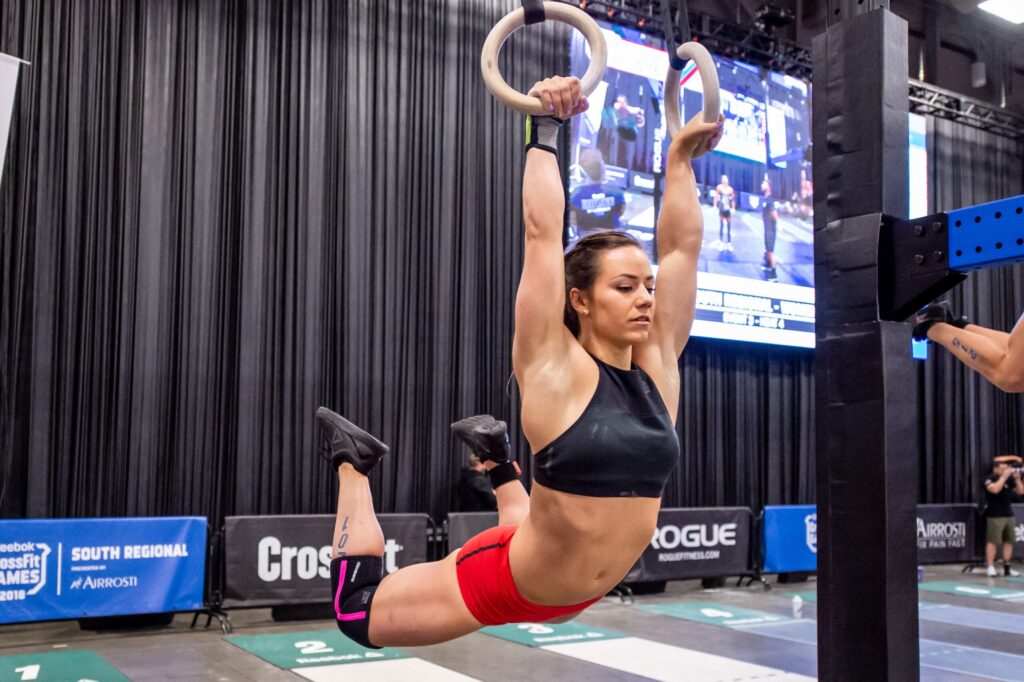
Power Is Force × Velocity
Muscle-ups require you to move your body upward quickly enough to clear the implement. That is a power demand. Research shows that training for maximal strength alone does not automatically optimize power output unless velocity-specific work is included (Cormie, McGuigan and Newton, 2011).
High-velocity movements improve rate of force development, which is critical in ballistic actions like kipping muscle-ups.
Why Rate of Force Development Matters
Rate of force development (RFD) refers to how quickly you can produce force. Aagaard et al. (2002) demonstrated that explosive resistance training significantly increases RFD through neural adaptations.
In practical terms, this means you can apply force faster — exactly what you need during the upward pull of a muscle-up.
Practical Strategy
Include:
- Banded chest-to-bar pull-ups
- Jumping chest-to-bar pull-ups (max height)
- High pulls to sternum
- Kipping drills emphasizing aggressive hip extension
For power work:
- Keep reps low (2–5 per set)
- Rest fully between sets
- Focus on maximal speed
Do not train power under fatigue. Research shows power output declines significantly with fatigue (Haff et al., 1997). Train explosive pulling at the beginning of your session when fresh.
Technical Cue
Think “pull to the hips” rather than “pull up.” This creates a more horizontal bar path, which is biomechanically advantageous for clearing the bar.
Tip 3: Master the Kip Through Motor Learning Principles
The kip is not cheating. It is a coordinated skill that transfers force from the hips to the upper body.
Muscle-Ups Are a Skill, Not Just a Strength Test
Motor learning research shows that skill acquisition depends on deliberate practice, repetition, and task-specific feedback (Schmidt and Lee, 2011). You cannot brute-force a muscle-up if you lack timing.
The kip requires:
- Coordinated hip extension
- Efficient arch-to-hollow swing
- Proper sequencing of pull and hip drive
Why Coordination Matters
Complex skills rely on intermuscular coordination — the ability of different muscles to activate in a precise sequence. Strength training alone does not automatically optimize coordination (Behm and Sale, 1993).
This is why athletes with high pull-up strength sometimes still fail to complete muscle-ups.
Practical Strategy
Break the skill down:
Arch and Hollow Swings
Practice controlled swings focusing on rhythm and tension. Maintain active shoulders at all times.
Hip Pop Timing
Drill the transition between hollow and aggressive hip extension.
Low Bar Muscle-Ups
Use a low bar to practice fast turnover without fear.
Research on contextual interference suggests that varying practice conditions improves long-term retention (Brady, 2004). Practice muscle-ups in different contexts: fresh, light fatigue, after light conditioning, and within short intervals.
Use External Focus Cues
Studies show that external focus cues (such as “drive hips to the bar”) improve motor performance more effectively than internal cues (Wulf, 2013). Avoid overthinking muscle activation. Focus on movement outcome.
Tip 4: Improve Shoulder Mobility and Stability to Avoid the “Sticking Point”
Many failed muscle-ups are not strength failures. They are mobility restrictions or poor shoulder mechanics.
The Shoulder Demands of Muscle-Ups
The transition phase requires deep shoulder flexion and internal rotation under load. Limited mobility increases compensations and stress on passive structures.
Research shows that restricted shoulder mobility can alter movement patterns and increase injury risk (Laudner et al., 2014).
Stability Is Just as Important
The shoulder joint is inherently unstable. It depends heavily on rotator cuff and scapular stabilizers for control (Reinold and Wilk, 2009).
In ring muscle-ups especially, instability increases muscular demand.
Practical Strategy
Include:
- Scapular pull-ups
- Ring support holds
- External rotation strengthening
- Thoracic spine mobility drills
Strengthening the rotator cuff improves dynamic stability (Reinold and Wilk, 2009). Add controlled external rotations and face pulls 2–3 times per week.
Address Thoracic Mobility
Limited thoracic extension restricts overhead mechanics. Thoracic mobility work can improve shoulder function (Laudner et al., 2014).
Spend 5–10 minutes per session on:
- Foam rolling thoracic spine
- Extension drills over a roller
- Controlled wall slides
Mobility alone is not enough. It must be paired with strength in the new range.
Tip 5: Optimize Body Composition and Energy System Efficiency
This tip is often ignored, but it may be the fastest way to improve muscle-ups.
Body Mass Directly Affects Performance
In bodyweight movements, every kilogram matters. Research consistently shows that relative strength determines performance in pull-ups and similar tasks (Beardsley and Contreras, 2014).
If you increase strength without increasing body mass, your muscle-up performance improves significantly.
Lean Mass vs. Non-Functional Mass
Excess non-functional mass increases the load you must move. A modest reduction in body fat — without compromising strength — improves relative strength.
Strength training combined with adequate protein intake preserves lean mass during mild caloric deficits (Helms et al., 2014).
Energy System Considerations for the Open
The CrossFit Open often demands repeated muscle-ups under fatigue.
High-intensity interval training improves both aerobic capacity and repeated high-intensity performance (Gibala et al., 2012). Improving aerobic efficiency helps you recover faster between muscle-up sets.

Practical Strategy
- Maintain protein intake around 1.6–2.2 g/kg/day (Morton et al., 2018).
- Include interval conditioning 2–3 times per week.
- Practice muscle-ups in small sets under moderate fatigue.
Do not crash diet. Rapid weight loss reduces strength and power output (Fogelholm, 1994). Aim for gradual, sustainable body composition changes.
Putting It All Together: A Simple Weekly Framework
Here is a practical structure you can follow:
Day 1 – Strength Focus
- Weighted pull-ups
- Strict chest-to-bar
- Ring dips
- Rotator cuff work
Day 2 – Power and Skill
- Banded chest-to-bar
- Kipping drills
- Low bar muscle-ups
- Short conditioning piece
Day 3 – Mixed Conditioning
- Interval training
- Small sets of muscle-ups under fatigue
- Mobility work
Consistency is more important than complexity.
Common Mistakes to Avoid
Skipping Strict Strength
Without strict strength, kipping becomes inefficient and risky.
Training Muscle-Ups Only When Fatigued
Skill quality decreases under heavy fatigue. Early-phase learning requires high-quality reps (Schmidt and Lee, 2011).
Ignoring Shoulder Health
Overuse injuries are common in high-volume pull-up training. Balanced strengthening reduces injury risk (Reinold and Wilk, 2009).
Chasing Volume Instead of Quality
Ten ugly muscle-ups reinforce bad patterns. Five crisp reps build skill.
Final Thoughts
Mastering muscle-ups before the 2026 CrossFit Open is realistic if you approach the movement intelligently.
Build relative pulling strength.
Develop explosive power.
Refine the kip using motor learning principles.
Protect and strengthen your shoulders.
Optimize body composition and conditioning.
The muscle-up is not a mystery. It is a trainable combination of strength, power, coordination, and structure.
By the time the Open arrives, muscle-ups will no longer feel like a barrier — they will feel like an advantage.
References
- Aagaard, P., Simonsen, E.B., Andersen, J.L., Magnusson, P. and Dyhre-Poulsen, P. (2002) ‘Increased rate of force development and neural drive of human skeletal muscle following resistance training’, Journal of Applied Physiology, 93(4), pp. 1318–1326.
- Beardsley, C. and Contreras, B. (2014) ‘The role of muscular strength in conditioning for athletes’, Strength and Conditioning Journal, 36(6), pp. 87–92.
- Behm, D.G. and Sale, D.G. (1993) ‘Velocity specificity of resistance training’, Sports Medicine, 15(6), pp. 374–388.
- Brady, F. (2004) ‘Contextual interference: A meta-analytic study’, Perceptual and Motor Skills, 99(1), pp. 116–126.
- Cormie, P., McGuigan, M.R. and Newton, R.U. (2011) ‘Developing maximal neuromuscular power: Part 1’, Sports Medicine, 41(1), pp. 17–38.
- Fogelholm, M. (1994) ‘Effects of bodyweight reduction on sports performance’, Sports Medicine, 18(4), pp. 249–267.