

American football is one of the most physically demanding sports in the world. Success depends on far more than raw strength in the weight room. Players must express force rapidly, in multiple directions, under fatigue, while reacting to unpredictable opponents. This is where functional strength matters.
Functional strength refers to the ability to produce, transfer, and absorb force in sport-specific movement patterns. For football players, this includes sprinting, blocking, tackling, changing direction, and maintaining posture under contact.
Research consistently shows that athletes who train for strength in ways that reflect real-game demands improve performance and reduce injury risk more effectively than those who rely on isolated or machine-based training alone.
This article outlines five science-backed strategies to enhance functional strength specifically for American football. Each tip is grounded in peer-reviewed research and applied sport science, with clear explanations and practical implications for players and coaches at every level.
1. Prioritize Multi-Joint, Compound Strength Training

Why Compound Movements Matter in Football
Football movements are whole-body actions. Blocking, tackling, sprinting, and cutting all require coordinated force production across the hips, knees, ankles, trunk, and upper body. Compound lifts such as squats, deadlifts, presses, and pulls train multiple joints and muscle groups simultaneously, making them highly transferable to sport.
Research shows that multi-joint exercises lead to greater improvements in overall strength, power, and neuromuscular coordination compared to single-joint movements. These adaptations are critical for football players, who rarely use isolated muscles in competition.
Evidence Supporting Compound Strength Training
Studies comparing multi-joint and single-joint training demonstrate superior gains in strength and athletic performance when compound movements form the foundation of a program. This is largely due to higher motor unit recruitment and greater mechanical loading across the body.
Heavy compound lifts also stimulate greater hormonal responses, including increases in testosterone and growth hormone, which support muscle hypertrophy and strength development. While hormones are not the sole driver of adaptation, they contribute to the overall training effect when combined with progressive overload.
Additionally, compound lifts improve intermuscular coordination, meaning muscles learn to work together more efficiently. This coordination is essential for transferring force from the ground through the body, a key determinant of sprint speed and collision performance in football.
Practical Application for Football Players
To enhance functional strength, players should prioritize compound lifts that closely resemble football movement patterns. These include:
Back and front squats for lower-body force production
Deadlifts and trap bar deadlifts for hip extension strength
Bench presses and push variations for upper-body pushing power
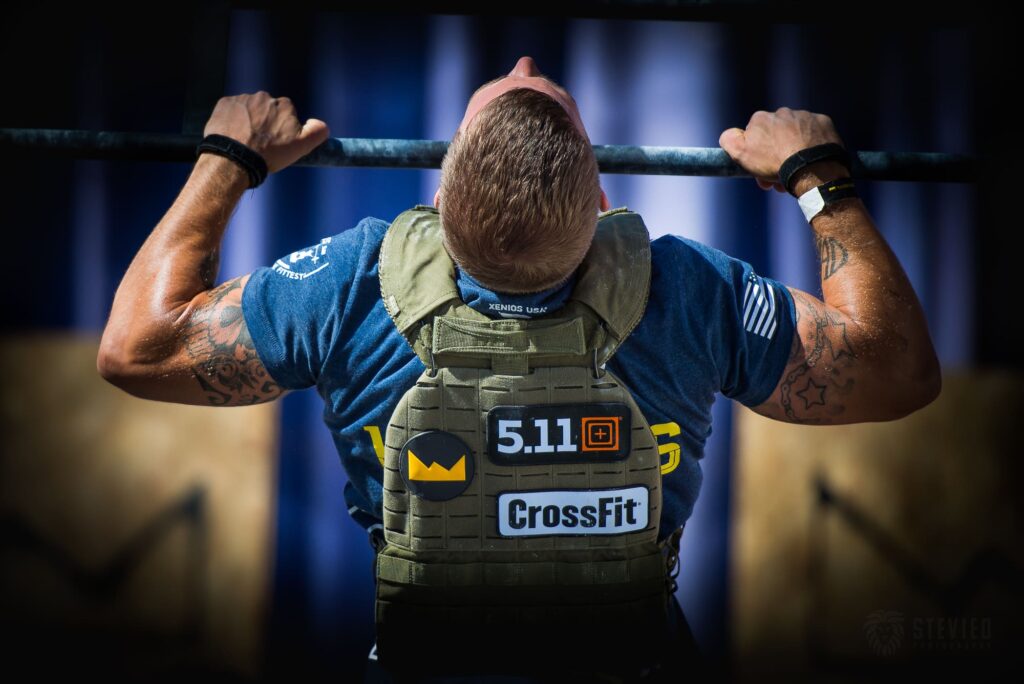
Rows and pull-ups for upper-body pulling strength and shoulder stability
Accessory exercises can support these lifts, but they should not replace them. Research suggests that spending the majority of training volume on compound movements yields the greatest return for athletic performance.
2. Develop Force Through the Hips and Posterior Chain
The Role of the Posterior Chain in Football Performance
The posterior chain includes the glutes, hamstrings, spinal erectors, and associated musculature. These muscles are the primary drivers of sprinting speed, jumping ability, and collision force. In football, nearly every explosive action begins with powerful hip extension.

Weaknesses in the posterior chain are linked to reduced performance and increased injury risk, particularly hamstring strains and lower back issues. Strengthening this area is therefore critical for both performance and durability.
Scientific Evidence on Hip-Dominant Strength
Biomechanical studies of sprinting and tackling consistently show that peak force production occurs at the hip joint. Athletes who can generate greater hip extension torque accelerate faster and maintain higher sprint velocities.
Resistance training programs emphasizing hip-dominant exercises have been shown to improve sprint performance, change-of-direction ability, and vertical jump height. These improvements are not limited to elite athletes; similar benefits are observed in collegiate and high school players.
Furthermore, research indicates that balanced strength between the quadriceps and hamstrings reduces the risk of non-contact lower-body injuries. Posterior chain training plays a central role in achieving this balance.
Practical Application for Football Players
Football-specific posterior chain training should include both bilateral and unilateral exercises, performed through full ranges of motion. Effective options include:
Romanian deadlifts to target eccentric hamstring strength
Hip thrusts to maximize glute activation and horizontal force production
Good mornings for integrated hip and trunk strength
Single-leg deadlifts and split squats for unilateral control and balance
Training loads should progress gradually, with an emphasis on technical execution. Research supports moderate to heavy loading for maximal strength development, combined with controlled eccentric phases to enhance tissue resilience.
3. Train Rotational and Anti-Rotational Core Strength
Why the Core Is More Than Just Abs
In football, the core functions as a force transfer system rather than a simple flexion mechanism. Whether delivering a block, absorbing a tackle, or throwing the ball, players must stabilize and rotate through the trunk while maintaining posture and balance.
Traditional sit-ups and crunches do not adequately prepare athletes for these demands. Instead, functional core strength involves resisting unwanted motion and producing controlled rotation under load.
Scientific Support for Functional Core Training
Research in sports biomechanics shows that trunk stability is strongly associated with lower-body force output. Athletes with stronger core musculature can transmit force more efficiently from the legs to the upper body, resulting in improved sprinting and throwing performance.
Studies also demonstrate that anti-rotational training improves spinal stability and reduces the incidence of lower back pain in athletes. This is particularly relevant in football, where repeated contact places significant stress on the spine.
Rotational power training has been shown to enhance performance in sports requiring rapid changes of direction and forceful torso rotation. While football is not purely rotational, many actions involve resisting or producing rotation against an opponent.
Practical Application for Football Players
Core training for functional strength should emphasize stability, rotation, and anti-rotation. Effective exercises include:
Pallof presses for anti-rotational stability
Cable chops and lifts for controlled rotational strength
Loaded carries to challenge trunk stability under fatigue
Medicine ball throws for explosive rotational power
These exercises should be performed with intent and control. Research suggests that quality of movement is more important than high repetition counts when training the core for athletic performance.
Modern football performance is increasingly shaped by data, probabilities, and pattern recognition – not only in training and coaching, but also in how the sport is analyzed and followed off the field.
The same principles used to evaluate functional strength, force transfer, and game-speed execution are often applied to understanding matchups, tendencies, and outcomes. For readers interested in this broader analytical side of the sport, including how performance trends translate into predictive models, platforms focused on online sports betting offer insight into how data-driven evaluation extends beyond training and into the competitive landscape of football.
4. Integrate Strength and Power Through Velocity-Based Training

The Importance of Strength-Speed Transfer
Maximal strength alone does not guarantee improved football performance. Players must be able to express strength quickly, often within milliseconds. This ability is referred to as rate of force development and is a key determinant of explosive performance.
Velocity-based training focuses on moving loads at specific speeds to target different points on the force-velocity curve. This approach helps bridge the gap between slow, heavy lifting and fast, explosive actions on the field.
Scientific Evidence for Velocity-Based Training
Research shows that training across a range of loads and velocities leads to superior improvements in power output compared to training at a single intensity. Heavy loads improve maximal force, while lighter loads moved quickly enhance speed and explosiveness.
Studies in team sport athletes demonstrate that combining heavy strength training with explosive movements such as jumps and Olympic lift derivatives results in greater improvements in sprint speed and jump performance than either method alone.
Velocity-based feedback has also been shown to improve training quality by ensuring athletes move loads with maximal intent. Even without specialized technology, focusing on bar speed and explosive execution produces similar benefits.
Practical Application for Football Players
Football players should integrate both heavy and explosive work within their training programs. Examples include:
Heavy squats paired with jump squats or broad jumps
Trap bar deadlifts followed by short sprints
Bench presses combined with medicine ball chest passes
This approach, often referred to as contrast or complex training, is supported by research on post-activation performance enhancement. Proper rest between sets is essential to realize these benefits.
5. Build Functional Strength Through Unilateral and Asymmetrical Training
Why Unilateral Strength Matters in Football
Football is rarely symmetrical. Players cut, sprint, block, and tackle from staggered stances and uneven positions. Unilateral strength training addresses side-to-side imbalances and improves stability in single-leg or offset positions.
Asymmetries in strength and movement have been linked to reduced performance and higher injury risk. Addressing these asymmetries enhances force production and control during game-specific actions.
Scientific Evidence Supporting Unilateral Training
Research comparing bilateral and unilateral training shows that unilateral exercises improve balance, coordination, and joint stability more effectively. These adaptations translate to improved change-of-direction performance and reduced injury risk.
Unilateral training also produces a phenomenon known as the bilateral deficit, where training one limb at a time can increase overall force output by improving neural efficiency. This is particularly beneficial for athletes who rely on rapid force production from staggered stances.
Studies in football and rugby players indicate that incorporating unilateral exercises leads to improvements in sprint acceleration and agility, key performance markers in the sport.
Practical Application for Football Players
Unilateral and asymmetrical exercises should complement, not replace, bilateral lifting. Effective options include:
Split squats and lunges for single-leg strength
Single-arm presses and rows for upper-body asymmetry
Lateral lunges for frontal plane strength
Offset carries to challenge trunk and hip stability
Load selection should allow for proper control and balance. Research emphasizes that unilateral training is most effective when performed with intentional tempo and full ranges of motion.
Bibliography
- Baker, D. (2001) ‘A series of studies on the training of high-intensity muscle power in rugby league football players’, Journal of Strength and Conditioning Research, 15(2), pp. 198–209.
- Behm, D.G. and Anderson, K. (2006) ‘The role of instability with resistance training’, Journal of Strength and Conditioning Research, 20(3), pp. 716–722.
- Cormie, P., McGuigan, M.R. and Newton, R.U. (2011) ‘Developing maximal neuromuscular power: Part 1’, Sports Medicine, 41(1), pp. 17–38.
- Cormie, P., McGuigan, M.R. and Newton, R.U. (2011) ‘Developing maximal neuromuscular power: Part 2’, Sports Medicine, 41(2), pp. 125–146.
- Escamilla, R.F. et al. (2000) ‘Biomechanics of the squat exercise’, Medicine and Science in Sports and Exercise, 32(1), pp. 127–141.