

When it comes to building muscle, the debate between free weights and machines is a prevalent one among fitness enthusiasts and professionals alike. Both methods are widely used in gyms around the world and each has its own advantages and potential drawbacks.
To help you make an informed decision, this article explores the benefits and limitations of free weights and machines, examining scientific studies to understand which might be more effective for muscle growth and strength gains.
Understanding Free Weights and Machines
What Are Free Weights?
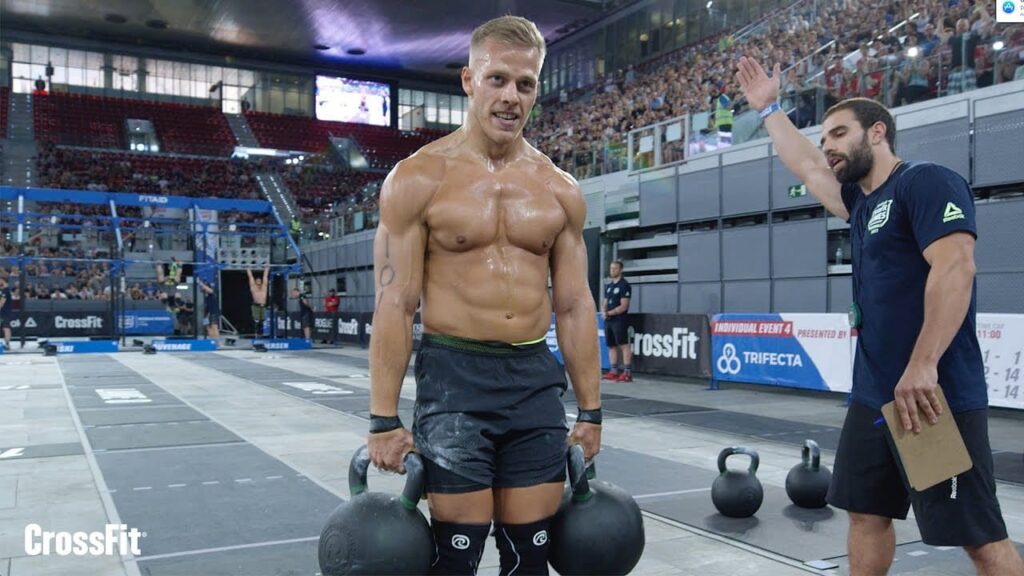
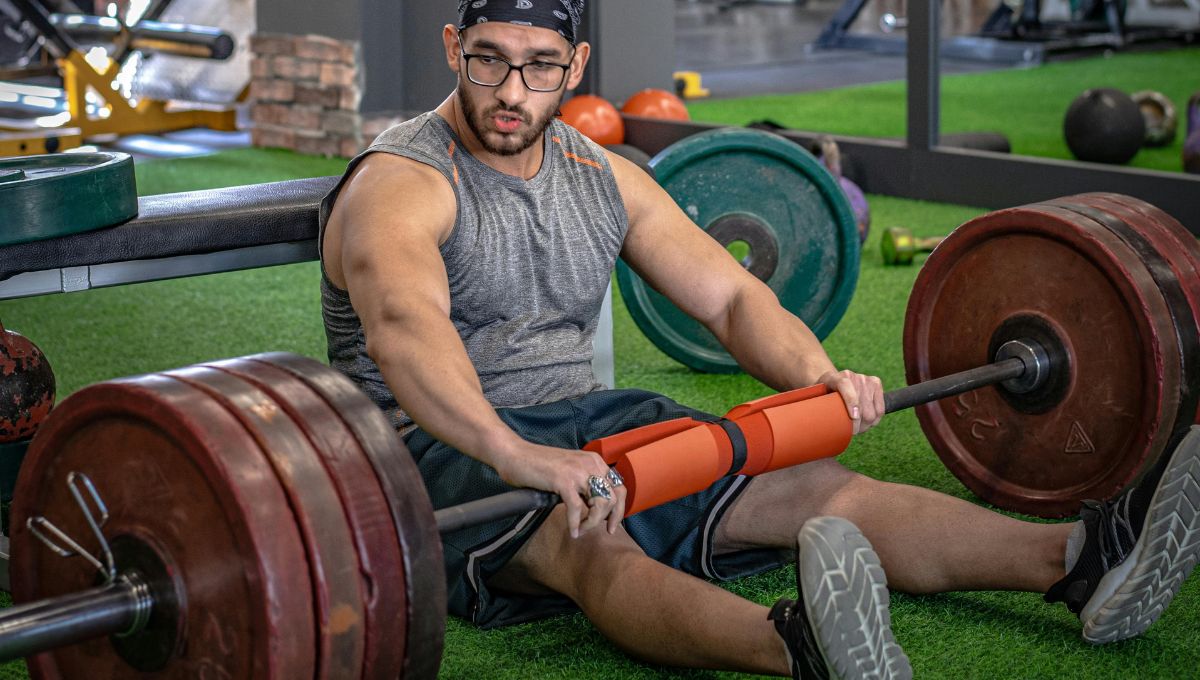
Free weights are exercise equipment that requires the user to support and balance the weight without external assistance. Common examples include dumbbells, barbells, kettlebells, and weighted plates. Because they are not attached to a machine or a fixed path, free weights allow for a greater range of motion, activating a wider variety of muscles.
What Are Machines?
Machines, on the other hand, are typically larger pieces of equipment that control the movement path of an exercise, often using cables, pulleys, and levers. Common examples are the chest press machine, leg extension machine, and lat pulldown machine. Machines are generally easier to use for beginners as they provide a controlled motion, which can prevent improper technique and injury.
Benefits of Free Weights
1. Greater Muscle Activation
Studies have shown that free weights activate more muscle fibres than machines due to the balance and stabilisation required. For example, a study published in the Journal of Strength and Conditioning Research found that exercises performed with free weights (such as the squat) led to significantly greater activation of stabiliser muscles in the lower body compared to similar exercises performed on machines (Schwanbeck et al., 2009). This increased muscle activation can potentially lead to more substantial muscle growth over time.
2. Functional Strength Gains
Free weights are considered more effective for developing functional strength—strength that translates to real-life movements. Exercises like the deadlift, squat, and overhead press not only improve muscular strength but also enhance core stability, coordination, and balance. Research from the European Journal of Applied Physiology indicates that free-weight training improves functional strength better than machine training, especially in multi-joint movements (Alegre et al., 2006).

3. Greater Range of Motion
Free weights provide the flexibility to move through a full range of motion. By allowing unrestricted movement, they engage muscles through the full contraction cycle. This maximises the stretch-shortening cycle and leads to more effective hypertrophy. A study from Sports Medicine highlighted that training with free weights allows for a full range of motion, which can be critical for muscle hypertrophy in major muscle groups (Wernbom et al., 2007).
4. Versatility and Variety
Free weights enable a wide variety of exercises with minimal equipment. With a set of dumbbells or a barbell, users can perform a comprehensive full-body workout, which makes free weights more adaptable for personalised training programmes. Additionally, free weights can be used in compound movements like squats, deadlifts, and bench presses, which engage multiple muscle groups and can enhance overall muscle growth and caloric expenditure.

5. Improved Balance and Stability
The use of free weights demands balance and coordination, requiring engagement of smaller stabiliser muscles that support larger muscle groups. Research in the Journal of Sports Science and Medicine emphasises that exercises involving balance, such as those done with free weights, can significantly improve stability, especially for the core muscles (Behm & Anderson, 2006). This increased stability can contribute to improved athletic performance and injury prevention.
Benefits of Machines
1. Isolation of Specific Muscles
Machines are particularly effective for isolating specific muscle groups, which can be beneficial for bodybuilders looking to target and develop specific areas. For instance, the leg extension machine isolates the quadriceps without engaging the hamstrings or glutes. This makes machines valuable for targeted hypertrophy, allowing users to hone in on weak areas or muscles that need more development. Research shows that isolating a single muscle can sometimes improve its recruitment for hypertrophy purposes (Gentil et al., 2015).
2. Reduced Risk of Injury
For those new to resistance training or individuals rehabilitating from an injury, machines offer a safer alternative to free weights by controlling the movement path. This fixed motion reduces the risk of injury from improper form. A study published in the Journal of Orthopaedic & Sports Physical Therapy found that machine-based training was advantageous for those with lower back issues, as it minimises the potential for excessive strain on the spine (Vincent et al., 2014).
3. Easier for Beginners
Machines are generally easier to learn for beginners because they provide guidance on movement patterns, thus helping with correct form. According to a study in the Journal of Sports Medicine and Physical Fitness, beginners using machines experienced faster initial strength gains compared to those using free weights, primarily due to the ease of learning and reduced need for stabilisation (Durall et al., 2007). This ease of use can encourage adherence to a workout programme.
4. Consistent Load and Progression
Machines allow users to maintain a consistent load throughout the entire range of motion. This is especially beneficial for those looking to perform progressive overload in their training. With machines, incremental weight adjustments are simple and controlled, enabling progressive increases in resistance that are more manageable and less intimidating for beginners.
5. Ideal for High-Volume Training
Because machines limit the need for balance and stabilisation, they are excellent for high-volume training or “pump” sets. This is beneficial for bodybuilders during a hypertrophy phase when training close to failure with high repetitions. Research suggests that such high-volume training can increase muscle size significantly, especially when fatigue is less of an issue as with machines (Krieger, 2010).
Scientific Comparison: Free Weights vs Machines
Muscle Activation and Hypertrophy
Muscle activation is a primary factor for hypertrophy (muscle growth), and studies reveal that free weights generally stimulate higher muscle activation than machines. A study in the Journal of Strength and Conditioning Research measured EMG activity in muscles during a variety of exercises and found that free-weight exercises like the squat, bench press, and deadlift led to greater activation compared to machine versions of the same exercises (Schoenfeld et al., 2014). This increased activation can lead to improved hypertrophy when paired with progressive overload.
Functional Movement
Functional movement is a term that refers to exercises mimicking everyday or athletic movements. Free weights are advantageous here because they involve multiple joints and engage core muscles, making them more effective for functional strength development. A review in Sports Medicine reported that free-weight exercises have a greater carryover to functional tasks compared to machine exercises, which often isolate muscles (Behm et al., 2002).
Strength Gains
When comparing strength gains, studies indicate that both free weights and machines are effective, but free weights may have a slight advantage. Research published in the European Journal of Applied Physiology found that free-weight users gained more strength in functional, multi-joint exercises than machine users (Folland & Williams, 2007). However, for beginners, machines may offer comparable results in strength gains without the additional challenge of learning complex movement patterns.
Injury Prevention
Machines can play a role in injury prevention, especially for beginners or those recovering from injury. By guiding the range of motion, machines reduce the risk of injury due to improper form. Conversely, free weights require proper technique and stabilisation, which can increase injury risk, particularly for inexperienced users. That said, with proper guidance, free weights can be used safely and may even help strengthen stabiliser muscles that reduce injury risk in the long term.
Conclusion: Which is Better for Building Muscle?
Both free weights and machines have distinct advantages, and the best choice depends on individual goals, experience level, and physical condition. For individuals seeking functional strength, greater muscle activation, and overall athleticism, free weights are likely the superior choice. However, machines offer a safer, more accessible alternative for beginners, those looking to isolate specific muscles, or individuals focusing on recovery and high-volume training.
Key Takeaways Table (WordPress-Embeddable)
| Key Point | Free Weights | Machines |
|---|---|---|
| Muscle Activation | Higher muscle activation | Less activation, but safer |
| Functional Strength | Better for functional strength | Limited functional benefit |
| Range of Motion | Allows full range of motion | Fixed range, reduces stabiliser muscle engagement |
| Injury Risk | Higher risk without proper form | Lower risk, good for beginners |
| Ease of Use | More complex, requires guidance | Easier to learn, ideal for beginners |
| Progressive Overload | Easier for compound movements | Excellent for controlled load increments |
Bibliography
- Alegre, L. M., et al. (2006). “Effects of dynamic resistance training on functional strength and muscle thickness.” European Journal of Applied Physiology, 96(6), 670-677.
- Behm, D. G., & Anderson, K. (2006). “The role of instability with resistance training.” Journal of Sports Science and Medicine, 5(1), 58-68.
- Behm, D. G., et al. (2002). “The influence of balance and instability on muscle activation.” Sports Medicine, 32(9), 625-635.
- Folland, J. P., & Williams, A. G. (2007). “The adaptations to strength training.” European Journal of Applied Physiology, 102(3), 257-264.
- Gentil, P., et al. (2015). “Isokinetic strength tests are not representative of changes in muscle hypertrophy induced by resistance training.” Journal of Sports Medicine and Physical Fitness, 55(6), 595-605.
- Krieger, J. W. (2010). “Single versus multiple sets of resistance exercise: a meta-regression.” Journal of Strength and Conditioning Research, 24(4), 1150-1159.
- Schwanbeck, S., et al. (2009). “A comparison of free weight and machine weight training on strength and balance in young adults.” Journal of Strength and Conditioning Research, 23(8), 2331-2337.
- Schoenfeld, B. J., et al. (2014). “Strength and hypertrophy adaptations between low- vs. high-load resistance training.” Journal of Strength and Conditioning Research, 28(10), 2844-2853.
- Vincent, K. R., et al. (2014). “Resistance exercise and back pain in elderly adults.” Journal of Orthopaedic & Sports Physical Therapy, 44(5), 287-296.
- Wernbom, M., et al. (2007). “The influence of frequency, intensity, volume and mode of strength training on whole muscle cross-sectional area in humans.” Sports Medicine, 37(3), 225-264.