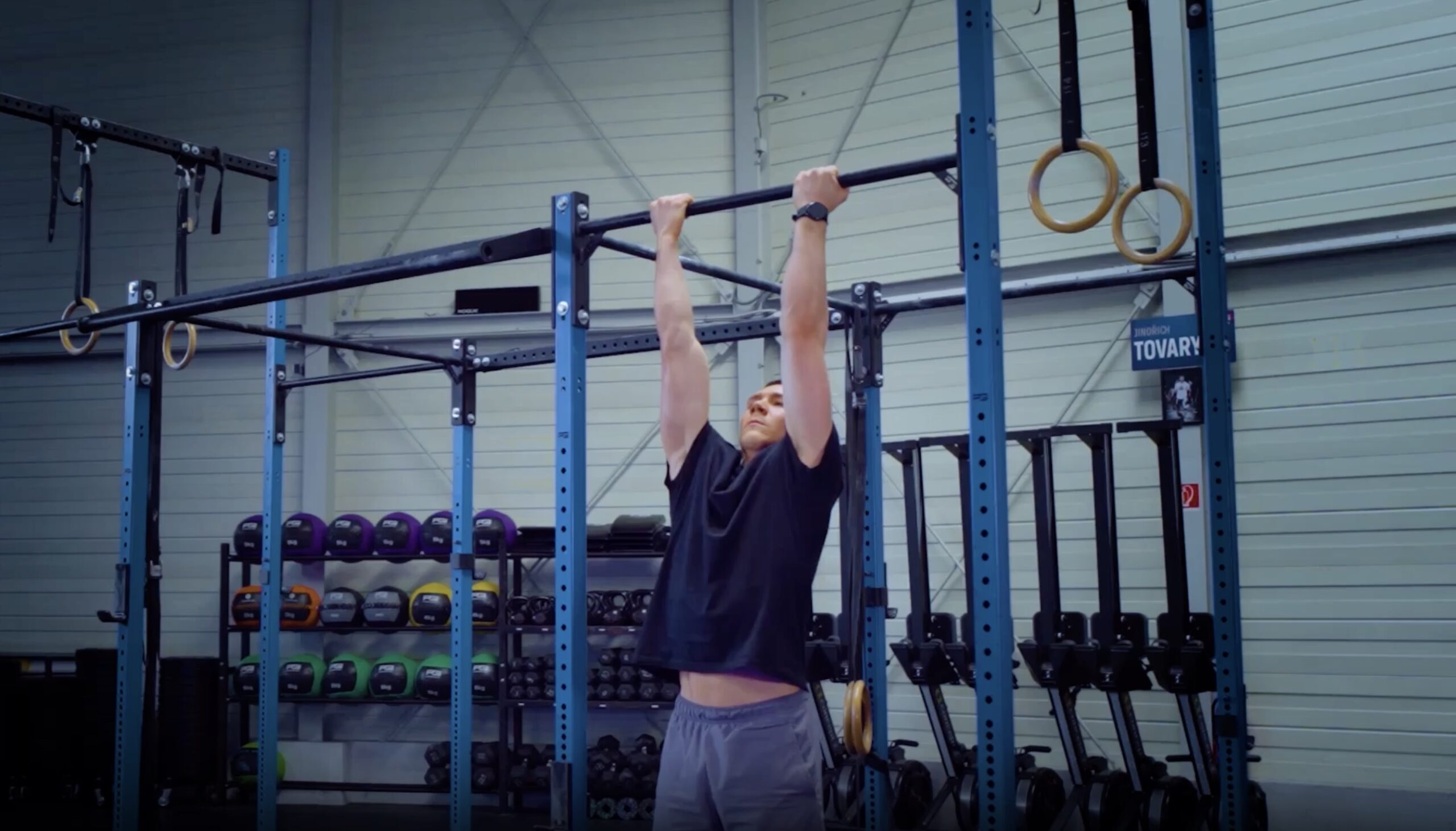


Getting your first chin up is a milestone that represents real, measurable strength. It is not just about pulling yourself over a bar. It reflects coordination, neuromuscular efficiency, relative strength, and consistency in training.
For many people, especially beginners, the first successful chin up can feel out of reach. The good news is that science offers clear guidance on how to get there.
What Is a Chin Up and Why It Matters
A chin up is a vertical pulling movement where your palms face toward you. You pull your body upward until your chin clears the bar. This grip orientation emphasizes the biceps more than a pull up, which uses an overhand grip.
Why Chin Ups Are Hard
Chin ups are difficult because they require you to lift your entire body weight using your upper body. That makes relative strength crucial. If your pulling muscles are not strong enough relative to your body mass, the movement will not happen.
From a physiological perspective, chin ups demand coordinated activation of several muscle groups:
- Latissimus dorsi for shoulder extension and adduction
- Biceps brachii for elbow flexion
- Rhomboids and trapezius for scapular retraction
- Core muscles for stability
Electromyography studies show that chin ups produce high activation in both the lats and biceps, making them one of the most effective upper body pulling exercises.
Why You Should Learn Them
Chin ups are not just a party trick. They offer several benefits:
- Improved upper body strength
- Better posture due to scapular control
- Increased grip strength
- Functional strength that transfers to other movements
Research on resistance training consistently shows that compound movements like chin ups produce greater overall strength adaptations compared to isolation exercises.
The Science of Strength Development
To get your first chin up, you need to understand how strength improves.

Neural Adaptations Come First
When you begin training, your strength increases quickly even before your muscles grow. This is due to neural adaptations. Your nervous system becomes more efficient at recruiting motor units.
Studies show that early strength gains are largely due to improved coordination and motor unit recruitment rather than muscle hypertrophy.
Progressive Overload Is Essential
You must gradually increase the demand placed on your muscles. This principle is called progressive overload.
If you keep doing the same exercises at the same intensity, your body will stop adapting. To build the strength needed for a chin up, you must increase either load, volume, or difficulty over time.
Specificity Matters
Your training should resemble the goal movement. This is known as the principle of specificity.
If your goal is a chin up, you need to practice movements that mimic the chin up pattern. This includes vertical pulling exercises and isometric holds.
Assessing Your Starting Point
Before you begin, it is important to know where you are.
Grip Strength
If you cannot hang from a bar for at least 20 to 30 seconds, grip strength is a limiting factor.
Scapular Control
Can you hang from a bar and pull your shoulders down without bending your arms? This is called a scapular pull. It is essential for safe and effective chin ups.
Upper Body Strength
If you cannot perform exercises like inverted rows or assisted chin ups, you need to build foundational strength first.
Step by Step Progression to Your First Chin Up
This is the most important part of the process. Follow these steps in order and be consistent.
Step 1: Dead Hangs
Start by simply hanging from a bar.
Dead hangs build grip strength and help your body get used to supporting your weight.

Aim for:
- 3 to 5 sets
- 20 to 45 seconds per set
Research shows that grip strength is strongly correlated with overall upper body strength and functional capacity.
Step 2: Scapular Pulls
From a hanging position, pull your shoulder blades down and together without bending your arms. This trains the initial phase of the chin up.
Perform:
- 3 sets of 8 to 12 repetitions
Scapular control is critical for shoulder health and injury prevention.
Step 3: Inverted Rows
Use a bar set at waist height and pull your chest to the bar while your feet stay on the ground. This reduces the load compared to a full chin up. Progress by lowering the bar or elevating your feet.
Perform:
- 3 to 4 sets of 8 to 15 repetitions
Inverted rows have been shown to activate similar muscle groups as chin ups, making them an effective progression.
Step 4: Assisted Chin Ups
Use a resistance band or an assisted machine. The assistance allows you to complete the full movement while building strength.
Perform:
- 3 to 5 sets of 5 to 10 repetitions
Gradually reduce assistance over time.
Step 5: Negative Chin Ups
Jump or step up to the top position, then slowly lower yourself down. Eccentric training is highly effective for building strength. Studies show that eccentric contractions can produce greater force and lead to significant strength gains.
Perform:
- 3 to 5 sets of 3 to 6 repetitions
- Lower yourself over 3 to 5 seconds
Step 6: Isometric Holds
Hold yourself at different points of the chin up.
Focus on:
- Top position
- Mid range
- Just above the bottom
Perform:
- 10 to 20 seconds per hold
- 3 to 4 sets
Isometric training improves joint stability and strength at specific angles.
Step 7: Full Chin Up Attempts
Once you can control negatives and perform assisted reps with minimal help, start attempting full chin ups.
Try:
- 2 to 3 attempts per session
Even failed attempts contribute to neural adaptation.
Programming Your Training
Consistency is more important than intensity.
Frequency
Train chin up related movements 2 to 4 times per week.
Research shows that training frequency can influence strength gains, with moderate frequency producing optimal results.
Volume
Aim for 10 to 20 total sets per week across all pulling exercises.
Rest
Allow 48 hours between intense sessions to recover.
Recovery is essential for muscle repair and growth.
Technique Matters
Even if you are strong enough, poor technique can prevent you from completing a chin up.
Proper Setup
- Hands shoulder width apart
- Palms facing you
- Full hang with engaged shoulders
Execution
- Pull your chest toward the bar
- Keep your elbows close to your body
- Avoid swinging
Common Mistakes
- Using momentum
- Shrugging shoulders up
- Not completing full range of motion
Proper technique ensures maximum muscle activation and reduces injury risk.
The Role of Body Composition
Since chin ups involve lifting your body weight, body composition plays a role.
Strength to Weight Ratio
Improving your strength relative to your body weight is key.
This can be achieved by:
- Increasing muscle strength
- Reducing excess body fat
Studies show that relative strength is a major determinant of performance in bodyweight exercises.
Nutrition
Adequate protein intake supports muscle growth and recovery.
General guidelines:
- 1.6 to 2.2 grams of protein per kilogram of body weight
Energy balance also matters. If you are in a calorie deficit, strength gains may be slower.
Accessory Exercises That Help
Supplement your training with these exercises.
Lat Pulldowns
Mimic the chin up movement and allow controlled loading.
Bicep Curls
Strengthen elbow flexors, which are heavily involved in chin ups.
Face Pulls
Improve shoulder stability and posture.
Core Work
Exercises like planks and hanging leg raises improve stability. Core engagement is essential for efficient force transfer.
Mental Strategies That Work
Your mindset matters more than you think.
Consistency Over Motivation
Motivation fluctuates. Discipline does not. Set a schedule and stick to it.
Track Progress
Keep a training log. Seeing improvement, even small, reinforces consistency.
Break the Goal Down
Focus on small wins:
- Longer hang time
- More assisted reps
- Slower negatives
Each step brings you closer to your first chin up.
How Long Does It Take?
This depends on your starting point, body composition, and training consistency.
On average:
- Beginners may achieve their first chin up in 4 to 12 weeks
Research on resistance training shows that significant strength gains can occur within this timeframe with consistent training.
Sample Weekly Plan
Here is a simple plan you can follow.
Day 1
- Dead hangs
- Scapular pulls
- Assisted chin ups
- Bicep curls
Day 2
- Inverted rows
- Negative chin ups
- Core work
Day 3
- Assisted chin ups
- Isometric holds
- Face pulls
Repeat this cycle and progressively increase difficulty.
Troubleshooting Plateaus
If you stop progressing, adjust your approach.
Increase Volume
Add more sets or reps.
Improve Recovery
Sleep and nutrition play a major role.
Change Assistance Level
Gradually reduce support to challenge your muscles.
Focus on Weak Points
If your grip fails first, train grip more. If your arms fatigue quickly, add bicep work.
Injury Prevention
Protect your shoulders and elbows.
Warm Up Properly
Include:
- Arm circles
- Band pull aparts
- Light rows
Avoid Overtraining
Too much volume can lead to overuse injuries.
Listen to Your Body
Pain is not the same as effort. Stop if you feel sharp or persistent discomfort.
Final Thoughts
Getting your first chin up is a process that combines strength, technique, and consistency. There are no shortcuts, but there is a clear path.
Focus on progressive overload, practice the movement pattern, and stay consistent. The science is clear. If you follow these principles, you will get your first chin up. And once you do, it opens the door to even greater strength gains.
References
- Aagaard, P. et al. (2002). Increased rate of force development and neural drive following resistance training. Journal of Applied Physiology, 93(4), pp. 1318 to 1326.
- Andersen, L.L. et al. (2014). Muscle activation during selected strength exercises in women. Journal of Strength and Conditioning Research, 28(4), pp. 1145 to 1153.
- Dankel, S.J. et al. (2017). Frequency of training and muscle hypertrophy. Sports Medicine, 47(6), pp. 1207 to 1216.
- Gentil, P. et al. (2017). Effects of resistance training on upper body strength. Sports Medicine, 47(12), pp. 2513 to 2524.
- Grgic, J. et al. (2018). Effects of resistance training frequency on gains in muscular strength. Sports Medicine, 48(5), pp. 1207 to 1220.
- Król, H. and Golas, A. (2017). Effect of bar grip width on muscle activity during pull ups. Journal of Human Kinetics, 56, pp. 33 to 40.
- Schoenfeld, B.J. (2010). The mechanisms of muscle hypertrophy and their application to resistance training. Journal of Strength and Conditioning Research, 24(10), pp. 2857 to 2872.