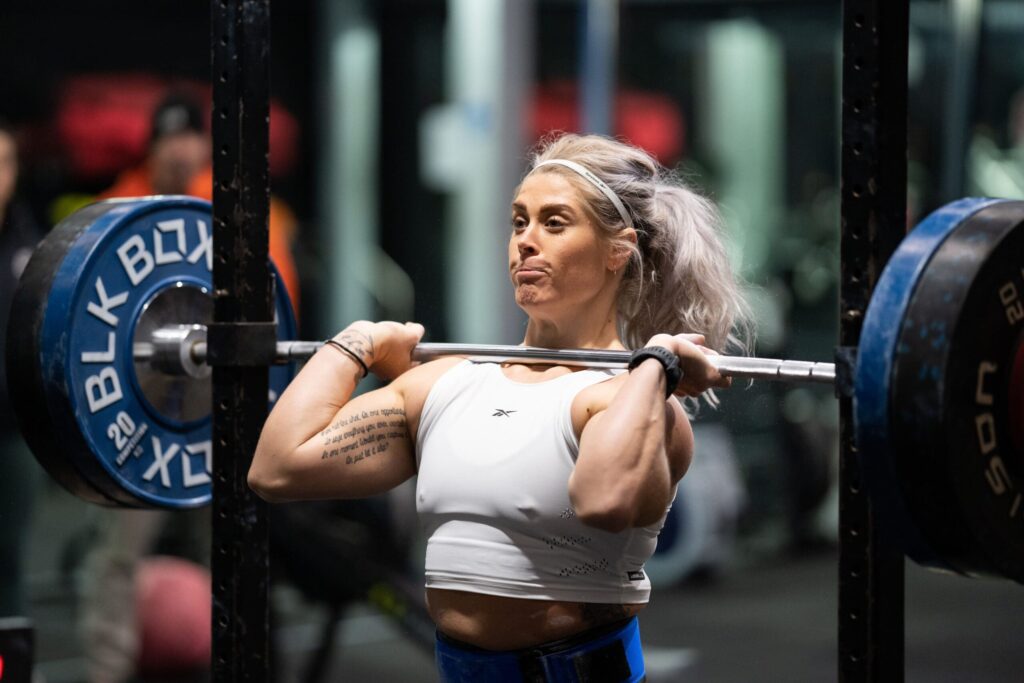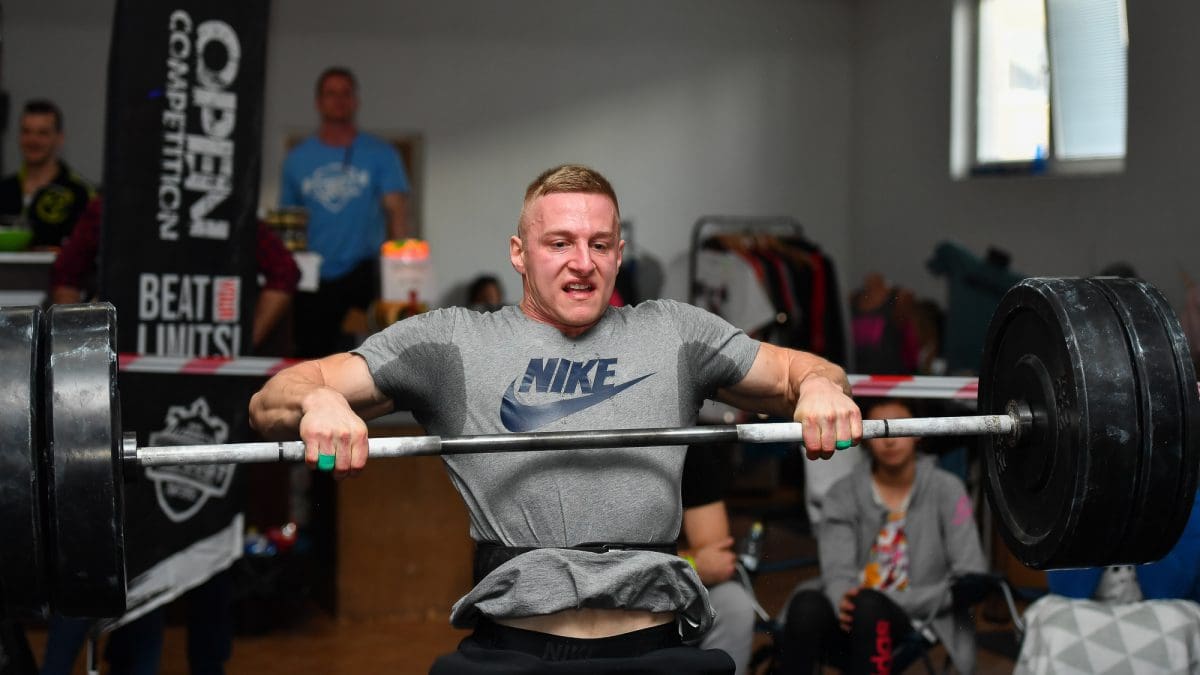


The jerk is one of the most technically demanding movements in Olympic weightlifting. It is also one of the most misunderstood. When athletes reach the stage of choosing between a split jerk and a power jerk, the decision can significantly impact performance, progress, and long term joint health.
In this guide to Split Jerk vs Power Jerk, you will learn the key differences, the biomechanics behind each variation, and how to determine which one is best suited to your body and goals. Everything here is grounded in sports science and coaching research, presented in a way that is easy to apply in real training.
What Is the Jerk?
The jerk is the second phase of the clean and jerk. After cleaning the barbell to the shoulders, the athlete drives the bar overhead using a powerful leg extension, then moves the body underneath to receive the weight in a stable overhead position.
The jerk is not simply a press. It relies on:
- Rapid force production from the lower body
- Efficient transfer of force through the torso
- Precise timing and coordination
- Stable overhead positioning
Research on Olympic weightlifting shows that the jerk phase requires extremely high rates of force development, often exceeding those seen in other strength exercises. This makes it one of the most explosive movements in sport.
There are several jerk variations, but the two most commonly used in training and competition are:
- Split Jerk
- Power Jerk
Understanding the differences between these two will help you make a smarter decision about your training.
The Split Jerk Explained
The split jerk is the most widely used jerk variation in Olympic weightlifting competitions. In this movement, the athlete splits their legs front to back while receiving the bar overhead.
Key Characteristics of the Split Jerk
- Front foot steps forward
- Back foot steps backward
- Body lowers under the bar to catch it in a split stance
- Bar is stabilized overhead before recovery
The split stance allows for a lower receiving position without requiring as much mobility in the hips and ankles compared to a squat based catch.
Biomechanics of the Split Jerk
The split jerk increases the base of support in the forward and backward direction. This makes it easier to stabilize heavier loads. Research on balance and force distribution shows that a wider base improves stability and reduces the demand on joint control systems.
The split also allows the athlete to drop lower under the bar without needing deep knee flexion. This is important because it reduces the need for extreme mobility in the hips, knees, and ankles.
Studies on Olympic lifting biomechanics show that successful jerks rely heavily on vertical bar path and minimal horizontal displacement. The split jerk makes it easier to maintain this vertical path while adjusting the body position around the bar.
Advantages of the Split Jerk
- Greater stability under heavy loads
- Allows deeper receiving position without full squat mobility
- More forgiving for balance errors
- Widely used and well supported by coaching literature
Disadvantages of the Split Jerk
- Requires coordination between upper and lower body
- Recovery from the split position can be challenging
- Asymmetrical stance may increase unilateral stress if poorly executed
The Power Jerk Explained
The power jerk involves driving the bar overhead and catching it with both feet in a parallel stance, typically with a slight dip rather than a full squat.
Key Characteristics of the Power Jerk
- Feet remain parallel or move slightly outward
- Athlete dips under the bar without splitting the legs
- Catch position is higher than a squat jerk but lower than a push press
Biomechanics of the Power Jerk
The power jerk requires more vertical force production because the athlete cannot rely on a split to lower their body significantly. Instead, they must generate enough upward momentum on the bar to create time to move under it.
Research on force production in weightlifting shows that movements with less receiving depth demand higher peak power output. This means the power jerk places a greater emphasis on explosive strength.
The symmetrical stance also requires strong midline stability. Without the forward and backward split, the athlete must rely more on core stiffness and precise bar placement to maintain balance.
Advantages of the Power Jerk
- Symmetrical stance reduces asymmetry
- Simpler footwork compared to split jerk
- Builds explosive power and vertical force production
- Transfers well to sports requiring vertical jumping
Disadvantages of the Power Jerk
- Less stable under maximal loads
- Requires excellent mobility and overhead positioning
- Smaller margin for technical error
- Harder to save a missed lift
Split Jerk vs Power Jerk: Key Differences
When comparing Split Jerk vs Power Jerk, the main differences come down to stability, mobility requirements, and force production.
Stability
The split jerk provides greater stability due to the larger base of support. This makes it more effective for lifting maximal weights.
The power jerk requires more precise balance because the base of support is narrower. This increases the difficulty under heavy loads.
Force Production
The power jerk demands higher peak power output. The athlete must drive the bar higher because they cannot drop as low under it.
The split jerk allows the athlete to drop lower, reducing the need for extreme bar height.
Mobility
The power jerk requires excellent mobility in the shoulders, hips, and ankles. The receiving position demands upright posture and strong overhead stability. The split jerk is more forgiving for athletes with limited mobility, particularly in the ankles and hips.
Technical Complexity
The split jerk involves more complex footwork and timing. The power jerk is simpler in terms of foot movement but requires more precise bar path and positioning.

What Does the Science Say?
Scientific research on Olympic weightlifting provides insight into how these movements differ and why athletes may perform better with one variation over the other.
Studies on elite weightlifters show that the split jerk is used by the majority of successful competitors. This is largely due to its ability to support heavier loads through increased stability.
Biomechanical analyses demonstrate that the split jerk allows for greater displacement of the body under the bar, which reduces the required bar height. This is a major advantage when lifting near maximal loads.
On the other hand, research on power output indicates that the power jerk can produce higher peak power values. This makes it useful for developing explosive strength and athletic performance.
Electromyography studies show that both jerk variations activate similar muscle groups, including the quadriceps, glutes, and deltoids. However, the timing and intensity of activation differ, with the power jerk requiring more rapid force production.
Which One Is Better for Strength?
If your primary goal is lifting the heaviest possible weight, the split jerk is generally the better option.
The increased stability and ability to drop lower under the bar allow athletes to handle heavier loads. This is why it dominates in Olympic weightlifting competitions.
Research on maximal strength performance consistently shows that stability is a key factor in successful lifts. The split jerk provides that stability.
Which One Is Better for Power?
If your goal is to improve explosive power, the power jerk has clear advantages.
Because it requires greater bar height and faster force production, it places a higher demand on the neuromuscular system. This can lead to improvements in:
- Rate of force development
- Vertical jump performance
- Athletic explosiveness
Studies on strength and conditioning programs often include power jerk variations for athletes in sports like football, basketball, and track and field.
Which One Is Better for Beginners?
For beginners, the choice between Split Jerk vs Power Jerk depends on several factors.
When Beginners Should Choose the Split Jerk
- Limited mobility
- Difficulty stabilizing overhead
- Focus on learning Olympic lifting
The split jerk provides a more forgiving learning curve because of its stability.
When Beginners Should Choose the Power Jerk
- Good mobility and coordination
- Focus on general strength and conditioning
- Not planning to compete in weightlifting
The power jerk can be easier to learn in terms of footwork but requires better control.
Injury Risk and Joint Stress
Injury risk is an important consideration when choosing between jerk variations.
Split Jerk Injury Considerations
The asymmetrical stance can place uneven stress on the hips and knees. However, when performed correctly, it distributes load effectively across the body.
Power Jerk Injury Considerations
The power jerk places more stress on the shoulders and spine due to the higher receiving position. This can increase the risk of overload if mobility is limited.
Research on overhead lifting suggests that proper technique and mobility are the most important factors in reducing injury risk, regardless of the variation used.
Mobility Requirements
Mobility plays a major role in determining which jerk variation is right for you.
Split Jerk Mobility Needs
- Moderate ankle mobility
- Good hip flexibility
- Stable shoulders
Power Jerk Mobility Needs
- High ankle mobility
- Excellent thoracic extension
- Strong overhead stability
Athletes with limited mobility often perform better with the split jerk.
Coaching Perspective
Experienced coaches often choose the split jerk for athletes aiming to compete in Olympic weightlifting.
However, many strength coaches use the power jerk as a training tool to develop explosiveness and coordination.
A common approach is to train both variations, using the power jerk for power development and the split jerk for maximal strength.
Practical Guidelines: How to Choose
When deciding between Split Jerk vs Power Jerk, consider the following:
Choose the Split Jerk if:
- You want to lift maximal weights
- You plan to compete in weightlifting
- You have limited mobility
- You struggle with overhead stability
Choose the Power Jerk if:
- You want to improve explosiveness
- You have excellent mobility
- You prefer symmetrical movements
- You train for general athletic performance
Can You Train Both?
Yes, and in many cases, you should.
Training both variations can provide:
- Improved overall strength
- Better coordination
- Reduced risk of overuse injuries
- Greater versatility
Many elite athletes incorporate both into their programs, using each for different purposes.
Common Mistakes
Split Jerk Mistakes
- Short or uneven split
- Poor foot placement
- Leaning forward or backward
- Weak overhead lockout
Power Jerk Mistakes
- Insufficient dip and drive
- Catching too high
- Poor bar path
- Lack of core stability
Correcting these mistakes requires consistent practice and feedback.
Final Thoughts
The debate around Split Jerk vs Power Jerk is not about which is universally better. It is about which is better for you.
The split jerk offers stability and strength potential, making it the top choice for competitive lifters. The power jerk develops explosive power and simplicity, making it valuable for athletes in many sports.
Your decision should be based on your goals, mobility, and experience level. In many cases, the best approach is not choosing one over the other, but using both strategically.
References
- Garhammer, J. (1993). A review of power output studies of Olympic and powerlifting movements. Journal of Strength and Conditioning Research.
- Haff, G.G. and Triplett, N.T. (2015). Essentials of Strength Training and Conditioning. Human Kinetics.
- Gourgoulis, V. et al. (2000). Biomechanical analysis of the jerk in Olympic weightlifting. Journal of Sports Sciences.
- McBride, J.M. et al. (2002). Comparison of strength and power characteristics between power lifters, Olympic lifters, and sprinters. Journal of Strength and Conditioning Research.
- Zatsiorsky, V.M. and Kraemer, W.J. (2006). Science and Practice of Strength Training. Human Kinetics.
- Enoka, R.M. (2008). Neuromechanics of Human Movement. Human Kinetics.
- Comfort, P. et al. (2011). A comparison of peak power output during variations of the power clean. Journal of Strength and Conditioning Research.
- Fry, A.C. et al. (2003). Anthropometric and performance variables discriminating elite American junior men weightlifters. Journal of Strength and Conditioning Research.