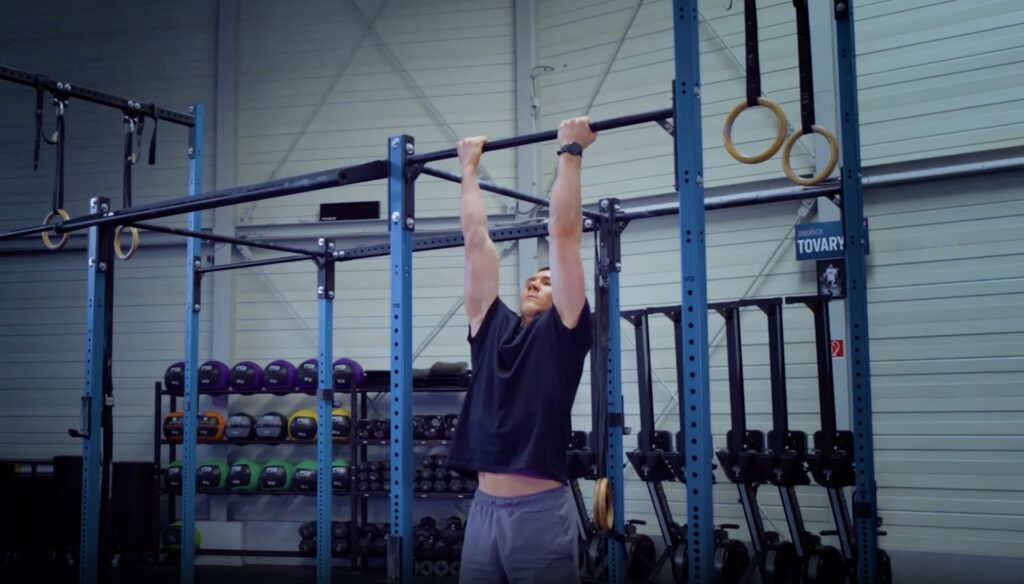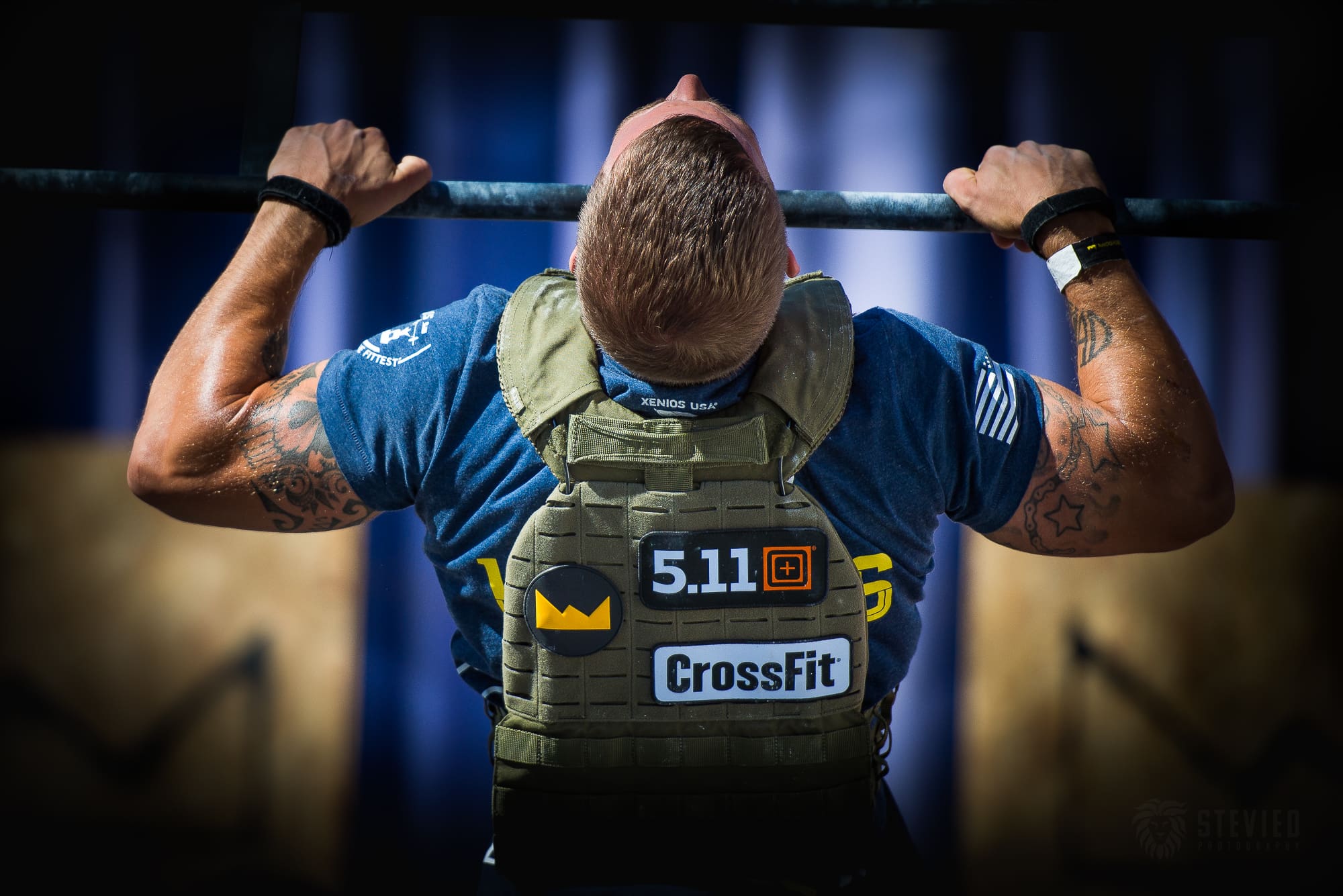


Pull ups are one of the most honest tests of upper body strength. There is no hiding behind momentum or machines. You either pull your body over the bar or you do not. That is exactly why so many people get stuck at five reps or fewer and stay there for months or even years.
If that sounds familiar, you are not alone. Plateaus in bodyweight pulling strength are extremely common, even among people who train regularly. The good news is that there is always a reason behind the plateau. Once you understand the limiting factors, progress becomes predictable again.
This article breaks down the real science behind pull up performance and explains what is actually holding you back. No guesswork. No fluff. Just clear explanations and practical solutions grounded in research.
Why Pull Ups Plateau So Easily
Pull ups demand a combination of strength, technique, and body composition. Unlike exercises where you can simply add weight in small increments, your bodyweight is the resistance. That makes progress less linear.
Strength to Bodyweight Ratio
The most important factor in pull up performance is relative strength. This means how strong you are compared to your bodyweight.

Research shows that bodyweight exercises depend heavily on relative strength rather than absolute strength. Someone with higher body fat or total mass must generate more force to complete each repetition. This makes pull ups significantly harder even if total muscle mass is high.
If your strength increases but your bodyweight also increases, your pull up performance may not improve at all. In some cases, it may even decline.
Neural Efficiency and Skill
Pull ups are not just about muscles. They are also about how effectively your nervous system recruits those muscles.
Early strength gains are largely due to neural adaptations. Your brain learns how to activate more muscle fibers and coordinate movement efficiently. If you have not practiced pull ups consistently, your nervous system may not be optimized for the movement.
Limited Progression Options
Unlike barbell exercises, pull ups do not allow for easy micro progression. You cannot add 2.5 pounds to your bodyweight in a controlled way. This often leads to stagnation because the jump from one rep to the next is too large.
The Most Common Reasons You Are Stuck
Let’s break down the specific factors that prevent progress and explain the science behind each one.
1. You Are Not Strong Enough in the Right Muscles
Pull ups rely heavily on the latissimus dorsi, biceps, and scapular stabilizers. If any of these are underdeveloped, your performance will suffer.
Weak Lats
The lats are the primary drivers of the pulling motion. Electromyography studies show that lat activation is highest during vertical pulling movements like pull ups.
If your lats are not strong enough, your body compensates with smaller muscles, which fatigue quickly.
Weak Scapular Stabilizers
Muscles like the lower trapezius and rhomboids control scapular movement. Proper scapular depression and retraction are essential for efficient pulling.
Poor scapular control leads to energy leaks and reduces force output. Research shows that scapular stability is critical for optimal upper body strength and injury prevention.
Weak Grip Strength
Grip strength is often overlooked but plays a major role. If your grip fails before your back muscles, you cannot complete more reps.
Studies have shown a strong correlation between grip strength and overall upper body strength performance.
2. Your Technique Is Holding You Back
Many people perform pull ups inefficiently without realizing it.
Lack of Full Range of Motion
Partial reps limit strength development. Training through a full range of motion leads to greater muscle activation and strength gains.

Poor Scapular Engagement
Starting each rep without engaging the scapula reduces efficiency. Proper pull ups begin with a slight scapular depression before the elbows bend.
Excessive Swinging
Using momentum reduces muscular demand. While kipping has its place in certain training styles, it does not build strict pulling strength effectively.
3. You Are Carrying Excess Body Fat
Pull ups are one of the few exercises where body composition directly impacts performance. Research shows that higher body fat percentages negatively affect relative strength. Even small reductions in body fat can significantly improve pull up performance. This is not about aesthetics. It is about physics. Less mass means less resistance.
4. You Are Not Training Frequently Enough
Skill based movements require frequent practice. Studies on motor learning show that higher training frequency improves skill acquisition and strength in complex movements. If you only do pull ups once per week, progress will be slow. Your nervous system needs regular exposure to improve coordination and efficiency.
5. You Always Train to Failure
Going to failure feels productive, but it can limit progress. Research indicates that training to failure increases fatigue without necessarily improving strength gains compared to stopping short of failure. For pull ups, this means you burn out quickly and cannot accumulate enough quality volume.
6. You Lack Progressive Overload
Progressive overload is the foundation of strength training. If you are always doing the same number of reps and sets, your body has no reason to adapt. Because pull ups are hard to scale, many people unintentionally stall their progress.
7. You Are Not Recovering Properly
Muscles grow and adapt during recovery, not during training. Sleep, nutrition, and overall stress levels all impact your ability to improve. Research shows that inadequate sleep reduces strength performance and muscle recovery. Similarly, insufficient protein intake limits muscle growth.
How to Break Through the Plateau
Now that we understand the causes, let’s look at the solutions.
Build Strength with Assistance Work
If you cannot perform many pull ups, you need to strengthen the muscles involved using scalable exercises.
Key Exercises
- Lat pulldowns
- Seated rows
- Straight arm pulldowns
- Bicep curls
- Face pulls
These exercises allow you to control the load and progressively increase resistance.
Use Assisted Pull Ups
Assistance allows you to train the movement pattern without being limited by your current strength.
Options
- Resistance bands
- Assisted pull up machines
- Partner assistance
Research shows that assisted variations help build strength while maintaining proper movement patterns.
Incorporate Eccentric Training
Eccentric training focuses on the lowering phase of the movement. Studies show that eccentric contractions can produce greater strength gains than concentric contractions alone.
How to Do It
Jump or step up to the top position, then lower yourself slowly over three to five seconds.
Increase Training Frequency
Instead of one intense session, spread your training across multiple days.
Example
- Three to four sessions per week
- Submaximal sets
- Focus on quality reps
This approach improves both strength and skill.
Practice Greasing the Groove
This method involves performing frequent, low effort sets throughout the day. Research on neural adaptation supports this approach for improving strength in specific movements.
Guidelines
- Perform sets at about half of your maximum reps
- Avoid fatigue
- Focus on perfect form
Improve Your Technique
Small adjustments can make a big difference.
Key Cues
- Start each rep with scapular depression
- Keep your core tight
- Pull your elbows down, not back
- Avoid swinging
Manage Your Body Composition
If you are carrying excess body fat, reducing it can improve your pull up performance. Even a small decrease in body weight can significantly increase your relative strength.
Program for Progress
A structured approach is essential.
Sample Weekly Plan
Day 1
- Pull ups
- Lat pulldowns
- Rows
Day 2
- Rest or light activity
Day 3
- Assisted pull ups
- Eccentrics
- Biceps work
Day 4
- Pull ups
- Scapular work
This structure balances intensity, volume, and recovery.
The Role of Nutrition
Nutrition plays a key role in strength development.
Protein Intake
Research recommends consuming sufficient protein to support muscle growth. Around 1.6 to 2.2 grams per kilogram of bodyweight is often cited as optimal.
Caloric Balance
If your goal is to improve relative strength, managing your calorie intake is important.
Micronutrients
Vitamins and minerals support muscle function and recovery. Deficiencies can impair performance.
The Mental Factor
Progress is not just physical.
Consistency
Consistency is the most important variable in long term progress.
Patience
Strength takes time to develop. Plateaus are normal but not permanent.
Focus on Process
Instead of chasing numbers, focus on improving technique and training quality.
What Progress Should Look Like
Realistic expectations are important.
Timeline
- Beginners may see improvements within weeks
- Intermediate lifters may take months to break plateaus
Signs of Progress
- Improved control
- Better technique
- Increased reps or reduced assistance
Final Thoughts
Being stuck at five pull ups is not a sign of failure. It is a signal that something in your training or recovery needs to change. When you address the real limiting factors, progress becomes inevitable. Build strength in the right muscles, refine your technique, train consistently, and manage your body composition.
Pull ups are challenging because they demand a high level of coordination and strength. That is exactly why they are worth mastering. Stay consistent, train smart, and the numbers will follow.
Key Takeaways
| Factor | What It Means | Solution |
|---|---|---|
| Relative Strength | Bodyweight impacts performance | Improve strength or reduce body fat |
| Weak Muscles | Lats and stabilizers are limiting | Use targeted assistance exercises |
| Poor Technique | Inefficient movement reduces output | Focus on scapular control and form |
| Low Frequency | Not enough practice | Train pull ups multiple times per week |
| Training to Failure | Excess fatigue limits progress | Use submaximal sets |
| Lack of Progression | No overload stimulus | Add assistance, eccentrics, or volume |
| Recovery Issues | Poor sleep or nutrition | Improve recovery habits |
References
- American College of Sports Medicine (2009). Progression models in resistance training for healthy adults. Medicine and Science in Sports and Exercise, 41(3), pp.687 to 708.
- Andersen, L.L. et al. (2014). The relationship between muscle strength and electromyographic activity in upper body exercises. Journal of Strength and Conditioning Research, 28(4), pp.1065 to 1072.
- Folland, J.P. and Williams, A.G. (2007). The adaptations to strength training. Sports Medicine, 37(2), pp.145 to 168.
- Gentil, P. et al. (2017). Effects of resistance training to failure on muscle strength and hypertrophy. Journal of Strength and Conditioning Research, 31(3), pp.689 to 694.
- Grgic, J. et al. (2018). Effects of resistance training frequency on measures of muscle hypertrophy. Sports Medicine, 48(5), pp.1207 to 1220.
- Krieger, J.W. (2010). Single versus multiple sets of resistance exercise for muscle hypertrophy. Journal of Strength and Conditioning Research, 24(4), pp.1150 to 1159.
- Morton, R.W. et al. (2018). Protein intake to maximize muscle mass. British Journal of Sports Medicine, 52(6), pp.376 to 384.