

When people think about building muscle, the same exercises always dominate the conversation: barbell squats, bench presses, deadlifts, pull-ups, and overhead presses. These lifts are effective, well-researched, and deservedly popular.
However, their popularity often causes other highly effective movements to be overlooked.
“Underrated” does not mean inferior. In many cases, these exercises produce comparable muscle activation, offer unique hypertrophy advantages, reduce joint stress, or target muscles through ranges of motion that the big lifts do not fully address. Research consistently shows that muscle growth depends more on mechanical tension, sufficient volume, proximity to failure, and progressive overload than on using any specific “iconic” exercise.
This article breaks down five underrated muscle building exercises that deserve a permanent place in most hypertrophy-focused training programs. Each section explains exactly why the exercise works, which muscles benefit most, and what the science says about its effectiveness.
What Makes an Exercise Effective for Muscle Growth?
Before diving into the exercises, it is important to establish what actually drives hypertrophy.
Mechanical Tension Is the Primary Driver
Mechanical tension occurs when muscle fibers produce force while lengthening or shortening under load. Research shows that exercises which allow muscles to experience high tension across a large range of motion are especially effective for hypertrophy (Schoenfeld, 2010).
Muscle Activation Alone Is Not Enough
High electromyography (EMG) activity does not automatically translate to more muscle growth. While EMG can indicate which muscles are involved, long-term hypertrophy depends on repeated exposure to sufficient tension and training volume over time (Vigotsky et al., 2017).
Range of Motion Matters
Studies have consistently found that training through a full or even lengthened range of motion produces greater hypertrophy than partial movements, especially for certain muscle groups (McMahon et al., 2014).
Stability Can Be a Limiting Factor
Highly unstable exercises may reduce the amount of force a muscle can produce. In contrast, exercises that provide stability often allow greater loading and higher total volume, which is beneficial for hypertrophy (Behm and Anderson, 2006).
With these principles in mind, the exercises below stand out as being far more effective than their reputation suggests.
1. Bulgarian Split Squat
The Bulgarian split squat is often dismissed as a “balance exercise” or a finisher rather than a serious muscle builder. In reality, it is one of the most effective lower-body hypertrophy exercises available.

Why the Bulgarian Split Squat Is Underrated
Many lifters avoid this exercise because it is uncomfortable, challenges balance, and limits how much weight can be used. However, muscle growth does not require maximal loading; it requires sufficient tension relative to the muscle’s capacity.
Muscle Activation and Hypertrophy Potential
Research comparing unilateral and bilateral lower-body exercises shows that single-leg movements can produce similar muscle activation in the quadriceps and gluteus maximus as bilateral squats, despite using lower external loads (McCurdy et al., 2005).
The Bulgarian split squat places the front leg through deep hip and knee flexion, significantly loading the quadriceps and glutes in a lengthened position. Training muscles at long lengths has been shown to enhance hypertrophy, particularly in the lower body (Maeo et al., 2021).
Reduced Spinal Load With High Leg Demand
Compared to back squats, Bulgarian split squats impose far less compressive force on the spine. This allows lifters to accumulate meaningful volume without excessive lower-back fatigue, which can be a limiting factor in traditional squatting.
A study by Speirs et al. (2016) found that unilateral lower-body exercises reduced spinal loading while maintaining high lower-limb muscle activation. This makes Bulgarian split squats especially useful during high-volume hypertrophy phases or for athletes managing back stress.
Practical Hypertrophy Advantages
The Bulgarian split squat:
• Allows high quad and glute tension with moderate loads
• Encourages symmetrical strength development
• Improves hip stability without compromising muscle growth
For hypertrophy, sets of 6–12 reps performed close to failure consistently produce significant muscle growth when progressive overload is applied (Schoenfeld et al., 2017).
2. Chest-Supported Row
Rows are widely accepted as essential for back development, but chest-supported rows are often overlooked in favor of barbell or Pendlay rows. This is a mistake for hypertrophy-focused training.
Why Chest-Supported Rows Are Underrated
Traditional barbell rows require significant isometric work from the lower back and hamstrings. While this can be useful, it often limits how much volume can be directed toward the upper back muscles.

Chest-supported rows remove this limitation.
Improved Targeting of the Upper Back
By eliminating the need to stabilize the torso, chest-supported rows allow lifters to focus more on scapular retraction and shoulder extension. Research indicates that reducing postural demands increases the ability to load the target musculature more effectively (Calatayud et al., 2015).
Studies using EMG analysis show high activation of the latissimus dorsi, middle trapezius, and rhomboids during supported rowing movements (Fenwick et al., 2009).
More Volume, Less Fatigue
Hypertrophy is strongly correlated with weekly training volume when intensity is sufficient (Schoenfeld et al., 2019). Because chest-supported rows reduce lower-back fatigue, lifters can perform more total sets without systemic exhaustion.
This makes them ideal for:
• High-frequency back training
• Lifters with lower-back sensitivity
• Late-session hypertrophy work
Range of Motion and Muscle Length
Chest-supported rows also make it easier to achieve a full stretch at the bottom position. Research suggests that hypertrophy is enhanced when muscles are trained under tension at longer lengths, especially for the upper back and lats (Schoenfeld and Grgic, 2020).
3. Romanian Deadlift (RDL)
Deadlifts are often viewed as the primary posterior chain builder, but Romanian deadlifts are frequently treated as an accessory rather than a main hypertrophy movement. This undervalues their unique muscle-building benefits.

Why the Romanian Deadlift Is Underrated
Conventional deadlifts involve significant knee extension and allow momentum from the floor. Romanian deadlifts maintain constant tension on the hamstrings and glutes, which is more relevant for hypertrophy.
Hamstring Growth and Muscle Length
Hamstrings are biarticular muscles, crossing both the hip and knee. Exercises that load the hamstrings at long muscle lengths are particularly effective for hypertrophy (Higashihara et al., 2015).
The RDL places the hamstrings under high tension in a stretched position, which has been shown to stimulate greater muscle growth than exercises emphasizing shortened positions (Maeo et al., 2021).
Lower Back Involvement Without Excessive Fatigue
Unlike conventional deadlifts, RDLs involve minimal knee flexion and less total load. This reduces systemic fatigue while still providing sufficient stimulus to the erector spinae.
Research by Escamilla et al. (2002) demonstrates significant activation of the hamstrings and gluteus maximus during Romanian deadlifts, comparable to or exceeding many machine-based alternatives.
Why RDLs Belong in Hypertrophy Programs
Romanian deadlifts:
• Emphasize eccentric control
• Maintain constant muscular tension
• Are highly scalable for volume-based training
Sets of 6–10 reps performed with controlled tempo are particularly effective for hamstring hypertrophy (Schoenfeld et al., 2017).
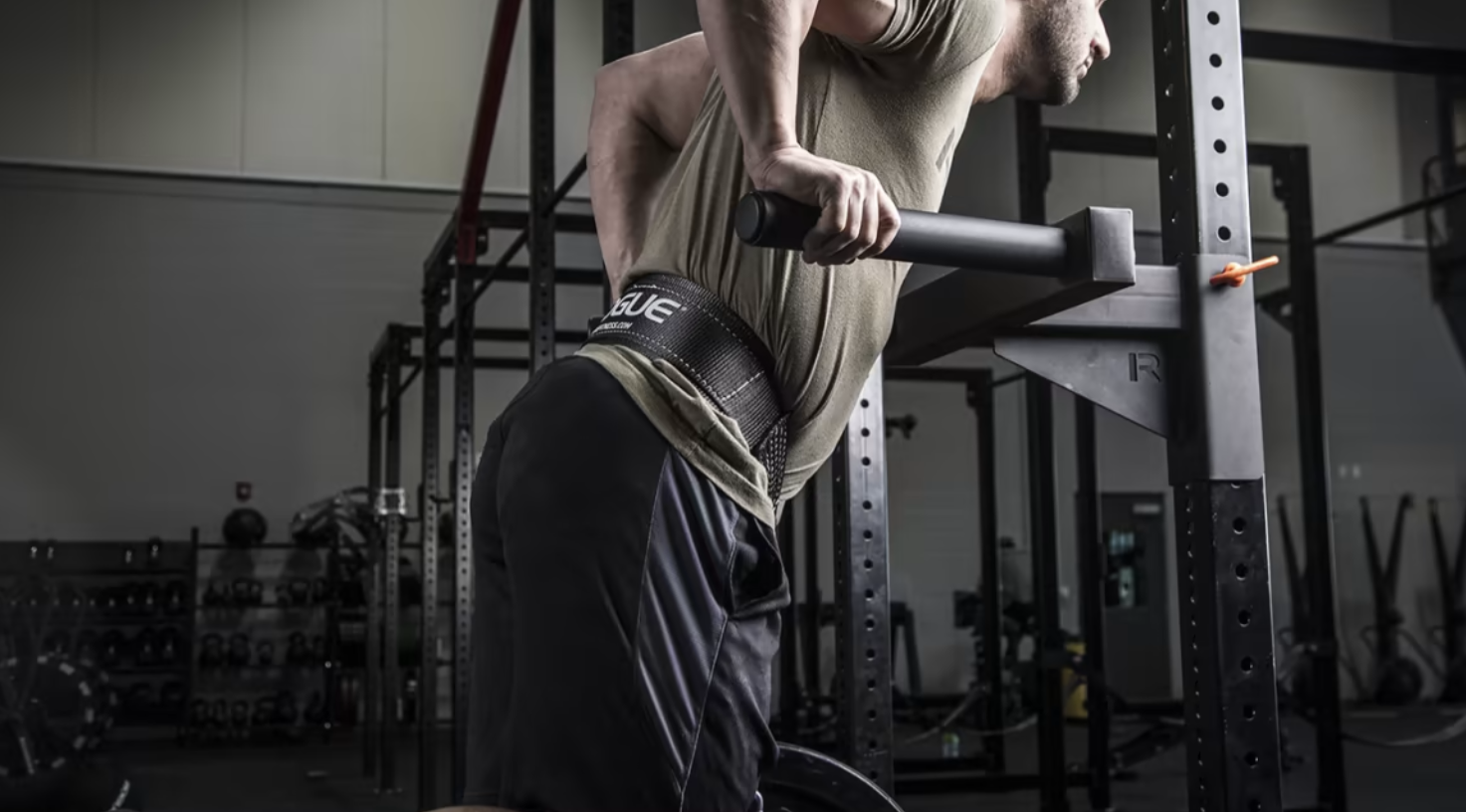
4. Dips
Dips are often categorized as a bodyweight exercise and dismissed as inferior to bench pressing for chest growth. The science suggests otherwise.
Why Dips Are Underrated
Dips require coordination, shoulder mobility, and upper-body strength, which leads many lifters to avoid them. However, they are one of the few compound movements that heavily load the chest, shoulders, and triceps simultaneously through a deep range of motion.
Chest and Triceps Activation
EMG research shows that dips produce high activation of the pectoralis major and triceps brachii, often comparable to or exceeding that of the bench press when performed with a forward torso lean (Lehman et al., 2005).

The deep shoulder extension at the bottom of a dip places the chest under significant stretch, a condition associated with increased hypertrophy signaling (Schoenfeld and Grgic, 2020).
Progressive Overload Is Simple
Contrary to popular belief, dips are easy to progressively overload by adding external weight. Studies show that muscle growth is similar when exercises are matched for effort, regardless of whether they are performed with bodyweight or external loads (Mitchell et al., 2012).
Joint-Friendly When Performed Correctly
When performed within an individual’s shoulder mobility limits, dips do not increase injury risk compared to other pressing movements (Behm et al., 2010). In fact, the freedom of scapular movement may reduce shoulder stress for some lifters.
5. Seated Leg Curl
The seated leg curl is frequently overshadowed by lying leg curls and deadlift variations. However, evidence suggests it may be one of the most effective hamstring isolation exercises for hypertrophy.
Why Seated Leg Curls Are Underrated
Many lifters assume all leg curls are essentially the same. This is incorrect due to differences in hip position.
Hamstrings and Lengthened Position Training
When seated, the hips are flexed, placing the hamstrings in a lengthened position. Research has shown that training muscles at longer lengths leads to greater hypertrophy compared to shortened positions (Maeo et al., 2021).
A landmark study by Evangelidis et al. (2023) found that seated leg curls produced significantly greater hamstring hypertrophy than lying leg curls over a 12-week training period.
Targeting All Hamstring Heads
The hamstrings consist of multiple heads with different functions. Seated leg curls effectively train the semitendinosus and semimembranosus, which are often underdeveloped with hip-dominant movements alone (Higashihara et al., 2015).
Low Fatigue, High Reward
Because seated leg curls involve minimal axial loading and systemic fatigue, they are ideal for accumulating volume. This aligns with research showing that hypertrophy benefits from higher weekly set volumes when recovery is managed properly (Schoenfeld et al., 2019).
Why “Underrated” Exercises Often Work So Well
Exercises become underrated for many reasons: discomfort, ego, misconceptions about load, or lack of visibility in social media. None of these factors determine hypertrophy outcomes.
Research consistently shows that:
• Muscle growth depends on effort and tension, not novelty
• Multiple exercises can build the same muscle effectively
• Simpler, stable movements often allow more productive volume
The exercises listed above meet all the fundamental requirements for hypertrophy while offering unique advantages that popular lifts sometimes lack.
Final Thoughts
Building muscle is not about chasing the most impressive-looking lifts. It is about selecting exercises that allow you to apply progressive overload, train muscles through effective ranges of motion, and recover well enough to repeat the process consistently.
Bulgarian split squats, chest-supported rows, Romanian deadlifts, dips, and seated leg curls are not “secondary” exercises. They are powerful hypertrophy tools supported by biomechanics and research.
Incorporating these movements strategically can improve muscle development, reduce joint stress, and help lifters continue progressing when traditional lifts stall.
References
• Behm, D.G. and Anderson, K. (2006) ‘The role of instability with resistance training’, Journal of Strength and Conditioning Research, 20(3), pp. 716–722.
• Behm, D.G., Drinkwater, E.J., Willardson, J.M. and Cowley, P.M. (2010) ‘Canadian Society for Exercise Physiology position stand: The use of instability to train the core in athletic and nonathletic conditioning’, Applied Physiology, Nutrition, and Metabolism, 35(1), pp. 109–112.
• Calatayud, J., Borreani, S., Colado, J.C., Martin, F. and Rogers, M.E. (2015) ‘Muscle activation during push-ups with different suspension training systems’, Journal of Sports Science and Medicine, 14(3), pp. 502–510.
• Escamilla, R.F., Francisco, A.C., Kayes, A.V., Speer, K.P. and Moorman, C.T. (2002) ‘An electromyographic analysis of sumo and conventional style deadlifts’, Medicine and Science in Sports and Exercise, 34(4), pp. 682–688.
• Evangelidis, P.E., Massey, G.J., Pain, M.T.G. and Folland, J.P. (2023) ‘Seated vs prone leg curl training induces greater hamstring hypertrophy’, Scandinavian Journal of Medicine and Science in Sports, 33(2), pp. 224–236.
• Fenwick, C.M.J., Brown, S.H.M. and McGill, S.M. (2009) ‘Comparison of trunk muscle activity between conventional and suspended push-ups’, Journal of Strength and Conditioning Research, 23(5), pp. 1587–1594.
• Higashihara, A., Ono, T., Kubota, J., Okuwaki, T. and Fukubayashi, T. (2015) ‘Functional differences in the activity of the hamstring muscles with increasing running speed’, Journal of Sports Sciences, 33(2), pp. 182–189.
• Lehman, G.J., Gordon, T. and Langley, J. (2005) ‘An electromyographic analysis of the barbell bench press, fly, and dip’, Journal of Strength and Conditioning Research, 19(3), pp. 449–454.