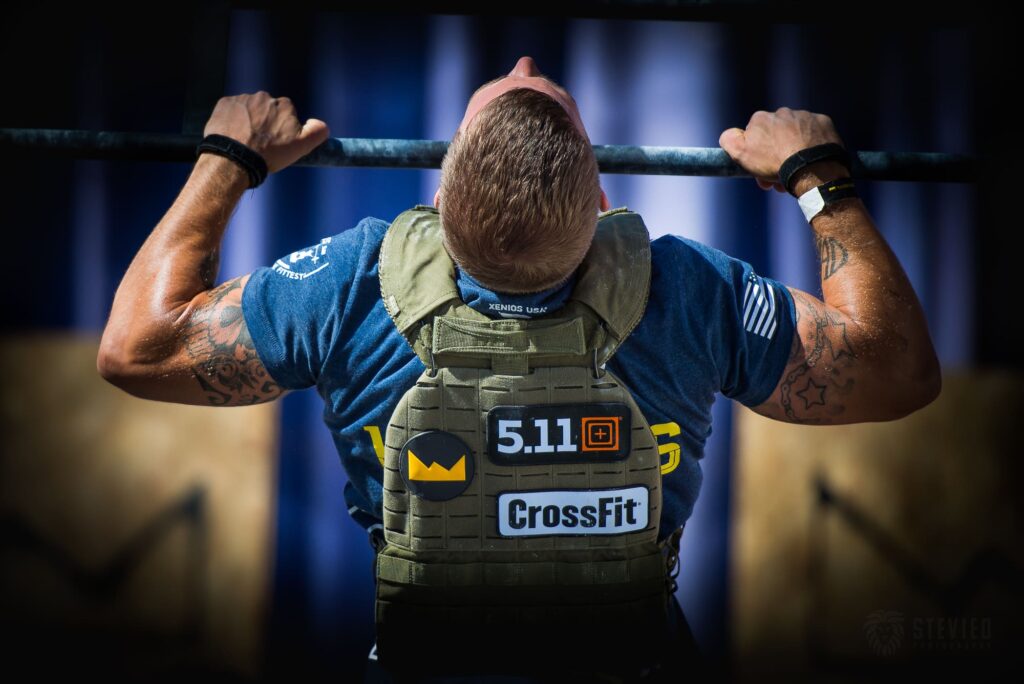
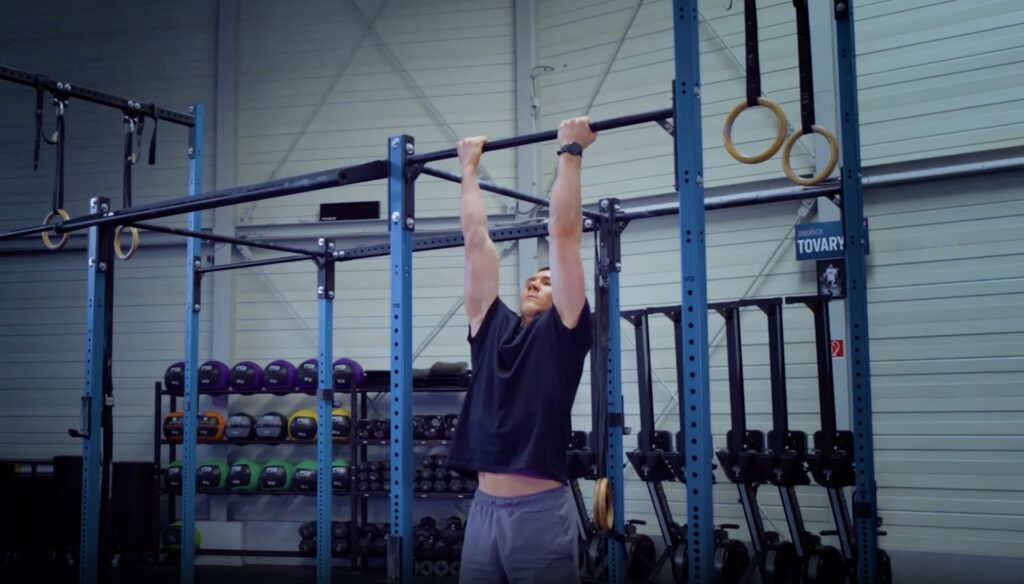
Pull ups look simple. You grab a bar, pull your chin over it, and lower yourself back down. In reality, they are one of the most demanding bodyweight movements you can attempt. Many people spend months or even years trying to get their first strict rep and fail, often assuming they just are not strong enough.
The truth is more nuanced. Strength matters, but it is not the only factor. If you cannot do pull ups yet, there is a combination of physiological, neurological, and technical reasons behind it. Once you understand these, progress becomes much more predictable.
Pull Ups Are a Relative Strength Exercise
What Relative Strength Actually Means
Pull ups are not just about how strong you are. They are about how strong you are relative to your body weight. This is called relative strength.
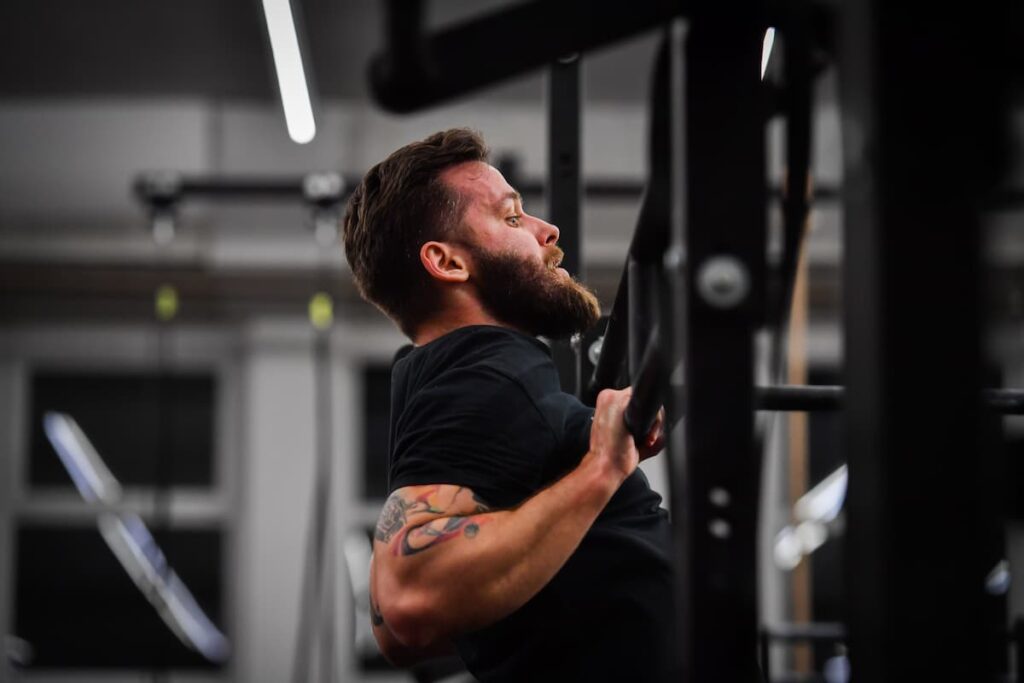
If two people have the same pulling strength but one weighs significantly more, the lighter person will find pull ups easier. This is because they have less mass to move. Research consistently shows that relative strength is one of the strongest predictors of performance in bodyweight exercises. In pull ups specifically, the force required is directly proportional to body mass.
Why This Matters
If you cannot do a pull up, one of the main limiting factors may be:
- Insufficient pulling strength
- Excess body mass relative to strength
- A combination of both
This does not mean you need to lose weight. It means you need to improve your strength to weight ratio.
The Key Muscles Involved
Pull ups primarily rely on:
- Latissimus dorsi
- Biceps brachii
- Rhomboids
- Lower trapezius
- Core stabilizers
Electromyography studies show high activation of the latissimus dorsi and biceps during pull ups, confirming their central role in the movement. If these muscles are not strong enough to move your body weight, the movement simply will not happen.
You Lack Specific Strength, Not General Strength
Strength Is Highly Specific
One of the biggest misconceptions is that general gym strength transfers directly to pull ups. It does not. You might be strong at:
- Rows
- Deadlifts
- Lat pulldowns
But still fail at pull ups. This is because strength is highly task specific. The nervous system adapts to the exact movement patterns you train. Studies on motor learning show that improvements in strength are largely specific to the movement pattern, joint angles, and muscle coordination used during training.
Why Lat Pulldowns Are Not Enough
Lat pulldowns are often seen as a substitute for pull ups. While they help, they are not identical. Key differences include:
- Fixed versus free body movement
- Lower core activation
- Different stabilization demands
Pull ups require you to stabilize your entire body while producing force. This adds a coordination component that machines do not replicate.
What You Should Focus On Instead
To build pull up strength, you need:
- Assisted pull ups
- Negative pull ups
- Isometric holds at the top position
- Scapular pull ups
These exercises mimic the actual movement pattern and train the specific muscles and coordination required.
Your Nervous System Is Not Trained for It Yet
Strength Is Not Just Muscle
Muscle size is only part of the equation. Your nervous system plays a critical role in how much force you can produce. This includes:
- Motor unit recruitment
- Firing frequency
- Coordination between muscles
Early strength gains in training are mostly neural, not muscular.
The Pull Up Coordination Problem
Pull ups require precise coordination between:
- Shoulder extension
- Elbow flexion
- Scapular retraction and depression
If these are not synchronized, your body cannot generate efficient force. Research shows that untrained individuals have lower neuromuscular efficiency, meaning they cannot fully activate their available muscle mass.
Signs of Poor Neural Coordination
- You swing or kip unintentionally
- You cannot control the descent
- You feel disconnected from your back muscles
These are not strength problems alone. They are motor control issues.
Your Scapula Control Is Weak
The Hidden Foundation of Pull Ups
Most people ignore the scapula, but it is essential for pulling strength. Before you even bend your arms in a pull up, your shoulder blades should:
- Depress
- Retract
This creates a stable base for force production.
What Happens Without Scapular Control
If your scapulae are not stable:
- Your lats cannot fully activate
- Your shoulders take unnecessary stress
- Your pulling strength is reduced
Studies on shoulder biomechanics show that proper scapular positioning improves force output and reduces injury risk.
How to Improve It
Start with:
- Scapular pull ups
- Dead hangs with active shoulders
- Banded scapular depressions
These teach you to engage the correct muscles before initiating the pull.
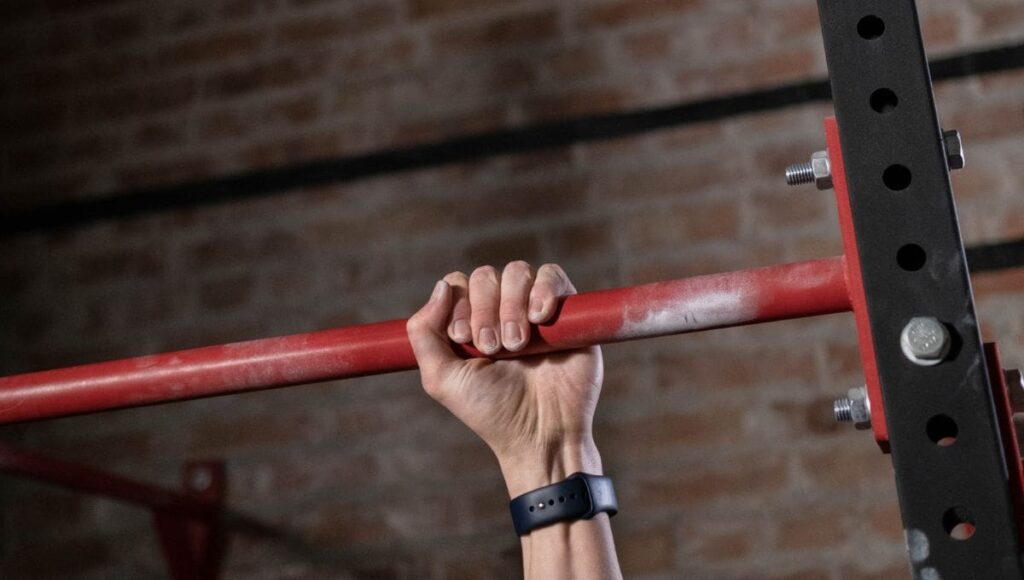
Your Grip Strength Is Limiting You
Grip Is the First Point of Failure
If your hands cannot hold the bar, nothing else matters. Grip strength is often overlooked but is strongly correlated with overall upper body strength. Research shows that grip strength is a reliable indicator of general strength and even predicts performance in pulling tasks.
Why Grip Fatigue Happens Early
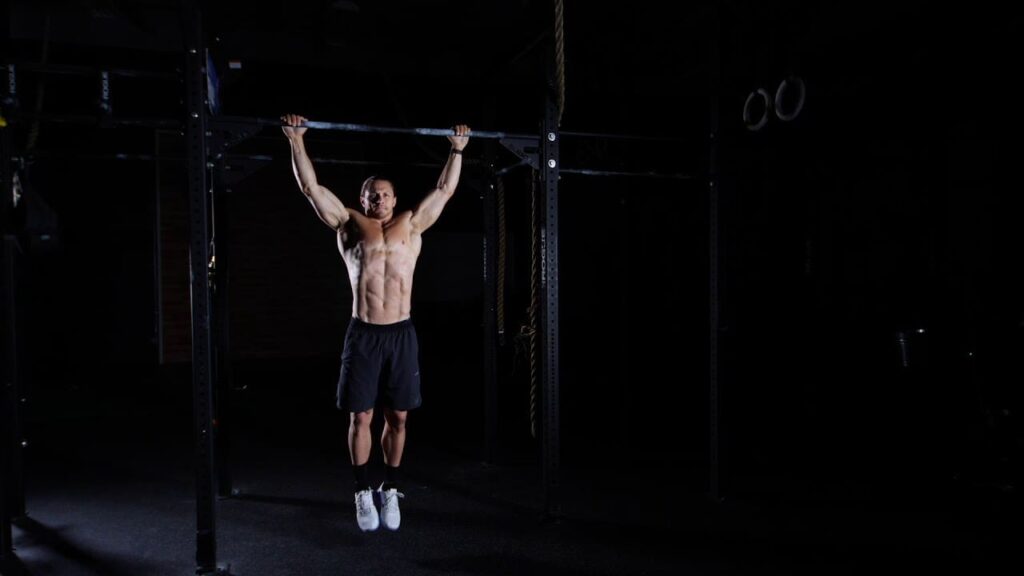
The forearm muscles fatigue faster than larger muscle groups like the lats. This means your grip can fail before your back muscles are fully challenged.
Solutions
- Dead hangs
- Farmer carries
- Thick bar training
Improving grip strength can immediately improve your pull up performance.
Your Body Position Is Inefficient
The Importance of Tension
A strict pull up is not just an upper body movement. It is a full body exercise.
You need:
- Core tension
- Glute activation
- Proper body alignment
Without this, you lose force through energy leaks.
Common Mistakes
- Arching excessively
- Kicking legs
- Loose core
These reduce efficiency and make the movement harder.
The Science Behind It
Research on force transmission shows that a stable core allows better transfer of force between limbs. This means more of your pulling strength actually contributes to lifting your body.
You Are Not Training Eccentrics Enough
The Power of Negative Reps
Eccentric training refers to the lowering phase of a movement. In pull ups, this is when you lower yourself from the bar. Studies show that muscles can produce more force eccentrically than concentrically. This makes eccentric training a powerful tool for building strength.
Why This Matters for Beginners
Even if you cannot pull yourself up, you can still:
- Jump to the top
- Lower yourself slowly
This builds strength in the exact movement pattern required.
Proven Benefits
Eccentric training has been shown to:
- Increase muscle strength
- Improve tendon stiffness
- Enhance neuromuscular coordination
All of these contribute to better pull up performance.
You Are Not Training Frequently Enough
Skill Requires Repetition
Pull ups are a skill as much as they are a strength movement. Training them once a week is often not enough. Motor learning research shows that frequent practice leads to faster skill acquisition.
Optimal Frequency
For beginners:
- 3 to 5 sessions per week
- Submaximal effort
This allows you to practice the movement without excessive fatigue.
Why This Works
Frequent exposure improves:
- Neural efficiency
- Coordination
- Movement confidence
All of which are critical for mastering pull ups.
Your Programming Is Not Progressive
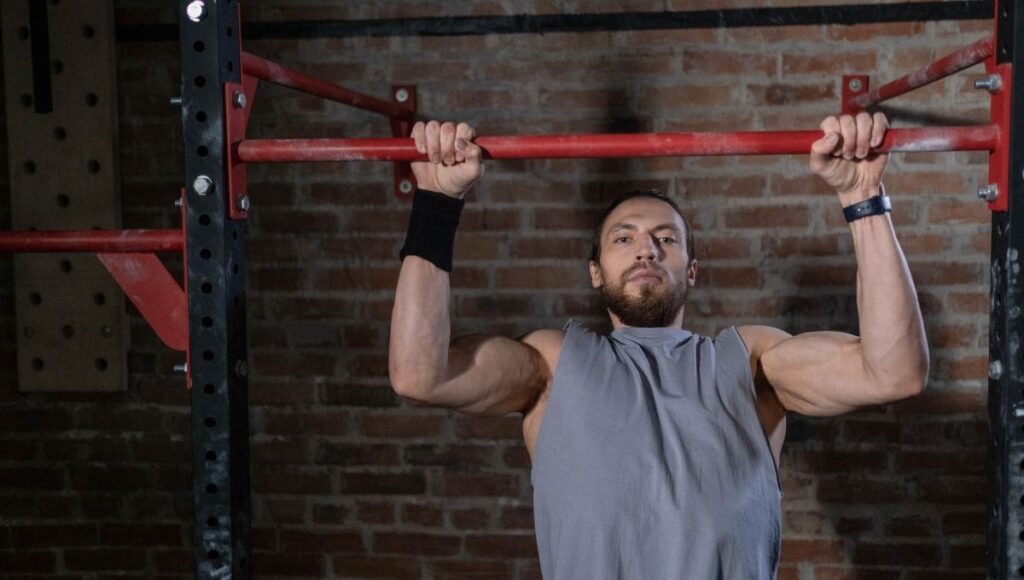
The Need for Progressive Overload
To improve, your training must gradually increase in difficulty.
This can be done through:
- Reducing assistance
- Increasing volume
- Slowing tempo
Without progression, your body has no reason to adapt.
Common Programming Mistakes
- Doing random workouts
- Not tracking progress
- Avoiding difficult variations
These stall progress.
A Better Approach
Follow a structured progression:
- Dead hangs
- Scapular pull ups
- Assisted pull ups
- Negative pull ups
- Full pull ups
Each step builds the foundation for the next.
You Are Not Recovering Properly
Recovery Drives Progress
Strength gains occur during recovery, not during training. If you are not recovering, you are not improving.
Key Recovery Factors
- Sleep
- Nutrition
- Stress management
Research shows that sleep deprivation reduces strength performance and slows recovery. Protein intake is also critical for muscle repair and growth.
Signs of Poor Recovery
- Persistent fatigue
- Decreasing performance
- Joint discomfort
If you notice these, your recovery needs attention.
You Might Be Overestimating How Close You Are
Pull Ups Have a High Strength Threshold
Unlike some exercises, pull ups require a significant baseline of strength before you can perform even one rep. This creates a steep entry barrier.
What This Means
Progress can feel slow at first. You may train for weeks without seeing a full rep. But internally, your body is adapting.
The Breakthrough Effect
Once you reach the required strength threshold, you often go from zero to multiple reps quickly. This is because the limiting factors are no longer holding you back.
How to Actually Get Your First Pull Up
A Practical Plan
Focus on:
- Training 3 to 5 times per week
- Practicing specific pull up variations
- Building grip and scapular strength
Sample Structure
Day 1:
- Assisted pull ups
- Negative pull ups
- Dead hangs
Day 2:
- Scapular pull ups
- Isometric holds
- Core work
Day 3:
- Repeat Day 1 with slightly less assistance
Key Principles
- Stay consistent
- Train with good form
- Progress gradually
The Bigger Picture
Pull ups are not just about upper body strength. They are a combination of:
- Relative strength
- Neuromuscular coordination
- Technique
- Consistency
If you cannot do one yet, it is not because you are incapable. It is because one or more of these elements is underdeveloped. Once you address them systematically, pull ups become achievable.
Conclusion
The real reason you cannot do pull ups yet is not a lack of effort. It is a lack of alignment between your training and the actual demands of the movement. You need to build:
- Strength relative to your body weight
- Movement specific skill
- Neural efficiency
- Proper technique
When these come together, your first pull up is not a matter of if, but when. Stay consistent, train smart, and trust the process.
References
- Andersen, L.L., Magnusson, S.P., Nielsen, M., Haleem, J., Poulsen, K. and Aagaard, P. (2006). Neuromuscular activation in conventional therapeutic exercises and heavy resistance exercises: implications for rehabilitation. Journal of Strength and Conditioning Research, 20(3), pp. 510–516.
- Behm, D.G. and Sale, D.G. (1993). Velocity specificity of resistance training. Sports Medicine, 15(6), pp. 374–388.
- Bohannon, R.W. (2008). Hand-grip dynamometry predicts future outcomes in aging adults. Journal of Geriatric Physical Therapy, 31(1), pp. 3–10.
- Campos, G.E.R., Luecke, T.J., Wendeln, H.K., Toma, K., Hagerman, F.C., Murray, T.F., Ragg, K.E., Ratamess, N.A., Kraemer, W.J. and Staron, R.S. (2002). Muscular adaptations in response to three different resistance training regimens. Journal of Applied Physiology, 88(1), pp. 50–60.
- Gentil, P., Fisher, J. and Steele, J. (2017). A review of the acute effects and long-term adaptations of single-joint and multi-joint exercises during resistance training. Sports Medicine, 47(5), pp. 843–855.
- Hakkinen, K., Komi, P.V. and Alen, M. (1985). Effect of explosive type strength training on isometric force and relaxation time, electromyographic and muscle fibre characteristics of leg extensor muscles. Acta Physiologica Scandinavica, 125(4), pp. 587–600.
Key Takeaways
| Key Factor | Why It Matters | What To Do |
|---|---|---|
| Relative Strength | You must lift your body weight | Build strength and improve strength to weight ratio |
| Movement Specificity | Strength does not fully transfer | Practice pull up variations regularly |
| Neural Coordination | Muscles must work together efficiently | Train frequently with controlled reps |
| Scapular Control | Stabilizes shoulders and improves force | Include scapular pull ups and hangs |
| Grip Strength | Limits your ability to hold the bar | Train grip with hangs and carries |
| Eccentric Strength | Builds strength faster than concentric alone | Use slow negative pull ups |
| Programming | Progression is required for adaptation | Follow structured progressions |
| Recovery | Growth happens outside training | Prioritize sleep and nutrition |