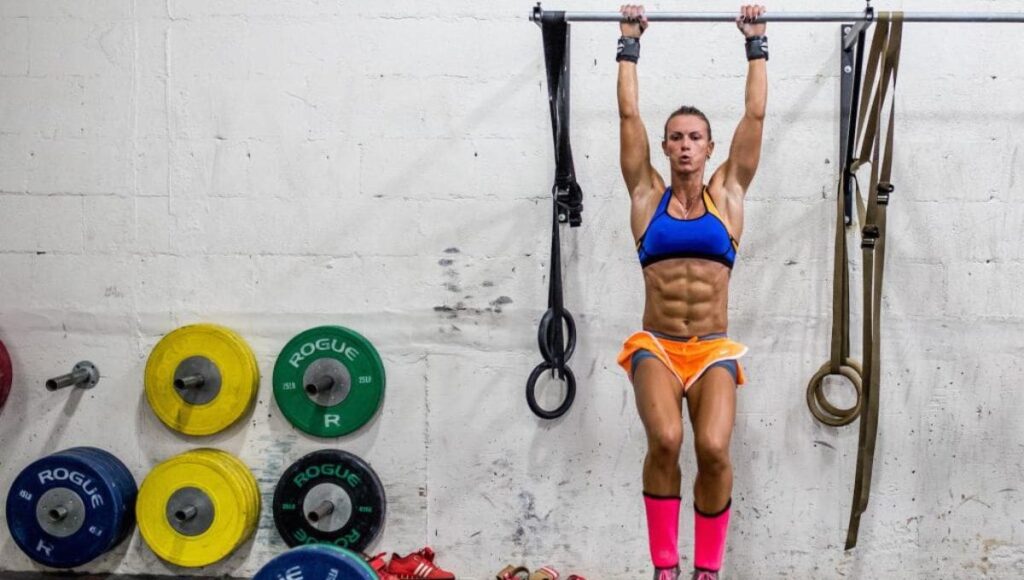
Ab training plateaus are frustrating. You train consistently, you feel the burn, yet your core strength, muscle definition, or performance simply stops improving. This is not a motivation problem. In most cases, it is a stimulus problem.
The abdominal muscles respond to training in the same way as any other skeletal muscle. They adapt to repeated stress. Once adaptation occurs, the same exercises, loads, and volumes no longer provide a strong enough signal to drive further progress. Research consistently shows that plateaus occur when mechanical tension, metabolic stress, and neuromuscular demand are no longer sufficiently increased or varied.
This article explains three science-backed ab training techniques that directly address the most common causes of stalled progress. Each technique is grounded in peer-reviewed research and applied exercise physiology, and each can be used by athletes, CrossFitters, and general fitness enthusiasts alike.
The goal is not novelty for novelty’s sake. The goal is to apply proven training principles to the abdominal muscles in ways that most people neglect.
Understanding Why Ab Plateaus Happen
Before introducing new techniques, it is important to understand why ab training often stalls in the first place.

The rectus abdominis, internal and external obliques, and transverse abdominis are involved in spinal flexion, rotation, anti-extension, anti-rotation, and force transfer between the upper and lower body. Many programs focus almost exclusively on spinal flexion using high-repetition bodyweight movements.
Research shows that when muscles are repeatedly exposed to the same load and movement pattern, neuromuscular efficiency improves, reducing motor unit recruitment for that task. This means the exercise feels easier without providing a sufficient hypertrophy or strength stimulus.
In addition, many ab routines lack progressive overload. Endless sets of sit-ups or crunches rarely increase tension over time. Studies on muscle hypertrophy consistently show that progressive overload is one of the primary drivers of continued adaptation.
Finally, ab training often ignores movement variability and stability demands, despite evidence that the core functions primarily as a stabilizer rather than a prime mover in athletic tasks.
The following techniques directly address these limitations.
Technique 1: Progressive Overload for the Abdominals
Why Progressive Overload Matters for Abs
Progressive overload refers to the gradual increase of stress placed on the body during training. This can be achieved by increasing load, volume, intensity, or complexity. While progressive overload is widely accepted for training limbs, it is often neglected in ab training.
Electromyography studies show that weighted core exercises elicit significantly higher muscle activation than bodyweight variations. Moreover, hypertrophy research confirms that muscles require sufficient mechanical tension to continue growing.
The abdominal muscles are no exception. They contain a mix of slow- and fast-twitch fibers and respond robustly to resistance training when appropriately loaded.
Scientific Evidence Supporting Loaded Ab Training
Research comparing weighted crunches to bodyweight crunches has demonstrated higher rectus abdominis activation with external resistance. In addition, studies on trunk flexor strength show that progressive resistance training leads to significant increases in muscle thickness and force output.
One controlled trial found that participants performing weighted abdominal exercises achieved greater improvements in strength and hypertrophy than those performing high-repetition bodyweight movements, even when total training time was matched.

These findings align with broader hypertrophy literature showing that load progression is essential for continued adaptation.
How to Apply Progressive Overload to Ab Training
Progressive overload for abs does not require extreme weights or unsafe spinal loading. It requires intelligent exercise selection and gradual progression.
Effective methods include:
• Weighted cable crunches
• Decline sit-ups with plates or dumbbells
• Hanging leg raises with ankle weights
• Ab wheel rollouts with added resistance bands
• Weighted Pallof presses
The key is to treat ab exercises like compound lifts. Use rep ranges that allow sufficient tension, typically 6–15 repetitions, and increase resistance once the top end of the range is reached with good technique.
Volume and Frequency Considerations
Research suggests that the abdominal muscles recover relatively quickly due to their postural role and frequent daily activation. However, this does not mean unlimited volume is beneficial.
Most studies on trunk training show optimal results with 2–4 focused sessions per week, using 6–12 challenging sets per session. Excessive daily volume may increase fatigue without providing additional stimulus.
Common Mistakes With Loaded Ab Training
One frequent mistake is sacrificing spinal control for heavier loads. Studies on lumbar spine biomechanics show that excessive spinal flexion under load can increase injury risk if technique degrades.
To mitigate this risk, prioritize controlled tempos, neutral pelvis positioning, and full-range movement under control. Progressive overload should be gradual, not aggressive.
Technique 2: Anti-Movement and Stability-Dominant Training
The Core’s Primary Function
While spinal flexion exercises target the rectus abdominis, research in biomechanics and sports performance consistently shows that the core’s primary function during athletic movement is stabilization.
The abdominal muscles resist extension, rotation, and lateral flexion to protect the spine and transfer force efficiently. Exercises that emphasize anti-movement place high neuromuscular demands on the core without excessive spinal motion.
Scientific Support for Anti-Extension and Anti-Rotation Training
Studies using motion analysis and electromyography demonstrate that anti-extension exercises, such as planks and rollouts, produce high levels of rectus abdominis and transverse abdominis activation.
Similarly, anti-rotation exercises like Pallof presses and unilateral carries significantly activate the obliques and deep stabilizers. Research has shown that these exercises improve trunk stiffness and force transfer efficiency, which are critical for performance and injury prevention.
One longitudinal study found that athletes who incorporated anti-rotation training improved sprint performance and reduced lower back injury incidence compared to controls.
Why Stability Training Breaks Plateaus
Traditional ab training often emphasizes visible fatigue rather than functional stress. Stability-based exercises challenge the nervous system by requiring constant micro-adjustments, increasing motor unit recruitment even without large ranges of motion.
This novel stimulus can reignite progress when hypertrophy or strength gains have stalled. It also addresses weaknesses that are often masked by high-repetition flexion work.
Key Anti-Movement Exercises to Implement
Effective exercises include:
• Ab wheel rollouts
• Long-lever planks
• Pallof presses (kneeling, standing, or split stance)
• Single-arm farmer’s carries
• Dead bug variations with external load
Progression can be achieved by increasing lever length, load, duration, or instability.
Programming Stability-Dominant Training
Research supports shorter sets with higher intent during stability training. Time-based sets of 20–45 seconds or repetition-based sets of 6–12 controlled reps are effective.
These exercises should be performed early in the workout or as standalone core sessions to ensure high-quality effort and neuromuscular engagement.
Technique 3: Training the Abs Through Multiple Planes of Motion

Why Single-Plane Training Limits Progress
Many ab routines focus exclusively on sagittal plane movement, such as crunches and leg raises. However, the trunk operates in three planes: sagittal, frontal, and transverse.
Neglecting rotation and lateral flexion limits overall core development and can create imbalances that stall progress and increase injury risk.
Biomechanical research shows that multi-planar training increases total trunk muscle activation and improves coordination between muscle groups.
Evidence Supporting Rotational and Multi-Planar Training
Studies examining rotational medicine ball throws, cable chops, and woodchoppers demonstrate high oblique activation and improved power transfer.
Research in athletic populations has shown that rotational core training improves throwing velocity, sprint mechanics, and change-of-direction performance.
Furthermore, ultrasound imaging studies reveal increased oblique muscle thickness following structured rotational training programs.
Key Multi-Planar Ab Exercises
Effective rotational and lateral exercises include:
• Cable woodchoppers (high to low and low to high)
• Russian twists with load and controlled tempo
• Side planks with hip abduction
• Landmine rotations
• Medicine ball rotational throws
The emphasis should be on control, range of motion, and appropriate resistance rather than speed alone.
Integrating Multi-Planar Training Into Existing Programs
Multi-planar exercises can be used as primary ab movements or as accessory work following compound lifts.
Research supports using moderate loads with 8–15 repetitions per side to maximize muscle activation without compromising technique.

Rotational power exercises, such as medicine ball throws, are best performed with lower repetitions and full recovery between sets.
Addressing Safety Concerns
Some coaches avoid rotational training due to concerns about spinal stress. However, studies show that controlled, progressive rotational loading within natural ranges of motion does not increase injury risk and may enhance spinal resilience.
The key is to avoid excessive lumbar rotation under high load and instead emphasize thoracic mobility and hip rotation.
How to Combine All Three Techniques
Weekly Structure Example
Research on concurrent training suggests that combining different stimuli within a week leads to more robust adaptation.
A sample weekly structure could include:
• Session 1: Loaded flexion and extension exercises
• Session 2: Stability-dominant anti-movement work
• Session 3: Multi-planar rotational training
This approach ensures mechanical tension, neuromuscular challenge, and movement variability.
Recovery and Adaptation
Abdominal muscles adapt quickly, but recovery still matters. Studies on muscle protein synthesis indicate that recovery periods of 24–48 hours between focused sessions are sufficient for most individuals.
Sleep, nutrition, and overall training load significantly influence outcomes. Core training should complement, not compete with, compound lifts.
Tracking Progress Beyond Aesthetics
Research emphasizes performance-based markers over visual changes alone. Improvements in load tolerance, stability duration, and movement control are reliable indicators of progress.
Visible abdominal definition is influenced by body fat levels, which are primarily determined by nutrition rather than ab training volume.
Final Thoughts on Breaking Ab Plateaus
Breaking an ab training plateau requires respecting the abdominal muscles as adaptable, trainable tissue governed by the same principles as any other muscle group.
Scientific evidence consistently supports progressive overload, stability-focused training, and multi-planar movement as effective strategies for continued improvement.
By applying these techniques systematically, athletes can build stronger, more resilient cores that enhance performance and reduce injury risk while also supporting aesthetic goals.
References
• Behm, D.G. and Anderson, K.G. (2006) ‘The role of instability with resistance training’, Journal of Strength and Conditioning Research, 20(3), pp. 716–722.
• Escamilla, R.F. et al. (2010) ‘Core muscle activation during Swiss ball and traditional abdominal exercises’, Journal of Orthopaedic & Sports Physical Therapy, 40(5), pp. 265–276.
• Hibbs, A.E. et al. (2008) ‘Optimizing performance by improving core stability and core strength’, Sports Medicine, 38(12), pp. 995–1008.
• McGill, S.M. (2010) ‘Core training: Evidence translating to better performance and injury prevention’, Strength and Conditioning Journal, 32(3), pp. 33–46.