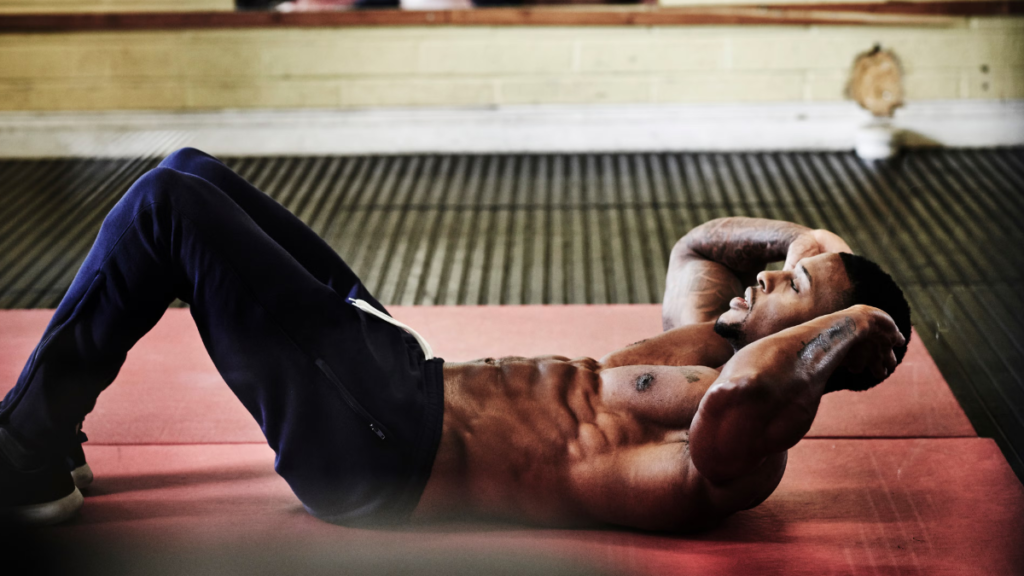
Building a powerful core after 35 is not about chasing six-pack abs. It is about protecting your spine, maintaining athletic performance, preventing injury, and staying strong for decades. As we age, muscle mass declines, connective tissues stiffen, and recovery slows. Hormonal changes also influence body composition and muscle quality. But none of this means your core has to weaken.
In fact, research shows that adults well into their 40s, 50s, and beyond can significantly increase strength, muscle thickness, neuromuscular control, and functional capacity with the right training approach. The key is not endless crunches. It is targeted, intelligent work grounded in biomechanics and physiology.


This article breaks down the three best science-backed methods to forge an iron-strong core after 35:
- Heavy compound lifting for deep trunk strength
- Anti-movement and stability training for spinal resilience
- Progressive rotational and carry-based training for real-world power
Each method is supported by research and built for longevity.
Why Core Training After 35 Is Different
Age-Related Muscle Changes
After the age of 30, adults typically lose 3–8% of muscle mass per decade, with the rate accelerating after 60. This process, known as sarcopenia, affects not only limb muscles but also trunk musculature (Volpi et al., 2004). Loss of muscle mass and strength in the abdominal wall and spinal extensors is associated with impaired balance, increased fall risk, and lower functional capacity.

Importantly, resistance training can counteract these effects. A meta-analysis by Peterson et al. (2010) showed that adults over 50 experience substantial strength gains with progressive resistance training, often comparable in relative terms to younger adults.
Spinal Health and Low Back Pain
Low back pain becomes more prevalent with age. Weakness and poor endurance in trunk muscles are associated with chronic low back pain and reduced functional performance (Steele et al., 2014). Training programs that improve trunk endurance and strength reduce symptoms and improve outcomes.
The goal after 35 is not just aesthetic. It is about reinforcing the spine with muscle that can produce force, resist force, and maintain position under load.
With that in mind, here are the three best methods.
Method 1: Heavy Compound Lifting for Deep Core Strength
If you want a core that is truly strong, not just toned, you must load it. Heavy compound lifts create high levels of trunk muscle activation and stimulate hypertrophy in deep and superficial abdominal muscles.
Why Compound Lifts Build the Core
Exercises like squats, deadlifts, overhead presses, and front-loaded carries demand significant spinal stabilization. The abdominal wall, obliques, erector spinae, and deep stabilizers such as the transversus abdominis must contract isometrically to prevent spinal flexion, extension, and rotation.
Electromyography (EMG) research shows that free-weight squats and deadlifts produce high activation of trunk musculature, often exceeding that of isolated abdominal exercises (Hamlyn et al., 2007). In particular, heavy deadlifts significantly recruit the erector spinae and abdominal wall.
Furthermore, multi-joint resistance training leads to hypertrophy not only in prime movers but also in stabilizing muscles (Schoenfeld, 2010). Mechanical tension is a primary driver of muscle growth. That includes your core.
Intra-Abdominal Pressure and Spinal Stability
Heavy lifting increases intra-abdominal pressure (IAP), which plays a critical role in spinal stability. Research by McGill and colleagues has demonstrated that generating IAP through abdominal bracing reduces spinal compressive load and enhances stability during lifting tasks (McGill and Norman, 1987).
Training with heavy compound lifts teaches the body to coordinate bracing strategies. Over time, this improves neuromuscular efficiency and resilience.
What the Research Says About Older Adults
Resistance training is highly effective in adults over 35 and well beyond. A systematic review by Steib et al. (2010) found that high-intensity resistance training (around 70–85% of one-repetition maximum) produced the greatest strength gains in older adults.
Additionally, resistance training improves muscle cross-sectional area and neuromuscular function even in individuals in their 60s and 70s (Peterson et al., 2010).
There is no reason to avoid lifting heavy simply because you are over 35. The key is intelligent progression and proper technique.
How to Apply It
Focus on:
- Back squats or front squats
- Conventional or trap bar deadlifts
- Romanian deadlifts
- Overhead presses
- Weighted step-ups or lunges
Train in the 3–6 rep range for strength and 6–10 rep range for hypertrophy, using progressive overload. Maintain strict bracing. Think “ribs down, abs tight, neutral spine.”
Two to three sessions per week that include at least one heavy compound lift are sufficient to stimulate adaptation.
Method 2: Anti-Movement and Stability Training
A strong core does not just create movement. It resists it. After 35, spinal integrity becomes increasingly important. Anti-movement training builds endurance, control, and stiffness in the right places.
The Role of Endurance in Core Health
Research shows that trunk muscle endurance is strongly associated with reduced risk of low back pain (McGill, 2001). In fact, endurance may be more protective than maximal strength alone.
Stuart McGill’s work has emphasized the importance of isometric endurance in the trunk muscles, particularly through exercises that avoid excessive spinal flexion (McGill, 2001).
Anti-Extension, Anti-Rotation, Anti-Lateral Flexion
Instead of performing repeated spinal flexion (like crunches), anti-movement training focuses on resisting motion.
Examples include:
- Planks (anti-extension)
- Side planks (anti-lateral flexion)
- Pallof presses (anti-rotation)
- Dead bugs and bird dogs (anti-extension with limb movement)
EMG research shows that planks and side planks effectively activate the rectus abdominis, obliques, and deep stabilizers with lower spinal compression compared to sit-ups (Ekstrom et al., 2007).

Bird dogs also activate both spinal extensors and abdominal musculature while minimizing compressive forces (Ekstrom et al., 2007).
Why This Matters After 35
Intervertebral discs undergo degenerative changes with age, including reduced hydration and elasticity. Repeated loaded spinal flexion may increase injury risk in susceptible individuals. McGill (2007) demonstrated that repeated flexion under load is a mechanism associated with disc herniation in biomechanical models.
Anti-movement training builds stiffness without excessive shear and compressive forces.
Progression Is Critical
Holding a plank for five minutes is not the goal. Instead, aim for:
- High tension holds of 10–30 seconds
- Multiple sets
- Increased difficulty through lever changes (longer limbs, unstable surfaces, added load)
Research suggests that shorter, repeated isometric contractions with high tension may be more effective for strength development than long, low-intensity holds (Kubo et al., 2006).
Practical Structure
Include 2–3 anti-movement exercises at the end of your strength sessions:
- Front plank: 3–4 sets of 15–30 seconds
- Side plank: 3 sets per side
- Pallof press: 3–4 sets of 8–12 reps per side
Focus on quality, not duration.
Method 3: Rotational Power and Loaded Carries
Life and sport happen in three dimensions. After 35, maintaining rotational power and grip-integrated trunk strength is essential for performance and injury prevention.
Rotational Strength and Aging
Power declines earlier and faster than maximal strength with age (Izquierdo et al., 1999). This includes rotational power, which is crucial in many sports and daily activities.
Training rotational movements with medicine balls, cables, and bands improves neuromuscular coordination and force transfer across the kinetic chain.
Cable woodchops and rotational throws activate the internal and external obliques at high levels (Escamilla et al., 2010). These muscles are essential for transmitting force between the lower and upper body.
The Power of Carries
Loaded carries may be one of the most underrated core exercises. Farmer’s carries, suitcase carries, and front rack carries require constant trunk stiffness under dynamic conditions.
Research on unilateral load carriage shows increased activation of lateral trunk stabilizers, particularly the quadratus lumborum and obliques (McGill et al., 2009). Suitcase carries, in particular, create high anti-lateral flexion demand.
Carries also integrate grip strength, which is strongly associated with overall health and mortality risk in adults (Leong et al., 2015). A stronger grip often reflects better overall neuromuscular health.
Why This Is Essential After 35
Asymmetry increases with age due to previous injuries, occupational stress, and movement habits. Unilateral training helps correct imbalances.
Additionally, dynamic stability under load improves balance and coordination. Resistance training that challenges balance has been shown to improve functional performance in older adults (Orr et al., 2008).
How to Implement
Add rotational and carry work 1–2 times per week:
Rotational Work:
- Medicine ball rotational throws: 3–5 sets of 3–5 reps per side
- Cable woodchops: 3–4 sets of 8–12 reps
Carries:
- Farmer’s carry: 20–40 meters x 3–5 sets
- Suitcase carry: 20–30 meters per side
- Front rack carry: 20–30 meters
Use challenging loads that force you to brace hard while maintaining posture.
Programming It All Together
To forge an iron-strong core after 35, combine all three methods in a weekly structure.
Example Weekly Layout:
Day 1:
- Squats (heavy)
- Assistance lower body
- Planks and Pallof presses
Day 2:
- Deadlifts or Romanian deadlifts
- Overhead press
- Suitcase carries
Day 3:
- Front squats or lunges
- Medicine ball rotational throws
- Side planks
This integrated approach builds maximal strength, endurance, and dynamic control.
Recovery and Adaptation After 35
Recovery capacity changes with age due to hormonal shifts and reduced anabolic signaling. However, resistance training remains highly effective.
Ensure:
- At least 48 hours between heavy sessions for the same movement pattern
- Adequate protein intake (around 1.6 g/kg/day has been shown to support muscle growth in resistance-trained individuals) (Morton et al., 2018)
- Sleep of 7–9 hours per night
Nutrition and sleep amplify adaptation to training.
What to Avoid
- Excessive crunches and sit-ups under load
- High-rep spinal flexion work
- Neglecting heavy resistance training
- Ignoring unilateral weaknesses
Core training should support your spine, not irritate it.
Final Thoughts
An iron-strong core after 35 is not built through gimmicks. It is built through:
- Heavy compound lifting
- Anti-movement stability training
- Rotational power and loaded carries
This combination is grounded in biomechanics, supported by research, and designed for longevity.
Train hard. Brace with intent. Move in all planes. Stay consistent. Strength after 35 is not just possible. It is expected.
Key Takeaways
| Method | Why It Works | Key Exercises | Frequency |
|---|---|---|---|
| Heavy Compound Lifts | High trunk activation and hypertrophy through mechanical tension | Squats, Deadlifts, Overhead Press | 2–3x per week |
| Anti-Movement Training | Improves spinal stability and endurance with lower injury risk | Planks, Side Planks, Pallof Press | 2–3x per week |
| Rotational & Carries | Builds real-world power and asymmetrical stability | Woodchops, Med Ball Throws, Suitcase Carries | 1–2x per week |
References
- Ekstrom, R.A., Donatelli, R.A. and Carp, K.C., 2007. Electromyographic analysis of core trunk, hip, and thigh muscles during 9 rehabilitation exercises. Journal of Orthopaedic & Sports Physical Therapy, 37(12), pp.754–762.
- Escamilla, R.F., Lewis, C., Pecson, A., Imamura, R. and Andrews, J.R., 2010. Muscle activation among supine, prone, and side position exercises with and without a Swiss ball. Sports Health, 2(3), pp. 250–258.
- Hamlyn, N., Behm, D.G. and Young, W.B., 2007. Trunk muscle activation during dynamic weight-training exercises and isometric instability activities. Journal of Strength and Conditioning Research, 21(4), pp.1108–1112.
- Izquierdo, M., Aguado, X., Gonzalez, R., Lopez, J.L. and Hakkinen, K., 1999. Maximal and explosive force production capacity and balance performance in men of different ages. European Journal of Applied Physiology, 79(3), pp.260–267.
- Kubo, K., Kanehisa, H. and Fukunaga, T., 2006. Effects of different duration isometric contractions on tendon elasticity in human quadriceps muscles. Journal of Physiology, 536(2), pp.649–655.