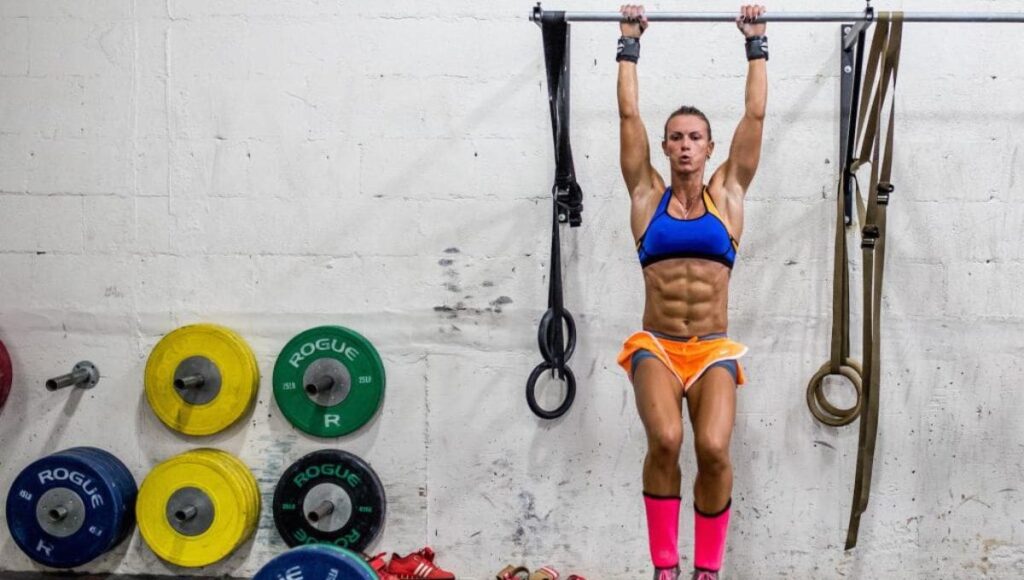


Strong, toned abs are about far more than aesthetics. For women, a well-trained core improves posture, reduces injury risk, supports the spine, enhances athletic performance, and plays a critical role in everyday movement.
Science is very clear on this: core strength is linked to better balance, improved force transfer between the upper and lower body, and reduced lower-back pain.
Despite this, many women are still given outdated or ineffective advice about abdominal training. Endless crunches, spot-reduction myths, and fear-based messaging around heavy or challenging movements continue to dominate mainstream fitness culture. Research does not support these ideas. Instead, evidence shows that the most effective ab training focuses on progressive overload, full-core engagement, and movements that challenge stability, anti-rotation, and spinal control.
This article presents three complete, science-backed ab workouts designed specifically for women who want toned, strong abs. Each workout targets the core in a different way, drawing on biomechanics, electromyography (EMG) research, and exercise science principles.
These workouts are not random collections of exercises. They are structured programs that build strength, definition, and functional resilience over time.

Before diving into the workouts, it is important to understand what “toned” abs actually mean from a physiological perspective.
What “Toned” Abs Really Mean
The term “toned” is often misunderstood. Muscles do not become long and lean through specific exercises. Muscle shape is largely determined by genetics. What people perceive as “toned” is the combination of increased muscle size and reduced body fat.
Scientific research consistently shows that localized fat loss, also known as spot reduction, does not occur. Fat loss happens systemically, not in isolated areas. Ab exercises strengthen and hypertrophy the abdominal muscles, but visible definition depends on overall body fat levels, which are influenced by nutrition, total energy expenditure, and hormonal factors.
For women, hormonal differences such as higher estrogen levels influence fat distribution, often leading to greater fat storage in the hips, thighs, and lower abdomen. This is normal and biologically protective. Core training still significantly improves muscle definition, even if visible abs appear at different body fat levels compared to men.
What ab training can reliably do is increase muscle thickness, strength, endurance, and neuromuscular control. These adaptations lead to a firmer, tighter appearance and better functional performance, regardless of visible six-pack definition.
The Anatomy of the Female Core
The core is not a single muscle. It is a complex system that stabilizes the spine and transfers force throughout the body.
The primary abdominal muscles include:
The rectus abdominis, which flexes the spine and contributes to trunk stability.
The external and internal obliques, which are responsible for rotation, side bending, and anti-rotation.
The transversus abdominis, a deep stabilizing muscle that increases intra-abdominal pressure and supports the spine.
In addition to these muscles, effective core training also involves the diaphragm, pelvic floor, erector spinae, glutes, and hip flexors. Research shows that coordinated activation of these muscles is essential for spinal health and athletic movement.
Women, particularly postpartum women, may experience changes in core function due to pregnancy-related adaptations such as diastasis recti. While this article does not replace medical guidance, evidence-based core training can improve function and reduce symptoms when appropriately scaled.
How These Workouts Are Designed
Each workout in this article follows key scientific principles:
Progressive overload: Muscles adapt when they are challenged beyond their current capacity.
Movement variety: Different exercises target different regions and functions of the core.
Time under tension: Slower tempos and isometric holds increase muscle activation.
Stability and anti-movement: Research shows that resisting movement is as important as producing movement for core strength.
Neuromuscular control: Exercises are selected to improve coordination, not just muscle fatigue.
These workouts can be performed two to four times per week, depending on overall training volume and recovery.

Workout 1: Deep Core Strength and Stability
This workout focuses on the muscles responsible for spinal stability and posture. It is particularly effective for building a strong foundation and improving core endurance.
Dead Bug Variations
The dead bug is widely supported by research as a low-risk, high-reward core exercise. EMG studies show high activation of the transversus abdominis and rectus abdominis while maintaining a neutral spine.
Lie on your back with arms extended toward the ceiling and hips and knees bent to 90 degrees. Brace your core as if preparing for impact. Slowly extend the opposite arm and leg toward the floor without allowing your lower back to arch. Return to the starting position and alternate sides.
Perform 3 sets of 8 to 12 controlled repetitions per side.
Side Plank With Hip Abduction
Side planks activate the obliques more effectively than traditional crunches, according to EMG research. Adding hip abduction increases gluteus medius involvement, which improves pelvic stability.
Lie on your side with your elbow under your shoulder. Lift your hips to form a straight line from head to feet. Raise the top leg slightly while maintaining balance and control.
Hold for 20 to 40 seconds per side, for 3 sets.
Bird Dog With Pause
The bird dog challenges spinal stability while engaging the posterior chain. Research shows it is effective for improving core endurance and reducing lower-back pain.
Begin on all fours. Extend one arm and the opposite leg while keeping the hips and shoulders square. Pause for three seconds at full extension before returning to the start.
Perform 3 sets of 10 repetitions per side.
Why This Workout Works
Stability-focused exercises improve intra-abdominal pressure and motor control, which are essential for both performance and injury prevention. Studies indicate that endurance-based core training improves functional outcomes more effectively than flexion-based exercises alone.
This workout is ideal for beginners, postpartum women (with clearance), or anyone rebuilding core strength.
Workout 2: Dynamic Strength and Muscle Definition
This workout emphasizes controlled spinal movement and rotation, targeting the rectus abdominis and obliques to promote muscle hypertrophy and visible definition.
Hanging or Captain’s Chair Knee Raises
Research shows that hanging knee raises produce significantly higher lower abdominal activation compared to crunches. The instability of hanging increases neuromuscular demand.
Lift your knees toward your chest while maintaining a posterior pelvic tilt. Avoid swinging or using momentum.
Perform 4 sets of 10 to 15 repetitions.
Cable or Resistance Band Woodchoppers
Rotational movements activate the obliques through a large range of motion. Studies demonstrate high oblique activation during diagonal chopping patterns.
Stand with feet shoulder-width apart. Pull the cable or band diagonally across your body, rotating through the torso while keeping the hips stable.
Perform 3 sets of 12 repetitions per side.
Decline Sit-Ups With Slow Tempo
While traditional sit-ups are often criticized, controlled decline sit-ups increase rectus abdominis activation when performed with proper technique. Research indicates higher muscle engagement when tempo is slowed.
Lower yourself for three seconds, pause briefly, then sit up under control.
Perform 3 sets of 8 to 12 repetitions.
Pallof Press Holds
The Pallof press is an anti-rotation exercise shown to activate the obliques and deep core musculature effectively.
Press the handle straight out from your chest and hold for 10 to 20 seconds without allowing rotation.
Perform 3 sets per side.
Why This Workout Works
Muscle hypertrophy occurs when mechanical tension and metabolic stress are applied. Dynamic ab exercises performed under control provide sufficient stimulus for growth. Studies show that combining rotation and flexion leads to more balanced core development.

This workout is best performed by women who already have basic core control.
Workout 3: Athletic Core Power and Conditioning
This workout targets the core’s role in force production and transfer. It is particularly effective for athletes and women who enjoy high-intensity training.
Medicine Ball Slams
Explosive movements increase neural drive and muscle recruitment. Research supports the use of ballistic training to improve power output.
Lift the ball overhead and slam it forcefully into the ground while bracing the core.
Perform 4 sets of 10 repetitions.
Toes-to-Bar or Lying Leg Raises
Toes-to-bar produce extremely high EMG activation of the rectus abdominis and hip flexors. Regression to lying leg raises is appropriate if needed.
Perform 3 sets of 8 to 15 repetitions.
Russian Twists With Load
Weighted rotational exercises significantly increase oblique activation. Research shows greater muscle recruitment when load is added gradually.
Rotate from side to side while maintaining an upright posture.
Perform 3 sets of 20 total repetitions.
Farmer’s Carries
Loaded carries challenge the entire core through anti-lateral flexion and posture control. Studies show improvements in trunk stability and grip strength.
Carry heavy dumbbells or kettlebells for 30 to 60 seconds.
Perform 4 rounds.
Why This Workout Works
Athletic core training improves the ability to transmit force efficiently. Conditioning-based core work also increases caloric expenditure, supporting overall fat loss. Research shows that compound, loaded movements produce greater hormonal and metabolic responses than isolated exercises.
How Often Should Women Train Abs?
Contrary to popular belief, abs do not need to be trained every day. Research indicates that muscles require recovery time to adapt. Two to four sessions per week is sufficient for strength and hypertrophy.
Volume should be adjusted based on overall training load, stress, sleep, and nutrition.
Nutrition and Recovery Considerations
Protein intake supports muscle repair and growth. Research suggests that women benefit from protein intakes of approximately 1.6 to 2.2 grams per kilogram of body weight when training regularly.
Adequate sleep is essential. Studies show that sleep deprivation negatively impacts muscle recovery and fat loss.
Stress management is also critical. Elevated cortisol levels are associated with increased abdominal fat storage, particularly in women.
Common Myths About Ab Training for Women
The idea that heavy or challenging core exercises will make women bulky is not supported by evidence. Women have lower testosterone levels, limiting excessive hypertrophy.
Another myth is that crunches flatten the stomach. Research shows that posture, breathing mechanics, and deep core engagement play a larger role.
Final Thoughts
Strong, toned abs are built through intelligent training, not endless repetitions or extreme dieting. Science supports a balanced approach that includes stability, strength, and power-based core work.
The three workouts in this article provide a complete framework for women who want functional strength and visible muscle tone. When paired with proper nutrition and recovery, these programs deliver results that extend far beyond aesthetics.
References
• Akuthota, V. and Nadler, S.F. (2004) ‘Core strengthening’, Archives of Physical Medicine and Rehabilitation, 85(3), pp. 86–92.
• Behm, D.G., Drinkwater, E.J., Willardson, J.M. and Cowley, P.M. (2010) ‘The use of instability to train the core musculature’, Applied Physiology, Nutrition, and Metabolism, 35(1), pp. 91–108.
• Escamilla, R.F., Lewis, C., Bell, D., Bramblet, G., Daffron, J., Lambert, S., Pecson, A. and Imamura, R. (2010) ‘Core muscle activation during Swiss ball and traditional abdominal exercises’, Journal of Orthopaedic & Sports Physical Therapy, 40(5), pp. 265–276.
• McGill, S.M. (2010) ‘Core training: Evidence translating to better performance and injury prevention’, Strength and Conditioning Journal, 32(3), pp. 33–46.