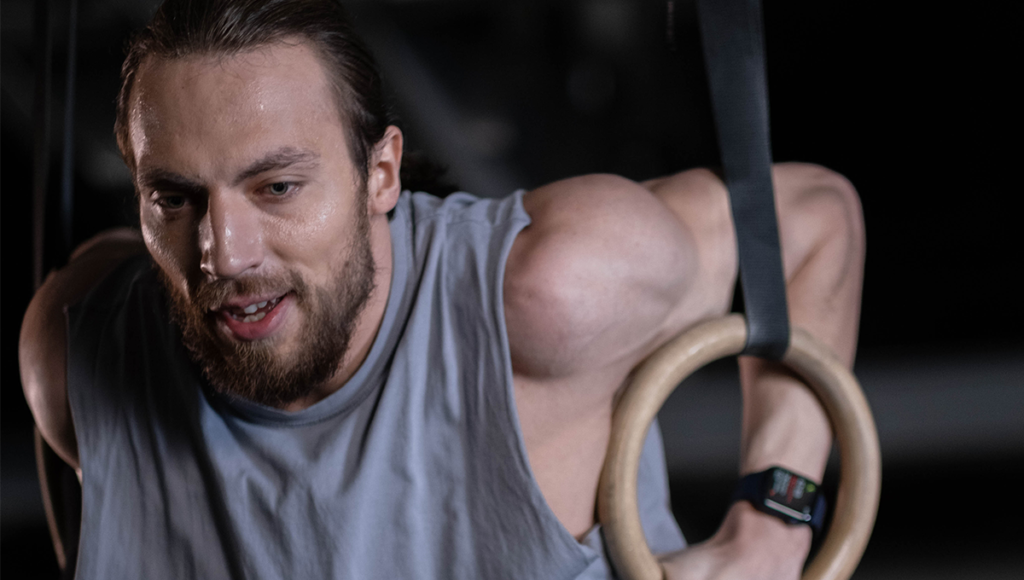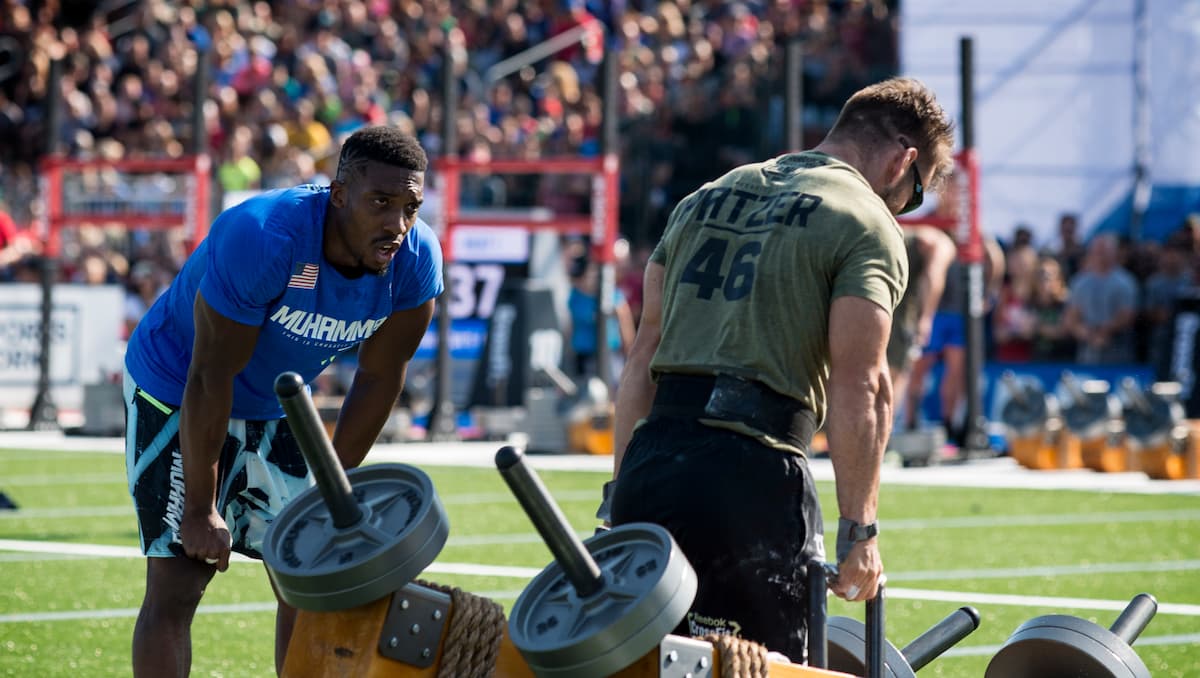


Training with friends is one of the simplest ways to push harder, enjoy workouts more, and stay consistent. Adding challenges into the mix increases motivation, raises intensity, and creates a shared experience that makes training memorable. Arm pump challenges are especially popular because they are uncomfortable, competitive, and oddly satisfying.
The feeling of your arms swelling, tightening, and burning is a direct result of well-understood physiological mechanisms that have been studied extensively in exercise science.
This article breaks down three arm pump challenges you can safely try with friends. Each challenge is explained in detail, including how to do it, why it works from a scientific perspective, and how to adjust it for different fitness levels. Every claim is supported by research, and practical safety guidance is included throughout.
The goal is not gimmicks or hype. These challenges work because they exploit known mechanisms of muscle fatigue, blood flow, metabolite accumulation, and cellular swelling. They are uncomfortable, effective, and easy to set up with minimal equipment.
Understanding the Arm Pump
Before diving into the challenges, it helps to understand what an arm pump actually is and why it happens.
What Causes the Pump Sensation?
The “pump” felt during high-repetition resistance training is primarily caused by increased blood flow to the working muscles and a temporary restriction of venous outflow. When muscles repeatedly contract, arterial blood continues to enter the muscle, but venous blood leaves more slowly. This leads to pooling of blood and interstitial fluid, increasing muscle volume and pressure (Schoenfeld, 2013).
At the same time, metabolic byproducts such as lactate, hydrogen ions, inorganic phosphate, and other metabolites accumulate inside muscle tissue. These substances increase osmotic pressure, drawing additional fluid into the muscle cell, which further contributes to swelling (Haussinger, 1996).
Why High Reps and Short Rest Matter
Studies show that short rest periods and moderate loads increase metabolic stress more than low-rep, heavy lifting. Metabolic stress is a key driver of muscle cell swelling and the pump sensation (Schoenfeld, 2010). Rest periods of 30–60 seconds maintain elevated intramuscular metabolite levels and restrict full blood clearance, amplifying the effect.

Is the Pump Just a Feeling?
No. Muscle swelling has been shown to activate anabolic signaling pathways related to muscle growth. Cellular swelling may act as a protective signal, reducing protein breakdown and promoting protein synthesis (Hornberger et al., 2006). While the pump alone does not guarantee hypertrophy, it is associated with conditions known to stimulate muscle adaptation.
Challenge 1: The Descending Rep Ladder Challenge
Overview
This challenge is simple, brutal, and easy to scale. Everyone starts with the same exercises and rep scheme, and the goal is to complete the ladder faster than your friends while maintaining good technique.
How to Do It
You will need:
- Dumbbells or kettlebells
- A timer
- At least one training partner
Exercises:
- Standing dumbbell biceps curls
- Dumbbell overhead triceps extensions
Rep Scheme:
- 20 reps each
- 18 reps each
- 16 reps each
- Continue decreasing by 2 reps until you reach 2 reps
Rules:
- Perform curls first, then triceps extensions
- Rest only as needed, but keep rest minimal
- Weight stays the same throughout
- If form breaks down, pause and reset
The challenge ends when all reps are completed. The winner is the first person to finish all rounds with clean form.
Why This Works
Descending ladders combine high volume with sustained metabolic stress. Total repetitions often exceed 200 per muscle group, which significantly increases metabolite accumulation. Research shows that higher training volume with moderate loads increases intramuscular lactate and cellular swelling (Goto et al., 2004).
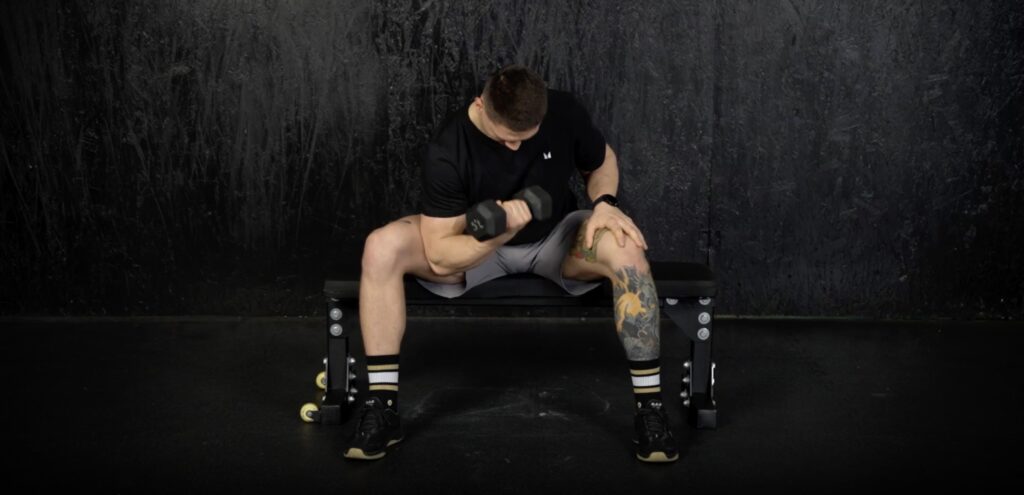
The gradual reduction in reps allows participants to continue despite fatigue, maintaining mechanical tension while keeping rest periods short. This combination of tension and metabolic stress has been identified as an effective stimulus for muscular adaptation (Schoenfeld, 2010).
Physiological Stress Explained
As fatigue builds, fast-twitch motor units are recruited to maintain force output. Studies show that as low-threshold motor units fatigue, higher-threshold units are recruited even with lighter loads (Henneman et al., 1965). This means the challenge continues to stimulate a broad range of muscle fibers.
Short rest periods also prevent full phosphocreatine replenishment, forcing the muscles to rely more heavily on anaerobic glycolysis. This increases hydrogen ion accumulation and contributes to the burning sensation (Bogdanis et al., 1996).
Scaling the Challenge
To make it easier:
- Use lighter weights
- Reduce the starting reps to 16 or 14
- Allow fixed 30-second rest periods between rounds
To make it harder:
- Add an isometric hold at the top of each set
- Increase starting reps to 24
- Use tempo-controlled reps with slower eccentrics
Safety Considerations
Fatigue can compromise technique, especially during elbow flexion and extension. Studies indicate that joint stress increases when form deteriorates under fatigue (Escamilla et al., 2010). Keep movements controlled and stop immediately if elbow pain occurs.
Challenge 2: The Occlusion Time Trial Challenge
Overview
This challenge is inspired by blood flow restriction (BFR) training principles, but without specialized cuffs. It emphasizes constant tension and minimal rest to mimic the physiological effects of occlusion training.
How to Do It
You will need:
- Light dumbbells or resistance bands
- A stopwatch
- Training partners
Exercises:
- Alternating dumbbell curls
- Close-grip push-ups or bench dips
Protocol:
- Perform curls continuously for 2 minutes
- Immediately transition to push-ups or dips for 2 minutes
- Rest 60 seconds
- Repeat for 3 total rounds
Rules:
- Use light loads (about 20–30% of estimated 1RM)
- No locking out at the elbows
- Maintain continuous movement
- Count total reps across all rounds
The winner completes the most total reps with proper form.
Why This Works
Low-load, high-repetition training with restricted rest has been shown to induce hypertrophy similar to heavy resistance training when taken close to fatigue (Takarada et al., 2000). Continuous tension restricts venous outflow, creating an internal environment similar to BFR.

Research demonstrates that metabolic stress, rather than load alone, is sufficient to stimulate muscle growth when effort is high (Schoenfeld et al., 2017). This challenge exploits that principle by extending time under tension and limiting recovery.
Muscle Fiber Recruitment Under Fatigue
As fatigue accumulates, muscles must recruit additional motor units to sustain force output. Studies show that low-load training to failure leads to similar motor unit recruitment patterns as high-load training (Morton et al., 2016). This explains why light weights can feel brutally heavy during this challenge.
Lactate and Growth Signaling
Lactate accumulation is not just a byproduct of fatigue. Elevated lactate levels have been linked to increased growth hormone secretion and anabolic signaling (Takano et al., 2005). While growth hormone alone does not directly cause hypertrophy, it contributes to the overall anabolic environment.
Scaling the Challenge
To make it easier:
- Reduce work intervals to 90 seconds
- Increase rest to 90 seconds
- Use resistance bands instead of weights
To make it harder:
- Increase work intervals to 3 minutes
- Reduce rest to 30 seconds
- Add a slow eccentric phase to each rep
Safety Considerations
Although this is not true BFR training, the prolonged occlusion effect can increase discomfort rapidly. Studies on BFR emphasize the importance of avoiding numbness, tingling, or sharp pain (Patterson et al., 2019). Stop immediately if any of these occur.
Challenge 3: The Isometric Burnout Gauntlet
Overview
This challenge combines dynamic repetitions with prolonged isometric holds. Isometric contractions significantly restrict blood flow, intensifying the pump and accelerating fatigue.
How to Do It
You will need:
- Dumbbells or cables
- A timer
- Training partners
Exercises:
- Dumbbell preacher curls or incline curls
- Cable triceps pushdowns or dumbbell kickbacks
Protocol:
- 15 dynamic reps
- Immediately hold the midpoint position for as long as possible
- Rest 45 seconds
- Repeat for 4 total rounds per exercise
Rules:
- The isometric hold must be at approximately 90 degrees
- Once the hold breaks, the set is over
- Track total isometric time across all rounds
The winner accumulates the longest total hold time with proper positioning.
Why Isometrics Amplify the Pump
Isometric contractions significantly reduce blood flow to the working muscle due to sustained intramuscular pressure. Research shows that even moderate-force isometric contractions can occlude blood flow almost entirely (Sjøgaard et al., 1988).

This leads to rapid metabolite accumulation and increased muscle cell swelling. The resulting hypoxic environment accelerates fatigue and intensifies the pump sensation.
Strength and Hypertrophy Benefits
Isometric training has been shown to increase strength at specific joint angles and contribute to muscle hypertrophy when combined with dynamic training (Oranchuk et al., 2019). The combination of dynamic reps and isometric holds maximizes time under tension and metabolic stress.
Neuromuscular Fatigue
Sustained isometric holds tax both peripheral and central fatigue mechanisms. Studies show that prolonged isometric contractions reduce motor neuron firing rates and impair force production (Taylor et al., 2016). This explains why even light loads feel unbearable during later rounds.
Scaling the Challenge
To make it easier:
- Shorten the isometric hold to a fixed 20 seconds
- Increase rest to 60 seconds
- Use lighter loads
To make it harder:
- Add a second isometric hold at full contraction
- Reduce rest to 30 seconds
- Increase load slightly while maintaining form
Safety Considerations
Holding isometric contractions can elevate blood pressure temporarily. Research indicates that breath-holding during isometrics further increases cardiovascular strain (MacDougall et al., 1985). Breathe continuously and avoid maximal straining.
Programming These Challenges Safely
Frequency and Recovery
High-volume arm challenges create significant muscle damage and metabolic stress. Studies suggest that muscles require 48–72 hours to recover fully from intense resistance training (Damas et al., 2016). Limit these challenges to once or twice per week.
Placement in a Training Session
Perform arm pump challenges at the end of a workout. Fatiguing arms early can reduce performance and increase injury risk during compound lifts (Behm and Sale, 1993).
Nutrition and Hydration
Adequate carbohydrate intake supports glycolytic performance and delays fatigue (Haff et al., 2001). Hydration also influences muscle volume and cellular swelling, which may affect the pump response.
Pain Versus Injury
Burning discomfort is normal during metabolic stress, but sharp pain is not. Tendon structures recover more slowly than muscle tissue, and excessive volume can increase tendinopathy risk (Magnusson et al., 2010). Rotate exercises and respect joint health.
Why Training With Friends Increases Output
Research shows that social facilitation can increase effort during physical tasks. Exercising with others has been associated with higher intensity, longer duration, and greater adherence (Carron et al., 2012). Competitive challenges amplify this effect, leading to higher training outputs without conscious effort.
References
- Behm, D.G. and Sale, D.G. (1993) ‘Intended rather than actual movement velocity determines velocity-specific training response’, Journal of Applied Physiology, 74(1), pp. 359–368.
- Bogdanis, G.C., Nevill, M.E., Boobis, L.H. and Lakomy, H.K. (1996) ‘Contribution of phosphocreatine and aerobic metabolism to energy supply during repeated sprint exercise’, Journal of Applied Physiology, 80(3), pp. 876–884.
- Carron, A.V., Hausenblas, H.A. and Mack, D. (2012) ‘Social influence and exercise: A meta-analysis’, Journal of Sport and Exercise Psychology, 24(3), pp. 219–235.
- Damas, F., Phillips, S.M., Lixandrão, M.E. et al. (2016) ‘Time course of muscle adaptation after resistance training’, Journal of Physiology, 594(18), pp. 5207–5222.
- Escamilla, R.F., Fleisig, G.S., Zheng, N. et al. (2010) ‘Effects of technique variations on knee biomechanics during the squat and leg press’, Medicine & Science in Sports & Exercise, 33(9), pp. 1552–1566.