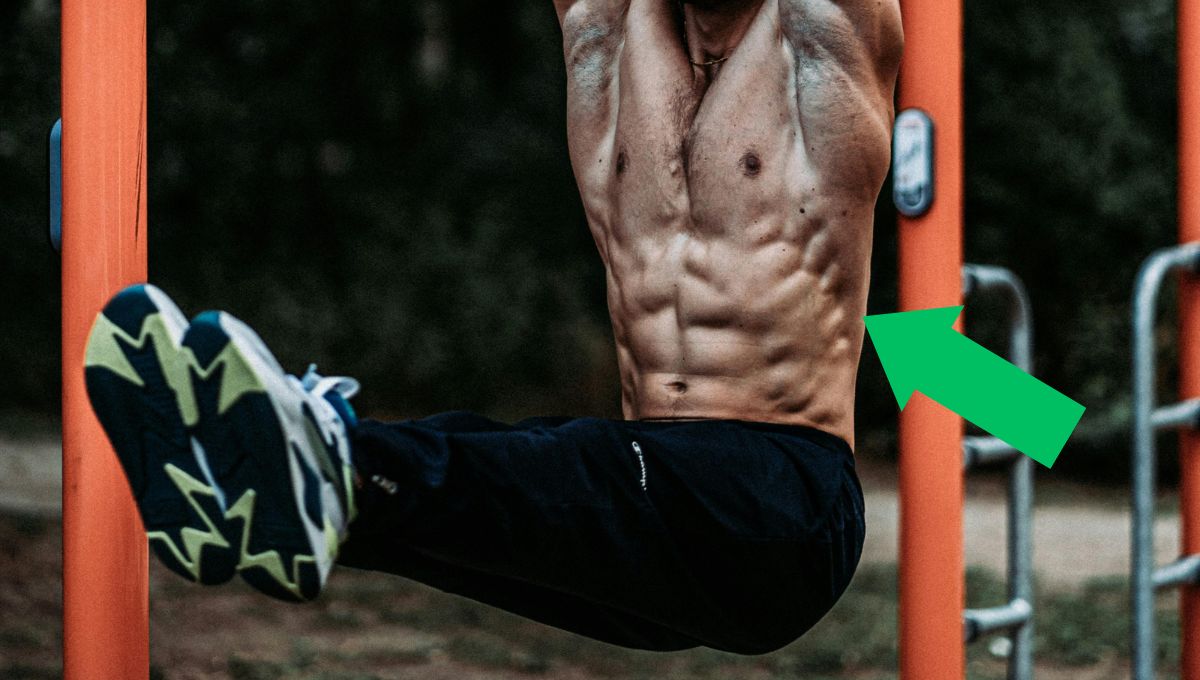


Strong obliques are not just about carving visible lines into your midsection. They are essential for rotation, anti-rotation, spinal stability, force transfer, athletic performance, and injury prevention. In functional fitness, where movements are multi-planar and high intensity, the obliques play a central role in protecting the spine and maximizing power output.
The internal and external obliques work together with the transverse abdominis, rectus abdominis, erector spinae, diaphragm, and pelvic floor to form the core’s dynamic support system. When you lift, throw, sprint, jump, or change direction, your obliques help control trunk rotation and resist unwanted movement.
Research consistently shows that core stability contributes to improved force production and reduced injury risk, particularly in the lower back. Poor trunk control has been associated with increased risk of lower extremity injury, while enhanced core stiffness improves power transfer between the hips and shoulders.
If you want obliques that are not just visible but functionally strong, you need exercises that train rotation, anti-rotation, and lateral stability under load.
Here are three of the best science-backed functional fitness exercises for building iron-strong obliques.
1. Pallof Press
The Pallof press is one of the most effective anti-rotation exercises you can perform. Unlike crunches or side bends, it trains your obliques to resist rotational force — a critical function in nearly every athletic movement.
Why Anti-Rotation Matters
The primary role of the obliques in sport is not to create movement, but to prevent excessive movement. During running, throwing, lifting, and jumping, the trunk must resist rotational forces generated by the limbs.

Research shows that increased core stiffness enhances force transmission between the lower and upper body. When your trunk is stable, power generated by the hips is transferred efficiently through the torso into the arms. Without that stability, force leaks occur.
The Pallof press directly trains this function.
What the Science Says
Electromyography (EMG) studies show that anti-rotation exercises such as the Pallof press produce high activation of the internal and external obliques. Research comparing core exercises consistently demonstrates that instability and resistance-based anti-rotation tasks activate the obliques more effectively than traditional floor crunches.
Stuart McGill’s research on spinal stability emphasizes that endurance and stiffness of the lateral abdominal wall are critical for spine health and performance. Exercises that resist rotation, rather than repeatedly flexing the spine, reduce spinal shear forces while building functional strength.
How to Perform the Pallof Press
- Attach a resistance band or cable at chest height.
- Stand perpendicular to the anchor point.
- Hold the handle at your chest with both hands.
- Brace your core.
- Press your hands straight out in front of you.
- Resist the urge to rotate toward the anchor.
- Hold briefly, then return to your chest.
Keep your hips and shoulders square. The band should try to pull you into rotation, and your obliques must fight to stay aligned.
Progressions
- Half-kneeling Pallof press
- Overhead Pallof press
- Pallof press with march
- Heavy cable holds for time
Increasing instability or load increases oblique activation.
Why It Builds Iron Obliques
The Pallof press trains:
- Anti-rotation strength
- Bracing under load
- Core stiffness
- Neuromuscular coordination
This is real-world strength. It translates directly into lifting, sprinting, and sport performance.
2. Single-Arm Farmer’s Carry
Loaded carries are among the most underrated core exercises in functional fitness. The single-arm farmer’s carry, also called the suitcase carry, is especially powerful for building lateral core strength.
The Role of Lateral Stability
When you carry a heavy weight on one side of your body, gravity attempts to pull your torso into lateral flexion. Your obliques and quadratus lumborum must fire to keep your spine neutral.
This anti-lateral flexion capacity is essential for sprinting, cutting, and lifting uneven loads.
Scientific Evidence Behind Loaded Carries
Research on loaded carries demonstrates significant activation of the obliques and deep core musculature. EMG analysis shows that unilateral loading increases lateral abdominal wall activity substantially compared to bilateral loading.
Studies on trunk stability have shown that asymmetric loads require greater neuromuscular engagement of stabilizing muscles to maintain upright posture.
Additionally, loaded carries train spinal stiffness without repetitive spinal flexion or extension, reducing compressive and shear forces compared to traditional sit-up variations.
How to Perform the Single-Arm Farmer’s Carry
- Pick up a heavy dumbbell or kettlebell in one hand.
- Stand tall with shoulders level.
- Brace your core.
- Walk forward slowly and under control.
- Avoid leaning toward or away from the load.
Think about growing taller as you walk. Keep your ribs stacked over your pelvis.
Programming Tips
- Walk 20–40 meters per set.
- Use a load that challenges posture.
- Switch sides each set.
- Focus on slow, controlled steps.
Why It Builds Iron Obliques
The suitcase carry trains:
- Anti-lateral flexion strength
- Postural control
- Grip and shoulder stability
- Core endurance
Because you are moving while stabilizing, it builds functional strength that transfers directly to sport and everyday tasks.
3. Cable or Medicine Ball Rotational Throws
Rotation is a primary function of the obliques. While anti-rotation training is critical, developing powerful rotational capacity is equally important.
Medicine ball rotational throws and cable rotations train explosive trunk rotation safely and effectively.
The Importance of Rotational Power
Many sports — baseball, golf, tennis, combat sports — rely heavily on trunk rotation. Even in functional fitness settings, rotational strength improves efficiency in Olympic lifts and dynamic movements.
Research shows that trunk rotational power correlates with performance in rotational sports. Rotational training improves neuromuscular coordination between the hips, torso, and shoulders.
Scientific Support for Rotational Training
Studies using EMG analysis demonstrate high activation of the external and internal obliques during rotational cable exercises. Medicine ball throws generate rapid trunk rotation with high oblique involvement while minimizing spinal compression.
Power training research also indicates that ballistic medicine ball exercises improve rate of force development, which is essential for explosive movement.
Additionally, integrating rotational training enhances intermuscular coordination between the glutes, obliques, and shoulders, forming what is often referred to as the posterior oblique sling system.
How to Perform Medicine Ball Rotational Throws
- Stand sideways to a wall.
- Hold a medicine ball at hip height.
- Load your hips by rotating away from the wall.
- Explosively rotate toward the wall.
- Throw the ball with full intent.
- Reset and repeat.
The power should come from the hips, transferring through the core to the arms.
Cable Rotations Alternative
If you do not have a medicine ball:
- Use a cable machine.
- Rotate through your torso.
- Keep hips controlled.
- Focus on smooth, powerful movement.
Why It Builds Iron Obliques
Rotational throws develop:
- Explosive trunk rotation
- Power transfer
- Athletic coordination
- High-threshold oblique recruitment
Unlike crunches, these exercises train the obliques in the way they are used in sport and real life.
Why Traditional Side Crunches Fall Short
Side crunches and oblique sit-ups primarily train spinal flexion with rotation. While they may create a burn, they often place repetitive stress on the lumbar spine.
Research comparing trunk flexion exercises to stability-based exercises suggests that stability training provides similar or superior muscle activation with reduced spinal loading.
Spinal health research also emphasizes that repeated loaded flexion may contribute to disc stress over time.
If your goal is performance and durability, stability and power-based movements are superior choices.
Programming for Maximum Oblique Strength
To build iron-strong obliques:
Train All Three Functions
- Anti-rotation (Pallof press)
- Anti-lateral flexion (Single-arm carry)
- Rotation (Medicine ball throw)
Prioritize Quality Over Volume
Core muscles respond well to:
- Moderate load
- Isometric tension
- Controlled tempo
- Explosive intent
Endless high-rep crunches are unnecessary.
Sample Weekly Structure
Day 1:
- Pallof press: 3–4 sets of 10–12 reps per side
- Suitcase carry: 3 sets of 30 meters per side
Day 2:
- Medicine ball rotational throws: 4 sets of 6 reps per side
- Heavy suitcase hold: 3 sets of 30 seconds per side
Day 3:
- Overhead Pallof press: 3 sets of 8 reps
- Farmer’s carry finisher
This combination ensures strength, endurance, and power development.
The Science of Core Stiffness and Performance
Core stiffness is the ability to resist deformation under load. Research shows that increased trunk stiffness improves running economy and force transmission.
When the trunk is stable, the hips and shoulders can generate greater force. A weak or unstable core creates energy leaks, reducing performance and increasing injury risk.
Studies on athletes demonstrate that core training improves balance, power output, and movement efficiency.
Functional core training has also been shown to reduce incidence of lower back pain and improve spinal stability.
Injury Prevention Benefits
Oblique strength is closely tied to lower back health.
Research indicates that individuals with poor trunk endurance are more likely to develop low back pain. Lateral core endurance, in particular, has been identified as a key predictor of spinal health.
Unilateral carries and anti-rotation exercises train endurance without excessive spinal compression.
Athletes who integrate stability-based core training demonstrate lower rates of non-contact injuries.
Building Visible Obliques
Strong obliques contribute to the appearance of a defined waistline. However, visible definition depends primarily on body fat levels.
The exercises above build muscle thickness and density. Nutrition and overall training determine whether that muscle becomes visible.
Unlike high-rep side bends, heavy functional training stimulates hypertrophy through progressive overload and high-tension contractions.
Final Thoughts
If you want obliques that are not just for show but built for performance, durability, and real-world strength, focus on:
- Pallof presses for anti-rotation
- Single-arm farmer’s carries for lateral stability
- Rotational throws for power
These exercises train the obliques in the way they were designed to function — stabilizing, transferring force, and generating rotation.
Forget endless crunches. Train like an athlete.
Strong obliques are not just aesthetic. They are armor for your spine and engines for your performance.
Key Takeaways
| Exercise | Primary Function | Key Benefit | Why It Works |
|---|---|---|---|
| Pallof Press | Anti-rotation | Builds core stiffness | High oblique activation while resisting rotation |
| Single-Arm Farmer’s Carry | Anti-lateral flexion | Improves posture and stability | Forces lateral core engagement under load |
| Rotational Throws | Rotation | Develops explosive power | Trains force transfer between hips and shoulders |
| Stability Training | Core stiffness | Enhances performance | Improves force transmission and reduces injury risk |
| Functional Core Work | Multi-planar strength | Protects spine | Trains real-world movement patterns |
References
- Behm, D.G., Drinkwater, E.J., Willardson, J.M. and Cowley, P.M., 2010. The use of instability to train the core musculature. Applied Physiology, Nutrition, and Metabolism, 35(1), pp.91–108.
- Cholewicki, J. and McGill, S.M., 1996. Mechanical stability of the in vivo lumbar spine: implications for injury and chronic low back pain. Clinical Biomechanics, 11(1), pp.1–15.
- Hibbs, A.E., Thompson, K.G., French, D., Wrigley, A. and Spears, I., 2008. Optimizing performance by improving core stability and core strength. Sports Medicine, 38(12), pp.995–1008.
- Marshall, P.W.M. and Murphy, B.A., 2005. Core stability exercises on and off a Swiss ball. Archives of Physical Medicine and Rehabilitation, 86(2), pp.242–249.
- McGill, S.M., 2007. Low back disorders: evidence-based prevention and rehabilitation. Human Kinetics.
- McGill, S.M., Childs, A. and Liebenson, C., 1999. Endurance times for low back stabilization exercises. Archives of Physical Medicine and Rehabilitation, 80(8), pp.941–944.