

Every year, the CrossFit Open tests something more than just fitness. It tests pacing under pressure, movement efficiency under fatigue, and decision-making when your lungs are on fire.
If you want to climb the leaderboard, you do not need secret programming or genetic superpowers. You need three things:
- Intelligent pacing
- Smart fatigue management
- Efficient movement strategy
These are not gimmicks. They are backed by decades of exercise physiology research on high-intensity functional training, interval performance, neuromuscular fatigue, and endurance science.
Let’s break down three science-backed “cheat codes” that can dramatically improve your performance in the CrossFit Open.
Cheat Code #1: Start Slower Than You Think You Should
The Science of Pacing in High-Intensity Workouts
One of the most consistent findings in exercise science is that pacing strategy strongly determines performance in high-intensity efforts.
Research on self-paced exercise shows that athletes subconsciously regulate output to avoid catastrophic fatigue. This is sometimes described through the central regulation model, which suggests the brain modulates effort to protect the body from physiological collapse.
Studies in endurance and high-intensity interval contexts consistently demonstrate that athletes who start too aggressively experience:
- Faster accumulation of metabolic byproducts
- Earlier onset of neuromuscular fatigue
- Greater reductions in power output later in the effort
When intensity exceeds sustainable thresholds early on, the body rapidly accumulates hydrogen ions and inorganic phosphate, which interfere with muscle contraction and reduce force production. Blood lactate rises, but more importantly, intracellular acidosis impairs cross-bridge cycling and calcium handling in muscle fibers.
The result? You blow up.
Research comparing fast-start versus even-pace strategies shows that even pacing typically produces superior overall performance in events lasting longer than approximately 2 minutes. This applies directly to most CrossFit Open workouts, which commonly range from 8 to 20 minutes.
In high-intensity functional training settings specifically, pacing variability is strongly linked to performance outcomes. Athletes who maintain consistent cycle times and avoid dramatic drop-offs outperform those who spike early and fade hard.
The takeaway: The Open rewards control, not chaos.
Why You Feel Good at the Start (And Why It Lies to You)

At the beginning of an Open workout:
- Phosphocreatine stores are full.
- Muscle temperature is elevated from warm-up.
- Adrenaline is high.
- You feel invincible.
The phosphagen system can provide high power output for about 10–30 seconds. But once phosphocreatine stores decline, glycolysis takes over. If you overshoot intensity in the first minute, you accelerate glycolytic flux and create a metabolic state that is difficult to recover from.
Research on repeated sprint and interval performance shows that early overexertion leads to larger performance decrements in later rounds, even when total work is similar.
In simple terms: going unbroken in round one is often the reason you break five times in round five.
Practical Application for the Open
Here’s how to use this cheat code:
1. Cap Your First Round at 85–90% Effort
If the workout is longer than 7 minutes, your first round should feel “too easy.” That sensation is a sign you are pacing correctly.
2. Use Objective Controls
Instead of going by feel alone:
- Count breathing cycles between transitions.
- Use planned rep breaks.
- Control tempo on cyclical machines (row, ski, bike).
Heart rate research shows that overshooting early leads to disproportionate cardiovascular strain later. Keeping output just below redline preserves cardiac efficiency and stroke volume stability deeper into the workout.
3. Negative Split When Possible
Studies on endurance performance show that negative splits — finishing faster than you start — are strongly associated with optimal performance.
In Open workouts with descending reps or time caps, aim to accelerate slightly in the final third. That is almost impossible if you go out too hot.
Cheat Code #2: Break Before You’re Forced To
The Physiology of Muscular Fatigue
Muscle fatigue is not just about “burn.” It involves multiple mechanisms:
- Decreased motor unit firing rates
- Accumulation of inorganic phosphate
- Impaired calcium release from the sarcoplasmic reticulum
- Reduced central drive
When you push a movement to technical failure — for example, max-effort toes-to-bar or chest-to-bar pull-ups — you create both peripheral and central fatigue.
Peripheral fatigue occurs in the muscle itself.
Central fatigue occurs in the nervous system.
Research shows that training to failure increases neuromuscular fatigue more than stopping short of failure, even when total volume is matched. That fatigue takes longer to recover from during the same session.
In an Open workout, going to failure once often leads to:
- Longer rest breaks
- Slower cycle times
- Grip deterioration
- Technical breakdown
And the recovery cost compounds round after round.
Why “Unbroken” Is Often a Trap
There is a psychological bias in CrossFit culture toward going unbroken. It looks impressive. It feels tough.
But studies on resistance training show that strategic rest intervals preserve force output and improve total work capacity.
Cluster-style sets — where brief rest periods are inserted before failure — allow athletes to maintain higher power and movement quality compared to continuous sets taken to failure.
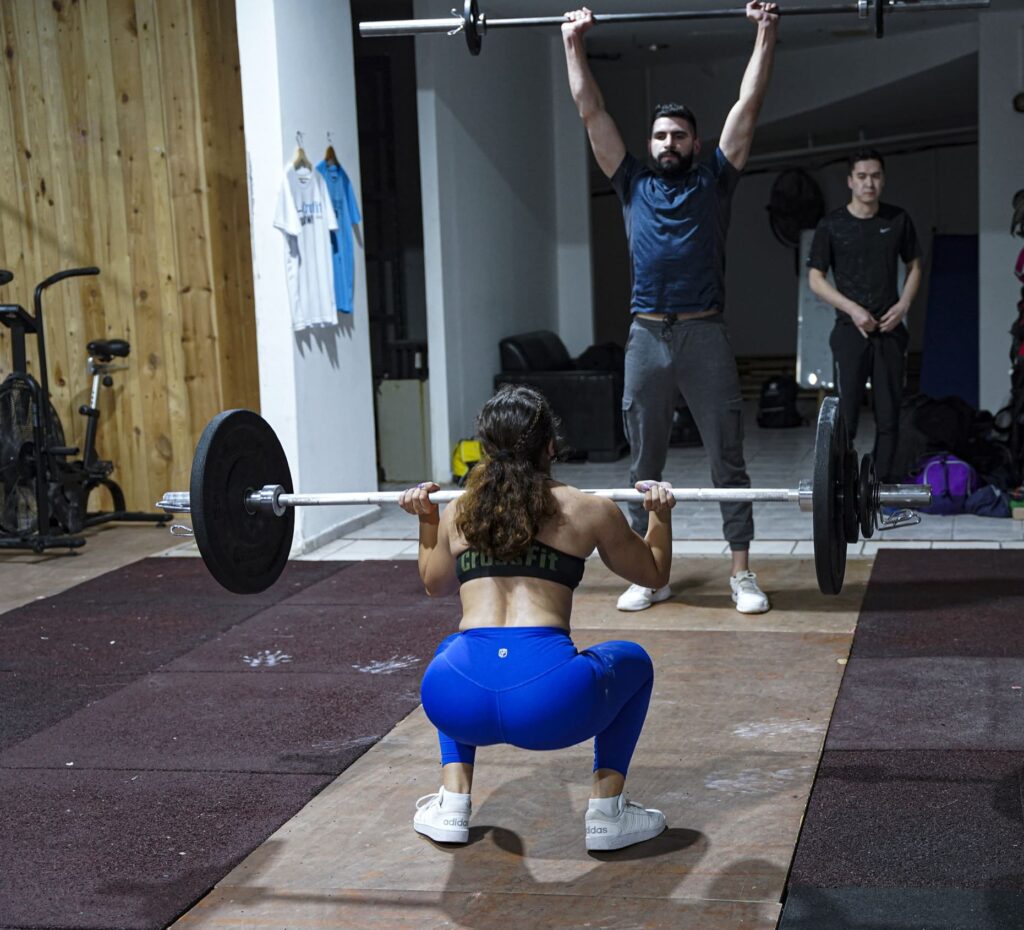
When applied to gymnastics or barbell cycling:
Breaking at 70–80% of max capacity often results in faster overall completion times compared to grinding to failure.
Why?
Because forced rest is longer than chosen rest.
Grip and the Open
Grip fatigue plays an outsized role in many Open workouts. Once grip is compromised:
- Pulling efficiency drops.
- Bar path worsens.
- Transition time increases.
Research on forearm muscle oxygenation shows that isometric contractions (like hanging or holding a barbell) restrict blood flow, accelerating fatigue. Short breaks restore partial perfusion and delay failure.
Five seconds on the floor can restore enough circulation to preserve the next set.
Thirty seconds after failing is much harder to recover from.
Practical Application for the Open
1. Pre-Plan Break Points
Before the workout starts, decide:
- “I will break toes-to-bar into sets of 8.”
- “I will drop the bar after 6 reps no matter what.”
This removes ego-based decisions mid-workout.
2. Keep Breaks Short and Intentional
Research on interval recovery shows that short, consistent rest intervals maintain performance better than irregular, reactive rest.
Aim for:
- 3–5 deep breaths
- 5–8 seconds max
- Eyes back on the target
3. Protect Technical Integrity
Fatigue degrades motor control. Studies show that neuromuscular coordination declines as metabolic stress rises.
Breaking early preserves movement efficiency, which reduces energy cost per rep.
Efficiency equals speed.
Cheat Code #3: Master Transitions and Movement Economy
The Hidden Energy Leak: Transitions
In many Open workouts, athletes lose more time walking to equipment than actually performing reps.
Research on movement economy shows that small inefficiencies accumulate significant performance costs over repeated cycles.
Economy refers to how much energy you expend at a given workload. Athletes with better movement economy consume less oxygen and produce less metabolic stress for the same output.
In CrossFit terms:
Two athletes can do the same reps.
One burns less energy doing them.
That athlete wins.
The Science of Movement Efficiency
Movement economy is influenced by:
- Motor learning
- Intermuscular coordination
- Technical consistency
- Reduced co-contraction
Studies show that skilled performers display lower electromyographic activity for the same external workload compared to less skilled individuals. That means fewer unnecessary muscle fibers firing.
Less wasted tension means:
- Lower oxygen cost
- Slower fatigue accumulation
- Greater repeatability
In barbell cycling, this shows up as:
- Smooth bar path
- Efficient breathing timing
- Minimal extra steps
In gymnastics, it shows up as:
- Consistent kip rhythm
- Reduced swing amplitude variation
- Efficient hip extension
Breathing Is a Performance Tool
Respiratory muscle fatigue is a real performance limiter.
High-intensity exercise increases ventilatory demand dramatically. If breathing becomes chaotic:
- Carbon dioxide clearance worsens
- Perceived exertion rises
- Core stability may decrease
Research shows that trained athletes who use controlled breathing patterns delay fatigue and reduce perceived exertion during intense efforts.
For example:
- Exhale during concentric barbell phases
- Establish breathing cadence on cyclical machines
- Use nasal breathing during transitions to lower arousal
These small controls reduce sympathetic overactivation and stabilize pacing.
Transition Efficiency Wins Leaderboards
Time-motion analyses in functional fitness competitions show that elite athletes minimize:
- Standing still
- Chalk time
- Equipment adjustment time
- Wandering between stations
The physiological benefit is clear:
Frequent small pauses drop heart rate variability and reduce momentum. Maintaining steady forward motion preserves rhythm and reduces the psychological weight of restarting.
Practical Application for the Open
1. Rehearse Transitions Before the Workout
Practice:
- Exactly where your hands go on the bar
- How you step off the rower
- Where chalk is placed
Motor learning research shows that rehearsed movement patterns reduce cognitive load under stress.
2. Lower Unnecessary Muscle Tension
Relax your face.
Relax your hands when possible.
Avoid white-knuckle grips unless required.
Excess tension increases energy cost and accelerates fatigue.
3. Control Your Setup Time
Give yourself:
- One breath
- One look
- One go
Not five adjustments.
Putting It All Together
The CrossFit Open is not just a fitness test. It is a fatigue management test.
Here is how the three cheat codes integrate:
- Starting slower preserves metabolic stability.
- Breaking early preserves neuromuscular output.
- Efficient movement preserves energy economy.
These three strategies compound.
Athletes who implode usually violate all three:
- They sprint the first round.
- They go to failure.
- They waste time transitioning.
And then they wonder why round four feels like survival.
Science is clear: performance in repeated high-intensity efforts depends on intelligent pacing, fatigue regulation, and movement efficiency.
Key Takeaways
| Cheat Code | What It Means | Why It Works | How to Apply It |
|---|---|---|---|
| Start Slower Than You Think | Control early intensity | Reduces metabolic acidosis and preserves power output | Cap first round at 85–90%, aim to negative split |
| Break Before Failure | Use planned rest | Preserves neuromuscular function and grip endurance | Pre-plan sets and take short, intentional breaks |
| Master Transitions and Economy | Eliminate wasted motion | Lowers energy cost and maintains rhythm | Rehearse transitions, control breathing, reduce tension |
References
- Amann, M. and Dempsey, J.A., 2008. Locomotor muscle fatigue modifies central motor drive in healthy humans and imposes a limitation to exercise performance. Journal of Physiology, 586(1), pp.161–173.
- Bishop, D., Girard, O. and Mendez-Villanueva, A., 2011. Repeated-sprint ability—Part II: Recommendations for training. Sports Medicine, 41(9), pp.741–756.
- Burnley, M. and Jones, A.M., 2007. Oxygen uptake kinetics as a determinant of sports performance. European Journal of Sport Science, 7(2), pp.63–79.
- Fitts, R.H., 1994. Cellular mechanisms of muscle fatigue. Physiological Reviews, 74(1), pp.49–94.
- Halperin, I. and Emanuel, A., 2020. Rating of perceived effort: Methodological concerns and future directions. Sports Medicine, 50(4), pp.679–687.
- Iglesias-Soler, E., Mayo, X., Río-Rodríguez, D. and Carballeira, E., 2014. Intermittent resistance training: Cluster sets and rest redistribution. Journal of Strength and Conditioning Research, 28(11), pp.3114–3121.