

Strong lower abs are more than just a visual goal. They are critical for force transfer, spinal stability, athletic performance, and injury prevention. Whether you sprint, lift, jump, throw, or simply want to move better, the lower portion of your rectus abdominis, along with the deeper core musculature, plays a central role.
But here’s the truth: you cannot truly isolate the “lower abs.” The rectus abdominis is one continuous muscle running from the pubic bone to the sternum. What you can do is emphasize movements that increase activation in the lower fibers by manipulating hip position, pelvic tilt, and lever length. Research using electromyography (EMG) confirms that certain exercises generate higher activation in the lower portion of the rectus abdominis compared to traditional crunches.
This article will break down three science-backed functional fitness workouts designed to build iron-strong lower abs. Each workout integrates compound movement, anti-extension strength, and dynamic hip flexion control.
Understanding the Lower Abs: What Science Actually Says
The Rectus Abdominis Is One Muscle — But Activation Varies
The rectus abdominis (RA) is segmented by tendinous intersections, giving it the “six-pack” appearance. However, anatomically it is a single muscle. Studies using surface EMG show that while it is one muscle, activation can vary between upper and lower portions depending on the movement pattern.

Research comparing different abdominal exercises found that reverse crunch variations and leg raise movements tend to increase activation in the lower region of the RA more than standard crunches. The key difference? Posterior pelvic tilt and controlled hip flexion.
When you actively tuck your pelvis (posterior tilt) while raising the legs, you increase lower RA recruitment.
Core Stability Is About Anti-Movement
The core’s primary function is not spinal flexion — it is resisting unwanted movement. Research on spinal biomechanics shows that excessive repeated spinal flexion under load may increase shear stress and compressive forces on lumbar discs.
Stability-based exercises such as planks, rollouts, and anti-extension drills create high abdominal activation while minimizing spinal motion. Studies show that these exercises produce substantial co-contraction of the abdominal wall, increasing trunk stiffness and enhancing force transfer.
Why Functional Fitness Matters
Functional fitness integrates multiple joints and planes of motion. Research on kinetic chain biomechanics shows that core stiffness improves force transmission between the lower and upper body during athletic movement. A strong anterior core improves sprint speed, jump performance, and change-of-direction ability.
The lower abs are especially important for:
- Controlling anterior pelvic tilt
- Resisting lumbar hyperextension
- Stabilizing during loaded carries
- Improving sprint mechanics
With that in mind, here are three evidence-based workouts designed to build serious lower ab strength.
Workout 1: Anti-Extension Strength Builder
This workout focuses on resisting lumbar extension. Anti-extension training has been shown to significantly activate the rectus abdominis and transverse abdominis while minimizing spinal strain.
Perform 3–4 rounds. Rest 60–90 seconds between rounds.
A1: Ab Wheel Rollouts – 8 to 12 Reps
The ab rollout consistently ranks among the highest for abdominal activation in EMG research. It produces strong rectus abdominis and external oblique activation while training anti-extension control.
Key coaching points:
- Start on knees (progress to standing later).
- Maintain posterior pelvic tilt.
- Avoid arching the lower back.
- Move slowly.
Research shows rollouts create greater abdominal activation than traditional crunches and planks due to the long lever arm and anti-extension demand.
A2: Dead Bug with Posterior Pelvic Tilt – 10 Reps per Side
The dead bug trains contralateral coordination while reinforcing lumbar neutrality. When performed with active pelvic tuck, it increases lower RA activation and deep core engagement.

Key coaching points:
- Flatten lower back into the floor.
- Extend opposite arm and leg slowly.
- Maintain tension throughout.
Core stabilization studies demonstrate that controlled limb movement with spinal stability enhances neuromuscular coordination and trunk stiffness.
A3: Front Plank with Reach – 30 to 45 Seconds
Adding reach increases anti-rotation demand. EMG studies show that limb movement during planking significantly increases abdominal muscle activation compared to static planks.
Key coaching points:
- Maintain straight line from head to heels.
- Reach slowly.
- Do not rotate hips.
Why this works: Research indicates that unstable or asymmetrical loading increases trunk muscle recruitment, improving core stability.
Workout 2: Dynamic Lower Ab Emphasis Circuit
This session emphasizes controlled hip flexion with posterior pelvic tilt. These movements show greater lower rectus abdominis activation compared to standard crunches.
Perform 4 rounds. Rest 60 seconds between rounds.
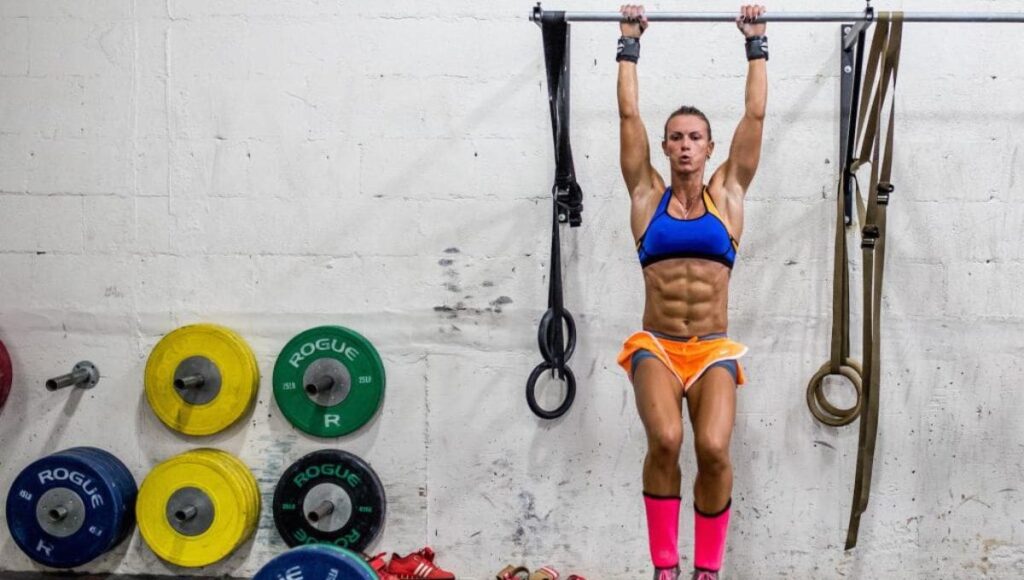
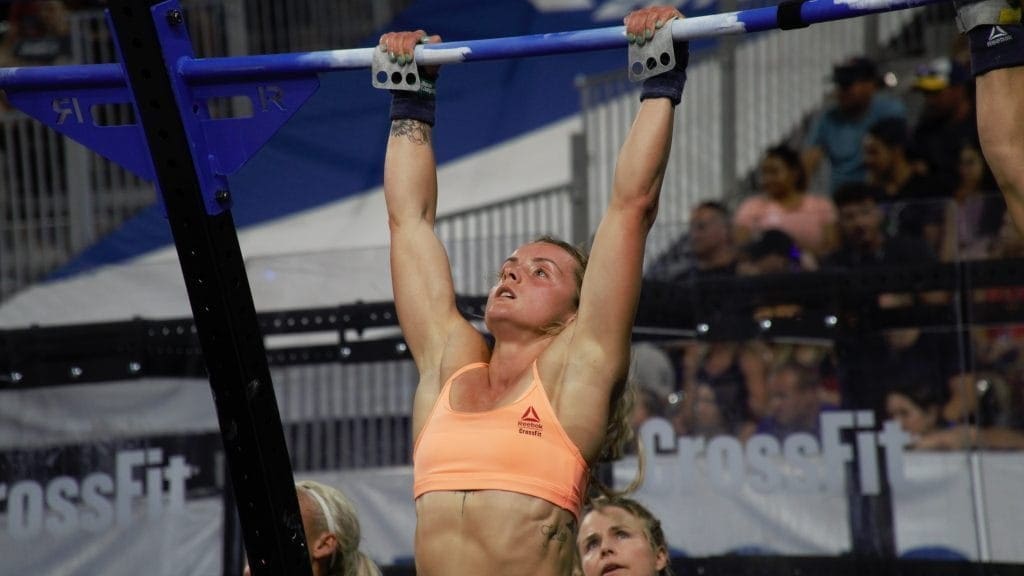
B1: Hanging Knee Raise with Pelvic Tuck – 10 to 15 Reps
Hanging variations significantly increase lower abdominal activation due to the need for pelvic stabilization and anti-swing control.
Key coaching points:
- Initiate by tucking pelvis.
- Lift knees only as high as control allows.
- Avoid swinging.
EMG research comparing hanging leg raises and crunches shows higher lower RA activation in hanging variations when pelvic tilt is emphasized.
B2: Reverse Crunch on Floor – 15 Reps
Reverse crunches produce higher lower RA activity compared to standard crunches because the pelvis moves toward the ribcage rather than the ribcage toward the pelvis.
Key coaching points:
- Lift hips slightly off floor.
- Move slowly.
- Avoid momentum.
Studies demonstrate greater lower abdominal activation when the pelvis posteriorly rotates during the movement.
B3: Farmer Carry – 40 to 60 Meters
Loaded carries build anterior core stiffness. Research on trunk muscle activation during loaded carries shows significant activation of rectus abdominis and obliques to resist extension and lateral flexion.
Key coaching points:
- Ribcage stacked over pelvis.
- Avoid leaning back.
- Walk slowly and controlled.
Carries train real-world stability under load, enhancing force transmission and injury resilience.
Workout 3: Athletic Lower Ab Power and Control
This session integrates lower ab strength into athletic movement patterns. Core stiffness improves sprint and jump performance by improving force transfer.
Perform 3–5 rounds. Rest 90 seconds between rounds.
C1: Toes-to-Bar or Lying Leg Raise – 8 to 12 Reps
Straight-leg raises increase lever length and abdominal demand. EMG studies show greater activation when legs remain extended compared to bent-knee variations.
Key coaching points:
- Initiate with pelvic tuck.
- Control descent.
- Avoid lumbar extension.
This movement increases lower RA activation due to the longer moment arm at the hip.
C2: Barbell Rollout or Stability Ball Rollout – 8 to 10 Reps
Rollouts performed from standing or using a barbell significantly increase anti-extension demand compared to kneeling versions.
Research shows that increasing instability or lever length amplifies abdominal activation.
C3: Sled Push – 20 to 30 Meters
Sled pushes require full-body bracing. Research on trunk stiffness demonstrates that increased abdominal co-contraction enhances force transfer during sprint-like activities.
Key coaching points:
- Neutral spine.
- Brace abs as if preparing for impact.
- Drive through hips.
Sled work teaches the lower abs to stabilize during explosive hip extension.
Why These Workouts Build “Iron Strong” Lower Abs
1. They Train Anti-Extension
Anti-extension training consistently produces high abdominal activation while protecting the spine.
2. They Emphasize Pelvic Control
Posterior pelvic tilt increases lower rectus abdominis recruitment.
3. They Integrate Full-Body Movement
Core strength must transfer into real-world tasks. Compound exercises increase trunk stiffness and improve athletic performance.
4. They Respect Spinal Biomechanics
Research suggests that repeated loaded spinal flexion may increase disc stress. These workouts balance flexion-based work with stabilization drills.
Programming Guidelines
For best results:
- Train lower abs 2 to 3 times per week.
- Focus on slow eccentric control.
- Progress by increasing lever length before adding load.
- Maintain proper pelvic position.
Visible abs require low body fat levels, but strength and stability come from consistent training.
Common Mistakes
Arching the Lower Back
This reduces abdominal activation and increases spinal stress.
Using Momentum
Swinging during hanging raises decreases muscle tension.
Ignoring Breathing
Research shows proper diaphragmatic breathing enhances trunk stability and intra-abdominal pressure.
Final Thoughts
Iron strong lower abs are built through anti-extension strength, pelvic control, and integrated functional movement. Forget endless crunches. Train your core the way it was designed to work: stabilizing, transferring force, and controlling motion.
Apply these workouts consistently, focus on quality reps, and your lower abs will become stronger, more stable, and more athletic.
Key Takeaways
| Key Point | Why It Matters |
|---|---|
| Lower abs cannot be isolated but can be emphasized | Activation varies by movement pattern |
| Anti-extension exercises are highly effective | Increase core activation while protecting spine |
| Pelvic tuck increases lower RA recruitment | Enhances muscle engagement |
| Hanging and reverse crunch variations outperform basic crunches | Higher EMG activation |
| Loaded carries improve real-world core strength | Enhance force transfer and stability |
| Slow control beats momentum | Maximizes tension and reduces injury risk |
References
- Andersson, E.A., Nilsson, J., Ma, Z. and Thorstensson, A., 1997. Abdominal and hip flexor muscle activation during various training exercises. European Journal of Applied Physiology, 75(2), pp.115–123.
- Axler, C.T. and McGill, S.M., 1997. Low back loads over a variety of abdominal exercises. Medicine & Science in Sports & Exercise, 29(6), pp.804–811.
- Escamilla, R.F., Lewis, C., Bell, D., Bramblet, G., Daffron, J., Lambert, S., Pecson, A., Imamura, R. and Andrews, J.R., 2010. Core muscle activation during Swiss ball and traditional abdominal exercises. Journal of Orthopaedic & Sports Physical Therapy, 40(5), pp.265–276.
- Hibbs, A.E., Thompson, K.G., French, D., Wrigley, A. and Spears, I., 2008. Optimizing performance by improving core stability and core strength. Sports Medicine, 38(12), pp.995–1008.
- Marshall, P.W.M. and Murphy, B.A., 2005. Core stability exercises on and off a Swiss ball. Archives of Physical Medicine and Rehabilitation, 86(2), pp.242–249.
- McGill, S.M., 2001. Low back stability: from formal description to issues for performance and rehabilitation. Exercise and Sport Sciences Reviews, 29(1), pp.26–31.
- McGill, S.M., Grenier, S., Kavcic, N. and Cholewicki, J., 2003. Coordination of muscle activity to assure stability of the lumbar spine. Journal of Electromyography and Kinesiology, 13(4), pp.353–359.