

Grip strength is often treated as a side quest in training programs. Lifters obsess over curls, extensions, and pressing strength, while grip work gets pushed to the warm-up or tacked onto the end of a session—if it happens at all. That’s a mistake.
Grip strength is not just about holding onto a barbell. It plays a direct role in overall upper-body strength, neuromuscular efficiency, injury prevention, and even long-term health outcomes. Large-scale epidemiological studies have linked grip strength to all-cause mortality, cardiovascular health, and functional independence later in life (Leong et al., 2015; Bohannon, 2019).
For athletes and recreational lifters, grip strength directly limits performance. If your grip fails, your set ends—no matter how strong your legs, back, or arms might be. Pull-ups, deadlifts, rows, Olympic lifts, strongman events, climbing, gymnastics, and combat sports all depend heavily on grip capacity.
Most people know the basics: farmer’s carries, dead hangs, and squeezing grippers. These work, but the human hand is far more complex than most training programs acknowledge. The forearm contains more than 20 muscles controlling finger flexion, extension, wrist deviation, and rotation. Training only crushing grip leaves major performance gains untapped.
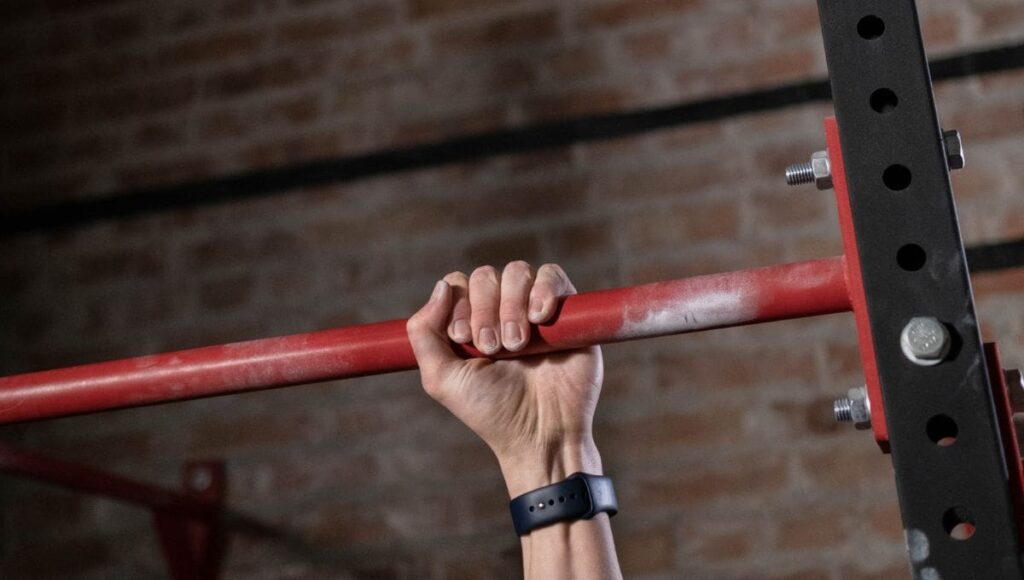
This article breaks down three unusual but highly effective grip strength exercises that directly enhance arm training. Each one targets a different grip function, challenges the neuromuscular system in a unique way, and is backed by solid scientific evidence.
No gimmicks. No circus tricks. Just exercises that work.
Why Grip Strength Directly Affects Arm Development
Before diving into the exercises, it helps to understand why grip training improves arm training overall.
Grip strength influences arm hypertrophy and strength through several mechanisms:
• Increased neural drive to the forearm and upper-arm muscles
• Greater motor unit recruitment during pulling and carrying tasks
• Improved force transmission through the kinetic chain
• Reduced inhibition caused by weak stabilizers
Electromyography studies consistently show that harder gripping increases activation in the biceps, brachialis, and even shoulder musculature during pulling movements (Youdas et al., 2010). When the nervous system senses instability at the hand, it limits force production upstream as a protective mechanism.
Stronger grip equals stronger arms—not indirectly, but neurologically.
Exercise 1: Bottom-Up Kettlebell Carries
What Makes This Exercise Unusual
Most people carry kettlebells by the handle with the bell hanging downward. Bottom-up kettlebell carries flip this logic on its head. The bell is held upside down, with the heavy portion above the hand.
This instantly creates instability. The kettlebell wants to tip, rotate, and fall. Your grip must constantly fire to maintain balance.

Unlike static grip exercises, bottom-up carries demand continuous micro-adjustments, making them a powerful tool for neuromuscular coordination.
How to Perform Bottom-Up Kettlebell Carries
- Clean a light kettlebell into the rack position
- Flip it upside down so the bell sits above your fist
- Crush the handle and keep your wrist neutral
- Walk slowly for 20–40 meters per arm
- Maintain an upright torso and controlled breathing
The load should be much lighter than a normal carry. If you’re shaking violently or dropping the bell, it’s too heavy.
Muscles and Systems Trained
• Finger flexors and extensors
• Wrist stabilizers
• Biceps and brachialis
• Rotator cuff and shoulder stabilizers
• Central nervous system motor control
This is not just grip training. It is a full upper-limb stability challenge.
Why Science Supports It
Grip stability exercises that involve instability increase co-contraction of forearm muscles, leading to higher overall force output and joint protection (Behm and Anderson, 2006). This co-contraction improves strength transfer during compound lifts.
Additionally, studies on unstable load training show increased activation of stabilizing muscles without reducing prime mover involvement when load is appropriately scaled (Saeterbakken and Fimland, 2013).
Bottom-up kettlebell work also improves proprioception—the body’s ability to sense joint position—which is critical for injury prevention and skill transfer to sports (Riemann and Lephart, 2002).
Why It Boosts Arm Training
Stronger wrist and grip stability allows heavier loading during rows, pull-ups, and curls. Lifters who improve grip stability often report immediate increases in pulling volume before grip fatigue sets in.

Bottom-up carries also enhance elbow joint stability, which reduces strain during high-volume arm training.
Programming Guidelines
• 2–3 sets per arm
• 20–40 meters per set
• Rest 60–90 seconds
• Perform early in the session or on recovery days
This exercise pairs exceptionally well with pulling days.
Exercise 2: Towel Thick-Grip Pull Holds
What Makes This Exercise Unusual
Most grip work focuses on movement—squeezing, curling, or carrying. Towel thick-grip pull holds are static, brutally honest, and unforgiving.
Instead of hanging from a bar, you hang from towels draped over the bar. The increased diameter and compressible surface remove the mechanical advantage of a rigid grip.
This dramatically increases finger flexor demand while reducing assistance from passive structures in the hand.
How to Perform Towel Thick-Grip Pull Holds
- Loop two towels evenly over a pull-up bar
- Grab one towel with each hand
- Pull yourself into the top position of a pull-up
- Hold for time while keeping shoulders engaged
- Lower under control when grip fails
Beginners can perform dead hangs instead of top holds.
Muscles and Systems Trained
• Deep finger flexors
• Forearm flexors
• Biceps and brachialis
• Scapular stabilizers
• Isometric endurance pathways
Why Science Supports It
Research shows that increasing handle diameter significantly increases forearm muscle activation and grip force requirements (Grant et al., 1992). Towel grips further increase instability, requiring higher neural drive to maintain force.
Isometric holds have been shown to improve tendon stiffness and muscular endurance, particularly at specific joint angles (Kubo et al., 2006). This directly benefits pulling strength and elbow resilience.
Furthermore, hanging-based grip training improves shoulder health by reinforcing scapular depression and stability (Andersen et al., 2014).
Why It Boosts Arm Training
Static holds at the top of a pull-up increase time under tension for the biceps without joint movement, reducing elbow stress while increasing hypertrophic stimulus.
Athletes who improve isometric grip endurance often experience fewer failed reps during pulling exercises, extending productive sets.
Programming Guidelines
• 3–5 sets
• Hold for 10–30 seconds
• Rest 90–120 seconds
• Perform after pulling work or as a finisher
Avoid using straps for pulling movements if grip is the limiting factor you want to improve.
Exercise 3: Lever Bar Wrist Rotations
What Makes This Exercise Unusual
Most wrist training happens in one plane—flexion and extension. Real-world grip strength requires rotation control.

Lever bar wrist rotations use an uneven load to challenge pronation and supination, two often-neglected forearm functions that are essential for elbow health and grip durability.
How to Perform Lever Bar Wrist Rotations
- Use a hammer, mace, or long bar with weight on one end
- Hold the handle vertically with elbow at 90 degrees
- Slowly rotate the weighted end inward and outward
- Control the movement throughout the full range
- Perform both pronation and supination
Start light. This exercise humbles even strong lifters.
Muscles and Systems Trained
• Pronator teres
• Supinator
• Wrist stabilizers
• Elbow joint stabilizers
• Neural control under torque
Why Science Supports It
Forearm rotational strength plays a critical role in elbow stability and force transfer during gripping tasks (Murray et al., 2001). Weakness in pronation and supination has been linked to overuse injuries such as medial and lateral epicondylitis.
Studies show that eccentric and rotational forearm training improves tendon resilience and reduces injury risk in both athletes and manual laborers (Tyler et al., 2014).
Uneven load training also enhances neuromuscular coordination by forcing the nervous system to manage torque rather than linear force (Behm et al., 2010).
Why It Boosts Arm Training
Stronger rotational control reduces stress on the elbow during curls, rows, and Olympic lifts. This allows higher training volumes with less joint irritation.
Many lifters notice immediate improvements in grip endurance once rotational weaknesses are addressed.
Programming Guidelines
• 2–4 sets per direction
• 6–12 slow reps
• Rest 60–90 seconds
• Best placed on arm or accessory days
Consistency matters more than load here.
How to Combine These Exercises for Maximum Results
These three exercises target different grip qualities:
• Stability under instability
• Isometric endurance
• Rotational strength
Together, they create a complete grip training system.
A simple weekly structure might look like this:
Day 1 (Pull): Bottom-up carries
Day 2 (Arms): Lever bar rotations
Day 3 (Finishers): Towel pull holds
This spreads neural demand and avoids overuse.
Common Mistakes in Grip Training
• Using straps too often
• Training grip only in flexion
• Ignoring recovery of small muscles
• Progressing load too aggressively
Forearm muscles fatigue quickly but recover slowly. Respect volume and frequency.
Long-Term Benefits Beyond Aesthetics
Grip strength improvements extend beyond the gym.
Research links stronger grip to:
• Lower cardiovascular risk
• Improved metabolic health
• Reduced injury risk
• Greater functional independence with aging
Grip training is not optional—it’s foundational.
Final Thoughts
Grip strength is one of the highest-return investments you can make in training. These three unusual exercises address gaps that traditional methods miss, translating directly to better arm strength, healthier joints, and longer-lasting performance.
Train your grip with intention, and your arms will follow.
References
• Andersen, L.L., Jay, K., Andersen, C.H., Jakobsen, M.D. and Sundstrup, E. (2014) ‘Effect of brief daily resistance training on shoulder pain and work disability in adults’, Journal of Occupational and Environmental Medicine, 56(9), pp. 1006–1014.
• Behm, D.G. and Anderson, K.G. (2006) ‘The role of instability with resistance training’, Journal of Strength and Conditioning Research, 20(3), pp. 716–722.
• Behm, D.G., Drinkwater, E.J., Willardson, J.M. and Cowley, P.M. (2010) ‘Canadian Society for Exercise Physiology position stand: The use of instability to train the core in athletic and nonathletic conditioning’, Applied Physiology, Nutrition, and Metabolism, 35(1), pp. 109–112.
• Bohannon, R.W. (2019) ‘Grip strength: An indispensable biomarker for older adults’, Clinical Interventions in Aging, 14, pp. 1681–1691.
• Grant, K.A., Habes, D.J. and Steward, L.L. (1992) ‘An analysis of handle designs for reducing manual effort: The influence of grip diameter’, International Journal of Industrial Ergonomics, 10(3), pp. 199–206.
• Kubo, K., Kanehisa, H., Kawakami, Y. and Fukunaga, T. (2006) ‘Effects of isometric training on the elasticity of human tendon structures in vivo’, Journal of Applied Physiology, 91(1), pp. 26–32.