

Despite over a decade working in mental health, I somewhat feel like a fraud writing an article on mental strategies for race day performance. It’s akin to the logic that we give great advice but very rarely would take the advice we give and do it ourselves. I feel the application of mental strategies in a similar vein.
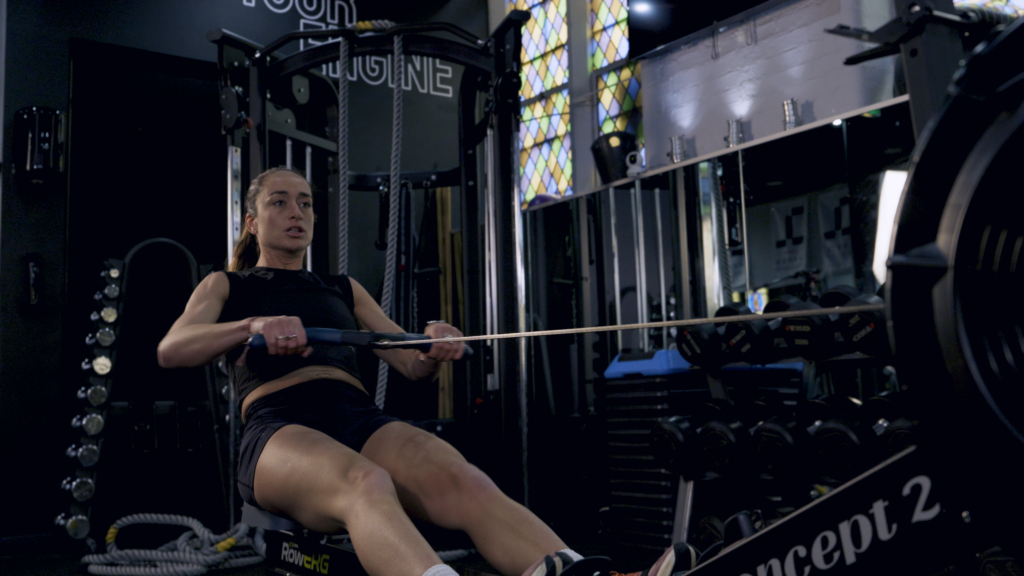
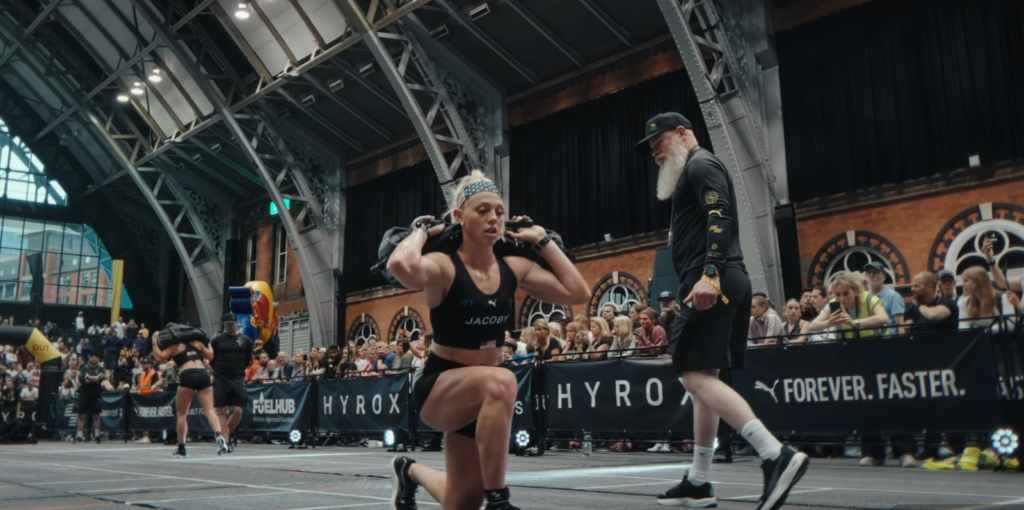
For many of us, myself included, the mental side of sport is my biggest weakness. In training I’m consistent. I show up well but come race day, I find myself negative self- talking, psyching myself out and often giving up when adversity hits (or in this case, a judge on burpees).
I’ve spent a while trying to figure out what works for me and why the performance I can execute under fatigue in training more than often does not translate into race day. Whilst I certainly have not got this nailed, here are some of the things that I am trying, that have actually been working.
1. Mantras
I’ve always believed in mantras – something simple to come back to when things get tough before and during a race. Mine is:
“I like doing hard things.”
I use it particularly from sled pull into the row, which is a transition I struggle with and right at the end at the approach to the wall balls.
Mantras work because they reduce cognitive noise. Instead of worrying about your heart rate, your shoes, or the person in front of you, you give your brain one clear instruction.
I also tend to lose focus mid-race, and my mantra brings me back into the present. It stops that “time-travel thinking” where most of my pressure actually comes from.
2. Reducing Self Inflicted Pressure
On the surface, I probably come across quite relaxed about sport. But in reality, I’ve spent a lifetime putting a huge amount of pressure on myself – to win, to perform, to prove something.

On January 1st of this year, I wrote a new goal: to focus on building, not proving. To remind myself that I am doing this for me. No one cares as much as I do and that is so freeing. Additionally, I have started reframing the self talk I have with myself before a race.
- I am proud to get to a start line health.
- I find racing fun.
- I will work as hard as I can.
For me, it’s separating identity from performance. But no one cares as much as me and I race to race, not for external validation.
3. Race Chunking
On paper, a whole hour of racing is daunting. If we all thought of the race as one large zone four workout, we wouldn’t even make it to the start line.
What has really helped me is chunking up the race and chunking up the stations.
- Instead of counting 100 wall balls, I mentally break them up into 25, 25, 20, 20, 10.
- For the ski erg, I mentally break them into quarter chunks.
- For burpees, I never think ten jumps ahead.
This has allowed me to give my pain a shorter boundary, enabling me to actually exceed the pain threshold my brain wants to impose on me. It makes pain manageable.
Chunking reduces the perceived effort. Our brains don’t just measure physical fatigue. It asks us “ how much is left?”. Chunking tells our brain that what’s coming up is achievable.
4. Controlling the Controllables
There are some things we can control. Our fueling strategy. Getting into bed early. What we have been doing during the build up for the race. The warm up.
There are also some things we simply cannot control. The other people that are competing with us. A busy course. The way we feel in the morning.
The more I remind myself that I have done all I can, the less the un-controllables phase me. Most of the pressure comes from focusing on the uncontrollables, but actually, all of our own performance should come from focusing on the first. Reminding ourselves how much we control brings agency back into our own hands.
5. Not Fearing Stations Before You Get There
This is one of my biggest weaknesses. I spend the first fifteen minutes worrying about the next fifteen minutes. Whilst doing lunges, I’m worrying about wall balls for example. We all do it. We create an anticipatory fear of fatigue.
But that fear actually translates into a reduction of performance. Our brain is not just listening to the physical cues in front of us, but also mental cues telling us we are going to be more fatigued than we currently are, and we should conserve our energy.
Instead of fearing what’s coming, I try to remind myself that I know this pain and I can handle it.
6. Accepting the Pain, Enjoying It
Learning to enjoy pain is less sadistic than you think. It’s also not enjoyable in the way you think. I know that no one enjoys pain. But we can enjoy the meaning pain gives us. It’s a reminder of commitment and effort. Instead of emphasizing pain, I try to frame it as:
This is the pain that means I am at the right threshold.
This is the pain that means I am working harder than anyone.
Instead of panic, I’m reminding myself that I am good at handling pain.
7. No Limits Mentality
David Goggins often talks about the idea that we only operate at 40% of our capacity. Whilst the number may be up for debate, the logic makes a lot of sense when it comes to racing.
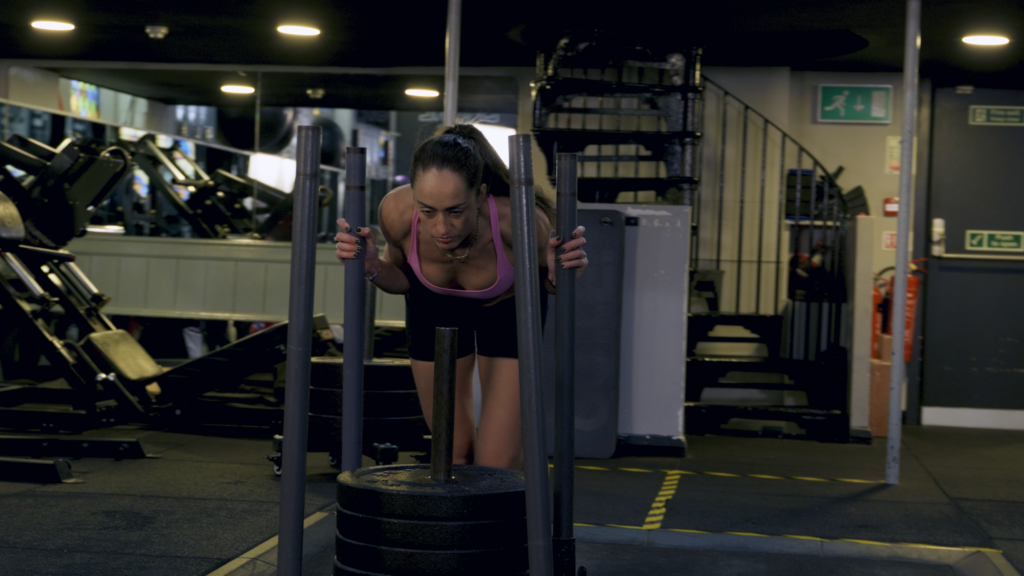
The brain has a natural protective mechanism when we enter a risky zone- it’s why our legs begin to ache and we get that burning sensation. A lot of people back off at that first point of resistance but framing that feeling as the beginning not the end is a huge performance hack.
It also allows us to separate feeling from capacity. I feel done does not mean I am done. Getting this nailed is where I know I can make a huge step up in my performance.