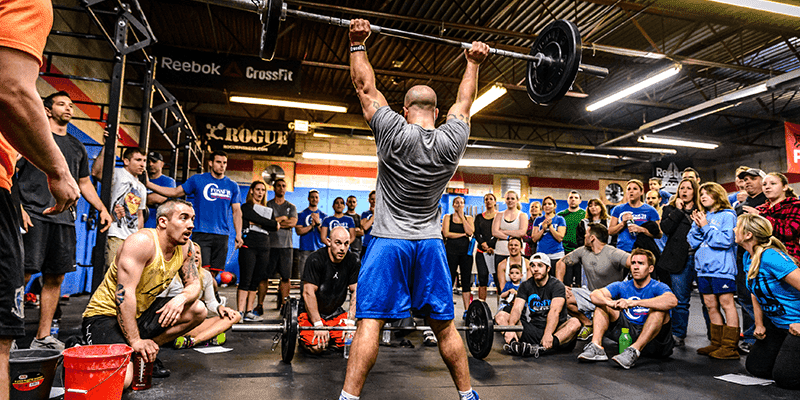


CrossFit athletes constantly look for ways to build strength, power, and conditioning at the same time. The sport demands explosive force, muscular endurance, speed, and the ability to repeat high intensity efforts under fatigue. Because of this, the best training tools are often simple movements that produce large physiological adaptations.
Hill sprints are one of those tools.
They require no equipment, they take little time, and they challenge nearly every system that CrossFit athletes rely on. Sprinting uphill forces the body to produce maximal power, recruits a high percentage of muscle fibers, improves running mechanics, and develops the anaerobic energy systems that dominate most CrossFit workouts.
Despite these benefits, hill sprints remain underused in many CrossFit programs. Many athletes rely heavily on rowing, biking, or flat running intervals, but hill sprints provide unique advantages that other conditioning methods cannot replicate.
This article explains five evidence based reasons why CrossFit athletes should incorporate hill sprints into their weekly training.
Why Hill Sprints Are Unique
Before exploring the five main benefits, it helps to understand what makes hill sprinting different from flat sprinting or traditional conditioning.
Running uphill increases the mechanical demand of each stride. The body must overcome gravity with every step, which dramatically increases force production in the hips, glutes, and hamstrings. At the same time, the incline reduces ground impact forces compared with sprinting on flat surfaces.

This combination allows athletes to produce very high power outputs while reducing some of the injury risk associated with maximal sprinting.
From a metabolic perspective, hill sprints strongly activate the anaerobic energy systems. Short sprints performed at maximal effort rapidly deplete phosphocreatine stores and generate high levels of metabolic stress, which drives adaptations in both anaerobic power and aerobic recovery capacity.
For CrossFit athletes who must repeatedly produce high power outputs during workouts, these adaptations are extremely valuable.
Reason 1: Hill Sprints Build Explosive Lower Body Power
The Link Between Sprinting and Power Production
Explosive power is a critical component of CrossFit performance. Movements such as cleans, snatches, box jumps, wall balls, and thrusters all rely on rapid force production from the lower body.
Sprinting is one of the most powerful stimuli for developing this quality. During maximal sprinting, the lower body produces extremely high levels of force in a very short time frame. Each ground contact requires rapid extension at the hip, knee, and ankle, which mirrors the triple extension used in Olympic lifting and jumping movements.
Hill sprints increase this stimulus even further.
When running uphill, the athlete must push against gravity during each stride. This increases the force requirement for hip extension and glute activation. The result is a powerful stimulus for strengthening the posterior chain.
Evidence for Sprint Training and Power Development
Research consistently shows that sprint training improves lower body power and neuromuscular performance.
Short sprint intervals increase the recruitment of fast twitch muscle fibers and improve the rate of force development. These adaptations translate to improved performance in jumping and explosive lifting tasks.
Studies examining resisted sprinting, including uphill sprinting, show even greater improvements in acceleration and power output compared with flat sprint training.
For CrossFit athletes, this means hill sprints can improve explosive performance in movements such as:
- Olympic lifts
- Box jumps
- Broad jumps
- Burpees
- Short sprint workouts
Posterior Chain Activation
Hill sprinting places heavy emphasis on the posterior chain, particularly the glutes and hamstrings.
These muscles are essential for powerful hip extension, which is the driving force behind many CrossFit movements. Weak or underactive glutes can limit power production and increase the risk of injury.
Uphill sprinting naturally encourages proper glute activation because the athlete must lean slightly forward and drive the knee upward to move against the incline.
Over time, this strengthens the muscles responsible for powerful hip extension and improves overall athletic performance.
Reason 2: Hill Sprints Improve Anaerobic Conditioning
CrossFit Is Primarily Anaerobic
Although CrossFit workouts vary widely, many high intensity workouts rely heavily on the anaerobic energy systems.
The phosphagen system provides energy for very short maximal efforts, such as heavy lifts or short sprints. The glycolytic system provides energy for efforts lasting roughly 10 seconds to two minutes, which covers many typical CrossFit workouts.
Hill sprints strongly stimulate both of these systems.
Because hill sprints are typically performed at maximal effort for short durations, they rapidly deplete phosphocreatine stores and produce significant metabolic stress. This forces the body to adapt by improving anaerobic energy production and recovery capacity.
Evidence From High Intensity Sprint Training
Research on sprint interval training shows that short bursts of maximal effort can significantly improve anaerobic capacity.
Repeated sprint training increases muscle buffering capacity and improves the ability to tolerate high levels of lactate. This allows athletes to maintain high intensity output during repeated efforts.

Studies also demonstrate improvements in both anaerobic and aerobic performance following sprint training protocols.
For CrossFit athletes, this translates directly to better performance during workouts that include repeated bursts of effort.
Examples include:
- Short AMRAP workouts
- Repeated sprint intervals
- Burpees or box jump workouts
- Assault bike or rower sprints
- Shuttle runs in competitions
Hill sprints provide a simple way to train these systems effectively.
Improved Recovery Between Efforts
Another important benefit of sprint interval training is improved recovery between high intensity efforts.
CrossFit workouts often require athletes to perform repeated bursts of effort with minimal rest. The ability to recover quickly between these bursts can make a major difference in performance.
Sprint training improves the body’s ability to restore phosphocreatine levels and clear metabolic byproducts more efficiently. This allows athletes to sustain higher outputs during repeated intervals.
Hill sprints therefore help athletes maintain power output deeper into a workout.
Reason 3: Hill Sprints Improve Running Mechanics
Better Technique Through Incline Running
Running technique plays an important role in both performance and injury prevention.
Many recreational runners overstride, land heavily on their heels, or fail to generate enough force from the hips. These issues reduce efficiency and increase injury risk.
Hill sprints naturally encourage better sprint mechanics.
When running uphill, athletes are forced to:
- Lean slightly forward
- Drive the knees upward
- Strike the ground with the midfoot
- Generate force from the hips
These positions promote efficient sprint mechanics and reduce braking forces during each stride.
Improved Stride Efficiency
Research shows that incline sprinting can improve stride length, stride frequency, and overall running efficiency.
Because each stride requires more force production, the neuromuscular system adapts by coordinating muscle activation more effectively.
Over time, athletes develop more efficient movement patterns that carry over to flat running and other athletic movements.
This is especially valuable for CrossFit athletes who encounter running in workouts but may not spend much time refining their technique.
Reduced Impact Stress Compared With Flat Sprinting
Another advantage of hill sprinting is reduced impact forces.
When running uphill, athletes naturally slow down compared with flat sprinting. This reduces ground reaction forces and decreases the stress placed on joints and connective tissues.
Despite the lower impact, the muscular demand remains extremely high due to the incline.
This allows athletes to train explosive speed and power while reducing the risk of overuse injuries associated with high speed sprinting on flat ground.
Reason 4: Hill Sprints Strengthen the Posterior Chain and Core
The Muscles Involved in Hill Sprinting
Hill sprinting recruits many of the same muscle groups used in CrossFit movements.
Key muscles involved include:
- Glutes
- Hamstrings
- Quadriceps
- Calves
- Hip flexors
- Core stabilizers
Because the incline increases resistance, these muscles must work harder to propel the body upward.
The result is a powerful strengthening stimulus that complements traditional strength training.
Core Stability and Force Transfer
Sprinting requires strong core stability to maintain proper posture and transfer force from the lower body through the torso.
During hill sprints, the athlete must maintain a forward lean while stabilizing the spine and pelvis. This requires continuous activation of the abdominal and spinal stabilizer muscles.
Research on sprinting biomechanics shows that core stability plays a major role in maintaining efficient force transfer during high speed running.
For CrossFit athletes, this carries over to many movements that require coordinated force transfer between the lower and upper body.
Examples include:
- Olympic lifts
- Kettlebell swings
- Wall balls
- Thrusters
- Running workouts
A stronger and more stable core improves overall movement efficiency and reduces energy leaks during these movements.
Strength Gains Without Heavy Loads
Hill sprints provide a form of resistance training using bodyweight and gravity.
Because the incline increases mechanical demand, athletes experience significant muscular loading even without external weights.
This makes hill sprints particularly useful during deload periods or conditioning focused training phases.
They allow athletes to maintain strength and power development while reducing heavy barbell volume.
Reason 5: Hill Sprints Improve Work Capacity With Minimal Time
Highly Efficient Conditioning
One of the biggest advantages of hill sprints is time efficiency.
A hill sprint session can produce significant physiological adaptations in a short amount of time.
Many protocols involve only 6 to 10 short sprints lasting 10 to 20 seconds each. Even with full recovery between efforts, the entire workout may last only 15 to 20 minutes.
Despite the short duration, the intensity of these efforts creates strong cardiovascular and metabolic stimuli.
Evidence for Short Sprint Intervals
Research on sprint interval training shows that very short high intensity sessions can produce improvements in cardiovascular fitness similar to much longer endurance workouts.
Repeated sprint efforts stimulate mitochondrial adaptations, improve oxygen utilization, and enhance metabolic efficiency.
These adaptations contribute to improved work capacity during both aerobic and anaerobic activities.
For CrossFit athletes balancing strength work, skill training, and conditioning, efficient workouts are extremely valuable.
Hill sprints deliver large benefits without requiring long training sessions.
Mental Toughness
Maximal sprint efforts also build mental resilience.
Short hill sprints demand full commitment and push athletes into uncomfortable levels of intensity. Learning to maintain effort under these conditions can improve mental toughness during demanding workouts and competitions.
CrossFit events often require athletes to sustain high intensity efforts while fatigued. Training that develops both physical and mental resilience is therefore highly valuable.
How CrossFit Athletes Can Add Hill Sprints
Basic Hill Sprint Session
A simple hill sprint session can be added once or twice per week.
A typical session might look like this:
Warm up thoroughly with light jogging, mobility work, and several progressive accelerations.
Perform 6 to 10 hill sprints lasting 10 to 20 seconds.
Walk back down the hill and rest for 60 to 120 seconds between sprints.
Maintain maximal effort during each sprint.
Cool down with light jogging and stretching.
Choosing the Right Hill
The ideal hill has a moderate incline of about 5 to 10 percent.
A hill that is too steep can disrupt sprint mechanics, while a hill that is too shallow may not provide enough resistance.
The hill should also allow athletes to run safely with good footing.
Progression Strategy
Athletes new to sprint training should start conservatively.
Begin with 4 to 6 sprints and gradually increase volume over several weeks.
Focus on maintaining maximal effort and proper technique rather than adding excessive volume.
Quality is far more important than quantity with sprint training.
Common Mistakes to Avoid
Poor Warm Up
Sprinting places large demands on muscles and connective tissues.
A thorough warm up is essential to prepare the body for maximal effort and reduce injury risk.
Excessive Volume
More is not always better with sprint training.
Too many sprints can lead to fatigue and poor technique, which reduces training quality.
Short sessions with maximal effort are far more effective.
Treating Hill Sprints Like Conditioning Intervals
Hill sprints should be performed with maximal power output.
If athletes treat them like moderate intensity intervals, they lose many of the neuromuscular benefits.
Full effort and adequate rest are essential.
Conclusion
Hill sprints are one of the simplest and most effective conditioning tools available to CrossFit athletes.
They build explosive lower body power, improve anaerobic conditioning, strengthen the posterior chain, refine running mechanics, and increase overall work capacity.
Perhaps most importantly, they deliver these benefits in a short amount of time without requiring any equipment.
For athletes seeking a powerful addition to their training, hill sprints offer a science backed method to improve performance across multiple aspects of CrossFit.
Incorporating just one or two hill sprint sessions per week can lead to meaningful improvements in power, endurance, and resilience.
References
• Buchheit, M. and Laursen, P.B. (2013). High intensity interval training, solutions to the programming puzzle. Sports Medicine.
• Gibala, M.J. et al. (2012). Physiological adaptations to low volume high intensity interval training. Journal of Physiology.
• Morin, J.B. et al. (2017). Sprint acceleration mechanics and training strategies. Sports Medicine.
• Paavolainen, L. et al. (1999). Explosive strength training improves running economy. Journal of Applied Physiology.
• Ross, A. et al. (2001). Sprint training improves sprint performance and muscle metabolism. Journal of Applied Physiology.