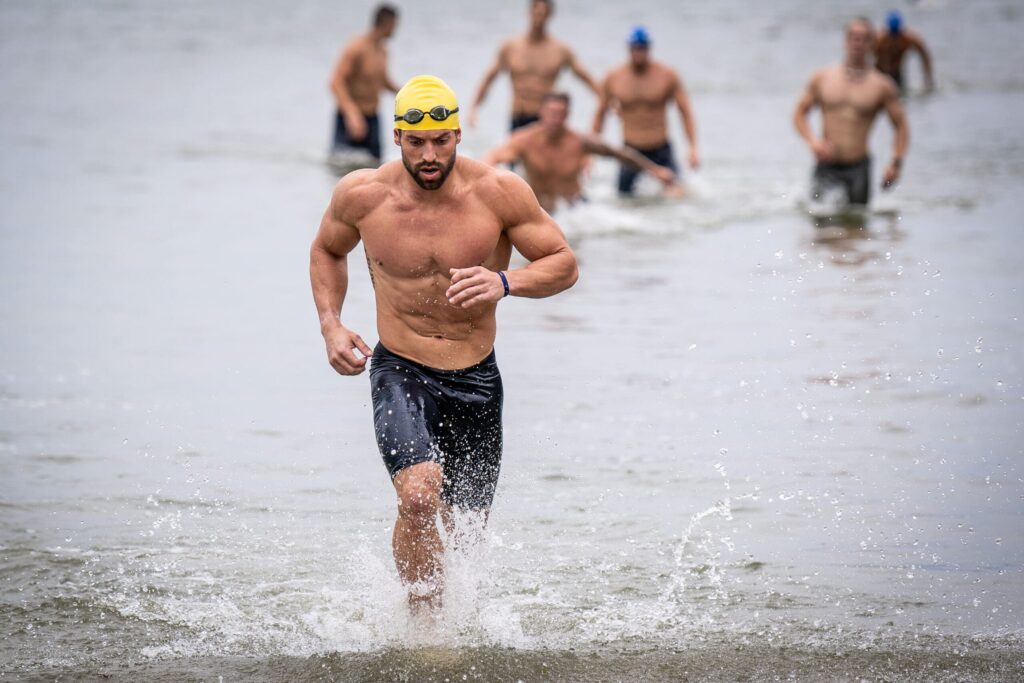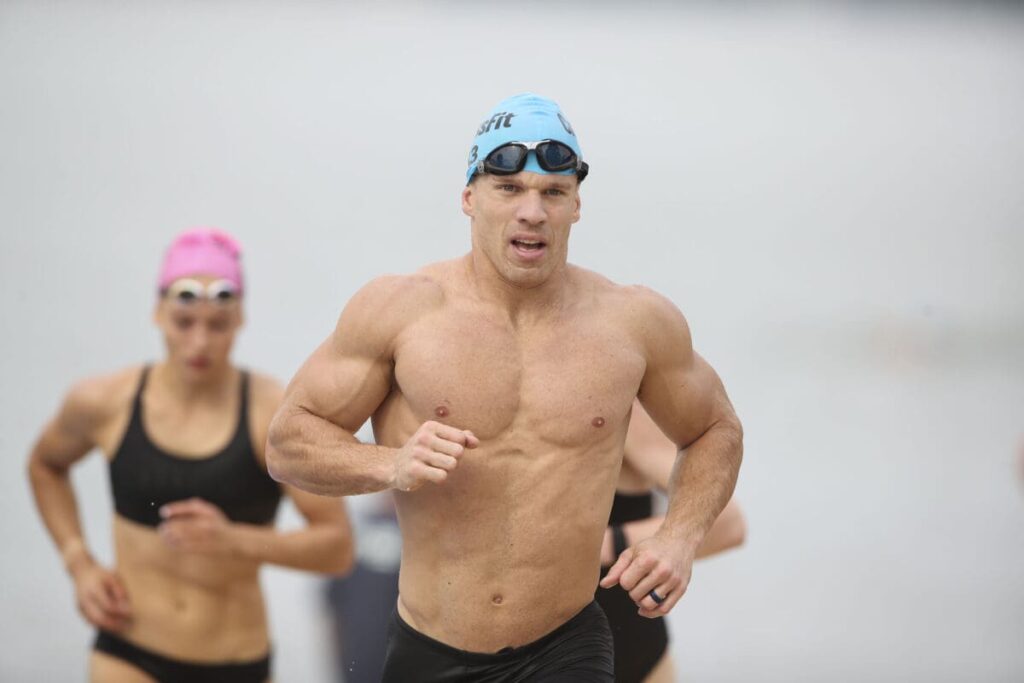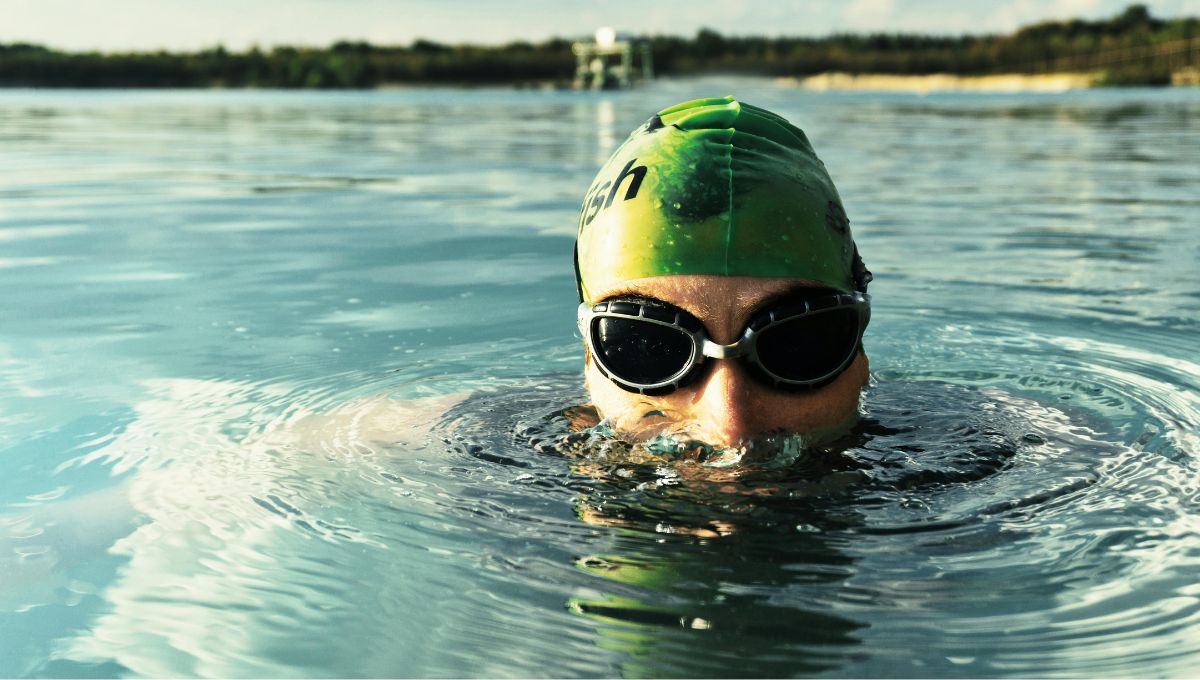


Swimming is one of the most effective full body exercises a person can do. It develops cardiovascular endurance, muscular strength, coordination, and mobility while placing minimal stress on the joints. Because water supports body weight, swimming is often recommended for people recovering from injury, older adults, and athletes who want a high intensity workout without impact stress.
Despite these advantages, many recreational swimmers struggle to move efficiently through the water. They feel exhausted after a short distance, experience shoulder fatigue, or notice that stronger swimmers glide past them with much less effort. In most cases, the problem is not fitness. The issue is technique.

Swimming efficiency depends heavily on hydrodynamics. Water is about 800 times denser than air, which means that even small technical mistakes dramatically increase resistance. Studies in swimming biomechanics consistently show that improving technique can reduce energy cost and increase speed more effectively than simply increasing fitness.
Research analyzing elite swimmers demonstrates that stroke mechanics, body alignment, and propulsion efficiency play a major role in performance. When swimmers maintain a streamlined body position and generate propulsion effectively with each stroke, they minimize drag and maximize forward movement.
The good news is that swimmers do not need dozens of complicated corrections to improve. A few simple adjustments can produce immediate improvements in efficiency, speed, and endurance. The key is focusing on the factors that most strongly influence hydrodynamics.

This article explains three quick tips that can dramatically improve swimming technique. Each recommendation is supported by scientific research in biomechanics, physiology, and sports science. Whether someone is a beginner swimmer or an experienced athlete looking to refine their form, these principles can help make every stroke more efficient.
Why Swimming Technique Matters
Before discussing the tips, it is important to understand why technique is so critical in swimming.
Water Resistance Is the Main Limiting Factor
The primary force slowing swimmers down is hydrodynamic drag. Drag is the resistance a body experiences when moving through water. The magnitude of this resistance depends on body shape, surface area, and movement patterns.
Research in swimming biomechanics shows that drag increases rapidly with speed. Even small increases in frontal surface area can significantly raise resistance. When swimmers lift their head too high, drop their hips, or use inefficient arm mechanics, they create additional drag that slows them down.
Reducing drag is therefore one of the most important goals in swimming technique. Elite swimmers focus heavily on maintaining a streamlined position that minimizes resistance.
Efficiency Determines Endurance
Swimming is also unique because propulsion efficiency is relatively low compared with land based movements. In running or cycling, a large percentage of muscular effort contributes directly to forward movement. In swimming, a significant portion of energy is lost due to turbulence and inefficient stroke mechanics.
Studies examining swimming economy show that technique improvements can reduce oxygen consumption at a given speed. This means swimmers can maintain pace with less effort. For recreational swimmers, improving efficiency often leads to the feeling of suddenly being able to swim longer distances without fatigue.
Coordination Improves Propulsion
Swimming involves coordinated movement between the arms, legs, and core. The arms generate most of the propulsion in strokes like freestyle and butterfly, while the legs help maintain body position and contribute additional propulsion.
Research indicates that elite swimmers demonstrate highly coordinated movement patterns that maximize propulsion while minimizing wasted motion. Small improvements in coordination can therefore produce noticeable improvements in performance. With this context in mind, let us examine three powerful technique improvements that can help swimmers move through the water more effectively.
Tip 1: Maintain a Horizontal Body Position
One of the most important factors in swimming efficiency is body alignment in the water.
Why Body Position Matters
When swimmers move through the water, their body acts like a vessel moving through a fluid environment. The more horizontal and streamlined the body is, the less drag it experiences.
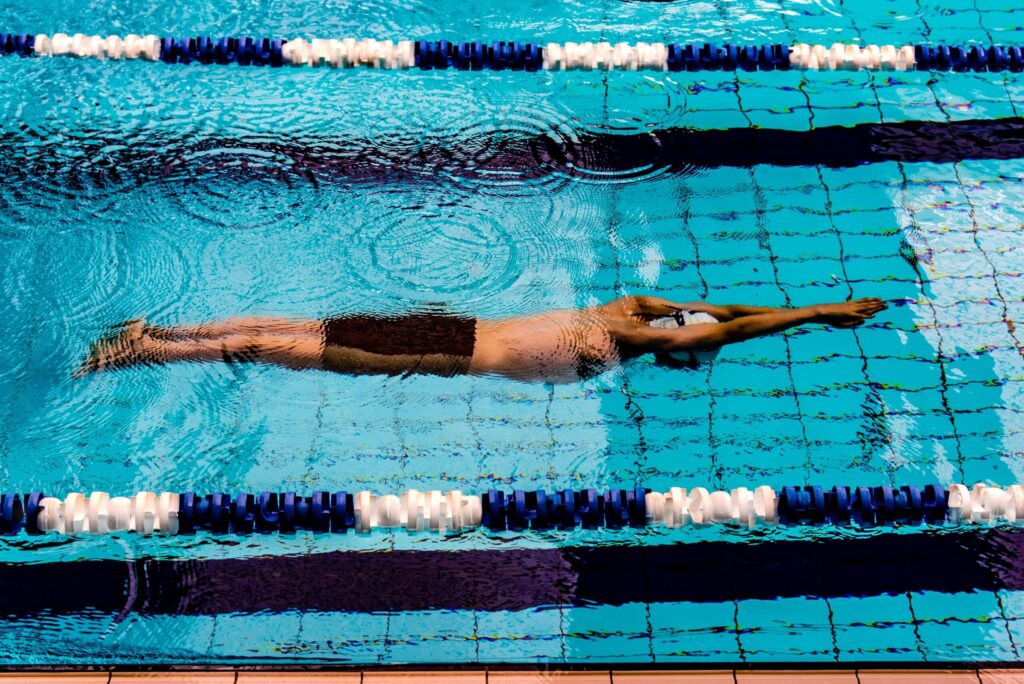
If the hips and legs sink, the swimmer creates a larger frontal surface area. This increases form drag and forces the swimmer to work harder to maintain speed. Biomechanical studies have shown that body alignment significantly influences hydrodynamic drag. Even small changes in body angle relative to the water surface can increase resistance and reduce efficiency.
Elite swimmers therefore aim to keep their body close to the surface of the water with the head, hips, and legs aligned.
Common Mistakes That Cause the Legs to Sink
Several common technical errors lead to poor body position. The first mistake is lifting the head too high. When swimmers look forward instead of down, the head rises and the hips sink. Because the body acts like a lever in the water, even a small change in head position can drop the legs significantly.
Another mistake is insufficient core engagement. The core muscles help stabilize the body and maintain alignment. Weak or relaxed core muscles allow the hips to sag, which increases drag.
Kicking mechanics can also affect body position. Inefficient kicking patterns that bend excessively at the knees often push water downward rather than backward, causing the legs to drop.
How to Improve Body Position
A few simple adjustments can improve alignment quickly.
First, swimmers should keep their head in a neutral position with their gaze directed downward toward the bottom of the pool. This helps maintain a straight line from head to hips.
Second, engaging the core muscles helps keep the body stable and aligned. Many coaches encourage swimmers to imagine pressing their chest slightly downward into the water. This small adjustment helps raise the hips toward the surface.
Third, swimmers should focus on relaxed but continuous kicking from the hips rather than the knees. A narrow and controlled flutter kick supports body alignment.
Scientific Evidence
Research examining hydrodynamic drag in swimmers consistently demonstrates that body position strongly affects resistance. Studies using passive towing systems show that swimmers with better horizontal alignment experience lower drag forces.
Additionally, biomechanical analyses of elite swimmers reveal that high level athletes maintain extremely streamlined positions during freestyle and other strokes. Their body angle relative to the water surface remains minimal throughout the stroke cycle.
For recreational swimmers, improving body position often produces immediate improvements in speed and endurance because it dramatically reduces resistance.
Tip 2: Improve the Catch Phase of the Stroke
While body position reduces drag, propulsion determines how effectively swimmers move forward. The most important moment for propulsion in freestyle swimming is the catch phase.
What Is the Catch?
The catch is the moment when the swimmer’s hand and forearm begin to grip the water and generate propulsion. During freestyle, the arm enters the water and extends forward. The swimmer then bends the elbow and positions the forearm vertically while pulling backward against the water.
This action allows the swimmer to push water toward the feet, which generates forward movement according to Newton’s third law of motion.
Why the Catch Is Critical
Research in swimming biomechanics shows that propulsion during freestyle primarily occurs during the pull phase that begins with the catch. Swimmers who establish a strong early catch are able to anchor their arm in the water and pull their body forward effectively.
In contrast, swimmers who allow their arm to slip through the water without creating a stable catch lose propulsion and waste energy. Underwater video analysis of elite swimmers consistently shows that they position their forearm vertically early in the stroke to maximize surface area pushing against the water.
The Concept of Early Vertical Forearm
A key technical concept in swimming is the early vertical forearm position. This refers to bending the elbow shortly after hand entry so that the forearm becomes vertical while the hand and forearm press backward against the water.
When swimmers maintain this position, they create a large surface area that pushes water toward the rear of the pool. This increases propulsion and improves stroke efficiency.
Studies analyzing underwater motion capture data show that elite swimmers maintain higher propulsive forces during the pull phase compared with recreational swimmers.
Common Errors in the Catch Phase
Many swimmers make technical mistakes that reduce propulsion. One common error is dropping the elbow during the pull. When the elbow drops below the hand, the swimmer pushes water downward rather than backward. This reduces forward propulsion.
Another mistake is pulling with a straight arm. This reduces the effective surface area of the forearm and limits the ability to create propulsive force.
Some swimmers also rush the stroke without establishing a stable catch, which results in the hand slipping through the water.
How to Improve the Catch
Improving the catch requires focusing on a few technical cues. Swimmers should think about keeping the elbow high while the forearm rotates downward into a vertical position. This helps maintain a strong pulling surface.

Another helpful cue is imagining that the hand and forearm are grabbing a large barrel of water and pulling it behind the body. Slow and controlled stroke drills can also help swimmers develop awareness of proper arm positioning.
Practicing underwater sculling drills is another effective way to improve feel for the water. These drills train swimmers to apply pressure against the water using the hands and forearms.
Scientific Evidence
Research using force sensors and motion capture systems shows that swimmers who maintain an early vertical forearm generate greater propulsive force during the pull phase.
Studies analyzing elite swimmers in international competitions also demonstrate that efficient catch mechanics correlate with higher swimming velocity and improved stroke efficiency.
For swimmers of all levels, improving the catch phase can significantly increase propulsion without requiring additional energy expenditure.
Tip 3: Rotate Your Body With Each Stroke
The third technique improvement involves body rotation. Many recreational swimmers try to swim flat in the water, keeping their shoulders and hips parallel to the pool surface. However, effective swimming actually involves controlled rotation around the body’s long axis.
Why Rotation Improves Swimming Efficiency
Body rotation plays several important roles in swimming mechanics. First, rotation allows swimmers to extend their reach during the stroke. When the body rotates, the shoulder moves forward slightly, which increases stroke length.
Stroke length is a key determinant of swimming speed. Research shows that elite swimmers travel farther with each stroke than less skilled swimmers.
Second, rotation allows the large muscles of the back and torso to contribute to propulsion. Instead of relying only on the shoulder and arm muscles, swimmers engage the latissimus dorsi and core muscles during the pull. This improves power generation and reduces stress on the shoulders.
Third, rotation helps position the arm properly for an effective catch. When the body rotates, the arm can enter the water at an angle that facilitates the early vertical forearm position.
Optimal Rotation Angle
Biomechanical studies indicate that freestyle swimmers typically rotate about 40 to 50 degrees from side to side during the stroke cycle. This rotation allows efficient arm movement while maintaining stability in the water.
Too little rotation limits reach and reduces propulsion. Too much rotation can disrupt stroke timing and increase drag. Elite swimmers demonstrate smooth and rhythmic rotation that is synchronized with their arm strokes.
How to Practice Proper Rotation
One helpful cue is to think about rolling from side to side rather than swimming flat. When the right arm enters the water, the body rotates slightly to the right. When the left arm enters, the body rotates to the left.
The hips and shoulders should rotate together as a unit. This coordinated movement helps maintain balance and alignment. Swimmers should also keep their core engaged during rotation to prevent excessive twisting or instability.
Breathing during freestyle also depends on proper rotation. When the body rotates, the swimmer can turn the head slightly to the side to inhale without lifting the head excessively.
Scientific Evidence
Biomechanical research analyzing elite swimmers consistently shows that effective body rotation contributes to longer stroke length and improved efficiency.
Studies examining muscle activation patterns also indicate that rotation allows swimmers to recruit powerful trunk and back muscles during the pull phase.
This reduces reliance on smaller shoulder muscles and helps prevent fatigue during longer swims. For recreational swimmers, learning to rotate smoothly often results in a more relaxed and fluid stroke.
Putting the Three Tips Together
Each of these technique improvements addresses a major factor in swimming performance.
- Maintaining a horizontal body position reduces drag.
- Improving the catch phase increases propulsion.
- Rotating the body allows swimmers to generate more power and extend their stroke length.
When these three elements work together, swimmers move through the water much more efficiently.
In practice, swimmers should focus on one element at a time during training sessions. Gradually integrating these changes allows the nervous system to adapt and develop new movement patterns.
Over time, these improvements become automatic and significantly enhance swimming performance.
Practical Drills to Reinforce These Tips
Technique improvements are easier to learn when swimmers use targeted drills.
Streamline Glide Drill
Push off the wall in a tight streamline position with arms extended overhead. Focus on keeping the body horizontal and aligned. This drill helps swimmers feel how a streamlined body position reduces drag.
Sculling Drill
Perform small figure eight motions with the hands while floating face down in the water. This drill improves sensitivity to water pressure and helps swimmers develop a stronger catch.
Side Kick Drill
Kick while lying on one side with one arm extended forward. This drill encourages proper body rotation and reinforces alignment. Practicing these drills regularly helps swimmers integrate technical improvements into their normal stroke.
The Long Term Benefits of Better Technique
Improving swimming technique provides several long term benefits beyond immediate performance gains.
Greater Endurance
Efficient swimmers use less energy at a given speed. This allows them to swim longer distances without fatigue.
Reduced Injury Risk
Poor technique often leads to shoulder strain and overuse injuries. Proper body rotation and improved catch mechanics distribute workload across larger muscle groups.
Faster Progress in Training
Swimmers who move efficiently through the water can train at higher intensities with better results. For athletes training for triathlon, fitness, or competitive swimming, technical improvements often produce greater gains than simply increasing training volume.
Conclusion
Swimming is a technically demanding sport where small adjustments can produce major improvements. Three simple technique tips can dramatically improve efficiency and performance.
First, maintaining a horizontal body position reduces drag and allows swimmers to glide through the water more easily.
Second, improving the catch phase of the stroke increases propulsion and ensures that each pull generates meaningful forward movement.
Third, rotating the body during each stroke allows swimmers to extend their reach, recruit powerful muscles, and maintain a fluid rhythm.
Together, these principles form the foundation of efficient swimming technique. Whether someone is a beginner learning to swim or an experienced athlete seeking to refine their performance, focusing on these key elements can make every stroke more effective. With consistent practice and attention to technique, swimmers can move through the water with greater speed, efficiency, and enjoyment.
References
• Barbosa, T.M., Fernandes, R.J., Keskinen, K.L. and Vilas Boas, J.P. (2008). The influence of stroke mechanics into energy cost of elite swimmers. European Journal of Applied Physiology, 103(2), pp.139–149.
• Craig, A.B. and Pendergast, D.R. (1979). Relationships of stroke rate, distance per stroke, and velocity in competitive swimming. Medicine and Science in Sports, 11(3), pp.278–283.
• Toussaint, H.M. and Beek, P.J. (1992). Biomechanics of competitive front crawl swimming. Sports Medicine, 13(1), pp.8–24.
• Zamparo, P., Pendergast, D.R., Termin, A. and Minetti, A.E. (2002). Economy and efficiency of swimming at the surface with fins of different size and stiffness. European Journal of Applied Physiology, 87(6), pp.543–550.
• Psycharakis, S.G. and Sanders, R.H. (2010). Shoulder and hip roll changes during 200 m front crawl swimming. Medicine and Science in Sports and Exercise, 42(11), pp.2129–2136.
• Toussaint, H.M., Knops, W., De Groot, G. and Hollander, A.P. (1990). The mechanical efficiency of front crawl swimming. Medicine and Science in Sports and Exercise, 22(3), pp.402–408.
• Seifert, L., Chollet, D. and Bardy, B. (2004). Effect of swimming velocity on arm coordination in the front crawl. International Journal of Sports Medicine, 25(6), pp.453–458.