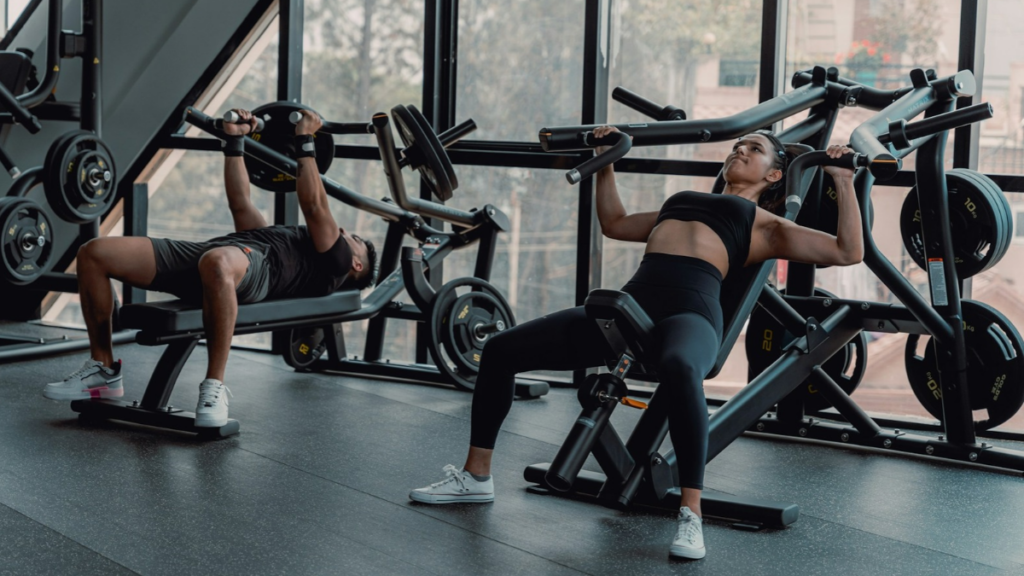
Walk into almost any gym and you will see the same thing happening at the dumbbell rack. Endless sets of bicep curls. Some people use strict form. Others swing the weight like they are trying to launch it into orbit. Either way, the traditional curl has become the default arm exercise for millions of lifters.
There is nothing wrong with curls. They work. Research consistently shows that elbow flexion exercises are highly effective for building the biceps brachii and improving upper arm strength. But there is also a problem. Many people become stuck doing the same movement pattern over and over again. Progress slows down. Motivation fades. Elbows and wrists start to ache. Eventually training becomes repetitive and uninspiring.



The human body adapts quickly to repeated stress. Muscles respond best when they are challenged through different joint angles, loading patterns, tempos, and movement demands. Variety is not just about avoiding boredom. It can improve muscle activation, increase coordination, reduce overuse injuries, and help break through strength plateaus. That is where unusual exercises can become extremely valuable.
The best unconventional arm movements do more than simply look cool on social media. They challenge the muscles in ways traditional curls often do not. Some place greater tension on the long head of the biceps. Others improve grip strength, forearm development, or shoulder stability while still building the arms. Many of these exercises also recruit stabilizing muscles throughout the upper body and core, making them more efficient than isolated movements alone.
Each exercise offers unique benefits that standard curls cannot fully replicate. You will learn how to perform them correctly, why they work from a biomechanical perspective, what the research says, and how to include them in your program.
Why Traditional Arm Training Stops Working
Many lifters assume that bigger arms simply require more volume. More curls. More pushdowns. More sets. More reps. While training volume does matter for hypertrophy, the body also responds strongly to novelty and mechanical variation.
Muscle growth is largely driven by three primary factors:
• Mechanical tension
• Metabolic stress
• Muscle damage
Traditional curls certainly create tension and metabolic stress, especially when performed close to failure. However, relying on the same movement repeatedly can reduce the stimulus over time as the nervous system becomes more efficient. Another issue is that many conventional arm exercises limit movement variability. Standard curls train elbow flexion in a very controlled environment with minimal instability. That can be useful for isolation, but human movement is rarely that simple.
Want to Deadlift 200kg? Here are 4 Numbers You Need to Hit First
The arms function alongside the shoulders, scapulae, wrists, and core. Training them in integrated patterns often produces more functional strength gains and improved joint resilience.
Research also suggests that exercise variation may improve long term hypertrophy outcomes by exposing muscle fibers to different loading profiles and ranges of motion. Different exercises emphasize different portions of muscles depending on shoulder angle, grip orientation, and resistance curve.
For example, the long head of the biceps crosses the shoulder joint, meaning shoulder position significantly affects activation. Similarly, the triceps long head responds differently depending on whether the arm is overhead or by the torso. This is why unusual exercises can become valuable tools rather than gimmicks.
Exercise 1: Towel Pull Ups
Why This Exercise Is Different
At first glance, towel pull ups look simple. You drape two towels over a pull up bar and grip the hanging ends instead of the bar itself. In practice, they are brutally difficult.
The instability of the towels changes the entire movement. Grip demands increase dramatically. The forearms work overtime to maintain control. The biceps must stabilize while generating pulling force. The shoulders and upper back become heavily involved as well. This transforms a standard vertical pull into a highly integrated upper body challenge.
Unlike curls, towel pull ups force the arms to work in coordination with the hands, wrists, scapulae, and torso. This creates greater overall neuromuscular demand.
Muscles Worked
Towel pull ups target:
• Biceps brachii
• Brachialis
• Brachioradialis
• Forearm flexors
• Latissimus dorsi
• Rhomboids
• Rotator cuff muscles
• Core stabilizers
The crushing grip component is especially important. Research shows that grip intensive exercises can substantially increase forearm muscle activation and improve functional upper body strength.
How To Perform Towel Pull Ups
- Loop two sturdy towels over a pull up bar.
- Grip one towel in each hand.
- Hang with arms fully extended.
- Pull your chest upward while keeping your body controlled.
- Lower slowly until the elbows are fully extended again.
Avoid swinging or using momentum. The instability already makes the movement challenging enough.
Why They Build Better Arms
Traditional curls isolate elbow flexion. Towel pull ups force the elbows, wrists, shoulders, and hands to work together under instability.
This creates enormous tension throughout the arm musculature while simultaneously improving athletic grip strength and shoulder stability. For many lifters, towel pull ups also produce a unique forearm pump that curls rarely achieve.
Exercise 2: Bottoms Up Kettlebell Carries
What Makes Bottoms Up Training Unique
Bottoms up kettlebell carries involve holding a kettlebell upside down so the heavy bell sits above the handle. The instability forces the hand, wrist, forearm, and shoulder to stabilize continuously. At first, the movement feels almost impossible. The kettlebell wobbles in every direction. Your grip fights to keep the bell balanced. Small muscles throughout the arm and shoulder fire intensely. Unlike curls, this exercise trains reactive stability.
The body must constantly make micro adjustments to prevent the kettlebell from tipping over. That creates an entirely different stimulus compared to traditional resistance exercises.
Muscles Worked
Bottoms up carries train:
• Forearm flexors and extensors
• Biceps
• Triceps
• Rotator cuff muscles
• Deltoids
• Core stabilizers
• Scapular stabilizers
The wrist and forearm demand is particularly high.
How To Perform Bottoms Up Carries
- Clean a kettlebell into the bottoms up position.
- Grip the handle tightly while balancing the bell vertically.
- Keep the wrist neutral.
- Brace the core and maintain upright posture.
- Walk slowly and under control.
Start with lighter weights than expected. Even experienced lifters are often surprised by the difficulty.
Progressions and Regressions
Beginners can start with:
• Static holds
• Half kneeling holds
• Short distance carries
Advanced variations include:
• Overhead bottoms up carries
• Double kettlebell carries
• Longer distances
• Heavier kettlebells
Why This Exercise Builds Impressive Arms
Bottoms up carries create continuous muscular tension throughout the arms while demanding high levels of stabilization. The forearms work relentlessly to maintain grip integrity. The biceps and triceps co contract to stabilize the elbow. Meanwhile the shoulder complex works continuously to keep the kettlebell balanced.
This integrated tension creates an arm training effect that feels dramatically different from isolation work. Many lifters notice improved grip strength and healthier shoulders within weeks of consistent practice.
Exercise 3: Bodyweight Tricep Extensions
The Overlooked Tricep Builder
The triceps make up roughly two thirds of the upper arm mass, yet many people spend far more time training biceps. Bodyweight tricep extensions are one of the most underrated arm exercises available. They combine high tension, deep stretch, and scalable difficulty without requiring heavy equipment.
The movement resembles a skull crusher performed against a fixed surface such as a barbell in a rack, suspension trainer, or rings. Unlike cable pushdowns, bodyweight extensions challenge stability and body control while heavily loading the triceps through a large range of motion.

Muscles Worked
This exercise targets:
• Triceps brachii
• Anconeus
• Anterior deltoids
• Core stabilizers
• Chest stabilizers
The long head of the triceps receives substantial loading because the shoulder flexes during the movement.
How To Perform Bodyweight Tricep Extensions
- Set a barbell in a rack around waist height.
- Grip the bar slightly narrower than shoulder width.
- Walk the feet back so the body forms a straight line.
- Bend the elbows and lower the forehead toward the bar.
- Extend the elbows to return to the starting position.
The key is moving primarily at the elbows while maintaining full body tension.
Progressions and Regressions
To make the movement easier:
• Raise the bar higher
• Use a more upright body angle
• Perform fewer reps
To increase difficulty:
• Lower the bar closer to the floor
• Elevate the feet
• Use rings or suspension trainers
• Slow the eccentric phase
Why This Exercise Outperforms Pushdowns
Cable pushdowns are popular because they are easy to learn and isolate the triceps effectively. However, bodyweight tricep extensions provide:
• Greater stretch under load
• More stabilization demand
• Improved shoulder integration
• Scalable bodyweight resistance
• Enhanced core activation
The result is a more athletic and comprehensive tricep exercise.
How To Program These Exercises
Adding unusual exercises does not mean abandoning traditional movements completely. Standard curls and extensions still work well. The goal is strategic variety. Here is one effective approach:
Upper Body Workout Example
- Towel Pull Ups
4 sets of 5 to 8 reps - Dumbbell Bench Press
4 sets of 6 to 10 reps - Bottoms Up Kettlebell Carries
3 sets of 20 to 40 yards per arm - Bodyweight Tricep Extensions
3 sets of 8 to 15 reps - Hammer Curls
3 sets of 10 to 12 reps
This combination balances heavy compound pulling, instability work, and direct arm training.
Weekly Frequency
Most people respond well to training arms directly two to three times weekly. Recovery matters because grip intensive exercises can create significant forearm fatigue.
Progressive Overload Still Matters
Novelty alone does not build muscle. The exercises must still become progressively harder over time. Track:
• Repetitions
• Load
• Distance
• Tempo
• Time under tension
Consistent progression remains the foundation of hypertrophy.
Final Thoughts
If your arm training has become repetitive, you are not alone. The fitness industry often reduces arm development to endless curls and pushdowns because they are simple, familiar, and easy to market. But the body thrives on challenge, variation, and integrated movement.
Towel pull ups, bottoms up kettlebell carries, and bodyweight tricep extensions offer unique benefits that traditional isolation exercises cannot fully replicate.
Most importantly, they make arm training interesting again. That matters more than many people realize. The best training program is not simply the one that looks optimal on paper. It is the one you can consistently perform with effort, focus, and enjoyment over months and years. If you are bored of curls, these exercises may be exactly what your training needs.
Key Takeaways
| Exercise | Primary Benefit | Main Muscles Worked | Best Feature |
|---|---|---|---|
| Towel Pull Ups | Grip and pulling strength | Biceps, forearms, lats | Extreme grip activation |
| Bottoms Up Kettlebell Carries | Shoulder and arm stability | Forearms, shoulders, arms | Continuous stabilization |
| Bodyweight Tricep Extensions | Tricep hypertrophy | Triceps, shoulders | Deep stretch under load |
| Unusual Arm Exercises Overall | Improved motivation and coordination | Entire upper body | More athletic arm development |
| Traditional Curls Still Matter | Isolation and hypertrophy | Biceps | Easy progressive overload |
References
• Andersen, L.L., Magnusson, S.P., Nielsen, M., Haleem, J., Poulsen, K. and Aagaard, P. (2010) ‘Neuromuscular activation in conventional therapeutic exercises and heavy resistance exercises: Implications for rehabilitation’, Physical Therapy in Sport, 11(2), pp. 53 to 58.
• Behm, D.G. and Anderson, K. (2006) ‘The role of instability with resistance training’, Journal of Strength and Conditioning Research, 20(3), pp. 716 to 722.
• Behm, D.G., Drinkwater, E.J., Willardson, J.M. and Cowley, P.M. (2010) ‘Canadian Society for Exercise Physiology position stand: The use of instability to train the core in athletic and nonathletic conditioning’, Applied Physiology, Nutrition, and Metabolism, 35(1), pp. 109 to 112.
• Dankel, S.J., Jessee, M.B., Mattocks, K.T., Mouser, J.G., Counts, B.R., Buckner, S.L. and Loenneke, J.P. (2017) ‘Training to fatigue: The answer for standardization when assessing muscle hypertrophy?’, Sports Medicine, 47(6), pp. 1021 to 1027.