How Many Push Ups Should You Be Able to Do Based on Your Age?


Push ups are one of the simplest and most useful exercises you can perform. They require no equipment, can be done almost anywhere, and provide valuable insight into upper body strength, muscular endurance, and even long term health. Many people wonder how their performance compares with others of the same age, but the answer is not as simple as chasing a single number.
Your age certainly influences how many push ups you can perform, but it is only one part of the picture. Regular training, body weight, muscle mass, mobility, and overall health all have a significant impact. Someone in their sixties who has trained consistently for years may outperform a sedentary person in their twenties.



The good news is that research consistently shows push ups are not just a fitness challenge. Your ability to perform them is associated with muscular fitness, cardiovascular health, functional independence, and healthy aging. Rather than viewing push ups as an arbitrary test, think of them as a practical marker of physical capability.
Why Push Ups Matter More Than You Think
Push ups primarily target the chest, shoulders, and triceps while also demanding significant activation from the core, glutes, and stabilizing muscles around the shoulders. This makes them a compound movement that develops strength throughout the body.
Research published by the American College of Sports Medicine has shown that muscular fitness is independently associated with lower rates of chronic disease, improved metabolic health, and reduced risk of premature death. While aerobic fitness often receives more attention, muscular endurance and strength are equally important for long term health.
Push ups also measure relative strength. Unlike a bench press, where heavier individuals can often lift more weight, push ups require moving your own body. This makes them an excellent indicator of how well your muscles work relative to your body mass.
One large study involving active adult men found that individuals capable of performing more than 40 consecutive push ups had a dramatically lower risk of cardiovascular events over the following decade compared with those who could complete fewer than 10 repetitions. Although the participants were primarily male firefighters and the findings should not be generalized to every population, the study highlighted the potential value of muscular endurance as a simple health marker.
How Aging Affects Push Up Performance
It is perfectly normal for push up performance to decline gradually with age. Several physiological changes contribute to this trend. Muscle mass naturally decreases beginning around the fourth decade of life. This process, known as sarcopenia, accelerates after age 60 if strength training is not maintained. At the same time, reductions in anabolic hormones, slower recovery, decreased joint mobility, and changes in nervous system function can all reduce muscular endurance.
However, these declines are far from inevitable. Studies consistently show that resistance training significantly slows age related muscle loss and helps preserve strength well into older adulthood. In many cases, regular exercise reduces the performance gap between younger and older adults. This means your chronological age matters less than your training age.

Push Up Standards by Age
Several organizations publish normative fitness data. One of the most widely recognized comes from the American College of Sports Medicine, which categorizes muscular endurance performance across different age groups.
The following ranges represent healthy targets for men and women who are generally active. Individual differences should always be expected.
Men
- Men between 20 and 29 years old should generally aim to perform around 22 to 28 consecutive push ups to demonstrate average muscular endurance. Completing more than 40 repetitions places someone well above average.
- For men aged 30 to 39, performing approximately 17 to 21 push ups represents average fitness, while more than 34 repetitions is considered excellent.
- Between ages 40 and 49, completing about 13 to 16 push ups reflects average muscular endurance, while more than 28 repetitions is excellent.
- Men aged 50 to 59 typically average around 10 to 12 push ups, with more than 21 representing a high level of fitness.
- For men over 60, performing between 8 and 10 push ups is generally considered average, while completing more than 18 remains an excellent achievement.
Women
- Women aged 20 to 29 generally demonstrate average fitness by completing around 15 to 20 push ups, while more than 30 repetitions is considered excellent.
- Between ages 30 and 39, average performance falls around 13 to 19 repetitions, with more than 27 representing excellent muscular endurance.
- Women aged 40 to 49 typically average around 11 to 14 push ups, while exceeding 24 repetitions indicates excellent fitness.
- From ages 50 to 59, completing roughly 7 to 10 push ups is generally considered average, while more than 21 is excellent.
- Women over 60 commonly perform around 5 to 11 push ups, while completing more than 17 remains an outstanding result.
These values should be viewed as general benchmarks rather than strict rules. Body weight, training history, injury history, and technique all influence performance.
What Is a Good Number of Push Ups?
Rather than comparing yourself only with others, it is more useful to think about practical fitness categories. If you cannot complete five strict push ups, improving upper body strength should become a priority. Low muscular endurance may reflect insufficient strength or excess body weight relative to muscle mass.
Being able to perform between 10 and 20 quality repetitions indicates a solid foundation for general health and everyday function. Completing between 20 and 40 push ups demonstrates above average muscular endurance and generally reflects consistent resistance training.
Exceeding 40 consecutive strict push ups represents excellent muscular endurance for most adults and is associated with very good overall fitness. Technique always matters more than the final number. Half repetitions, poor body alignment, or incomplete range of motion reduce the value of the test.
How to Perform a Proper Push Up
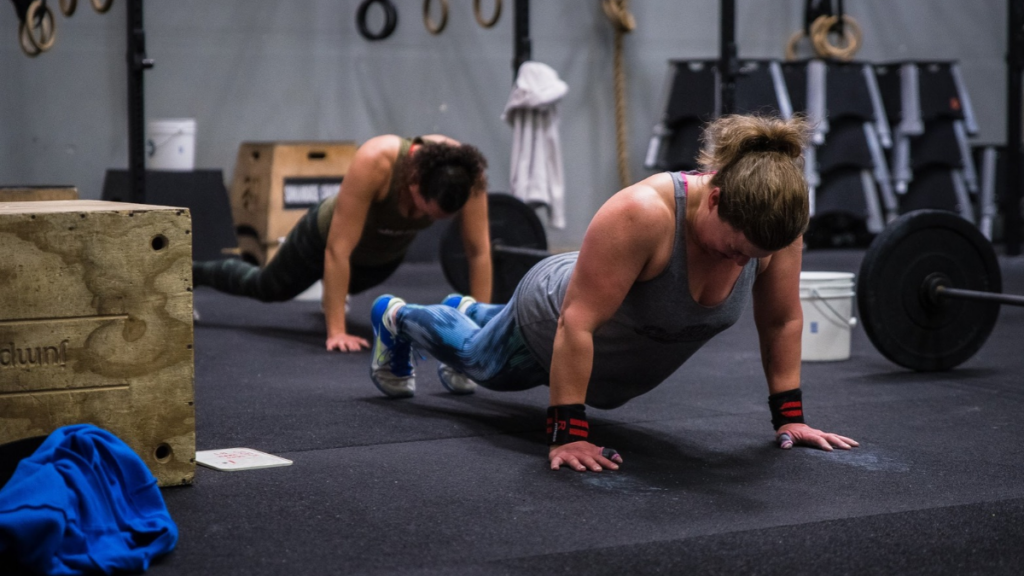
Proper technique ensures that the test accurately reflects your fitness while reducing injury risk. Begin in a high plank position with your hands slightly wider than shoulder width. Your shoulders, hips, knees, and ankles should form one straight line throughout the movement.
Lower your body until your chest comes close to the floor while maintaining a stable torso. Avoid allowing your hips to sag or rise excessively.
Push back to the starting position until your elbows are fully extended.
Each repetition should follow the same movement pattern without bouncing, shortening the range of motion, or excessively flaring the elbows.
Research using electromyography has demonstrated that maintaining proper alignment increases activation of the chest, triceps, shoulders, and core muscles while minimizing unnecessary stress on the joints.
Factors That Influence Your Score
Many variables affect how many push ups you can perform. Body composition plays a major role because push ups require lifting your own body weight. Someone carrying excess body fat must move more mass during every repetition, making the exercise more demanding. Upper body strength is another obvious factor. Stronger chest, shoulder, and triceps muscles improve performance, but so does core stability.
Training frequency also matters. Individuals who regularly perform resistance training generally achieve higher scores than those who focus only on cardiovascular exercise.
Sleep, nutrition, hydration, and recovery influence muscular endurance as well. Inadequate protein intake or chronic fatigue can reduce performance even in well trained individuals. Finally, age related declines become much smaller among people who remain physically active throughout adulthood.
Are Push Ups Enough for Total Fitness?
Push ups are an outstanding exercise, but they should not be your only form of training. They primarily develop pushing muscles and muscular endurance. Complete fitness also requires pulling exercises for balanced shoulder development, lower body strength exercises such as squats or lunges, cardiovascular exercise, flexibility training, and balance work.
The World Health Organization recommends adults perform at least 150 minutes of moderate intensity aerobic activity each week along with muscle strengthening activities involving all major muscle groups on two or more days each week.
Push ups fit perfectly within those muscle strengthening recommendations but should be combined with a balanced exercise program.
The Bottom Line
There is no perfect push up number for every age, but there are useful benchmarks that can help you evaluate your current fitness.
Most healthy adults should aim to perform at least 10 to 20 strict push ups with good technique. Younger adults and those who train regularly can often exceed 30 or even 40 repetitions, while older adults who remain active frequently outperform age based averages. More importantly, your ability to perform push ups reflects much more than upper body strength. Research links muscular endurance with healthier aging, greater functional independence, and lower risk of chronic disease.
Instead of focusing solely on how your score compares with someone else, focus on steady improvement. Whether you can currently perform two push ups or fifty, becoming stronger than you were last month is the goal that matters most.
Key Takeaways
| Topic | Key Takeaway |
|---|---|
| Why push ups matter | Push ups assess upper body strength, muscular endurance, core stability, and relative strength. |
| Effect of age | Push up performance generally declines with age, but regular resistance training greatly slows this process. |
| Healthy benchmark | Most adults should aim for at least 10 to 20 strict push ups with proper technique. |
| Excellent performance | Completing more than 40 consecutive push ups represents outstanding muscular endurance for most adults. |
| Health connection | Better push up performance is associated with improved muscular fitness and lower long term cardiovascular risk in some populations. |
| Improving performance | Progressive strength training, proper nutrition, adequate recovery, and consistent practice improve results at any age. |
| Technique | Full range of motion and proper body alignment are more important than simply completing more repetitions. |
| Overall fitness | Push ups should be combined with pulling exercises, lower body training, aerobic exercise, and mobility work for complete fitness. |
References
- American College of Sports Medicine (2022) ACSM’s Guidelines for Exercise Testing and Prescription. 11th ed. Philadelphia: Wolters Kluwer.
- Artero, E.G., Lee, D.C., Lavie, C.J., España Romero, V., Sui, X., Church, T.S., Lavie, C.J. and Blair, S.N. (2012) ‘Effects of muscular strength on cardiovascular risk factors and prognosis’, Journal of Cardiopulmonary Rehabilitation and Prevention, 32(6), pp. 351 to 358.
- Cruz Jentoft, A.J., Bahat, G., Bauer, J., Boirie, Y., Bruyère, O., Cederholm, T., Cooper, C., Landi, F., Rolland, Y., Sayer, A.A., Schneider, S.M., Sieber, C.C., Topinkova, E., Vandewoude, M. and Visser, M. (2019) ‘Sarcopenia: Revised European consensus on definition and diagnosis’, Age and Ageing, 48(1), pp. 16 to 31.
- Dodds, R.M., Syddall, H.E., Cooper, R., Benzeval, M., Deary, I.J., Dennison, E.M., Der, G., Gale, C.R., Inskip, H.M., Jagger, C., Kirkwood, T.B.L., Lawlor, D.A., Robinson, S.M., Starr, J.M., Steptoe, A., Tilling, K., Kuh, D., Cooper, C. and Sayer, A.A. (2014) ‘Grip strength across the life course: Normative data from twelve British studies’, PLoS ONE, 9(12), e113637.
- Edwards, M.K. and Loprinzi, P.D. (2018) ‘Effects of a sedentary inducing randomized controlled intervention on depression and mood profile in active young adults’, Mayo Clinic Proceedings, 93(1), pp. 1 to 8.
- Harvey, L.J., Holroyd, C., Ntani, G., Javaid, K., Cooper, P., Moon, R., Cole, Z., Tinati, T., Godfrey, K., Dennison, E. and Cooper, C. (2018) ‘Vitamin D supplementation and muscle strength: A systematic review and meta analysis’, Osteoporosis International, 29(2), pp. 271 to 284.
- Kodama, S., Saito, K., Tanaka, S., Maki, M., Yachi, Y., Asumi, M., Sugawara, A., Totsuka, K., Shimano, H., Ohashi, Y., Yamada, N. and Sone, H. (2009) ‘Cardiorespiratory fitness as a quantitative predictor of all cause mortality and cardiovascular events’, Journal of the American Medical Association, 301(19), pp. 2024 to 2035.
- Saint Maur, C., Shaw, B.S., Shaw, I. and Gennat, H. (2022) ‘Electromyographic analysis of push up variations: A systematic review’, International Journal of Environmental Research and Public Health, 19(19), 12347.