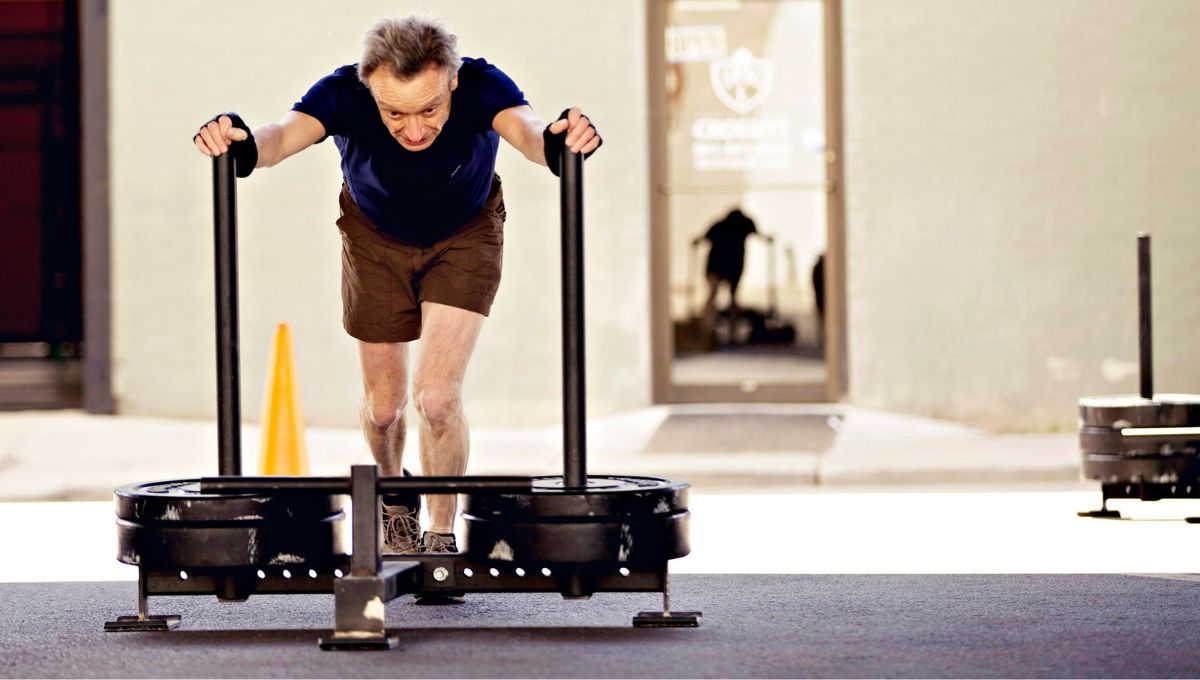


You’ve probably seen people pushing a heavy sled at the gym and wondered, “What’s the deal with that?” The sled push may look simple, but it’s actually one of the most powerful, full-body exercises you can incorporate into your fitness routine. What’s fascinating about this movement is that it doesn’t require fancy equipment or complicated techniques, yet it delivers immense results. Whether you’re a seasoned athlete or just starting out, the sled push can be a game-changer. But it’s not just about brute strength; this exercise helps with endurance, speed, and overall fitness.
Now, you might be asking, “Why should I bother adding sled pushes to my workouts?” That’s exactly what we’re going to dive into! We’ll explore how the sled push can improve your fitness, compare it with other similar exercises, and show you how it fits into a well-rounded workout routine. By the end of this article, you’ll have all the tips and tricks you need to take full advantage of the sled push.
Why the Sled Push is a Must-Have in Your Workout Routine
- Full-body engagement: The sled push works everything from your legs to your core to your upper body, offering a complete workout in one exercise.
- Low-impact on joints: Unlike running or jumping, the sled push is gentle on your knees and ankles.
- Customisable resistance: You can adjust the weight to match your fitness level, making it perfect for beginners and advanced athletes alike.
- Cardiovascular benefits: You’re not just building muscle; you’re also getting your heart rate up, improving cardiovascular fitness.
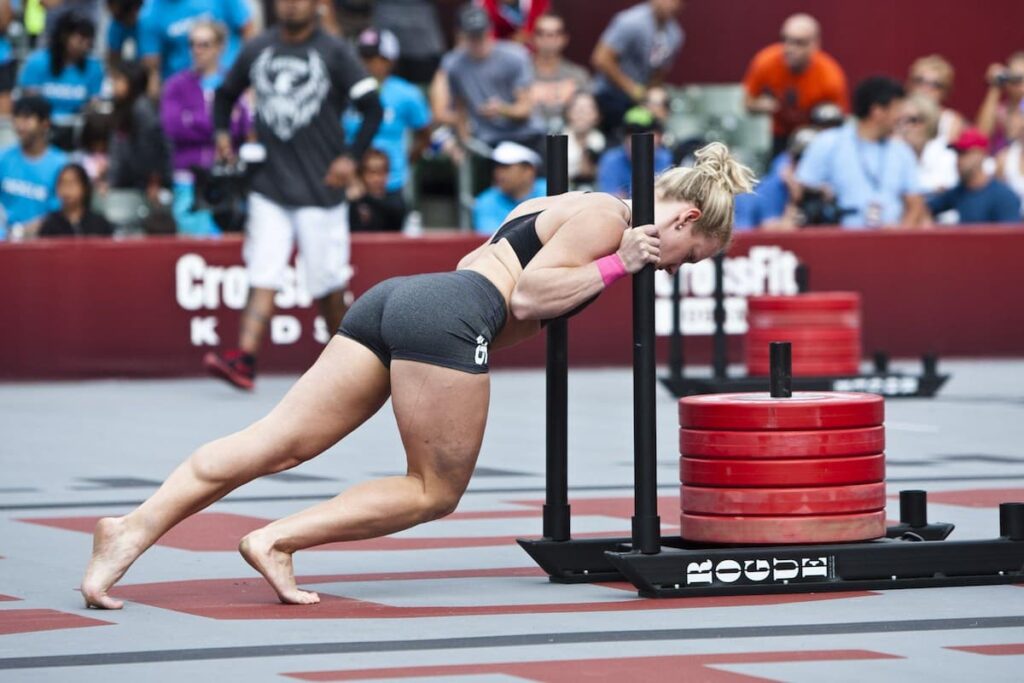
The Physical Benefits of the Sled Push
When it comes to fitness gains, the sled push delivers a unique combination of benefits that’s hard to find in other exercises. Let’s break down exactly how this move can supercharge your fitness.
1. Builds Explosive Strength
The sled push is all about moving a heavy object with speed and power. This makes it an ideal exercise for building explosive strength—something that’s particularly beneficial for athletes but also for anyone looking to improve their general power and mobility. Think about it: when you’re pushing that sled, your legs, glutes, and core are all firing in sync to move the load forward. It’s a demanding exercise that challenges your strength in ways typical weightlifting moves don’t.
2. Improves Cardiovascular Endurance
While the sled push is primarily a strength-building move, it also gets your heart pumping—especially if you push it over longer distances or for extended periods. When done right, it can feel almost like a sprint, pushing your cardiovascular system to the limit. This makes the sled push a killer two-in-one: strength training and cardio, rolled into one sweaty, heart-pounding package.
Mountain Climbers: The Ultimate Total-Body Exercise
3. Low Impact but High Reward
If you’ve ever dealt with joint pain or are trying to avoid it, the sled push is your friend. It’s a low-impact exercise, meaning it won’t put unnecessary strain on your knees, ankles, or hips. Unlike running or jumping exercises, there’s no pounding, so it’s great for people who need a joint-friendly yet effective workout.
4. Boosts Athletic Performance
For athletes, especially those involved in sports like football, rugby, or track, the sled push offers direct benefits. It mimics the kind of explosive, forward-moving strength you need for sprinting, tackling, or charging down the field. But even if you’re not a competitive athlete, the sled push will help you with everyday movements that require strength and stability, like lifting heavy objects or climbing stairs.
5. Develops Core Stability
Though it may seem like a leg exercise, the sled push demands a solid core. Your abs and lower back engage to keep your torso stable as you push the sled forward. Over time, this helps develop core strength and stability, which is crucial for preventing injuries and improving posture.
How the Sled Push Compares to Similar Exercises
There are plenty of exercises out there that promise similar benefits, so you might be wondering how the sled push stacks up against them. Let’s take a look at how the sled push compares to some of the most popular strength and conditioning exercises.
1. Sled Push vs. Squats
Both squats and the sled push target the legs and glutes, but the sled push offers a few distinct advantages. First, the push engages the muscles in a dynamic, forward-moving way, which is more similar to real-life activities like running or climbing. Squats, while incredibly effective for building leg strength, are a stationary exercise and don’t offer the same cardiovascular benefits as the sled push. That said, both exercises are complementary, and combining them can give you the best of both worlds.
2. Sled Push vs. Deadlifts
Deadlifts are a staple for building raw strength, particularly in the posterior chain—the muscles along the back of your body, like the hamstrings, glutes, and lower back. While the sled push also works these areas, it incorporates more cardiovascular work and allows for smoother, more fluid movements. Deadlifts are more about raw power, while the sled push focuses on power, endurance, and core stability. Again, both exercises serve different purposes, and using them together can deliver maximum benefits.
3. Sled Push vs. Sprinting
Sprinting and sled pushing have a lot in common, especially when it comes to building explosive power and speed. However, the sled push adds an element of resistance that you don’t get with sprinting alone. This means that your muscles work harder to generate speed, making the sled push a more strength-focused exercise. On the flip side, sprinting is more effective for improving pure speed and agility. Combining sprints with sled pushes can help you develop both speed and strength.
Exercises to Combine with the Sled Push for Maximum Fitness
If you want to take your fitness to the next level, the sled push is best paired with complementary exercises. By doing so, you can work different muscle groups, improve cardiovascular endurance, and build functional strength.

1. Squats
Squats are a natural companion to the sled push. While the sled push targets your legs in a dynamic, pushing motion, squats work them in a more controlled, stabilising way. You can incorporate barbell squats for added resistance or bodyweight squats if you’re focusing more on endurance. Doing both exercises in the same workout will leave your legs thoroughly worked and strong.
2. Lunges
Lunges are another great leg-focused exercise that pairs well with the sled push. Like the push, lunges require stability and balance, while also working the quads, glutes, and hamstrings. You can alternate between sled pushes and walking lunges to really fatigue your legs and engage your core.
3. Core Work
Since the sled push demands a stable core, adding specific core exercises to your routine will enhance your performance. Moves like planks, Russian twists, or mountain climbers can help build the core strength you need to maintain stability while pushing a heavy sled.
4. Pulling Movements
While the sled push focuses on pushing strength, it’s essential to balance it out with pulling exercises. Moves like pull-ups, rows, or even sled pulls (where you pull the sled towards you instead of pushing it) can help create a balanced upper body. By incorporating both pushing and pulling exercises, you ensure you’re building strength evenly throughout your body.
5. Sprints or HIIT Training
To maximise the cardiovascular benefits of the sled push, pair it with sprints or other high-intensity interval training (HIIT) exercises. Doing intervals of sled pushes followed by sprints or jump rope can give you a killer cardio workout that also builds strength.
How to Incorporate the Sled Push into Your Routine
Now that we’ve covered the benefits and complementary exercises, you might be wondering how to structure a workout that includes the sled push. Here’s a simple but effective workout routine that can be done once or twice a week:
Warm-up (5-10 minutes):
- Jogging or jumping rope
- Dynamic stretches, focusing on legs and core
Workout:
- Sled Push: 3 sets of 20-30 metres, increasing weight each set
- Squats: 3 sets of 10-12 reps
- Walking Lunges: 3 sets of 10-12 reps (each leg)
- Plank: 3 sets of 1-minute holds
- Pull-ups or Rows: 3 sets of 8-10 reps
- Sprints: 3 sets of 30-second sprints, followed by 1 minute of rest

Cool-down (5-10 minutes):
- Light stretching, focusing on legs, back, and core
This routine hits all the major muscle groups, challenges your cardiovascular system, and improves both strength and endurance. You can also tweak the weights, reps, and distances to match your fitness level.
5 Sled Push Workouts to Burn Fat and Build Mental Toughness
Conclusion
The sled push is a fantastic exercise for anyone looking to build strength, improve cardiovascular fitness, and boost overall athleticism. Its low-impact nature makes it accessible for people of all fitness levels, while its versatility allows you to adjust the resistance to match your goals. Whether you’re looking to gain muscle, lose fat, or simply improve your performance, the sled push should be a staple in your routine.
When combined with complementary exercises like squats, lunges, and core work, the sled push can help you achieve a well-rounded and effective fitness plan. So, the next time you hit the gym, give the sled push a try—your body will thank you! Just remember to start slow, focus on form, and gradually increase the weight as you get stronger. Happy pushing!
3 Ways to Lose Belly Fat That Have Nothing to Do With Cardio