

Most dads do not have unlimited time, perfect recovery, or the freedom to train like professional athletes. Work, family, and life responsibilities demand efficiency. The good news is that you do not need dozens of exercises or complicated routines to build strength, improve health, and stay athletic.
Science consistently shows that a small number of well chosen compound movements can deliver nearly all the benefits of a full training program.
This article breaks down the five exercises that cover strength, muscle, cardiovascular health, mobility, and long term function. These movements are efficient, scalable, and supported by strong scientific evidence. If you focus on these consistently, you will build a resilient, capable body that keeps up with your life.
Why Simplicity Works
The Power of Compound Movements
Compound exercises recruit multiple muscle groups and joints at the same time. This leads to higher energy expenditure, greater hormonal response, and more efficient strength development compared to isolation exercises. Research shows that multi joint training improves functional strength and overall muscle mass more effectively than single joint training when time is limited.
For dads balancing busy schedules, this matters. You can stimulate the entire body with fewer exercises, reducing time in the gym without sacrificing results.

Consistency Beats Complexity
One of the strongest predictors of long term fitness success is adherence. Complex programs often fail because they are hard to follow consistently. Simpler routines are easier to repeat week after week. Studies on exercise adherence show that enjoyment and simplicity increase long term compliance, which ultimately determines results.
Functional Strength for Real Life
Dads do not just train for aesthetics. You carry kids, move furniture, run around parks, and deal with unpredictable physical demands. Functional strength training improves movement patterns that transfer directly to daily life. Research confirms that resistance training improves mobility, balance, and injury resilience across all age groups.
With that in mind, here are the five exercises that cover everything you need.
1. The Squat
Why It Matters
The squat is one of the most fundamental human movement patterns. It builds strength in the quads, glutes, hamstrings, and core while improving mobility in the hips and ankles. It also reinforces proper posture and movement mechanics.
From a scientific perspective, squats are highly effective for increasing lower body strength and muscle mass. They also stimulate a large systemic response due to the amount of muscle involved, which contributes to overall strength development.
Health and Longevity Benefits
Lower body strength is strongly linked to reduced risk of falls, improved metabolic health, and better quality of life as you age. Squats improve bone density by placing mechanical stress on the skeleton, which is critical for preventing osteoporosis.
Research also shows that resistance training involving large muscle groups improves insulin sensitivity and glucose metabolism, reducing the risk of type 2 diabetes.
How to Do It Right
Start with bodyweight squats if you are new. Focus on keeping your chest up, knees tracking over your toes, and hips moving back and down. As you progress, you can add load with goblet squats, back squats, or front squats.
Practical Tip for Dads
If you have limited time, perform squats early in your workout when energy is highest. Even two to three sets performed consistently can produce meaningful strength gains.
2. The Deadlift
Why It Matters
The deadlift is a hinge movement that trains the posterior chain, including the glutes, hamstrings, and lower back. It is one of the most effective exercises for building total body strength.
From a functional standpoint, the deadlift mimics picking objects off the ground. This is something dads do constantly, whether lifting groceries or picking up children.
Scientific Support
Deadlifts activate a large amount of muscle mass and produce high levels of mechanical tension, which is a key driver of muscle growth. Studies show that posterior chain strength is critical for reducing injury risk, particularly in the lower back.

Strengthening the muscles involved in hip extension also improves athletic performance and everyday movement efficiency.
Health Benefits
Deadlifting improves spinal stability and core strength. Contrary to common myths, properly performed deadlifts can reduce the risk of back pain by strengthening the muscles that support the spine.
Research indicates that resistance training programs that include deadlift variations can improve functional capacity and reduce disability in adults with lower back issues.
How to Do It Right
Keep the bar close to your body, maintain a neutral spine, and drive through your heels. The movement should come from the hips, not the lower back.
Start with lighter weights or variations such as the kettlebell deadlift if you are new.
Practical Tip for Dads
Use moderate weights and focus on perfect technique. You do not need maximal loads to get strong. Consistency and quality matter more than chasing numbers.
3. The Push Up or Bench Press
Why It Matters
Upper body pushing strength is essential for daily tasks such as pushing doors, lifting objects, and stabilizing your body during movement. Push ups and bench presses target the chest, shoulders, and triceps.

Push ups are especially valuable because they also engage the core and require body control.
Scientific Support
Research shows that push ups can produce similar muscle activation and strength gains as the bench press when performed with sufficient intensity. This makes them an excellent option for dads who train at home.
Upper body pushing exercises also contribute to improved bone density in the upper body and better shoulder stability.
Health Benefits
Strength training in the upper body is associated with improved cardiovascular health markers and reduced mortality risk. Studies have shown that higher muscular strength correlates with lower risk of chronic disease.
How to Do It Right
For push ups, keep your body in a straight line, engage your core, and lower your chest to the floor. For bench press, keep your shoulder blades retracted and feet planted firmly.
Practical Tip for Dads
If standard push ups are too easy, elevate your feet or add weight. If they are too hard, start with incline push ups. This scalability makes them perfect for any fitness level.
4. The Pull Up or Row
Why It Matters
Pulling movements balance out pushing exercises and are essential for shoulder health. They strengthen the back, biceps, and grip while improving posture.
Modern life often involves a lot of sitting and forward leaning. This can lead to rounded shoulders and weak upper back muscles. Pulling exercises correct these imbalances.
Scientific Support
Studies show that balanced training of pushing and pulling muscles reduces injury risk and improves joint stability. Strong back muscles are also associated with better posture and reduced neck and shoulder pain.
Pull ups are one of the most effective bodyweight exercises for upper body strength, while rows provide a scalable alternative.
Health Benefits
Improved posture has a direct impact on breathing efficiency and overall movement quality. Strengthening the upper back can also reduce the risk of chronic pain.
Grip strength, which is heavily involved in pulling exercises, is a strong predictor of overall health and longevity.
How to Do It Right
For pull ups, use a full range of motion and avoid swinging. For rows, keep your torso stable and pull your elbows back while squeezing your shoulder blades together.

Practical Tip for Dads
If you cannot perform pull ups yet, use resistance bands or focus on rows. Progression is key, and consistency will get you there.
5. Loaded Carries
Why They Matter
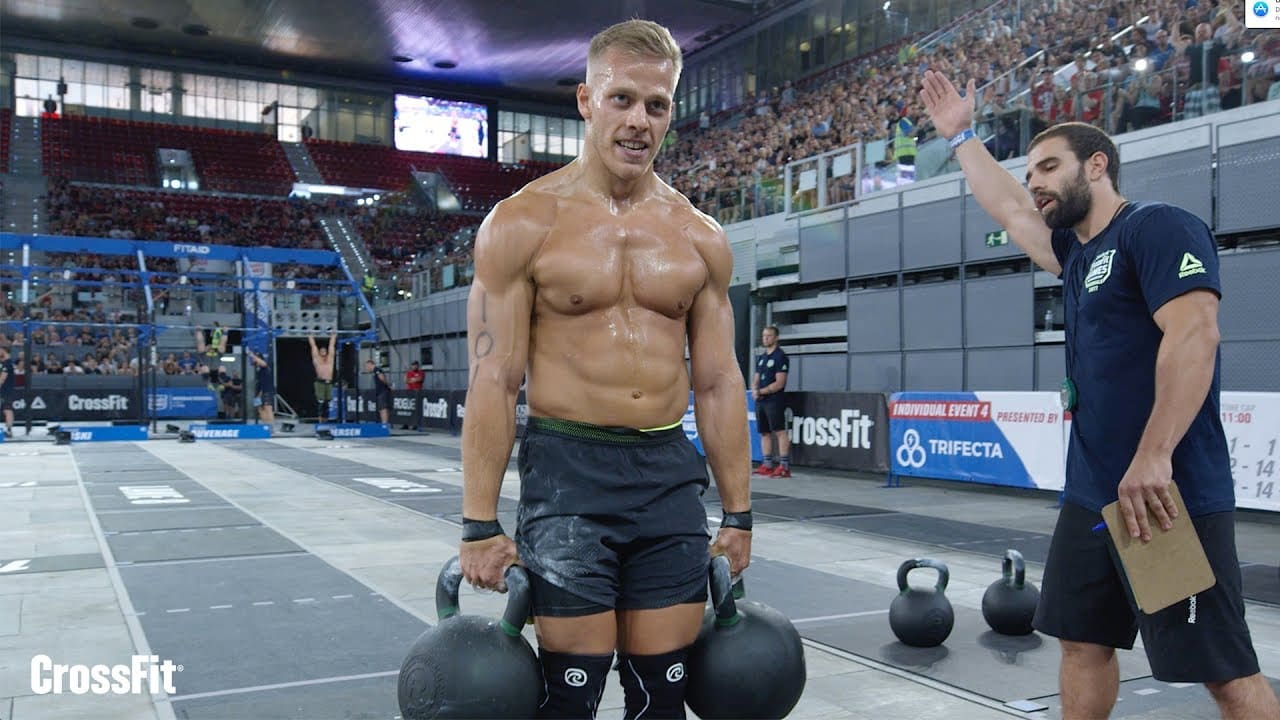
Loaded carries involve holding weight and walking. Examples include farmer carries and suitcase carries. They train the entire body, including grip, core, shoulders, and legs.
This is one of the most underrated exercises, yet it closely mimics real life tasks.
Scientific Support
Loaded carries improve core stability and functional strength. Research on gait and load carriage shows that carrying weight enhances coordination, balance, and muscular endurance.
These exercises also challenge the cardiovascular system, providing both strength and conditioning benefits.
Health Benefits
Carries improve posture, grip strength, and core stability. They also increase energy expenditure, making them effective for fat loss.
Grip strength has been identified in multiple studies as a predictor of mortality and overall health.
How to Do It Right
Pick up a pair of weights, stand tall, and walk with controlled steps. Keep your shoulders back and your core engaged.
Practical Tip for Dads
Incorporate carries at the end of your workout. They require minimal setup and deliver maximum return in a short time.
How to Combine These Exercises
A Simple Weekly Plan
You do not need a complicated split. A full body approach works well for most dads. For example:
- Day 1: Squat, push up, row
- Day 2: Deadlift, push up, carry
- Day 3: Squat variation, pull up, carry
This structure ensures that all major movement patterns are covered multiple times per week.
Volume and Intensity
Research suggests that two to three sessions per week of resistance training is sufficient for significant strength and health benefits. Aim for two to four sets per exercise, depending on your time and experience.
Progressive Overload
To keep improving, you need to gradually increase the challenge. This can be done by adding weight, increasing repetitions, or improving technique.
Progress does not need to be dramatic. Small, consistent improvements add up over time.
Recovery and Real Life Balance
Sleep and Stress
Sleep is critical for recovery, muscle growth, and overall health. Studies show that insufficient sleep negatively impacts strength, recovery, and metabolic health. Managing stress is equally important. High stress levels can impair recovery and increase the risk of injury.
Nutrition Basics
You do not need a perfect diet, but you do need consistency. Focus on adequate protein intake, whole foods, and sufficient calories to support your activity level.
Protein intake is especially important for muscle maintenance and growth. Research consistently shows that higher protein intake supports better body composition and recovery.
Staying Consistent
The best program is the one you can stick to. These five exercises are effective because they are simple, efficient, and adaptable.
Final Thoughts
You do not need endless variety or complicated routines to stay strong and healthy. Squats, deadlifts, push ups or presses, pull ups or rows, and loaded carries cover nearly every physical quality you need. They build strength, improve health, and prepare you for real life demands. Most importantly, they fit into a busy schedule.
If you focus on these movements, train consistently, and prioritize recovery, you will develop a body that is not only strong but also resilient and capable for years to come.
References
• American College of Sports Medicine (2009). Progression Models in Resistance Training for Healthy Adults. Medicine and Science in Sports and Exercise.
• Ahtiainen, J.P. et al. (2003). Muscle hypertrophy, hormonal adaptations and strength development during strength training in strength trained and untrained men. European Journal of Applied Physiology.
• Dankel, S.J. et al. (2017). The Minimal Dose of Resistance Exercise for Increasing Muscle Mass. Sports Medicine.
• Fisher, J. et al. (2011). The effects of resistance training on muscular strength and endurance in healthy adults. Journal of Strength and Conditioning Research.
• Leong, D.P. et al. (2015). Prognostic value of grip strength. The Lancet.
• Peterson, M.D. et al. (2010). Resistance exercise for muscular strength in older adults. Ageing Research Reviews.
• Schoenfeld, B.J. (2010). The mechanisms of muscle hypertrophy and their application to resistance training. Journal of Strength and Conditioning Research.
• Schoenfeld, B.J. et al. (2016). Effects of resistance training frequency on measures of muscle hypertrophy. Sports Medicine.
• Steele, J. et al. (2017). Resistance training to momentary muscular failure improves strength. Frontiers in Physiology.
• Westcott, W.L. (2012). Resistance training is medicine. Current Sports Medicine Reports.