

Building a bigger, stronger chest is one of the most common goals among gym beginners. The chest muscles are highly visible, contribute significantly to upper body strength, and play a major role in athletic performance and everyday pushing movements.
Yet many beginners struggle to develop their chest effectively. Some spend months performing endless sets of bench presses with little progress. Others focus too heavily on lifting heavier weights while neglecting important factors such as training volume, exercise technique, recovery, and nutrition.


3 Hacks to Make Barbell Thrusters Easier
The good news is that chest muscle growth does not require complicated training programs or advanced bodybuilding techniques. Research consistently shows that a few key principles account for most muscle growth. When beginners focus on these fundamentals, they can make impressive gains in both muscle size and strength.

The pectoralis major is the largest chest muscle and consists of two main portions: the clavicular head, often referred to as the upper chest, and the sternocostal head, which makes up most of the middle and lower chest. Beneath it lies the smaller pectoralis minor. Effective chest development requires training these muscles through a variety of movement patterns and angles while progressively challenging them over time.
1. Prioritize Compound Pressing Exercises
The foundation of chest growth should be compound pressing movements. These exercises involve multiple joints and muscle groups, allowing you to lift heavier loads and create greater overall muscle stimulation. The most effective chest-building compound exercises include:
• Barbell bench press
• Dumbbell bench press
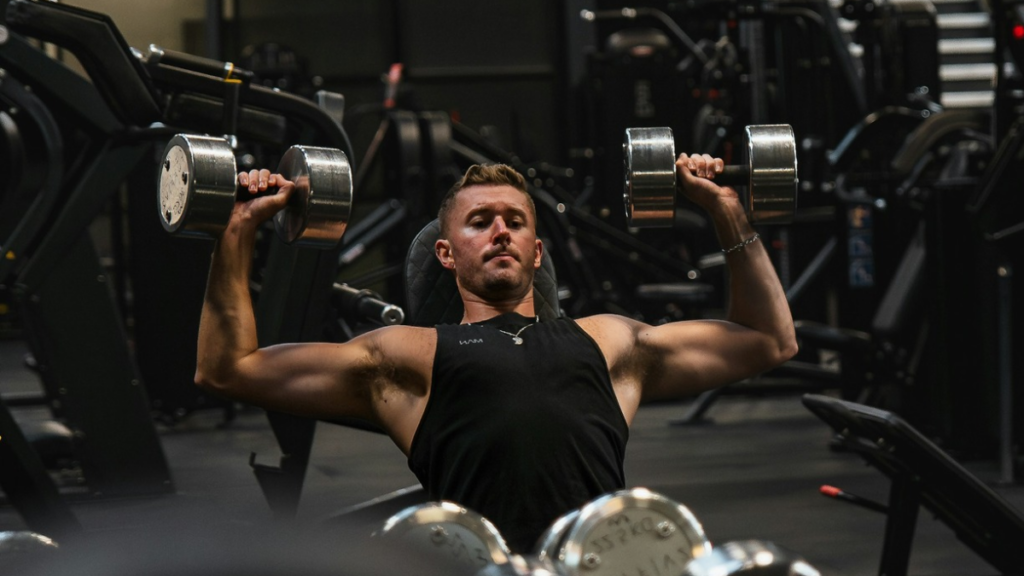
• Incline dumbbell press
• Incline barbell press
• Machine chest press
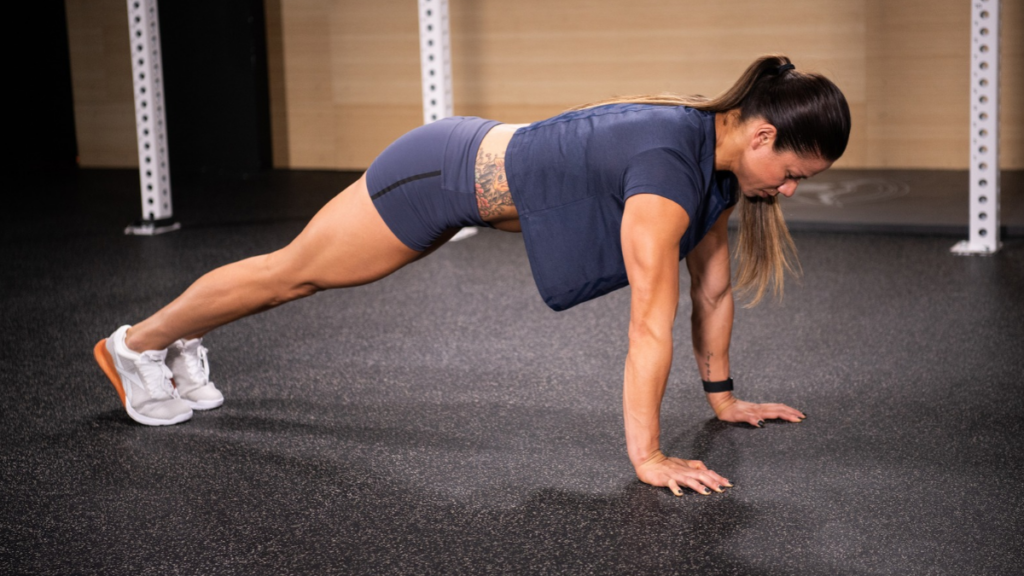
• Weighted push-ups
Research consistently shows that compound exercises produce high levels of muscle activation and allow for greater total training volume, both of which are important drivers of hypertrophy.

The flat bench press remains one of the most effective chest builders because it allows substantial loading through a large range of motion. Dumbbell variations may offer additional benefits by increasing movement freedom and requiring greater stabilization. For beginners, building a program around one or two pressing exercises per workout is often sufficient. Trying to include every chest exercise in a single session usually leads to unnecessary fatigue without additional benefits.
Key Point
Focus on mastering a few fundamental pressing movements before worrying about advanced exercises.
2. Train Your Chest at Least Twice Per Week
Many beginners still follow traditional bodybuilding routines that train each muscle group only once per week. While this approach can produce results, research suggests that training frequency plays an important role in maximizing muscle growth.
Studies comparing different training frequencies have found that training a muscle group at least twice weekly generally produces superior hypertrophy outcomes compared to once weekly training when total volume is equated. A twice weekly approach offers several advantages:
• More opportunities to stimulate muscle protein synthesis
• Better quality training sessions
• Higher weekly training volume
• Improved skill development in key exercises
For example:
Monday:
Chest and triceps
Thursday:
Chest and shoulders
This schedule allows the chest muscles to recover while still receiving frequent growth signals. Most beginners will see better chest growth by training the muscle at least two times per week rather than cramming all chest work into a single session.
3. Use a Full Range of Motion
One of the biggest mistakes beginners make is shortening the range of motion during pressing exercises. Partial repetitions may allow heavier weights, but research increasingly shows that training muscles through longer muscle lengths and full ranges of motion can produce superior hypertrophy. During chest exercises:
• Lower the weight under control
• Allow a comfortable stretch in the chest muscles
• Press through the full range without bouncing
• Maintain proper shoulder positioning
For the bench press, this typically means bringing the bar to the chest while maintaining control and pressing to full elbow extension. Dumbbells can be especially valuable because they often allow a greater range of motion than barbells. A larger range of motion increases mechanical tension across the muscle fibers, which is considered one of the primary mechanisms responsible for muscle growth.

4. Focus on Progressive Overload
Muscles grow because they are forced to adapt to increasing demands. This principle is known as progressive overload. Without progression, growth eventually stalls. Progressive overload can be achieved through several methods:
• Increasing weight
• Performing more repetitions
• Adding more sets
• Improving exercise technique
• Increasing training frequency
Many beginners assume they must add weight every workout. While this sometimes happens early in training, progression often becomes slower over time. A simple strategy is to use a repetition range.
For example:
Bench Press:
3 sets of 6 to 10 repetitions
When you can perform all three sets for 10 repetitions with good technique, increase the load slightly during your next session. This gradual progression keeps the muscles adapting without compromising form.
Key Point
The best chest-building program is not the one with the fanciest exercises. It is the one that allows steady progression over months and years.
5. Include Both Flat and Incline Pressing
Not all chest exercises emphasize the chest in the same way. Research examining muscle activation patterns has found that incline pressing variations tend to increase activation of the clavicular portion of the pectoralis major, commonly called the upper chest. Meanwhile, flat pressing exercises effectively recruit the entire chest. For balanced development, beginners should include both movement patterns. A simple weekly setup might include:
Workout A:
• Flat bench press
• Dumbbell flyes
Workout B:
• Incline dumbbell press
• Machine chest press
This approach helps ensure complete chest development rather than overemphasizing a single region. While the chest functions as one muscle, different exercise angles can alter fiber recruitment patterns and contribute to more balanced growth.
Key Point
Combining flat and incline pressing creates a more comprehensive chest-building stimulus.
6. Train Close to Failure
Training intensity matters. One of the strongest findings in hypertrophy research is that muscle growth occurs most effectively when sets are performed close to muscular failure.
Muscular failure refers to the point where another repetition cannot be completed with proper technique. Beginners do not need to reach absolute failure on every set. In fact, doing so may increase fatigue unnecessarily. Instead, most sets should finish with approximately one to three repetitions left in reserve. This approach provides:
• High muscle fiber recruitment
• Strong hypertrophy stimulus
• Better recovery management
For example, if you could perform 12 repetitions but stop at 10, you are likely still training hard enough to maximize growth. Many beginners underestimate how hard they need to work. Sets that feel moderately challenging often do not recruit enough muscle fibers to produce optimal growth.
Practical Tip
The final few repetitions of a set should feel difficult while still allowing good technique.
7. Do Enough Weekly Volume
Training volume is one of the strongest predictors of muscle growth. Volume is generally measured as the number of hard sets performed for a muscle group each week. Research suggests that higher training volumes generally produce greater hypertrophy, up to an individual’s recovery capacity. For beginners, approximately 10 to 15 challenging chest sets per week is often an effective starting point.

Example:
Monday:
• Bench press 4 sets
• Incline dumbbell press 3 sets
Thursday:
• Machine chest press 4 sets
• Cable flyes 3 sets
Total:
14 chest sets
This amount is sufficient for most novice lifters while still allowing adequate recovery. Performing far more volume than necessary can reduce recovery quality and increase injury risk.
Key Point
More is not always better. Aim for enough volume to stimulate growth without overwhelming recovery.
8. Improve Your Mind-Muscle Connection
The mind-muscle connection refers to consciously focusing on the target muscle during an exercise. Research has shown that directing attention toward the working muscle can increase muscle activation, particularly when training with moderate loads.
Many beginners perform chest exercises primarily with their shoulders and triceps. To improve chest involvement:
• Retract and stabilize the shoulder blades
• Keep the chest lifted during presses
• Focus on squeezing the chest muscles throughout each repetition
• Control the lowering phase
During flyes, imagine bringing the upper arms together rather than simply moving the hands. While mind-muscle connection does not replace progressive overload, it can help beginners ensure that the chest muscles are receiving the intended stimulus.
Common Beginner Mistake
Allowing the shoulders to roll forward often shifts tension away from the chest and increases shoulder stress.
9. Support Growth With Proper Nutrition
Even the best training program cannot overcome poor nutrition. Muscle growth requires energy, amino acids, and sufficient recovery resources.
Protein intake is particularly important because muscle tissue is built from amino acids. Research consistently supports daily protein intakes of approximately 1.6 to 2.2 grams per kilogram of body weight for maximizing muscle growth. For a 180 pound individual, this equals roughly 130 to 180 grams of protein daily. Excellent protein sources include:
• Lean meat
• Poultry
• Fish
• Eggs
• Dairy products
• Whey protein
• Soy products
• Legumes
Calories also matter. Beginners seeking maximum muscle growth often benefit from a modest calorie surplus. Consuming slightly more calories than maintenance provides additional energy for building new tissue.
Hydration should not be overlooked either. Dehydration can negatively affect strength, performance, and recovery.
Key Point
Consistent training creates the stimulus for growth. Nutrition provides the building materials.
10. Prioritize Recovery and Sleep
Muscle growth occurs during recovery, not during workouts. Training creates microscopic muscle damage and physiological stress. Recovery processes then repair and strengthen the tissue. Sleep is one of the most important recovery tools available. Research shows that inadequate sleep can negatively affect:
• Muscle protein synthesis
• Hormone regulation
• Strength performance
• Recovery capacity
• Body composition
Most adults should aim for seven to nine hours of quality sleep each night. Recovery also includes:
• Managing overall training stress
• Taking rest days when needed
• Maintaining proper nutrition
• Staying hydrated
Many beginners focus exclusively on training while neglecting recovery. This often leads to stalled progress despite hard work in the gym.
Putting It All Together
Chest growth does not require complicated methods. The most effective approach is built on proven training and recovery fundamentals. A beginner chest-building program should prioritize:
• Compound pressing exercises
• Two or more weekly training sessions
• Full ranges of motion
• Progressive overload
• Flat and incline pressing variations
• Training close to failure
• Sufficient weekly volume
• Strong exercise technique
• Adequate protein intake
• Consistent recovery and sleep
These principles are supported by decades of exercise science research and form the foundation of nearly every successful muscle-building program.
Beginners often make rapid progress because their bodies respond strongly to proper resistance training. By focusing on these evidence-based strategies and applying them consistently, significant chest muscle growth can occur within the first year of training. Consistency ultimately matters more than perfection. The lifters who achieve impressive chest development are usually not those following the most complicated programs. They are the ones who repeatedly apply the basics, train hard, recover well, and stay patient long enough to see the results.
Key Takeaways
| Tip | Main Action | Why It Works |
|---|---|---|
| 1 | Prioritize compound presses | Allows heavier loading and greater muscle stimulation |
| 2 | Train chest twice weekly | Increases growth opportunities throughout the week |
| 3 | Use full range of motion | Maximizes mechanical tension and muscle recruitment |
| 4 | Apply progressive overload | Forces continual adaptation and growth |
| 5 | Include flat and incline presses | Develops the entire chest more effectively |
| 6 | Train close to failure | Maximizes muscle fiber recruitment |
| 7 | Perform enough weekly volume | Provides sufficient growth stimulus |
| 8 | Improve mind-muscle connection | Enhances chest activation during exercises |
| 9 | Eat enough protein and calories | Supports muscle repair and growth |
| 10 | Prioritize sleep and recovery | Allows adaptation and muscle building |
Bibliography
• American College of Sports Medicine. (2009) ‘Progression models in resistance training for healthy adults’, Medicine & Science in Sports & Exercise, 41(3), pp. 687-708.
• Grgic, J., Schoenfeld, B.J., Davies, T.B., Lazinica, B., Krieger, J.W. and Pedisic, Z. (2018) ‘Effect of resistance training frequency on gains in muscular strength: A systematic review and meta-analysis’, Sports Medicine, 48(5), pp. 1207-1220.
• Grgic, J., Mikulic, P., Podnar, H. and Pedisic, Z. (2022) ‘Effects of resistance training performed to repetition failure or non-failure on muscular strength and hypertrophy: A systematic review and meta-analysis’, Journal of Sport and Health Science, 11(2), pp. 202-211.
• Helms, E.R., Aragon, A.A. and Fitschen, P.J. (2014) ‘Evidence-based recommendations for natural bodybuilding contest preparation: Nutrition and supplementation’, Journal of the International Society of Sports Nutrition, 11(20), pp. 1-20.
• Morton, R.W., Murphy, K.T., McKellar, S.R., Schoenfeld, B.J., Henselmans, M., Helms, E., Aragon, A.A., Devries, M.C., Banfield, L., Krieger, J.W. and Phillips, S.M. (2018) ‘A systematic review, meta-analysis and meta-regression of the effect of protein supplementation on resistance training-induced gains in muscle mass and strength in healthy adults’, British Journal of Sports Medicine, 52(6), pp. 376-384.
• Phillips, S.M. and Van Loon, L.J.C. (2011) ‘Dietary protein for athletes: From requirements to optimum adaptation’, Journal of Sports Sciences, 29(S1), pp. S29-S38.