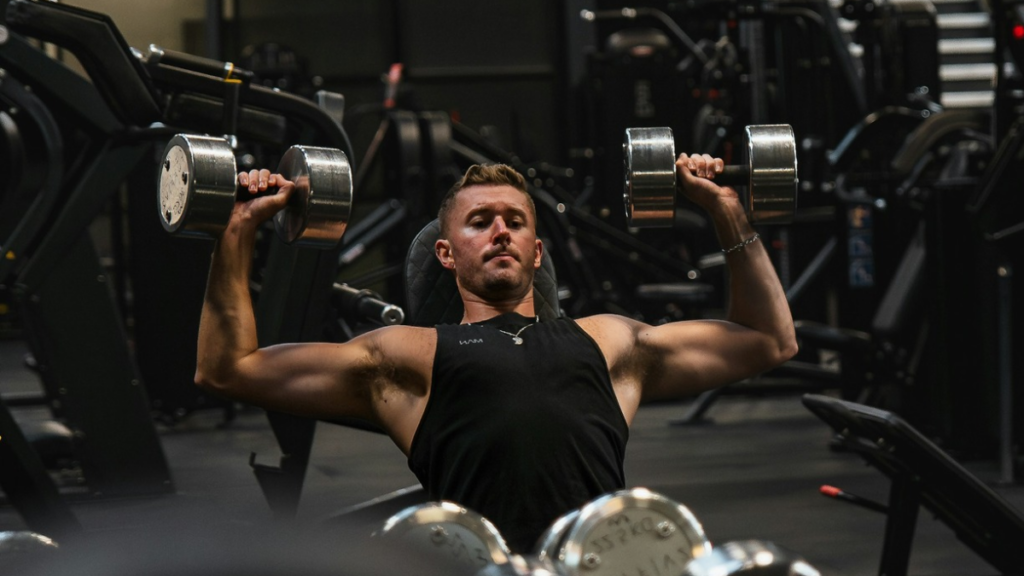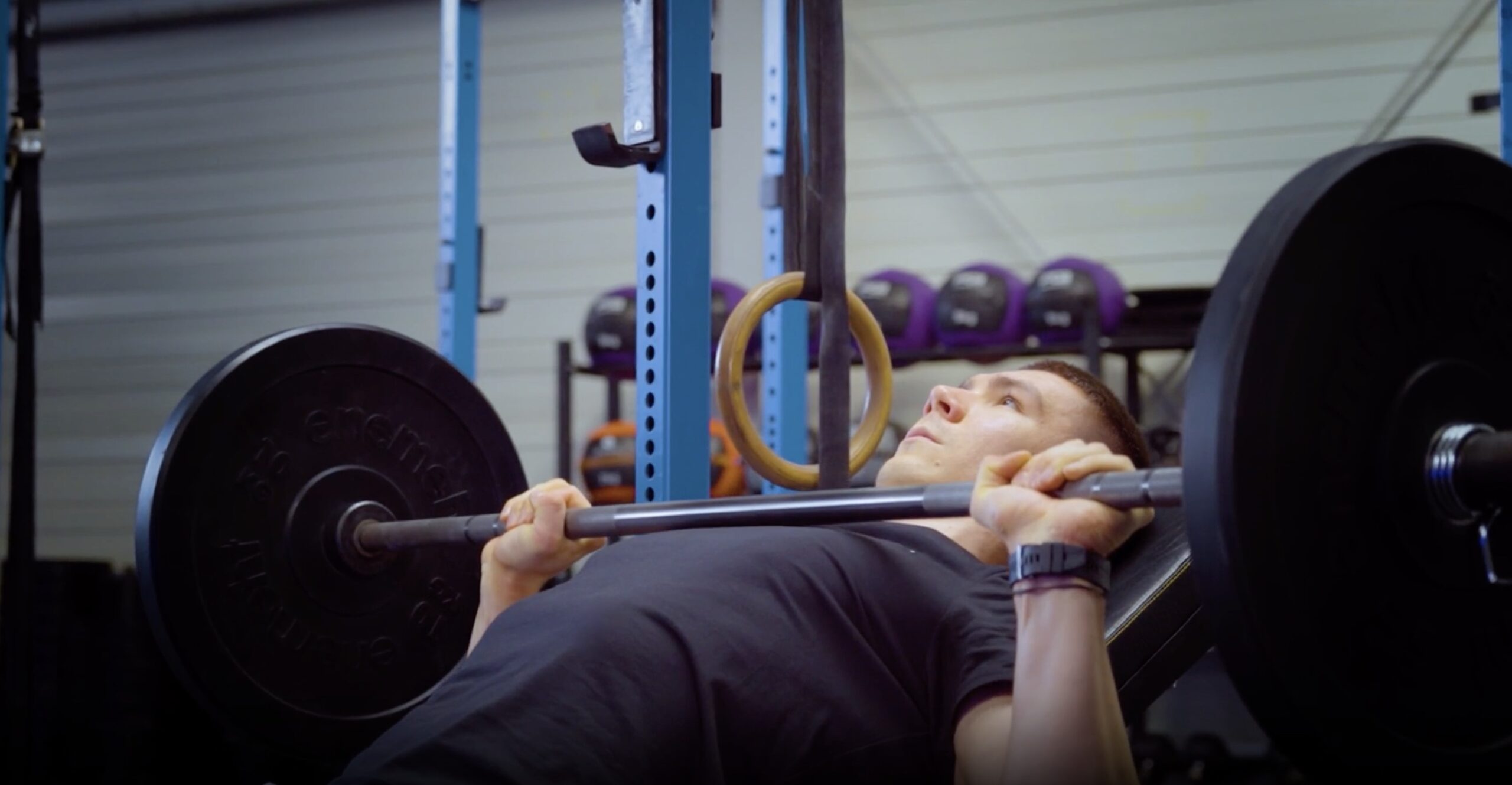


The bench press is one of the most recognized strength exercises in the world. Whether you train in a commercial gym, compete in powerlifting, or simply want to improve your overall fitness, people often ask the same question. How much do you need to bench press to be considered strong?
The answer is more interesting than many people think. Strength is not defined by a single number because body weight, training experience, age, and sex all influence performance. A 140 pound athlete who benches 225 pounds is demonstrating exceptional relative strength. A 250 pound athlete who benches the same weight is still strong compared to the general population, but not to the same degree relative to body mass.



Scientific research also shows that maximal strength is linked to better athletic performance, healthier aging, improved bone density, and even lower risk of injury when combined with proper movement quality. The bench press is not just a test of upper body strength. It reflects years of progressive training, muscle development, and neurological adaptation.
So, what numbers actually separate average lifters from strong lifters?
What Counts as Strong?
The easiest way to judge bench press strength is by comparing your one repetition maximum to your body weight. A one repetition maximum, often called a 1RM, is the heaviest weight you can lift for one complete repetition with proper technique.
Sports scientists and strength coaches often classify strength levels using large databases of lifting performances. While exact standards differ slightly between organizations, they generally agree on similar ranges.

For an adult male with at least one year of consistent training, bench pressing your body weight is a solid milestone. Reaching 1.25 times your body weight usually places you above the average recreational lifter. Bench pressing 1.5 times body weight is considered genuinely strong. Once you reach 1.75 times body weight, you are entering advanced territory. A double body weight bench press is an elite accomplishment achieved by only a small percentage of lifters.
Can You Hold a Plank for This Long? If Yes You’re An Elite Athlete!
For women, the numbers are naturally different because of differences in muscle mass and upper body anatomy. Bench pressing half your body weight is an excellent beginner milestone. Pressing your full body weight is considered an advanced achievement that requires dedicated training. Bench pressing 1.25 times body weight is exceptional and typically seen among experienced strength athletes.
These standards are supported by large performance databases as well as competitive lifting results.
Bench Press Standards for Men
Looking at body weight ratios provides a much more meaningful picture than simply comparing absolute weight.
A man weighing 165 pounds who benches 250 pounds is significantly stronger relative to his size than someone weighing 265 pounds who benches the same weight. This is why coaches often prioritize relative strength when evaluating athletic performance.
As a general guide, these standards are widely accepted.
| Strength Level | Bench Press Relative to Body Weight |
|---|---|
| Beginner | 0.65 times body weight |
| Novice | 0.85 times body weight |
| Intermediate | 1.00 to 1.25 times body weight |
| Strong | 1.50 times body weight |
| Advanced | 1.75 times body weight |
| Elite | 2.00 times body weight or more |
These numbers assume proper competition quality technique with a full range of motion rather than partial repetitions or heavily assisted lifts.
Bench Press Standards for Women
Women often underestimate their potential in the bench press. Research consistently shows that resistance training produces large improvements in strength regardless of sex, although men typically achieve higher absolute numbers because of greater muscle mass and testosterone levels.
Relative strength standards for women generally look like this.
| Strength Level | Bench Press Relative to Body Weight |
|---|---|
| Beginner | 0.35 times body weight |
| Novice | 0.50 times body weight |
| Intermediate | 0.75 times body weight |
| Strong | 1.00 times body weight |
| Advanced | 1.15 times body weight |
| Elite | 1.25 times body weight or more |
These are impressive accomplishments that often require several years of structured resistance training.
Why Body Weight Matters
Absolute strength tells only part of the story. Imagine two lifters. The first weighs 150 pounds and benches 225 pounds. The second weighs 250 pounds and also benches 225 pounds.
Both are strong compared to the average person, but the lighter athlete demonstrates much greater relative strength. Relative strength is especially important in sports that require moving your own body through space, such as gymnastics, climbing, wrestling, CrossFit, and many field sports.
Research shows that body composition also plays an important role. Greater lean muscle mass strongly predicts bench press performance. However, adding body fat without increasing muscle does not improve relative strength and may actually reduce athletic performance.
How Rare Is a 225 Pound Bench Press?
The ability to bench press 225 pounds has become an unofficial benchmark in many gyms. Among people who never strength train, it is extremely rare. Most adults lack the muscle mass, coordination, and technical skill required to lift that amount.
Even among recreational gym members, a strict 225 pound bench press is less common than many people believe. Surveys of commercial gym populations suggest that only a minority of male members ever achieve it with full range of motion. From a competitive standpoint, however, 225 pounds is only the beginning. Competitive powerlifters often bench well over 300 pounds, with elite athletes exceeding 500 pounds in heavier weight classes.
The important point is that strength standards depend entirely on the population you are comparing yourself with.
Why the Bench Press Improves More Than Muscle
Many people think getting stronger simply means building bigger muscles. Science shows that strength gains occur through multiple adaptations.
During the first several weeks of resistance training, improvements come primarily from the nervous system. The brain becomes more efficient at recruiting motor units, coordinating muscles, and reducing unnecessary muscle activity. As training continues, muscle fibers grow larger through hypertrophy. Increased muscle cross sectional area allows greater force production.
Connective tissues also adapt. Tendons become stiffer and better able to transmit force from muscle to bone. These changes improve lifting efficiency while helping reduce injury risk. This combination explains why experienced lifters continue getting stronger even after muscle growth slows.
What Muscles Matter Most?
The chest muscles receive most of the attention, but the bench press is a full upper body movement.
- The pectoralis major provides much of the pressing force during the middle portion of the lift.
- The anterior deltoids help move the upper arm forward while stabilizing the shoulder.
- The triceps brachii become especially important during the final lockout.
- The upper back muscles create a stable platform that allows force to transfer efficiently into the bar.
The core and leg muscles also contribute by maintaining full body tension. Studies using electromyography consistently demonstrate significant activation throughout the entire body during heavy bench pressing.
What Science Says About Getting Stronger
The principles behind strength development are remarkably consistent across decades of research. Progressive overload remains the foundation. Muscles and the nervous system only adapt when training gradually becomes more demanding.

Training with loads between about 80 percent and 95 percent of one repetition maximum is especially effective for maximizing strength. Lower repetition sets with heavier weights improve maximal force production more effectively than high repetition endurance style training. Rest periods also matter. Allowing two to five minutes between heavy sets helps maintain force production throughout the workout.
Training each major muscle group at least twice per week generally produces greater strength gains than training only once weekly, provided total training volume is appropriate. Technique quality is equally important. Consistent movement patterns improve efficiency while lowering injury risk.
Common Mistakes That Limit Bench Press Strength
Many lifters stop progressing because they repeat the same mistakes. The first mistake is skipping progressive overload. Using the same weight every week provides little reason for the body to adapt. The second is neglecting the upper back. Strong rows, pull ups, and rear shoulder work improve shoulder stability and provide a stronger foundation for pressing.
Poor recovery is another major problem. Muscle protein synthesis, nervous system recovery, and connective tissue adaptation all require sufficient sleep, nutrition, and rest between demanding workouts. Many lifters also focus only on chest exercises while ignoring triceps strength. Weak triceps frequently become the limiting factor near the top of the movement.
Finally, inconsistent technique can dramatically reduce performance. Small changes in grip width, bar path, or body position alter force production and make progress difficult to measure.
Does Age Change What Strong Means?
Strength naturally peaks during early adulthood, although well trained athletes often continue improving into their thirties. After middle age, muscle mass and strength gradually decline through a process known as sarcopenia. Fortunately, resistance training remains one of the most effective interventions available. Research consistently demonstrates that adults in their sixties, seventies, and even eighties can significantly increase muscle mass, strength, functional ability, and quality of life through regular resistance training.
This means that being strong is not simply about outperforming younger people. It is about maximizing your own potential at every stage of life.
Is the Bench Press Enough to Measure Overall Strength?
The bench press is an excellent indicator of upper body pushing strength, but it should never be viewed as a complete measure of physical capability. A well rounded strength profile also includes pulling movements, lower body strength, rotational control, grip strength, and muscular endurance.
Exercises such as the squat, deadlift, overhead press, pull up, and loaded carry all contribute to complete athletic development. Even so, the bench press remains one of the most researched and standardized strength exercises, making it a valuable benchmark for tracking long term progress.
Final Thoughts
Being strong is about much more than impressing people in the gym. If you can bench press your own body weight, you are already stronger than most people who never train seriously. Reaching 1.5 times your body weight places you among genuinely strong recreational lifters. A double body weight bench press is an elite accomplishment that reflects years of disciplined training.
More importantly, the journey toward those numbers provides benefits that extend far beyond the weight room. Greater strength improves athletic performance, supports healthy aging, increases bone density, enhances metabolic health, and makes everyday activities easier.
Instead of comparing yourself with the strongest person in the gym, compare yourself with who you were six months ago. Consistent progress through intelligent training remains the best definition of real strength.
Key Takeaways
| Topic | Key Takeaway |
|---|---|
| Body weight benchmark | Bench pressing your own body weight is a strong milestone for most recreational male lifters. |
| Relative strength | Comparing your bench press to your body weight provides a more meaningful assessment than absolute weight alone. |
| Strong standard | Around 1.5 times body weight is considered genuinely strong for trained men, while one times body weight is a strong benchmark for trained women. |
| Elite level | Bench pressing two times body weight is an elite achievement reached by very few lifters. |
| Strength development | Progressive overload, heavy resistance training, good technique, and adequate recovery produce the greatest gains. |
| Muscle involvement | The chest, shoulders, triceps, upper back, core, and legs all contribute to a successful bench press. |
| Health benefits | Greater strength is associated with improved bone health, physical function, athletic performance, and healthy aging. |
| Long term progress | Consistent improvement over time is a better indicator of success than comparing yourself with others. |
References
- American College of Sports Medicine. (2021) ACSM’s Guidelines for Exercise Testing and Prescription. 11th ed. Philadelphia: Wolters Kluwer.
- Grgic, J., Lazinica, B., Schoenfeld, B.J. and Pedisic, Z. (2020) ‘Test retest reliability of the one repetition maximum strength assessment: A systematic review’, Sports Medicine, 50(3), pp. 519 to 533.
- Kraemer, W.J. and Ratamess, N.A. (2004) ‘Fundamentals of resistance training: Progression and exercise prescription’, Medicine & Science in Sports & Exercise, 36(4), pp. 674 to 688.
- Peterson, M.D., Rhea, M.R. and Alvar, B.A. (2004) ‘Maximizing strength development in athletes: A meta analysis to determine the dose response relationship’, Journal of Strength and Conditioning Research, 18(2), pp. 377 to 382.
- Schoenfeld, B.J. (2010) ‘The mechanisms of muscle hypertrophy and their application to resistance training’, Journal of Strength and Conditioning Research, 24(10), pp. 2857 to 2872.
- Schoenfeld, B.J., Ogborn, D. and Krieger, J.W. (2017) ‘Dose response relationship between weekly resistance training volume and increases in muscle mass: A systematic review and meta analysis’, Journal of Sports Sciences, 35(11), pp. 1073 to 1082.
- Suchomel, T.J., Nimphius, S. and Stone, M.H. (2016) ‘The importance of muscular strength in athletic performance’, Sports Medicine, 46(10), pp. 1419 to 1449.
- Westcott, W.L. (2012) ‘Resistance training is medicine: Effects of strength training on health’, Current Sports Medicine Reports, 11(4), pp. 209 to 216.
- Wilson, J.M., Marin, P.J., Rhea, M.R., Wilson, S.M., Loenneke, J.P. and Anderson, J.C. (2012) ‘Concurrent training: A meta analysis examining interference of aerobic and resistance exercises’, Journal of Strength and Conditioning Research, 26(8), pp. 2293 to 2307.