

Well developed shoulders can completely change the way your physique looks. Wider shoulders create the appearance of a stronger upper body, improve posture, and help build the classic V taper that many people aim for in the gym. While genetics determine your shoulder width and bone structure, building the muscles around the shoulders can significantly increase your visual width.
For beginners, the biggest mistake is trying too many complicated exercises or chasing heavy weights before learning proper technique. The shoulder is one of the most mobile joints in the human body, which also makes it one of the most vulnerable to injury. Starting with simple, effective movements allows you to build muscle safely while developing the strength and coordination needed for more advanced training later.


Research consistently shows that resistance training is highly effective for increasing muscle size and strength when exercises are performed with good technique and progressive overload. Beginners are especially responsive to resistance training because their muscles adapt rapidly during the first months of consistent exercise.
This guide covers the three best beginner exercises for building wider shoulders, explains why they work, and shows you how to get the most from each movement.
Understanding What Makes Shoulders Look Wider
The shoulder consists primarily of the deltoid muscle, which has three distinct sections. The anterior deltoid sits on the front of the shoulder and assists with pressing movements. The posterior deltoid sits on the back and helps pull the arm backward. The lateral deltoid sits on the outside of the shoulder and is the most important muscle for creating visual width.
While all three heads should be trained for balanced development, the lateral deltoid deserves special attention if your goal is broader looking shoulders. Electromyography studies have shown that different exercises emphasize different portions of the deltoid, making exercise selection important for targeted muscle growth.
Building wider shoulders also requires strengthening the muscles of the upper back, including the trapezius and rotator cuff. These muscles stabilize the shoulder joint and improve posture, allowing the shoulders to sit in a stronger, more open position.
Why Beginners Should Focus on Simple Exercises
Many beginners assume that complicated exercises produce better results, but research does not support this idea. Muscle growth depends primarily on applying enough mechanical tension, training close to muscular fatigue, and progressively increasing training demands over time.

Simple exercises make it easier to learn proper movement patterns while reducing unnecessary stress on the shoulder joint. They also allow beginners to concentrate on feeling the target muscles working instead of worrying about balance or coordination.
Studies comparing different resistance training programs have repeatedly shown that beginners gain muscle and strength effectively using fundamental exercises performed consistently with proper technique.
Exercise 1: Dumbbell Lateral Raise
The dumbbell lateral raise is widely considered the best exercise for developing the lateral deltoid. Because the movement directly targets the side of the shoulder, it plays the biggest role in increasing visible shoulder width. Unlike pressing exercises that involve the chest and triceps, lateral raises place much of the workload on the lateral deltoid. Electromyography research consistently demonstrates high activation of the middle deltoid during this exercise.
How to Perform the Dumbbell Lateral Raise
- Stand upright while holding a dumbbell in each hand with your arms resting at your sides.
- Keep a slight bend in your elbows throughout the movement.
- Raise both arms outward until they reach approximately shoulder height.
- Avoid shrugging your shoulders toward your ears.
- Pause briefly before lowering the weights under control back to the starting position.
- The movement should be slow and controlled rather than explosive.
- Using momentum reduces tension on the deltoid and increases stress on other structures.
Common Beginner Mistakes
One of the biggest mistakes is choosing weights that are too heavy. Heavy dumbbells often cause lifters to swing their bodies and use momentum instead of muscular effort. Another common mistake is lifting the arms far above shoulder level. This does not improve muscle growth and may increase shoulder discomfort in some individuals.
Many beginners also shrug their shoulders throughout the movement, allowing the upper trapezius to dominate instead of the lateral deltoid.
Training Recommendations
For beginners, perform two to four sets of ten to fifteen repetitions while leaving one or two repetitions in reserve before complete failure. Once you can comfortably perform fifteen repetitions with excellent technique, increase the weight slightly.
Exercise 2: Seated Dumbbell Shoulder Press
Although the lateral raise is the primary exercise for shoulder width, the seated dumbbell shoulder press builds overall shoulder size while strengthening the anterior and lateral deltoids. Using dumbbells instead of a barbell allows each shoulder to move independently through a natural range of motion. This may improve comfort while helping correct strength imbalances between the left and right sides.

Research examining shoulder muscle activation has shown that overhead pressing exercises produce high levels of deltoid activation while also strengthening the triceps and upper chest.
How to Perform the Seated Dumbbell Shoulder Press
Sit on a bench with back support while holding a dumbbell in each hand at shoulder height. Your palms should face forward or slightly inward depending on what feels most comfortable. Press the dumbbells upward until your arms are nearly straight without locking your elbows aggressively. Lower the weights slowly until they return to shoulder height.
Keep your feet firmly planted on the floor and avoid arching your lower back excessively throughout the movement.
Common Beginner Mistakes
Many beginners use excessive back arching to help lift heavier weights. This shifts stress away from the shoulders and may increase strain on the lower back. Another mistake is lowering the dumbbells too quickly. The lowering phase contributes significantly to muscle growth because it increases time under tension.
Some lifters also allow the dumbbells to drift too far forward instead of maintaining a comfortable path above the shoulders.
Training Recommendations
Complete two to four sets of eight to twelve repetitions using a weight that allows controlled movement throughout every repetition. Rest for about ninety to one hundred twenty seconds between sets.
Exercise 3: Face Pull
Face pulls are often overlooked by beginners because they are not a traditional muscle building exercise. However, they are one of the best movements for improving shoulder health while strengthening the posterior deltoids and upper back.
Most people perform far more pushing than pulling exercises, especially beginners who enjoy bench presses and push ups. This imbalance can contribute to rounded shoulders and poor posture over time. Face pulls help strengthen muscles that stabilize the shoulder blades and improve overall shoulder mechanics. Better posture can make the shoulders appear wider while reducing the risk of common overuse injuries.
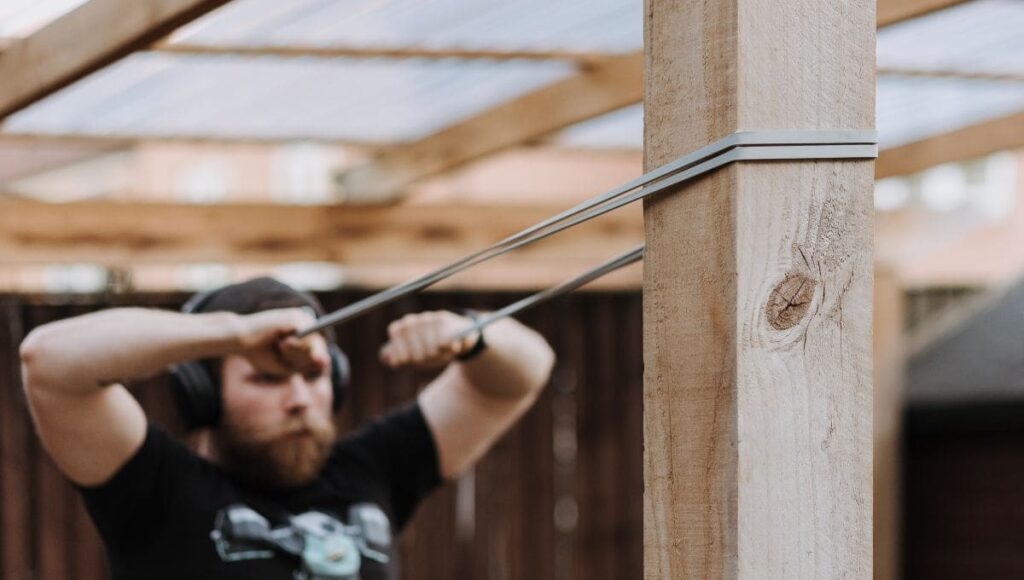
Electromyography studies have shown high activation of the posterior deltoid, middle trapezius, and rotator cuff muscles during properly performed face pulls.
How to Perform the Face Pull
- Attach a rope handle to a cable machine at about upper chest height.
- Grip the rope with both hands and step backward until the cable becomes tight.
- Pull the rope toward your face while keeping your elbows high and separating your hands as they approach your head.
- Pause briefly before slowly returning to the starting position.
- Focus on squeezing your shoulder blades together rather than simply pulling with your arms.
Common Beginner Mistakes
Using too much weight often causes lifters to lean backward and turn the movement into a full body pull.
Another mistake is pulling the rope toward the chest instead of toward the face. This changes muscle activation and reduces emphasis on the posterior shoulder. Many beginners also rush through the exercise instead of controlling both phases of the movement.
Training Recommendations
Perform two to three sets of twelve to fifteen repetitions with a moderate weight that allows perfect technique throughout the set.
Progressive Overload Is the Key to Bigger Shoulders
The exercises themselves are only part of the equation. Muscle growth requires progressive overload, which means gradually increasing the demands placed on your muscles over time. This can be achieved by increasing the weight, performing more repetitions, adding another set, or improving exercise quality through better technique and greater control.
Research consistently shows that muscles adapt when training stress gradually increases. Without progressive overload, muscle growth eventually slows because the body no longer receives a strong enough stimulus to adapt. Beginners should prioritize small, steady improvements rather than making large jumps in weight.
Training Frequency for Maximum Growth
Current evidence suggests that training each muscle group at least twice per week produces greater muscle growth than training it only once weekly when total training volume is similar.
For beginners, this could involve performing these three exercises during two upper body workouts each week.
A sample approach might include three sets of lateral raises, three sets of shoulder presses, and two sets of face pulls in each workout.
Recovery is equally important. Muscles grow during rest, not while lifting weights. Aim to allow at least forty eight hours before training the shoulders intensely again.
How Long Does It Take to Build Wider Shoulders?
Visible changes vary depending on genetics, nutrition, consistency, and training quality. Most beginners notice measurable strength improvements within several weeks and visible muscle development after eight to twelve weeks of consistent resistance training.
Research demonstrates that novice lifters often experience rapid neuromuscular adaptations before significant muscle hypertrophy becomes obvious. Over time, these strength gains create the foundation for continued muscle growth.
Patience is important because shoulder muscles are relatively small compared to muscles like the chest and legs. Consistent training over months rather than weeks produces the most impressive changes.
Final Thoughts
Building wider shoulders does not require complicated workouts or advanced lifting techniques. Beginners can make excellent progress by mastering three proven exercises.
The dumbbell lateral raise directly targets the lateral deltoid, making it the most important exercise for shoulder width. The seated dumbbell shoulder press builds overall shoulder size and strength while supporting balanced muscle development. The face pull strengthens the posterior shoulder and upper back, improving posture and shoulder health.
Combine these exercises with progressive overload, sufficient protein, quality sleep, and consistent training, and your shoulders will gradually become stronger, healthier, and noticeably wider.
Key Takeaways
| Topic | Key Point |
|---|---|
| Best exercise for shoulder width | Dumbbell lateral raises place the greatest emphasis on the lateral deltoid. |
| Best compound movement | Seated dumbbell shoulder press builds overall shoulder size and strength. |
| Best exercise for balance | Face pulls strengthen the posterior deltoids, upper back, and shoulder stabilizers. |
| Weekly frequency | Train shoulders at least twice per week for optimal muscle growth. |
| Repetition range | Use about 8 to 15 repetitions depending on the exercise while maintaining excellent technique. |
| Progressive overload | Gradually increase training demands through weight, repetitions, sets, or improved execution. |
| Nutrition | Consume sufficient protein and calories to support muscle growth and recovery. |
| Expected timeline | Beginners often notice visible improvements after 8 to 12 weeks of consistent training. |
References
- American College of Sports Medicine. (2009) ‘Progression models in resistance training for healthy adults’, Medicine & Science in Sports & Exercise, 41(3), pp. 687 to 708.
- Andersen, V., Fimland, M.S., Brennset, O., Haslestad, L., Lundteigen, M.S., Skalleberg, K., Saeterbakken, A.H. and Raastad, T. (2014) ‘Muscle activation and strength in shoulder exercises’, Journal of Strength and Conditioning Research, 28(6), pp. 1594 to 1603.
- Grgic, J., Schoenfeld, B.J., Orazem, J. and Sabol, F. (2018) ‘Effects of resistance training performed to repetition failure or non failure on muscular strength and hypertrophy’, Journal of Sport and Health Science, 10(3), pp. 275 to 283.
- Morton, R.W., Murphy, K.T., McKellar, S.R., Schoenfeld, B.J., Henselmans, M., Helms, E., Aragon, A.A., Devries, M.C., Banfield, L., Krieger, J.W. and Phillips, S.M. (2018) ‘A systematic review, meta analysis and meta regression of protein supplementation on resistance training induced gains in muscle mass and strength in healthy adults’, British Journal of Sports Medicine, 52(6), pp. 376 to 384.
- Schoenfeld, B.J. (2010) ‘The mechanisms of muscle hypertrophy and their application to resistance training’, Journal of Strength and Conditioning Research, 24(10), pp. 2857 to 2872.
- Schoenfeld, B.J., Ogborn, D. and Krieger, J.W. (2016) ‘Effects of resistance training frequency on measures of muscle hypertrophy’, Sports Medicine, 46(11), pp. 1689 to 1697.
- Wernbom, M., Augustsson, J. and Thomeé, R. (2007) ‘The influence of frequency, intensity, volume and mode of strength training on whole muscle cross sectional area in humans’, Sports Medicine, 37(3), pp. 225 to 264.