

Building bigger biceps takes more than swinging heavier dumbbells. Your arms grow when you train the elbow flexors consistently, use a challenging load, and add training over time. Choosing curl variations that change your arm position or grip can also help you train the muscles from different angles.
The biceps brachii is the muscle most people mean when they talk about biceps. It helps bend the elbow and turn the palm upward. Other muscles, including the brachialis and brachioradialis, also help bend the elbow. Training them can add size to the upper and lower arm, contributing to a fuller look.


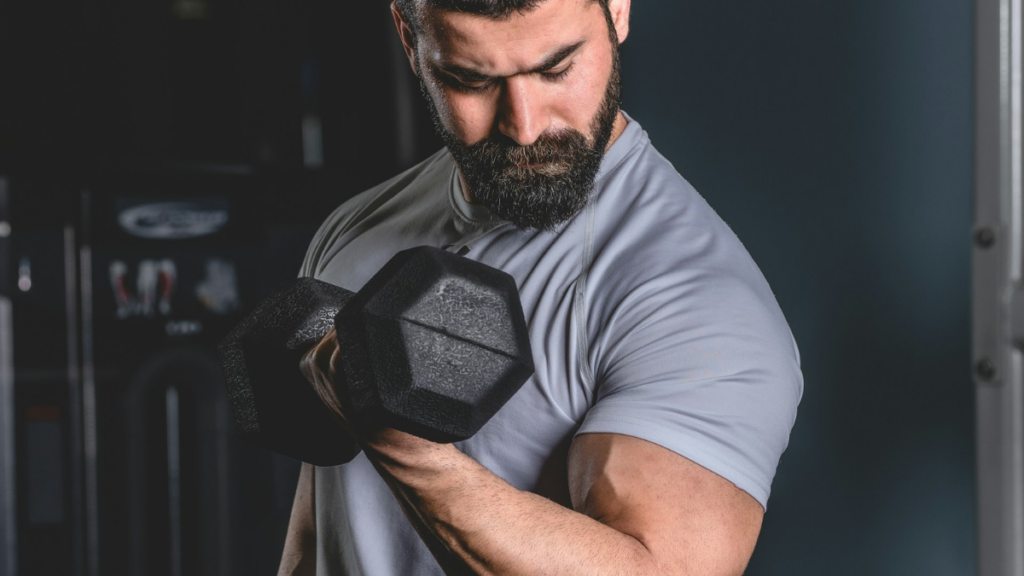
These three dumbbell curl variations cover a useful range of positions: a standing curl with the palm turning upward, an incline curl that starts with the arm behind the body, and a hammer curl with a neutral grip. Research has compared some curl variations directly, but there is no single exercise that is best for everyone. Your choice should fit your body, equipment, and ability to train with control.
1. Alternating Supinating Dumbbell Curl
Why it works
A supinating curl combines elbow bending with turning the palm upward. The biceps helps with both actions, so this variation lets you train its elbow flexion and forearm supination functions in the same repetition. In a study comparing curl grips, researchers recorded greater biceps activity during the lifting phase with a supinated grip than with a neutral or pronated grip. Electromyography measures electrical activity during an exercise, though it does not prove that one variation will produce more muscle growth over time.
The standing position is also simple to set up and easy to adjust. You can curl both dumbbells together or alternate arms, which may help you focus on keeping each repetition controlled. The key is to prevent your torso from rocking as the weight gets difficult. If you use momentum to move the dumbbell, it becomes harder to tell whether your elbow flexors are doing the work.
How to do it
Stand with a dumbbell in each hand and your arms at your sides. Begin with your palms facing inward. Keep your shoulders relaxed and your elbows close to your torso. Curl one dumbbell toward your shoulder while gradually turning your palm upward. Pause briefly near the top without letting your shoulder roll forward, then lower the dumbbell under control as you turn your palm back toward your body.
The Best 3 Twisting Core Exercises for Beginners
Keep your wrist straight rather than letting it bend backward. Use a weight that allows you to move through a comfortable range without swinging your upper body. You do not need to force the dumbbell all the way to your shoulder if doing so makes your elbow drift forward or causes discomfort. A smooth repetition with control is more useful than a heavier repetition that changes into a body swing.
Who should use it
This is a practical main curl for beginners and experienced lifters alike. It is easy to learn, requires little equipment, and allows you to add weight gradually. If you have discomfort when turning your palm, keep the wrist and forearm in a comfortable position and consider asking a qualified trainer or health professional to check your technique.
2. Incline Dumbbell Curl
Why it works
The incline curl changes the position of your upper arm. When you sit back on an incline bench, your arms hang slightly behind your torso. This places the biceps in a more lengthened position at the bottom of the repetition than a typical standing curl. Research reviews suggest that training through a full range of motion, or using partial repetitions in the earlier part of a movement, can benefit growth in some muscles, including the biceps. This supports using a controlled stretch at the bottom, but it does not mean you should force a painful or extreme position.
A nine week training study in recreationally trained women compared incline curls with preacher curls. Both groups trained regularly, and the results showed different regional growth patterns between the exercises. A separate eight week comparison also found differences in measured elbow flexor growth and exercise specific strength. These studies suggest that changing the curl setup may influence where growth occurs, but their results do not establish that incline curls are universally superior.
How to do it
Set an adjustable bench to a moderate incline and sit with your back supported. Let your arms hang naturally beside your torso, with a dumbbell in each hand and palms facing forward or slightly inward. Keep your upper arms behind your body as you bend your elbows and lift the dumbbells. Lower them slowly until your elbows are nearly straight and you feel a comfortable stretch in the biceps.
Use a lighter weight than you might use for a standing curl. The stretched starting position can make the bottom portion of each repetition feel challenging, so avoid bouncing out of the lowest point. Keep your shoulders settled against the bench and stop if you feel sharp pain in the front of the shoulder or elbow.
Who should use it
Incline curls suit lifters who want a curl that challenges the biceps near the bottom of the movement. They work well after a standing curl or as the main biceps exercise for a training session. If the bench position feels uncomfortable, use a smaller incline or choose a standing variation instead.
3. Dumbbell Hammer Curl
Why it works
A hammer curl keeps your palms facing each other throughout the repetition. This neutral grip still trains the biceps, while also involving the brachialis and brachioradialis. The brachialis sits beneath the biceps and contributes to elbow flexion. The brachioradialis runs along the forearm and also assists with bending the elbow.
Grip studies show that changing the forearm position can change the activity measured in the biceps and brachioradialis during a curl. These short term measurements do not prove that hammer curls will make the arms grow more than supinated curls. They do support using a neutral grip as a way to vary the muscles’ demands and train the elbow flexors in another position.
How to do it
Stand tall with a dumbbell in each hand and your palms facing inward. Keep your elbows near your sides and your wrists straight. Bend your elbows to raise the dumbbells toward your shoulders, keeping the same neutral grip from start to finish. Lower the weights with control until your arms are nearly straight.
Try not to let your elbows travel far forward or allow your shoulders to lift as you curl. If your body starts rocking, reduce the weight or stop the set. You can also perform hammer curls one arm at a time if that helps you maintain better control.
Who should use it
Hammer curls are useful for people who want to train more than the biceps brachii alone. They can be a good alternative when a fully supinated grip feels awkward, and they pair well with a standard curl because the hand position is different. They are not a replacement for every other curl, but they add variety without requiring special equipment.
How to Use These Curls for Arm Growth
Choose two or three curl variations and use them consistently long enough to track your progress. A simple session could include standing supinating curls followed by incline curls, with hammer curls included in another workout. You do not need to perform every variation in every session. More weekly training volume can support muscle growth, but adding sets indefinitely is not a guarantee of better results.
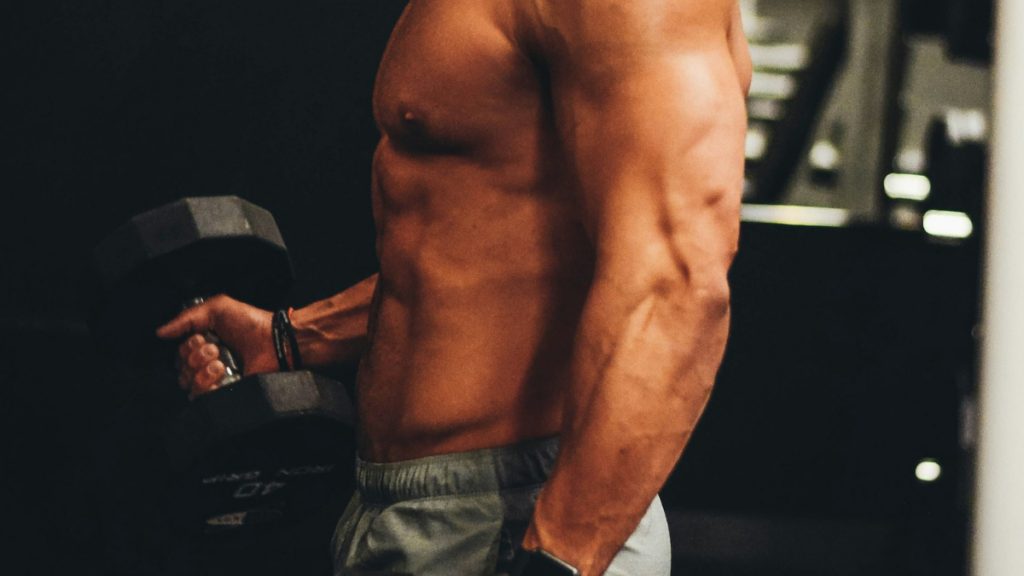
For each exercise, choose a load that lets you complete controlled repetitions while bringing the set close to the point where you could not complete another repetition with good form. Training to absolute failure is not required for muscle growth, according to a systematic review of resistance training research. If your form breaks down well before the target muscles feel challenged, reduce the load.
A practical starting point is two or three sets of each curl for a moderate repetition range, performed once or twice a week as part of a broader strength program. When you can complete all your planned repetitions with steady technique, increase the dumbbell weight slightly or add a repetition. Consistent progression, adequate recovery, and a balanced training plan matter more than trying to find a supposedly perfect curl.
Key Takeaways
| Focus | Takeaway |
|---|---|
| Supinating curl | Combines elbow bending with turning the palm upward, making it a strong general purpose biceps exercise. |
| Incline curl | Starts with the arm behind the torso and challenges the biceps in a lengthened position. |
| Hammer curl | Uses a neutral grip to train the elbow flexors, including the brachialis and brachioradialis. |
| Technique | Use a comfortable range, steady repetitions, and a load you can control without swinging. |
| Progress | Track repetitions and load, and increase the training challenge gradually. |
References
- Coratella, G., Tornatore, G., Longo, S., Toninelli, N., Padovan, R., Esposito, F. and Cè, E. (2023). Biceps brachii and brachioradialis excitation in biceps curl exercise: Different handgrips, different synergy. Sports, 11(3), 64.
- Grgic, J., Schoenfeld, B.J., Orazem, J. and Sólveborn, A. (2022). Effects of resistance training performed to repetition failure or non-failure on muscular strength and hypertrophy: A systematic review and meta-analysis. Journal of Sport and Health Science, 11(2), pp. 202–211.
- Kassiano, W., Costa, B., Nunes, J.P., Ribeiro, A.S., Schoenfeld, B.J. and Cyrino, E.S. (2023). Which ROMs lead to Rome? A systematic review of the effects of range of motion on muscle hypertrophy. Journal of Strength and Conditioning Research, 37(5), pp. 1135–1144.
- Oliveira, L.F., Matta, T.T., Alves, D.S., Garcia, M.A.C. and Vieira, T.M.M. (2009). Effect of the shoulder position on the biceps brachii EMG in different dumbbell curls. Journal of Sports Science and Medicine, 8(1), pp. 24–29.
- Schoenfeld, B.J., Ogborn, D. and Krieger, J.W. (2017). Dose-response relationship between weekly resistance training volume and increases in muscle mass: A systematic review and meta-analysis. Journal of Sports Sciences, 35(11), pp. 1073–1082.
- Zabaleta-Korta, A., Fernández-Peña, E., Torres-Unda, J., Francés, M., Zubillaga, A. and Santos-Concejero, J. (2023). Regional hypertrophy: The effect of exercises at long and short muscle lengths in recreationally trained women. Journal of Human Kinetics, 88, pp. 259–270.