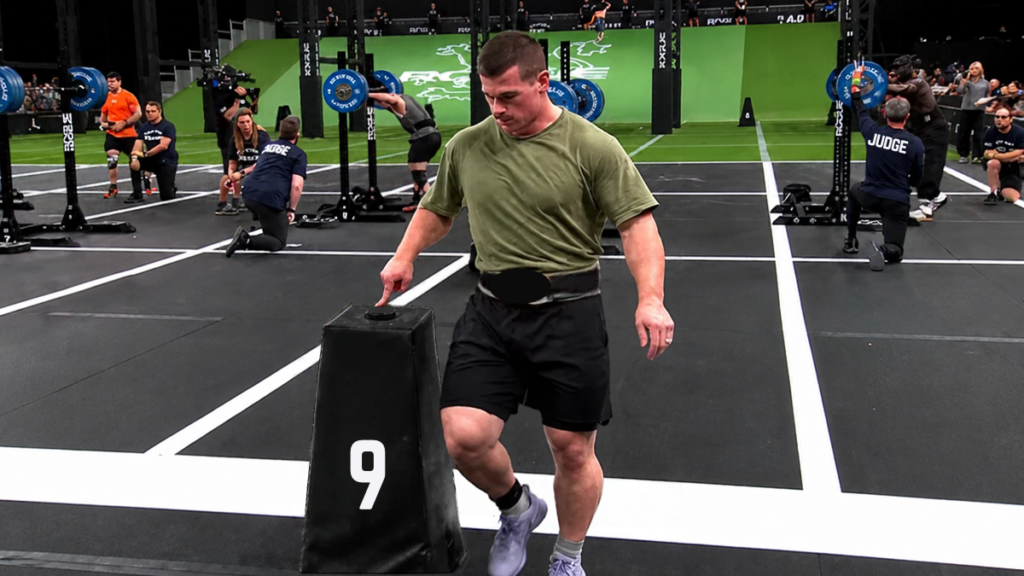


Neither CrossFit nor HYROX prioritize aesthetics over functionality, in fact they both do the exact opposite. However most people train to be be fit and healthy and strong, but it doesn’t hurt that getting in better shape is a nice ancillary benefit of both. But, for fun, which one will give you a better looking body?
The answer is far more complex than simply looking at the top athletes on a competition floor. While both sports forge lean, muscular bodies, they rely on entirely different physiological mechanisms to alter your body composition.
CrossFit leans heavily into high-intensity, explosive movements, skill under fatigued conditions and a wide variety of different modalities and exercises.

HYROX leverages sustained aerobic output combined with functional, low skill movements that are difficult to reach the point of technical fatigue. It is repeatable and known in advance.
The Physiology of Aesthetic Transformation
Building an impressive aesthetic comes down to two primary variables: increasing muscle mass (hypertrophy) and reducing essential body fat to reveal muscle definition. How you reach those twin goals depends heavily on the specific mechanical and metabolic demands you place on your body during training.

CrossFit relies on high-intensity functional movements executed at varied work-to-rest ratios. A typical workout might pair heavy barbell deadlifts with explosive Olympic lifts and high-skill gymnastics. This combination subjects muscle fibers to immense mechanical tension and high levels of metabolic stress, which are the primary drivers of muscular growth. HYROX, by contrast, pairs standardized functional stations like sled pushes and wall balls with repeated one-kilometer running intervals. This creates a prolonged aerobic demand coupled with high volume resistance work, driving metabolic adaptations and massive energy expenditure.
Mechanical Tension and Hypertrophy Drivers
Mechanical tension is widely recognized as the single most important factor for initiating muscle growth. When you lift heavy loads through a full range of motion, force sensors within your muscle fibers activate signal cascades that trigger muscle protein synthesis.
CrossFit workouts regularly incorporate heavy compound movements such as squats, clean and jerks, snatches, and heavy kettlebell swings. Performing these lifts near dynamic repetition maximums recruits high-threshold motor units. These fast-twitch type II muscle fibers possess the greatest potential for growth and visual density. Furthermore, CrossFit frequently utilizes progressive overload principles across varying repetition ranges, allowing athletes to systematically increase total weight lifted over time.
HYROX incorporates strength elements through movements like heavy sled pushes, weighted lunges, and sandbag carries. However, the loading in HYROX is static and optimized for endurancelike completion rather than maximal load output. While these stations create substantial muscular endurance, they rarely reach the intensity thresholds required to recruit and overload the largest fast-twitch muscle fibers responsible for significant hypertrophy.
Metabolic Stress and Fat Oxidation
While CrossFit excels at generating raw mechanical tension, HYROX shines when it comes to sustained metabolic expenditure and aerobic engine development. HYROX race conditions demand continuous exertion for anywhere from sixty to ninety minutes, keeping heart rates near the anaerobic threshold for extended periods.

This prolonged exertion dramatically elevates acute energy expenditure during the workout itself. More importantly, continuous mixed-modal endurance training enhances mitochondrial density within skeletal muscle, improving the body’s baseline ability to oxidize fatty acids for fuel. Over time, this adaptation allows athletes to maintain lower levels of body fat more easily, giving their muscles a sharper, more defined appearance.
CrossFit also generates high metabolic stress, primarily through excess post-exercise oxygen consumption. The high intensity intervals characteristic of CrossFit create an oxygen debt that keeps metabolic rates elevated for hours post-workout. However, because CrossFit workouts are often much shorter in total duration, the raw caloric burn during the session itself is frequently lower than during a long-format HYROX session.
Sculpting the CrossFit Physique
The quintessential CrossFit physique is defined by dense upper-body muscularity, broad shoulders, powerful thighs, and thick core muscle development. This distinctive look is a direct outcome of the specific movements and loading protocols inherent to the sport.
Heavy barbell work stimulates systemic muscle growth by placing massive loads across the entire axial skeleton. Movements like back squats, front squats, and overhead presses build substantial leg, shoulder, and back volume. Overhead lifting and Olympic movements specifically target the deltoids, upper trapezius, and upper back, creating a broad V-taper frame that stands out visually.
Gymnastics elements play an equally critical role in shaping the upper body of a CrossFit athlete. Strict and kipping pull-ups, muscle-ups, handstand push-ups, and ring dips place immense demands on the latissimus dorsi, pectorals, triceps, and core musculature. Pulling your body mass through space requires exceptional strength-to-weight ratios, promoting dense, defined muscle without excessive bulk.
The Role of Type II Muscle Fibers
The explosive nature of CrossFit training selectively targets type IIa and type IIx muscle fibers. Research confirms that fast-twitch fibers expand at a significantly higher rate than slow-twitch type I fibers when subjected to heavy mechanical strain and explosive movement patterns.
Because CrossFit training prioritizes maximal power output, sprint-interval work, and heavy lifting, athletes experience accelerated hypertrophy in visible muscle groups. The glutes, quadriceps, deltoids, and upper back respond particularly well to this explosive stimulus, resulting in a thick, powerful, and athletic appearance.
Core Development and Axial Loading
A striking feature of the CrossFit aesthetic is a thick, highly functional midsection. Heavy compound lifts and overhead stabilization require intense intra-abdominal pressure and continuous recruitment of the rectus abdominis, obliques, and transverse abdominis. Gymnastics movements like toes-to-bar and L-sits further stress the anterior core under extreme leverage conditions.

This heavy stabilization work builds substantial thickness in the core muscles. While this contributes to exceptional real-world strength and an impressive set of abdominal muscles, it can also widen the waistline slightly compared to sports that minimize heavy axial loading.
Sculpting the HYROX Physique
If CrossFit constructs a broad, muscular frame reminiscent of a sprinter or weightlifter, HYROX builds a body closely resembling a lean, muscular middle-distance runner or decathlete. The HYROX body is characterized by exceptional lean tissue definition, low overall body fat, well-developed legs, and a tight midsection.
The structure of a HYROX race consists of eight one-kilometer runs, each followed by a specific functional exercise station. This format creates a unique physiological stimulus known as concurrent training, where aerobic endurance and muscular stamina are developed simultaneously.
Sustained Aerobic Output and Fat Loss
The extended duration of HYROX training makes it an exceptionally potent tool for fat loss. Completing a full HYROX simulation requires continuous exertion over a prolonged period, forcing the body to burn through stored glycogen and utilize fat oxidation to sustain output.
How Many Calories Does Completing a HYROX Burn?
Maintaining low body fat levels is critical for revealing the underlying muscle structure. Even moderate amounts of muscle hypertrophy will look visually impressive when body fat percentages drop into lower single or low-double digits. HYROX naturally leans athletes toward a lower body weight and lower fat mass, as carrying extra mass presents a distinct disadvantage during eight separate kilometer runs.
Target Muscle Groups in HYROX
While HYROX may not build the massive upper-body volume associated with heavy barbell work, it develops tremendous localized muscular endurance and targeted hypertrophy in key areas.
The legs and posterior chain carry the heaviest burden in HYROX. Sled pushes and sled pulls place massive eccentric and concentric demands on the quadriceps, hamstrings, and glutes. Weighted lunges over a one-hundred-meter distance create extreme localized tension in the lower body, building defined, athletic legs without adding excessive upper-body weight.
Upper body development in HYROX is focused primarily on pulling endurance and shoulder stamina. The SkiErg and RowErg stations build impressive latency and posterior shoulder definition, while one hundred wall-ball shots forge exceptional shoulder and triceps endurance. Because these movements involve high repetitions with moderate resistance, they promote endurance adaptations and moderate hypertrophy in type I and type IIa muscle fibers.
Scientific Comparison of Physical Adaptations
To truly evaluate which sport delivers the physique you desire, it is essential to compare their physiological impacts across major aesthetic drivers. The table below outlines how each discipline influences key variables of body composition and physical appearance.
| Aesthetic Variable | CrossFit Training Adaptation | HYROX Training Adaptation |
|---|---|---|
| Fast-Twitch Muscle Growth | Extremely High (Targeted heavy loading) | Moderate (High reps with light to moderate load) |
| Slow-Twitch Muscle Endurance | Moderate (Interval-based metabolic work) | Extremely High (Continuous aerobic endurance) |
| Fat Oxidation Rate | Moderate to High (Post-workout metabolic elevation) | Extremely High (Sustained long-duration burn) |
| Upper Body Hypertrophy | High (Heavy pressing, pulling, and gymnastics) | Moderate (Ergometers, sleds, and wall balls) |
| Lower Body Hypertrophy | High (Maximal squats, Olympic lifts) | Moderate to High (High-volume lunges, sleds) |
| Waistline Slimness | Moderate (Thickened by heavy axial stabilization) | High (Lower axial loading, lean total mass) |
The Interference Effect: Understanding the Trade-Offs
When choosing between CrossFit and HYROX for aesthetic outcomes, you must consider a key exercise science principle: the interference effect. First documented by ground-breaking exercise physiologists, the interference effect describes how concurrent training for maximal strength and maximal aerobic endurance can blunt peak neuromuscular adaptations.
CrossFit leans closer to the strength and power end of the athletic spectrum. By prioritizing high-velocity force production and heavy resistance, it optimizes intracellular pathways responsible for protein synthesis and muscle growth. However, extremely grueling CrossFit metabolic conditioning sessions can occasionally compromise total strength gains if recovery is insufficient.
HYROX sits directly in the middle of the concurrent training spectrum. Because it requires massive aerobic capacity alongside functional strength, the body undergoes adaptations that favor energy efficiency over maximal muscle mass. Prolonged endurance running can activate signaling pathways that suppress maximal muscle hypertrophy pathways. As a result, athletes who train exclusively for HYROX will generally struggle to build the raw muscle volume attainable through dedicated CrossFit protocols, though they will often achieve lower body fat levels more easily.
Which Training Style Is Right for Your Visual Goals?
Determining which sport will give you a better looking physique ultimately depends on your personal vision of ideal aesthetics. Visual preference is subjective, and both disciplines create athletic, healthy, and functional bodies that turn heads.
If your ideal look is a powerful, muscular frame with broad shoulders, a thick upper back, and substantial muscle density, CrossFit is the clear winner. The inclusion of heavy barbell lifts, explosive movements, and gymnastics provides the exact mechanical tension needed to maximize structural muscle growth across the entire body.
If your aesthetic goal is a ultra-lean, athletic body with sharp muscle definition, a slim waist, and exceptional cardiovascular conditioning, HYROX is superior. The sustained caloric expenditure of running combined with high-volume functional stations strips away body fat while carving out defined legs, shoulders, and core muscles.
For many fitness enthusiasts, the optimal strategy may not be choosing one exclusively, but rather structuring training around seasonal periodization. Incorporating a block of heavy CrossFit style lifting builds structural muscle mass and dense tissue. Transitioning into a HYROX training phase uses high volume aerobic capacity to lean out, revealing the solid muscular foundation built under the barbell.
Key Takeaways
| Metric | CrossFit Outcome | HYROX Outcome |
|---|---|---|
| Primary Aesthetic Feature | Dense, powerful muscle hypertrophy | Ultra-lean, defined athletic frame |
| Fastest Route To | Broad shoulders, upper body density | Low body fat, slim waistline |
| Key Hypertrophy Mechanism | Heavy mechanical tension and fast-twitch activation | High metabolic stress and muscular endurance |
| Fat Loss Profile | High post-workout EPOC burn | High direct caloric expenditure during workouts |
References
- Atherton, P.J. and Smith, K., 2012. Muscle protein synthesis in response to nutrition and exercise. The Journal of Physiology, 590(5), pp.1049-1057.
- Coffey, V.G. and Hawley, J.A., 2017. Concurrent exercise training: do opposites distract? The Journal of Physiology, 595(9), pp.2883-2896.
- Fyfe, J.J., Bartlett, J.D., Hanson, E.D., Stepto, N.K. and Bishop, D.J., 2014. Endurance training intensity modulates the activation of AMPK and mTORC1 signaling following concurrent resistance and endurance exercise. American Journal of Physiology-Endocrinology and Metabolism, 307(12), pp.E1159-E1171.
- Glass, S.C. and Stanton, D.R., 2004. Self-selected exercise intensity during high-intensity interval training and continuous moderate-intensity exercise. Journal of Strength and Conditioning Research, 18(2), pp.255-260.
- Hickson, R.C., 1980. Interference of strength development by simultaneously training for strength and endurance. European Journal of Applied Physiology and Occupational Physiology, 45(2-3), pp.255-263.
- Schoenfeld, B.J., 2010. The mechanisms of muscle hypertrophy and their application to resistance training. Journal of Strength and Conditioning Research, 24(10), pp.2857-2872.
- Schoenfeld, B.J., Ogborn, D. and Krieger, J.W., 2016. Effects of resistance training frequency on measures of muscle hypertrophy: a systematic review and meta-analysis. Sports Medicine, 46(11), pp.1689-1699.
- Wilson, J.M., Marin, P.J., Rhea, M.R., Wilson, S.M., Loenneke, J.P. and Anderson, J.C., 2012. Concurrent training: a meta-analysis examining interference of aerobic and resistance exercises. Journal of Strength and Conditioning Research, 26(8), pp.2293-2307.