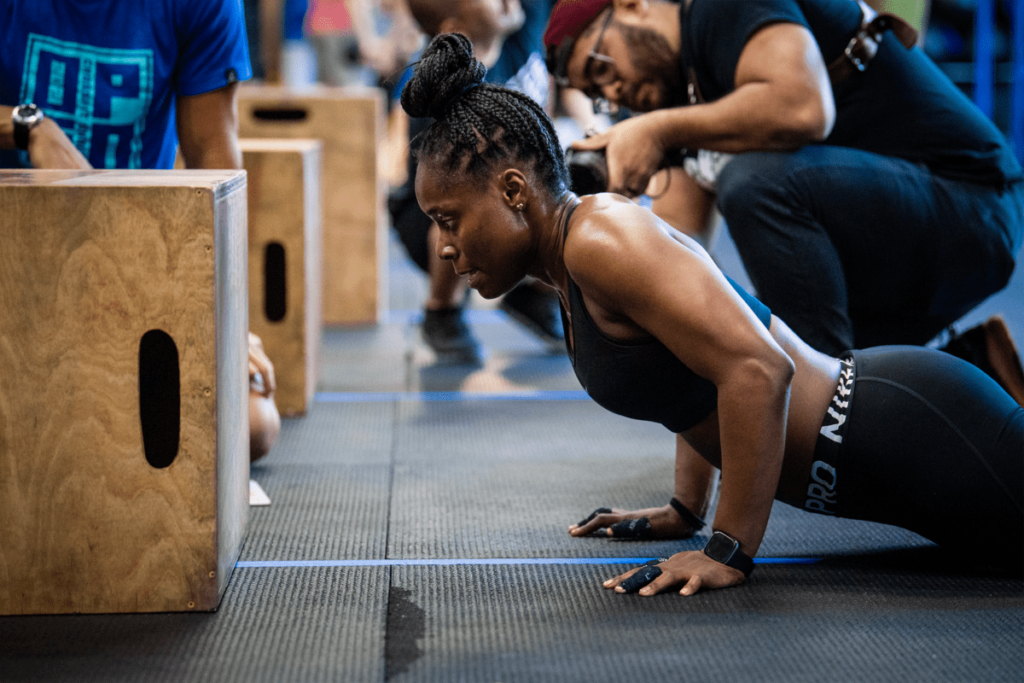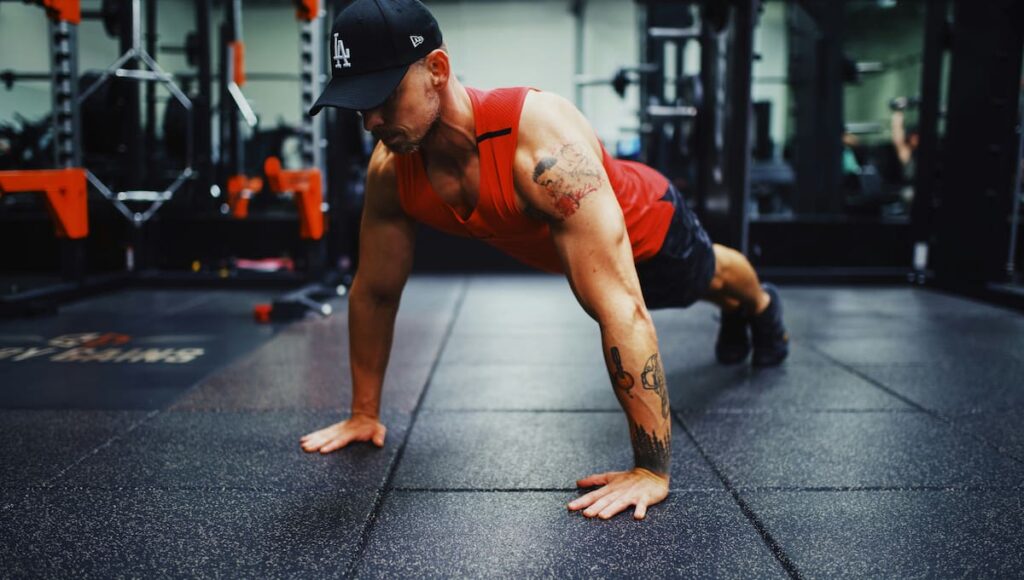


Calisthenics is one of the most accessible and effective ways to build strength, muscle, and athleticism. You do not need machines, barbells, or even a gym membership. Your body is the resistance. With the right structure and progression, bodyweight training can stimulate significant improvements in strength, hypertrophy, endurance, mobility, and even bone health.
The science is clear: properly programmed resistance training leads to measurable gains in muscle size and strength, whether the resistance comes from external weights or your own body mass. Studies consistently show that muscle growth can occur across a wide range of loads, provided the sets are performed close to muscular failure (Schoenfeld et al., 2017). That means push-ups, squats, lunges, planks, and pull-ups—when progressed intelligently—can deliver serious results.
However, doing calisthenics at home without structure often leads to plateaus, overuse injuries, or inconsistent results. The difference between random workouts and effective training comes down to a few core principles grounded in exercise science.
Here are three evidence-based tips to make your at-home calisthenics training more effective, safer, and more sustainable.
Tip 1: Train With Progressive Overload — Even Without Weights
Progressive overload is the foundation of strength training. It means gradually increasing the demands placed on the body so it continues to adapt. Without progressive overload, your body has no reason to grow stronger or build muscle.
What Progressive Overload Really Means
In resistance training, progressive overload can come from:
- Increasing resistance
- Increasing repetitions
- Increasing total volume (sets × reps)
- Increasing time under tension
- Reducing rest intervals
- Increasing movement complexity
The American College of Sports Medicine (ACSM) identifies progressive overload as essential for continued muscular adaptation (ACSM, 2009). If you always do the same number of push-ups at the same difficulty, your body will adapt and then stop progressing.
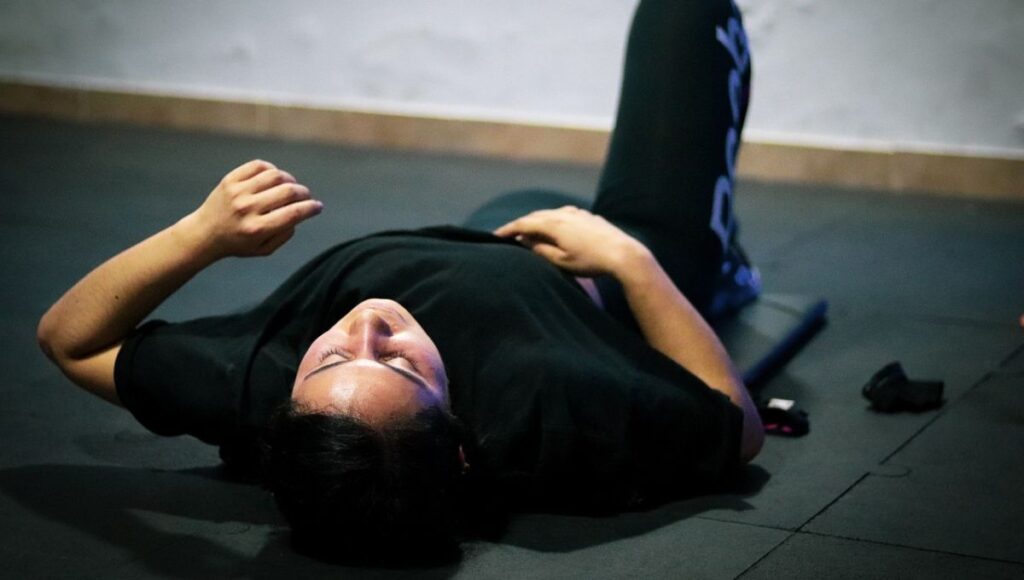
Research shows that muscle hypertrophy can occur with both heavy and light loads when sets are performed close to failure (Schoenfeld et al., 2017). This is important for calisthenics because you may not have access to heavy weights—but you can still challenge your muscles effectively.
How to Apply Progressive Overload at Home
Since you are using your body weight, the key is manipulating leverage and mechanical disadvantage.
Here are science-backed strategies:
1. Increase Repetitions Within a Target Range
Hypertrophy has been shown to occur across a wide repetition spectrum, from low to high reps, as long as effort is high (Schoenfeld et al., 2017). If you can do 10 push-ups, work toward 15, then 20 before progressing to a harder variation.
However, extremely high-rep sets may become limited by local muscular endurance rather than mechanical tension. Mechanical tension is one of the primary drivers of muscle growth (Schoenfeld, 2010). So once you exceed about 20–25 reps easily, increasing difficulty is more effective than just adding more reps.
2. Use Harder Variations
To increase mechanical tension:
- Push-ups → Decline push-ups → Diamond push-ups → Archer push-ups → One-arm push-ups
- Squats → Split squats → Bulgarian split squats → Pistol squats
- Plank → Side plank → Plank with reach → One-arm plank
By shifting more bodyweight to one limb or changing leverage, you increase force demands.
Research on unilateral training shows that single-limb movements significantly increase muscle activation and force production compared to bilateral variations (McCurdy et al., 2010). That makes exercises like Bulgarian split squats and single-arm push-up progressions especially powerful in home settings.
3. Slow the Tempo
Slowing down the eccentric (lowering) phase increases time under tension and may enhance hypertrophy stimulus (Schoenfeld, 2010). Controlled eccentrics also increase muscle damage and mechanical stress, both associated with growth.
Eccentric training has been shown to produce significant strength and hypertrophy gains (Douglas et al., 2017). Try lowering yourself for three to four seconds in push-ups or squats.
4. Train Close to Failure
Training close to muscular failure is a key factor in maximizing muscle fiber recruitment. Motor unit recruitment increases as fatigue accumulates (Henneman, 1957). This means your highest-threshold motor units—those responsible for the greatest force output and hypertrophy—are recruited as you approach failure.
Research comparing failure versus non-failure training suggests that effort level is a major determinant of hypertrophy (Sampson and Groeller, 2016). In calisthenics, you do not need to reach absolute failure every set, but finishing most sets within one to three reps of failure is a strong evidence-based guideline.
Why Progressive Overload Matters
Without increasing demands, your body reaches homeostasis. Muscle protein synthesis rises after resistance training but returns to baseline within about 24–48 hours (Phillips et al., 1997). If you do not progressively increase stimulus over time, adaptation slows.
Even at home, you can create a progressive program by:
- Tracking reps
- Tracking sets
- Recording rest times
- Logging exercise variations
Consistency plus progression equals results.
Tip 2: Structure Your Training for Strength and Hypertrophy
Random circuits might feel intense, but intensity alone does not guarantee adaptation. Structured programming does.
Train Each Muscle Group 2–3 Times Per Week
Meta-analyses show that training a muscle group at least twice per week results in greater hypertrophy compared to once weekly training (Schoenfeld et al., 2016). This is partly because muscle protein synthesis elevations are temporary (Phillips et al., 1997).
For home calisthenics, this means avoiding “once-a-week” body part splits. Instead, consider:
- Full-body workouts 3 times per week
- Upper/lower splits 4 times per week
- Push/pull/legs repeated twice weekly
Higher frequency allows for more total weekly volume, which is strongly associated with hypertrophy (Schoenfeld et al., 2019).
Aim for Adequate Weekly Volume
Research suggests that performing around 10 or more weekly sets per muscle group is associated with superior hypertrophy compared to lower volumes (Schoenfeld et al., 2017; Schoenfeld et al., 2019).

At home, that might look like:
- Chest: Push-up variations, dips between chairs
- Back: Pull-ups, inverted rows under a table
- Legs: Squats, lunges, split squats
- Core: Planks, hanging leg raises
Volume can be distributed across sessions. For example:
- 4 sets of push-ups Monday
- 3 sets Wednesday
- 3 sets Friday
That gives 10 weekly sets.
Rest Between Sets Properly
Rest intervals affect performance and total volume. Longer rest periods (2–3 minutes) have been shown to produce greater strength and hypertrophy gains compared to very short rest periods (Schoenfeld et al., 2016).
While circuits are time-efficient, constantly limiting rest may reduce your ability to produce sufficient mechanical tension. If muscle growth or strength is the goal, allow at least 1–2 minutes between hard sets.
Balance Push and Pull Movements
Imbalances between pushing and pulling strength can contribute to shoulder dysfunction. Scapular stabilizers and posterior shoulder muscles play a key role in joint health (Ludewig and Reynolds, 2009).
At home, prioritize:
- Pull-ups or assisted pull-ups
- Inverted rows
- Prone Y and T raises
- Scapular pull-ups
Balanced training supports long-term shoulder function and reduces injury risk.
Include Lower-Body Strength Work
Many people undertrain legs at home. That is a mistake.
Lower-body resistance training improves not only muscle mass but also bone density (Watson et al., 2018). Mechanical loading is essential for maintaining skeletal health. Single-leg exercises like Bulgarian split squats and step-ups increase relative loading dramatically.
Additionally, lower-body muscle mass is strongly associated with metabolic health and insulin sensitivity (Srikanthan and Karlamangla, 2011). Ignoring leg training limits overall adaptation.
Why Structure Matters
The body responds to:
- Adequate stimulus
- Adequate recovery
- Repeated exposure over time
Structured programming ensures these variables are controlled rather than left to chance.
Tip 3: Prioritize Technique, Recovery, and Injury Prevention
Training hard is important. Training smart is essential.
Master Technique Before Increasing Difficulty
Proper movement mechanics reduce joint stress and improve force transfer. Poor push-up mechanics, for example, can increase anterior shoulder stress (Ludewig and Reynolds, 2009).
Focus on:
- Neutral spine during planks and push-ups
- Full hip extension in glute bridges
- Knee tracking over toes in squats
Movement quality improves motor control. Motor learning research shows that deliberate practice with feedback enhances skill acquisition and efficiency (Schmidt and Lee, 2011).
Better technique also improves muscle activation. For example, deeper squat depth increases gluteal activation compared to partial squats (Caterisano et al., 2002).
Warm Up Properly
A dynamic warm-up increases muscle temperature and improves performance. Elevated muscle temperature enhances force production and power output (Bishop, 2003).
Include:
- Light aerobic activity (2–5 minutes)
- Dynamic mobility drills
- Specific warm-up sets
Avoid static stretching immediately before maximal strength work, as prolonged static stretching may temporarily reduce strength performance (Kay and Blazevich, 2012).
Sleep and Muscle Recovery
Muscle adaptation occurs during recovery, not during training. Sleep plays a crucial role in hormonal regulation and muscle repair.
Sleep restriction has been shown to impair muscle recovery and reduce anabolic hormone levels (Dattilo et al., 2011). Chronic sleep deprivation also increases injury risk (Milewski et al., 2014).
Aim for 7–9 hours per night. Without adequate sleep, even the best-designed program underperforms.
Protein Intake Supports Adaptation
Resistance training increases muscle protein turnover. Adequate dietary protein enhances muscle protein synthesis.
A meta-analysis suggests that protein intakes around 1.6 g/kg/day optimize muscle growth in individuals performing resistance training (Morton et al., 2018).
Even for calisthenics athletes, nutrition matters. Training stimulus plus protein availability drives adaptation.
Manage Training Stress
Too much volume without recovery increases injury risk. Sudden spikes in training load are associated with higher injury incidence (Gabbett, 2016).
Progress gradually. Increase volume or difficulty by small increments. Pay attention to joint discomfort, especially in wrists, elbows, and shoulders—common stress points in calisthenics.
Why Recovery and Technique Are Non-Negotiable
Overuse injuries often result from repetitive loading without adequate tissue adaptation. Tendons adapt more slowly than muscles. Gradual loading allows collagen remodeling and improved tensile strength (Magnusson et al., 2010).
If you rush progression, connective tissue may not keep up. Smart pacing leads to sustainable long-term progress.

Putting It All Together
Effective calisthenics at home comes down to three science-based principles:
- Apply progressive overload.
- Structure weekly volume and frequency.
- Prioritize technique and recovery.
Bodyweight training is not “less effective” than weight training when programmed correctly. Research shows that muscular adaptations depend more on effort, volume, and progression than on the specific equipment used (Schoenfeld et al., 2017).
With consistent overload, sufficient weekly volume, proper rest, good nutrition, and adequate sleep, calisthenics can build strength, muscle, and resilience—without ever stepping into a gym.
References
- American College of Sports Medicine (2009) ‘Progression models in resistance training for healthy adults’, Medicine & Science in Sports & Exercise, 41(3), pp. 687–708.
- Bishop, D. (2003) ‘Warm up I: potential mechanisms and the effects of passive warm up on exercise performance’, Sports Medicine, 33(6), pp. 439–454.
- Caterisano, A. et al. (2002) ‘The effect of squat depth on the EMG activity of 4 superficial hip and thigh muscles’, Journal of Strength and Conditioning Research, 16(3), pp. 428–432.
- Dattilo, M. et al. (2011) ‘Sleep and muscle recovery: endocrinological and molecular basis for a new and promising hypothesis’, Medical Hypotheses, 77(2), pp. 220–222.
- Douglas, J. et al. (2017) ‘Chronic adaptations to eccentric training: a systematic review’, Sports Medicine, 47(5), pp. 917–941.