

Pull-ups are one of the simplest and most respected tests of upper body strength. They require no machines, minimal equipment, and provide an honest assessment of how well you can move your own body through space. Whether you are a CrossFit athlete, a recreational gym goer, or someone who simply wants to improve their fitness, pull-ups are often viewed as a benchmark of athletic capability.
But how many pull-ups should you actually be able to do?



The answer depends on several factors including age, sex, body weight, training history, and overall fitness level. A lightweight climber may perform 20 or more pull-ups with ease, while a heavier strength athlete may struggle to reach double digits despite being exceptionally strong.
This article explores what science says about pull-up performance, how many pull-ups are considered average, good, or excellent, what influences your results, and how to improve your numbers safely and effectively.
Why Pull-Ups Matter
Pull-ups are a compound bodyweight exercise that primarily target the latissimus dorsi, biceps brachii, trapezius, rhomboids, posterior deltoids, forearms, and core musculature. Unlike many gym exercises, pull-ups require the body to function as an integrated system. The movement demands upper body strength, grip endurance, shoulder stability, and core control.
If You Can’t Do These 3 Things, You’re Not Ready for a 100kg Bench Press
Research has consistently shown that multi-joint exercises recruit large amounts of muscle mass and produce significant neuromuscular adaptations. Pull-ups are particularly valuable because they train vertical pulling strength, a movement pattern often neglected compared to pushing exercises such as bench presses and push-ups.
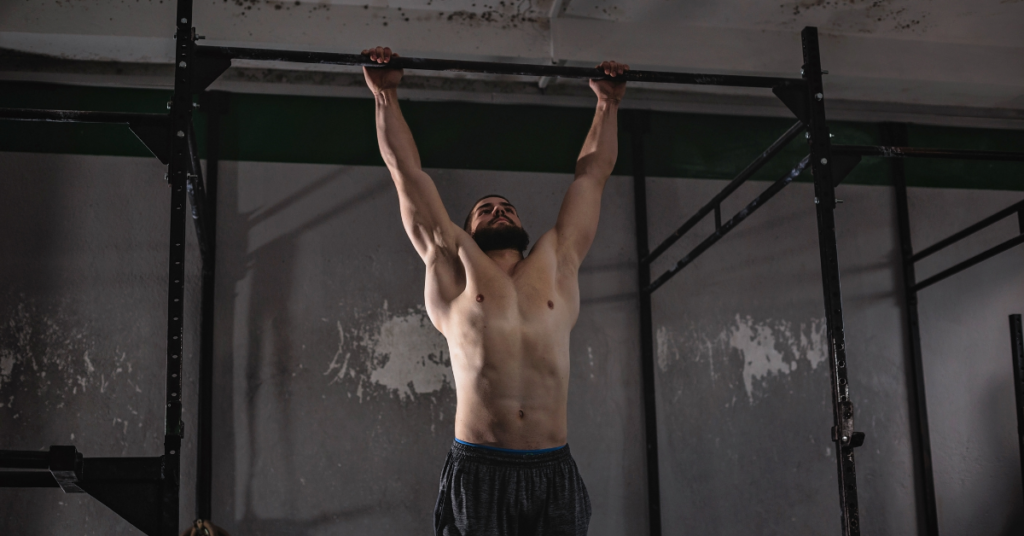
Strong pulling ability contributes to:
• Better upper body muscular development
• Improved shoulder health and stability
• Enhanced athletic performance
• Increased grip strength
• Better relative strength
• Functional movement capacity
Relative strength is particularly important. Unlike a bench press, where the external load can be adjusted, pull-ups require you to move your own body mass. This makes them a useful measure of strength relative to body weight.
Average Pull-Up Numbers for Men
Several fitness organizations and population studies have attempted to establish normative values for pull-up performance. For adult men, the following general standards are commonly accepted:
Beginner
0 to 3 pull-ups
Many untrained men cannot perform a single strict pull-up. This is especially common among sedentary individuals or those carrying excess body weight.
Average
4 to 8 pull-ups
This range typically represents recreationally active men with some resistance training experience.
Good
9 to 15 pull-ups
Men who can perform 9 to 15 strict pull-ups generally possess above average relative strength and muscular endurance.
Excellent
16 to 25 pull-ups
This level is often seen in military personnel, climbers, gymnasts, and well-trained athletes.
Elite
25+ pull-ups
Performing more than 25 strict pull-ups places an individual in a highly trained category. Elite climbers and calisthenics athletes may exceed 30 repetitions.

Average Pull-Up Numbers for Women
Women typically perform fewer pull-ups than men due to physiological differences including lower upper body muscle mass and reduced absolute strength levels.
However, women who train consistently can achieve impressive pull-up performance.
Beginner
0 pull-ups
Many women initially struggle with strict pull-ups, even if they are otherwise active.
Average
1 to 3 pull-ups
Being able to perform even one strict pull-up places many women above the general population average.
Good
4 to 8 pull-ups
This range indicates strong upper body development and good relative strength.
Excellent
9 to 15 pull-ups
Women reaching this level typically have substantial training experience.
Elite
15+ pull-ups
Elite female climbers, gymnasts, military personnel, and calisthenics athletes may exceed 20 repetitions.
How Age Affects Pull-Up Performance
Strength and muscle mass generally peak during early adulthood before gradually declining with age. Research demonstrates that aging is associated with reductions in muscle mass, neural drive, and recovery capacity. These factors contribute to lower pull-up performance over time.
However, regular resistance training can dramatically slow these declines. Many adults in their 40s, 50s, and even 60s maintain excellent pull-up performance through consistent training. A reasonable guideline for healthy adults is:
• Ages 20 to 39: 8 to 15 pull-ups for men, 3 to 8 for women
• Ages 40 to 59: 6 to 12 pull-ups for men, 2 to 6 for women
• Ages 60 and above: 3 to 8 pull-ups for men, 1 to 4 for women
Why Some Strong People Cannot Do Many Pull-Ups
Many people assume that being strong automatically means being good at pull-ups. This is not always true.
Powerlifters and strength athletes often possess tremendous absolute strength but may perform relatively few pull-ups due to higher body mass. A 120 kilogram powerlifter who can deadlift 300 kilograms may perform fewer pull-ups than a 70 kilogram climber. Pull-up performance depends on:
• Relative strength
• Body weight
• Body composition
• Technique
• Grip endurance
• Muscular endurance
This explains why athletes from different sports can have dramatically different pull-up capabilities despite all being highly trained.
How Body Weight Influences Pull-Up Performance
One of the strongest predictors of pull-up performance is body weight. Research consistently demonstrates that excess body fat negatively affects performance in bodyweight exercises.
Imagine adding a 20 kilogram weight vest to every pull-up. That is effectively what carrying 20 kilograms of excess body fat does. Improving body composition often leads to rapid improvements in pull-up numbers, even without significant increases in strength. This does not mean everyone should lose weight. Instead, athletes should focus on maintaining healthy body composition while building strength.

How to Improve Your Pull-Up Numbers
If you want to increase your pull-up performance, evidence supports several effective training approaches.
Increase Training Frequency
Research indicates that more frequent practice often improves skill acquisition and strength development. Performing pull-up variations two to four times per week can accelerate progress.
Use Assisted Variations
Band assisted pull-ups and machine assisted pull-ups allow beginners to practice the movement pattern while building strength.
Build Eccentric Strength
Eccentric training involves lowering yourself slowly from the top position. Studies show eccentric training can produce substantial strength gains.
Strengthen Supporting Muscles
Helpful accessory exercises include:
• Lat pulldowns
• Inverted rows
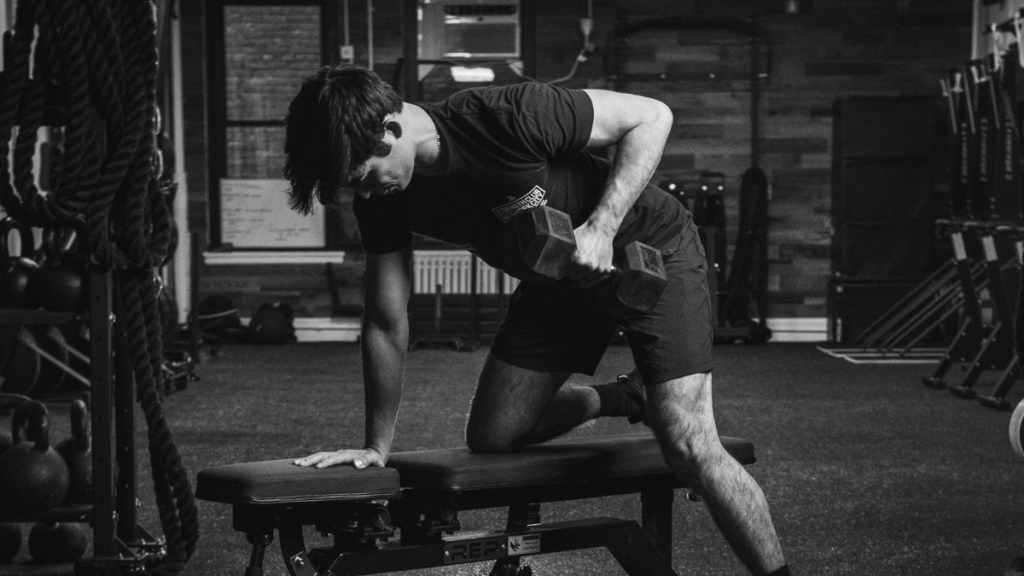
• Dumbbell rows
• Face pulls
• Biceps curls
• Dead hangs
Improve Body Composition
Reducing excess body fat while preserving muscle mass improves relative strength and often leads to immediate improvements in pull-up performance.
What If You Cannot Do a Single Pull-Up?
Many people begin with zero pull-ups. This is completely normal. The following progression works well for beginners:
- Dead hangs
- Scapular pull-ups
- Assisted pull-ups
- Negative pull-ups
- Full pull-ups
Research on motor learning and resistance training suggests that progressive skill development combined with gradual overload is the most effective path to mastering complex bodyweight movements. Most healthy adults can achieve their first pull-up within several weeks or months of structured training.
Pull Up Performance Standards
| Category | Men | Women |
|---|---|---|
| Beginner | 0 to 3 | 0 |
| Average | 4 to 8 | 1 to 3 |
| Good | 9 to 15 | 4 to 8 |
| Excellent | 16 to 25 | 9 to 15 |
| Elite | 25+ | 15+ |
References
• American College of Sports Medicine (2021) ACSM’s Guidelines for Exercise Testing and Prescription. 11th ed. Philadelphia: Wolters Kluwer.
• Campos, G.E.R., Luecke, T.J., Wendeln, H.K., Toma, K., Hagerman, F.C., Murray, T.F., Ragg, K.E., Ratamess, N.A., Kraemer, W.J. and Staron, R.S. (2002) ‘Muscular adaptations in response to three different resistance training regimens: specificity of repetition maximum training zones’, European Journal of Applied Physiology, 88(1-2), pp. 50-60.
• Gentil, P., Soares, S. and Bottaro, M. (2015) ‘Single versus multi-joint resistance exercises: effects on muscle strength and hypertrophy’, Asian Journal of Sports Medicine, 6(2), e24057.
• Granacher, U., Gollhofer, A., Hortobagyi, T., Kressig, R.W. and Muehlbauer, T. (2013) ‘The importance of trunk muscle strength for balance, functional performance, and fall prevention in seniors’, Sports Medicine, 43(7), pp. 627-641.
• Kraemer, W.J. and Ratamess, N.A. (2004) ‘Fundamentals of resistance training: progression and exercise prescription’, Medicine & Science in Sports & Exercise, 36(4), pp. 674-688.