



















Can You Build Muscle Without Moving A Single Weight? The Science Behind Isometric Training


It sounds like an odd idea, but is it actually true?
What Actually Happens Inside Your Muscles During Isometric Training
An isometric contraction occurs whenever your muscles generate force and tension while your joint angle and overall muscle-tendon unit length remain constant.
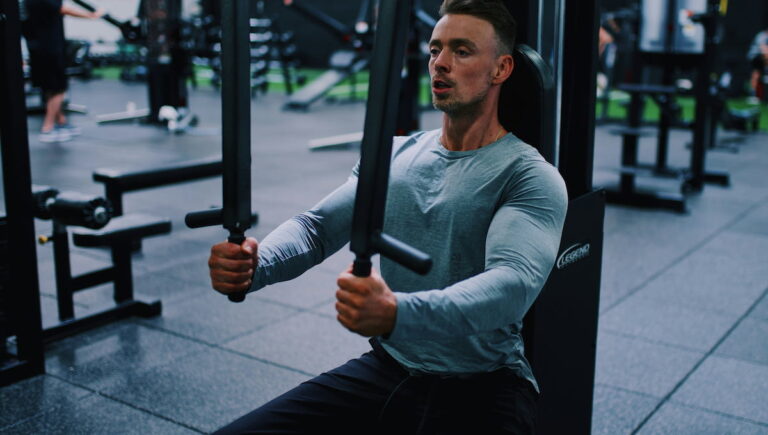
Unlike lifting a dumbbell upward or lowering a barbell under control, your actin and myosin cross-bridges form and cycle against an immovable resistance or static load without changing the external angle of your limb. Because no external movement occurs, isometric training eliminates momentum completely and lets you produce remarkably high levels of voluntary neural drive and mechanical tension.
Exercise physiology research examining neuromuscular adaptations demonstrates that sustained high-intensity isometric contractions stimulate significant motor unit recruitment, tendon stiffness improvements, and cellular signaling pathways tied to protein synthesis. In fact, studies measuring maximal voluntary force show that people can often generate slightly higher peak force during a maximal isometric push than during a concentric lift, creating intense mechanical stress across targeted muscle fibers.
However, how effectively that static tension translates into visible muscle growth depends heavily on the exact joint angle you choose to hold.
Why Joint Angle Determines Whether Isometric Holds Build Size
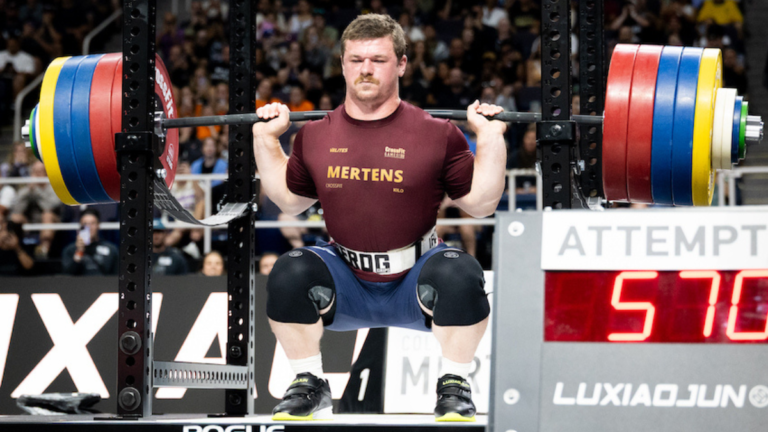
Not all isometric holds stimulate muscle hypertrophy equally, because training a muscle in a shortened, contracted position produces very different structural adaptations than holding it in a long, stretched position. When you squeeze a muscle at full contraction, such as holding the very top of a leg extension or bicep curl, blood flow temporarily slows down and metabolic stress builds quickly, yet mechanical stretch across the sarcomeres remains relatively low.
Conversely, holding an isometric contraction at a longer muscle length places intense passive and active mechanical tension directly across the muscle fibers.

Controlled training studies comparing isometric exercise performed at long versus short muscle lengths consistently find that training at long, stretched muscle lengths produces substantially greater increases in muscle volume, fascicle length, and strength across the wider range of motion.
Research on range-of-motion mechanics reinforces this principle, showing that loading muscles in lengthened positions triggers superior hypertrophic signaling compared to working strictly in shortened positions. That explains why holding a deep split squat or the stretched bottom position of a push-up builds noticeably more muscle than squeezing a weight at the top of a repetition.
Comparing Different Types of Isometric Training for Muscle Growth and Strength
| Isometric Style | How It Works | Primary Adaptation | Best Practical Application |
| Yielding Isometrics (Holding a Load) | Supporting a heavy weight or bodyweight position still against gravity | Muscular endurance, metabolic stress, and joint stability | Hold paused squats, split squats, or dips in a stretched position |
| Overcoming Isometrics (Pushing an Immovable Object) | Pushing or pulling maximally against fixed safety pins or a wall | Maximal neural drive, peak force, and tendon stiffness | Push against rack pins at sticking points for short, high-effort bursts |
| Long-Length Isometrics | Holding static tension while the target muscle is stretched | Superior muscle hypertrophy and broad range-of-motion strength | Pause deep in lunges, Romanian deadlifts, or chest flyes |
| Short-Length Isometrics | Squeezing statically at the peak contracted position | Angle-specific strength and strong mind-muscle connection | Finish isolation sets with a brief peak contraction hold |
Can You Build Muscle Without Moving a Weight?
Yes, you can genuinely build measurable muscle size and strength without moving a weight, provided your isometric holds generate high mechanical tension near muscular failure and emphasize longer muscle lengths. Meta-analytic evidence comparing resistance training modalities confirms that mechanical tension and effort close to failure drive skeletal muscle hypertrophy even when joint movement is absent.
Walking Faster vs Walking Longer: Which Is Better for Your Heart?
That said, combining long-length isometric holds with traditional full-range dynamic lifting remains the gold standard for complete development, because dynamic movement challenges every point along the strength curve and keeps joints moving fluidly.
1. Choose Overcoming or Yielding Holds at Longer Muscle Lengths
To maximize muscle growth from static training, set your joint angle where the target muscle feels moderately to deeply stretched rather than fully shortened. Holding the bottom third of a Bulgarian split squat, pausing an inch above the floor in a push-up, or pulling against immovable rack pins at mid-shin height puts high tension right where muscle fibers respond best.
2. Balance Intensity and Duration Smartly
If you are using overcoming isometrics where you push as hard as possible against an immovable bar or strap, keep each effort brief at roughly five to ten seconds per set for three to five sets with full rest between efforts. If you are using yielding isometrics where you hold a challenging load or bodyweight angle, aim for twenty to forty seconds per set taken close to muscular fatigue.
3. Pair Static Holds With Dynamic Full-Range Exercises
Rather than replacing every squat, press, and row in your program with motionless holds, sprinkle two or three sets of stretched isometric pauses into your existing workouts twice per week. Adding a three-second pause in the stretched bottom position of your regular lifts captures the unique benefits of isometric tension while keeping your dynamic training simple and fun.
Key Takeaways
| Decision Area | Evidence-Based Guidance | Why It Matters for Your Training |
| Muscle Growth Verdict | Isometric training can build muscle when performed with high effort near failure | High mechanical tension triggers protein synthesis even without joint motion |
| Critical Angle Rule | Emphasize longer, stretched muscle lengths over short squeezed positions | Long-length holds produce superior hypertrophy and broader strength carryover |
| Two Main Methods | Use brief maximal overcoming pushes or 20 to 40 second yielding holds | Matches neural force output and metabolic stress to your specific training goal |
| Best Weekly Strategy | Combine stretched isometric pauses with full-range dynamic resistance training | Delivers complete muscle development across the entire length-tension curve |
References
- Alegre, L.M., Ferri-Morales, A., Rodriguez-Casares, R. and Aguado, X., 2014. Effects of isometric training on the knee extensor moment-angle relationship and vastus lateralis muscle architecture. European Journal of Applied Physiology, 114(11), pp.2437-2446.
- Kubo, K., Ohgo, K., Takeishi, R., Yoshinaga, K., Tsunoda, N., Kanehisa, H. and Fukunaga, T., 2006. Effects of isometric training at different knee angles on the muscle-tendon complex in vivo. Scandinavian Journal of Medicine and Science in Sports, 16(3), pp.159-167.
- Lum, D. and Barbosa, T.M., 2019. Brief review: effects of isometric strength training on strength and dynamic performance. International Journal of Sports Medicine, 40(6), pp.363-375.
- Oranchuk, D.J., Storey, A.G., Nelson, A.R. and Cronin, J.B., 2019. Isometric training and long-term adaptations: effects of muscle length, intensity, and intent: a systematic review. Scandinavian Journal of Medicine and Science in Sports, 29(4), pp.484-503.
- Schoenfeld, B.J., Grgic, J., Ogborn, D. and Krieger, J.W., 2017. Strength and hypertrophy adaptations between low- vs. high-load resistance training: a systematic review and meta-analysis. Journal of Strength and Conditioning Research, 31(12), pp.3508-3523.
Robbie Wild Hudson
Editor-In-Chief at BOXROX. I come from a background of rugby and weightlifting. Growing up in the English Lake District, I spent a great deal of time swimming in its stunning lakes and rivers. In 2015 my brothers and I became the first people to swim the 145km length of the River Eden, from source to mouth, in 9 days. We also swam the Corryvreckan whirlpool, the third largest in the world, and Crossfit is a huge part of my training for these events.
More from Robbie Wild Hudson