



















Goblet Squats vs Barbell Squats: Which Is Better for Beginners?

Squats are a vital part of building muscle, strength and explosive power. But how should you start? What’s the best way to learn the movement patterns?
Let’s find the perfect jumping off point for you.
How Goblet Squats and Barbell Squats Challenge Your Body Differently
During a goblet squat, you hold a dumbbell or kettlebell close to your sternum with both hands while your elbows stay tucked comfortably near your ribcage as you sit down between your heels. Because that front load sits right in front of your center of mass, it naturally acts like a counterbalance that helps keep your chest taller and makes sitting deep into a full squat feel surprisingly intuitive. Many beginners find that goblet squats immediately help them feel where their weight sits across their mid-foot without tipping backward or folding excessively at the waist.
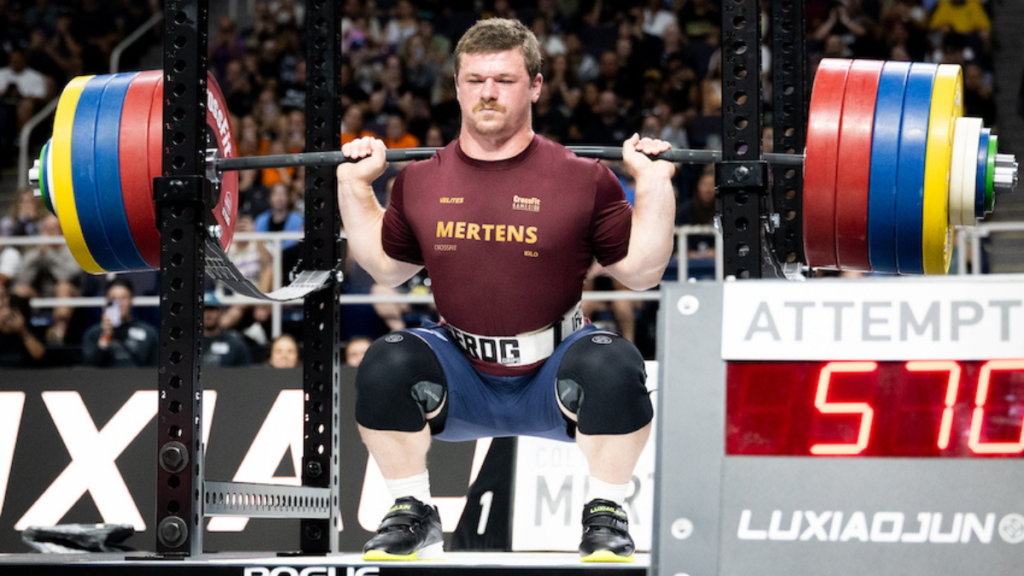
A barbell back squat places the load high or low across your upper back, which shifts your center of gravity rearward and requires greater whole-body bracing, shoulder mobility, and trunk stiffness to keep the bar path smooth. While barbell squats allow you to load substantially heavier weights over time as your strength climbs, learning to coordinate hip hinge, knee bend, and core tension under a heavy bar takes practice. Biomechanical research comparing front-loaded and back-loaded squatting patterns shows that anterior load placement alters trunk inclination and shifts mechanical demand across the hips, knees, and trunk musculature.
What Science Says About Muscle Growth, Strength, and Squat Mechanics
When beginners ask which squat builds better legs early on, exercise science points us toward mechanical tension, full range of motion, and progressive overload rather than a single magic exercise. Controlled training studies comparing front-loaded and back-loaded squat variations demonstrate that both produce meaningful lower-body strength and hypertrophy adaptations when performed consistently with adequate effort. Furthermore, systematic reviews examining range of motion show that squatting to greater depth and loading muscles through a full range of motion supports superior muscle growth compared to cutting reps short.
Research comparing resistance training loads also shows that moderate and lighter weights taken close to muscular failure stimulate substantial muscle hypertrophy, meaning beginners can build real leg size with goblet squats before moving into heavier barbell loading. At the same time, heavy barbell back squats excel at building high-load maximal force across the quadriceps, glutes, adductors, and spinal erectors once your form is solid. Combining movement quality early on with heavier progression over time gives beginners both clean technique and lasting strength gains.
Table 1: Comparing Goblet Squats and Barbell Squats for Beginners
| Training Factor | Goblet Squats | Barbell Back Squats | Best Practical Fit for Beginners |
| Learning Curve and Balance | Very accessible; front weight helps counterbalance an upright torso | Moderate to steep; requires learning bar path, grip, and trunk bracing | Start with goblet squats to build confidence, depth, and posture |
| Loading Ceiling | Limited by dumbbell or kettlebell size and upper-body grip endurance | High ceiling using standard barbell plates and progressive increments | Progress toward barbell squats as technique and strength mature |
| Core and Postural Demand | High anterior core and upper-back engagement to hold the weight | High full-body bracing and spinal stabilization under heavier loads | Both strengthen trunk stability while training quads and glutes |
| Knee and Hip Depth | Often makes reaching a deep, controlled squat position easier | Can feel tighter early on if ankle or hip mobility limits depth | Prioritize smooth, pain-free depth regardless of which squat you do |
Which Squat Is Better for Beginners?
For most absolute beginners, goblet squats are the better starting point because they make learning squat depth, foot pressure, and upright posture far easier while still challenging the quads, glutes, and core. Once you can squat smoothly to full depth with solid balance and control, introducing barbell back squats gives you a fantastic tool for heavier progressive overload and maximal lower-body strength. Rather than treating them as strict rivals, viewing goblet squats as your technique and depth foundation and barbell squats as your heavy strength builder sets you up for smooth long-term progress.
1. Master Depth and Control With Goblet Squats First
Begin your lower-body training with three sets of eight to twelve controlled goblet squats, lowering yourself over two to three seconds while keeping your heels grounded and your knees tracking cleanly in line with your toes. Pausing briefly at the bottom without losing posture builds leg strength and confidence long before you ever need a loaded barbell on your back.
2. Transition Smoothly Into Barbell Squats When Ready
Once your goblet squat mechanics look crisp and your legs are adapting to regular training, practice unloaded or lightly loaded barbell back squats inside a squat rack with safety bars set at the proper height. Take small, steady weight jumps over time and stop working sets roughly one to two clean repetitions shy of muscular failure so your form stays sharp.
3. Train Lower-Body Movements Twice Weekly
Meta-analytic evidence on resistance training frequency indicates that training muscle groups twice per week supports superior hypertrophy compared to once-weekly training. Spacing your squat sessions across two workouts each week allows plenty of recovery between sessions while giving your legs consistent practice and progressive overload.
Key Takeaways
Table 2: Summary of Evidence-Based Principles for Goblet Squats vs Barbell Squats
| Decision Area | Evidence-Based Guidance | Why It Matters for Beginners |
| Best Starting Lift | Goblet squats are often better early on for learning depth and posture | Front-loaded balance helps beginners squat smoothly without tipping |
| Long-Term Strength Ceiling | Barbell back squats offer higher loading potential as strength grows | Heavier loads support strong maximal force development over months |
| Hypertrophy Drivers | Prioritize full squat depth, controlled reps, and effort near failure | Both variations build muscle when taken close to muscular failure |
| Weekly Training Habit | Train lower-body muscles twice per week with gradual progression | Supports stronger hypertrophy than once-weekly workouts with good recovery |
References
- Gullett, J.C., Tillman, M.D., Gutierrez, G.M. and Chow, J.W., 2009. A biomechanical comparison of back and front squats in healthy trained individuals. Journal of Strength and Conditioning Research, 23(1), pp.284-292.
- Kubo, K., Ikebukuro, T. and Yata, H., 2019. Effects of squat training with different depths on lower limb muscle volumes. European Journal of Applied Physiology, 119(9), pp.1933-1942.
- Schoenfeld, B.J., Grgic, J., Ogborn, D. and Krieger, J.W., 2017. Strength and hypertrophy adaptations between low- vs. high-load resistance training: a systematic review and meta-analysis. Journal of Strength and Conditioning Research, 31(12), pp.3508-3523.
- Schoenfeld, B.J., Ogborn, D. and Krieger, J.W., 2016. Effects of resistance training frequency on measures of muscle hypertrophy: a systematic review and meta-analysis. Sports Medicine, 46(11), pp.1689-1697.
- Wolf, M., Androulakis-Korakakis, P., Fisher, J., Schoenfeld, B. and Steele, J., 2023. Partial vs full range of motion resistance training: a systematic review and meta-analysis. International Journal of Strength and Conditioning, 3(1), pp.1-15.
Robbie Wild Hudson
Editor-In-Chief at BOXROX. I come from a background of rugby and weightlifting. Growing up in the English Lake District, I spent a great deal of time swimming in its stunning lakes and rivers. In 2015 my brothers and I became the first people to swim the 145km length of the River Eden, from source to mouth, in 9 days. We also swam the Corryvreckan whirlpool, the third largest in the world, and Crossfit is a huge part of my training for these events.
More from Robbie Wild Hudson