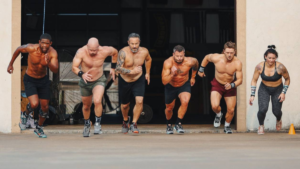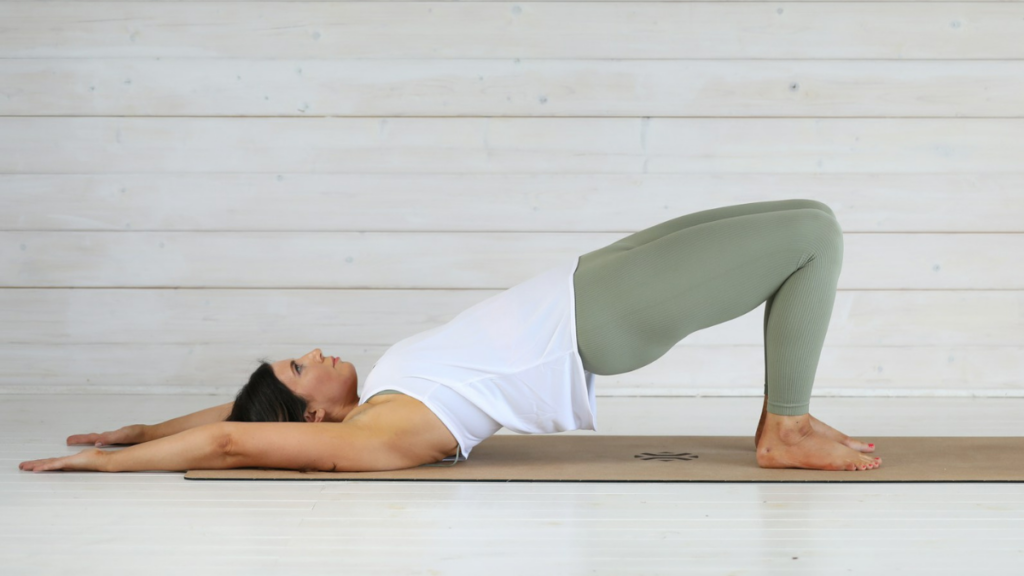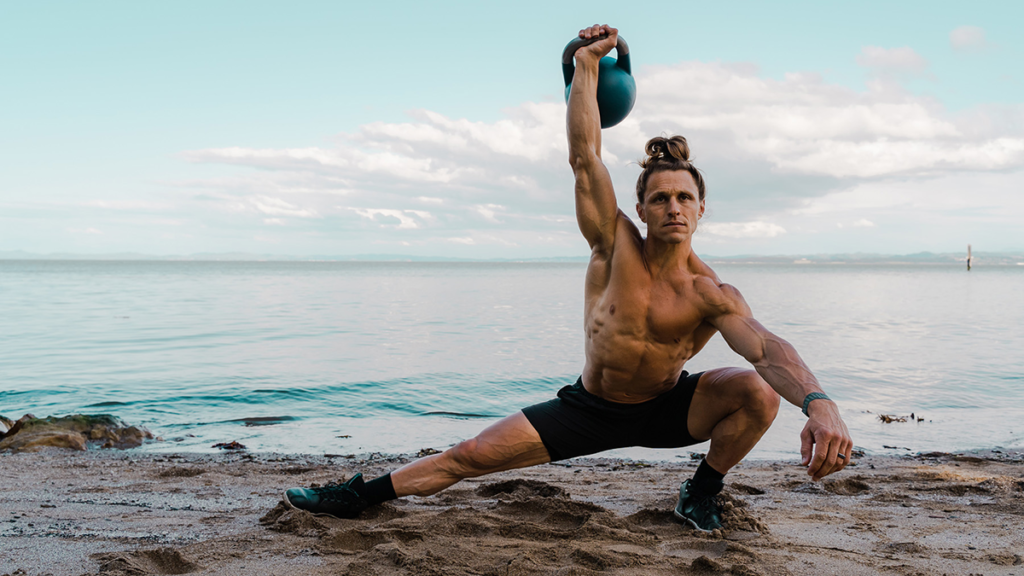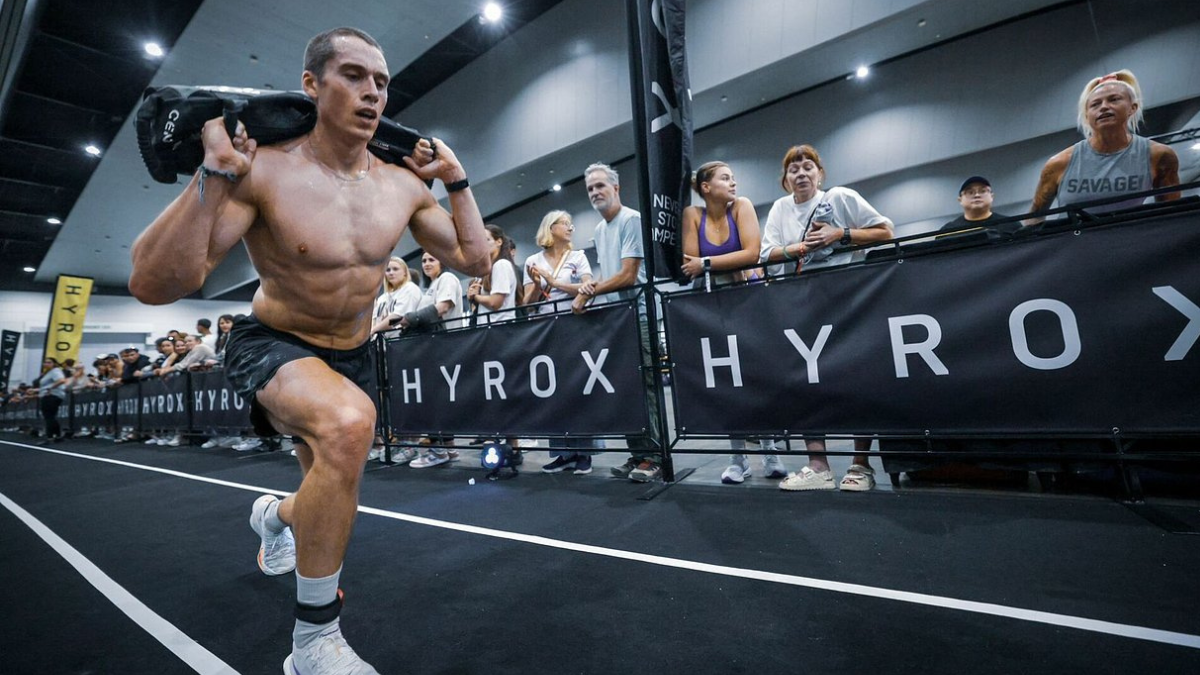


Strong glutes are not just about aesthetics. They are central to performance, injury prevention, posture, sprinting speed, jumping power, and long-term joint health. In functional fitness, where movements mimic real-world and sport-specific demands, glute strength becomes even more critical.
The gluteal muscles (gluteus maximus, gluteus medius, and gluteus minimus) are the largest and among the most powerful muscles in the human body. They control hip extension, external rotation, abduction, pelvic stability, and force transfer between the lower and upper body. When they are strong and well-coordinated, movement becomes efficient. When they are weak, the body compensates, often with pain or injury.


Research consistently shows that weak glutes are associated with lower back pain, knee valgus, ACL injury risk, hamstring strains, and reduced athletic performance. On the other hand, targeted glute training improves sprint speed, jump height, lifting performance, and lower body power.
This article breaks down the three best science-backed functional fitness exercises for building strong glutes:
- Barbell Hip Thrust
- Back Squat
- Romanian Deadlift
Each exercise trains the glutes in a slightly different way. Together, they cover hip extension strength, force production, and posterior chain development across multiple movement patterns.
Let’s dive in.
Understanding the Glutes: Why They Matter
Gluteus Maximus
The gluteus maximus is the largest muscle in the body and the primary driver of hip extension. It plays a critical role in standing up, climbing stairs, sprinting, jumping, and lifting heavy loads from the ground.
Electromyography (EMG) research shows that the gluteus maximus is highly active during hip extension exercises, particularly when the hip moves into full extension under load.
Gluteus Medius and Minimus
These smaller muscles stabilize the pelvis in single-leg stance and control femur position. Weakness here has been linked to knee valgus and increased ACL injury risk, especially in female athletes.

Strong glutes do more than produce force — they control force.
Glute Strength and Performance
Studies demonstrate that hip extensor strength correlates with sprint speed and vertical jump performance. Stronger glutes also improve change of direction ability and horizontal power production.
In functional fitness, that translates directly to heavier lifts, faster sprint intervals, more powerful box jumps, and safer mechanics under fatigue.
Now let’s look at the three best exercises to build them.
1. Barbell Hip Thrust
Why It Works
The barbell hip thrust is one of the most effective exercises for targeting the gluteus maximus. EMG studies consistently show greater glute activation during hip thrusts compared to traditional squats, particularly near full hip extension.
Unlike squats and deadlifts, where peak glute torque often occurs at deeper hip angles, the hip thrust challenges the glutes most at full extension — the position most relevant for sprinting, jumping, and locking out lifts.
Research comparing hip thrusts and back squats shows that hip thrusts produce significantly higher gluteus maximus activation. Additionally, hip thrust training has been shown to improve sprint acceleration performance.
Functional Carryover
The hip thrust builds horizontal force production. Sprinting and acceleration rely heavily on horizontal force application. By strengthening the glutes in this direction, hip thrusts enhance performance that transfers to sport and functional conditioning.
Because the spine remains relatively neutral and the torso is supported, the exercise also allows heavy loading with less spinal stress compared to some other compound lifts.
How to Perform It Properly
- Sit on the ground with your upper back against a bench.
- Roll a loaded barbell over your hips.
- Plant your feet flat, roughly shoulder-width apart.
- Drive through your heels and extend your hips upward.
- Squeeze your glutes hard at full extension.
- Lower under control.
Key cues:
- Chin tucked.
- Ribs down.
- Full hip extension without lumbar overextension.
- Shins vertical at the top.
Programming Guidelines
- 3–5 sets
- 6–12 reps
- Moderate to heavy load
- 1–2 seconds pause at the top for maximal contraction
Progressive overload is essential. Strength gains in hip thrusts correlate strongly with improvements in sprint speed and hip extension power.
2. Back Squat
Why It Works
The back squat is a foundational functional fitness movement. It trains triple extension — ankle, knee, and hip — which is critical for jumping, Olympic lifting, and athletic performance.
EMG data show high gluteus maximus activation during squats, particularly at deeper hip flexion angles. The glutes work hardest as you drive out of the bottom position.
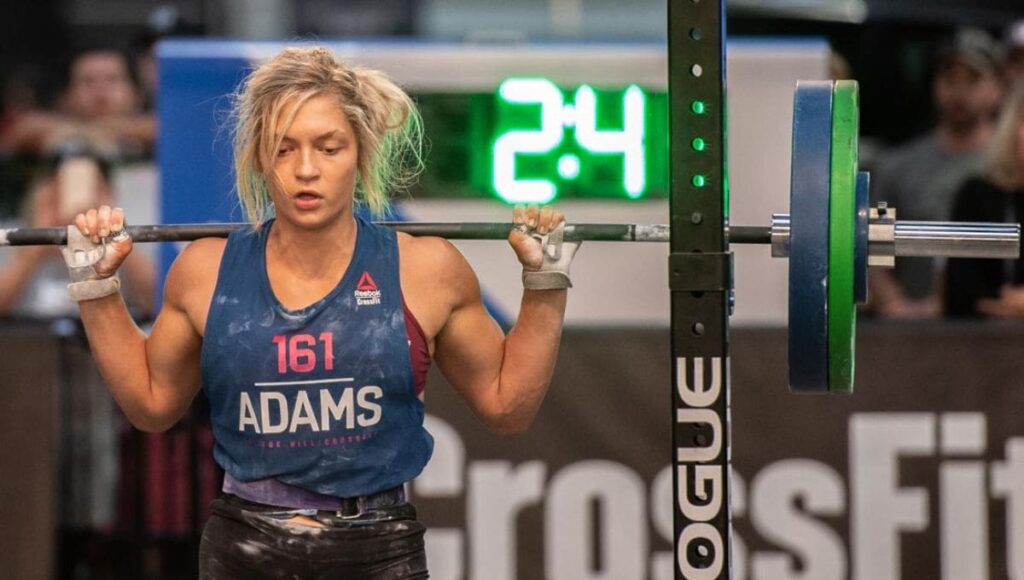
Squatting to greater depth increases glute activation significantly compared to partial squats. Deep squats recruit more hip extensor contribution and stimulate greater overall glute development.
Functional Carryover
Squats train vertical force production. This translates directly to box jumps, wall balls, Olympic lifts, and change-of-direction mechanics.
Long-term squat training improves lower-body power, maximal strength, and rate of force development. Stronger hip extensors from squatting contribute to improved vertical jump height and sprint performance.
Injury Prevention Benefits
Stronger glutes from squatting improve hip control and reduce excessive knee valgus. Research shows that hip strengthening reduces patellofemoral pain and improves lower limb alignment during dynamic tasks.
How to Perform It Properly
- Place the barbell across your upper traps.
- Grip tightly and brace your core.
- Sit back and down, maintaining a neutral spine.
- Descend until the hip crease passes below the knee.
- Drive upward through midfoot and heel.
- Extend hips and knees simultaneously.
Key cues:
- Knees track over toes.
- Chest tall.
- Full depth.
- Controlled eccentric phase.
Programming Guidelines
- 3–6 sets
- 3–8 reps
- Heavy loads
- 2–3 minutes rest
Full range of motion is crucial. Research shows that deeper squats lead to superior strength and hypertrophy outcomes compared to partial squats.
3. Romanian Deadlift (RDL)
Why It Works
The Romanian deadlift targets the posterior chain, with heavy emphasis on the glutes and hamstrings. Unlike conventional deadlifts, the RDL emphasizes hip hinging with minimal knee bend.
This places the gluteus maximus under significant stretch tension. Mechanical tension at longer muscle lengths is a potent stimulus for hypertrophy.
EMG research shows high glute activation during hip hinge movements, particularly when performed with controlled eccentric loading.
Functional Carryover
The hip hinge pattern is foundational in functional fitness: kettlebell swings, deadlifts, cleans, snatches, and sprinting mechanics all rely on strong hip extension.
The RDL improves eccentric control and strengthens the glutes in lengthened positions, reducing hamstring injury risk and improving force absorption capacity.
Athletes with stronger hip extensors demonstrate better sprint acceleration and deceleration control.
How to Perform It Properly
- Stand with a barbell at hip height.
- Slightly bend the knees.
- Push hips backward while keeping the bar close to the thighs.
- Lower until you feel a strong stretch in the hamstrings.
- Maintain a neutral spine throughout.
- Drive hips forward to stand tall.
Key cues:
- Hips back, not down.
- Bar stays close.
- Neutral spine.
- Slow eccentric (2–3 seconds).
Programming Guidelines
- 3–5 sets
- 6–10 reps
- Moderate to heavy load
- Controlled tempo
Eccentric emphasis increases glute and hamstring recruitment and enhances hypertrophy stimulus.
Why These Three Exercises Work Best Together
Each of these movements trains the glutes in a complementary way:
- Hip thrust: peak contraction at full extension (horizontal force).
- Back squat: deep hip flexion to extension (vertical force).
- Romanian deadlift: hip hinge with lengthened tension (posterior chain control).
Research supports combining multi-joint compound lifts with exercises that emphasize peak contraction. Different hip angles recruit the gluteus maximus differently, and comprehensive development requires training across those angles.
Together, these exercises:
- Maximize glute activation.
- Build strength across full hip range.
- Improve both vertical and horizontal power.
- Enhance pelvic stability.
- Reduce injury risk.
Volume, Frequency, and Progression
How Often Should You Train Glutes?
Evidence suggests training muscle groups at least twice per week optimizes hypertrophy. Weekly volume appears more important than frequency alone.

For glute development:
- 10–20 sets per week
- Split across 2–3 sessions
- Progressive overload applied consistently
Load and Intensity
Heavy loads build maximal strength. Moderate loads with controlled tempo build hypertrophy. Combining both produces the best long-term outcomes.
Tempo and Mind-Muscle Connection
Slower eccentrics and intentional peak contractions increase muscle activation. Studies show that internal focus cues can enhance glute recruitment during hip extension exercises.
Common Mistakes That Limit Glute Growth
Not Reaching Full Hip Extension
Incomplete lockout reduces glute activation.
Excessive Lumbar Extension
Arching the lower back shifts load away from the glutes.
Partial Range Squats
Shallow squats reduce glute recruitment compared to full depth.
Poor Hip Hinge Mechanics
Turning RDLs into stiff-legged back movements limits posterior chain development.
Technique determines effectiveness.
Final Thoughts
Strong glutes are foundational for functional fitness performance and long-term joint health. Science consistently supports the effectiveness of heavy compound hip extension movements for maximizing glute strength and hypertrophy.
The three best functional exercises for strong glutes are:
- Barbell hip thrust
- Back squat
- Romanian deadlift
Train them with intent. Load them progressively. Move through full ranges of motion. Control the eccentric. Squeeze at lockout.
Build strong glutes, and you build a stronger athlete.
Key Takeaways
| Exercise | Primary Benefit | Why It Works | Programming Tip |
|---|---|---|---|
| Barbell Hip Thrust | Max glute activation at full extension | High EMG activation and horizontal force production | Pause at top for 1–2 seconds |
| Back Squat | Vertical force and deep hip strength | Greater glute recruitment at full depth | Squat below parallel |
| Romanian Deadlift | Posterior chain and lengthened tension | High hip hinge activation and stretch stimulus | Slow 2–3 sec eccentric |
| Combined Training | Complete glute development | Trains multiple hip angles and force vectors | 10–20 weekly sets |
References
- Andersen, V., Fimland, M.S., Mo, D.A., Iversen, V.M., Vederhus, T., Rockland Hellebø, L.R., Nordaune, K.I. and Saeterbakken, A.H., 2018. Electromyographic comparison of barbell hip thrust, squat and deadlift. Journal of Strength and Conditioning Research, 32(3), pp.587–593.
- Bret Contreras, B., Vigotsky, A.D., Schoenfeld, B.J., Beardsley, C. and Cronin, J., 2015. A comparison of gluteus maximus, biceps femoris, and vastus lateralis electromyographic activity in the barbell hip thrust and back squat. Journal of Applied Biomechanics, 31(6), pp.452–458.
- Clark, D.R., Lambert, M.I. and Hunter, A.M., 2012. Muscle activation in the loaded free barbell squat: A brief review. Journal of Strength and Conditioning Research, 26(4), pp.1169–1178.
- Crow, J.F., Pearce, A.J., Veale, J.P., Vanderwesthuizen, D., Coburn, P.T., Pizzari, T. and Buttifant, D., 2012. Hip extension strength and speed performance in elite rugby union players. Journal of Strength and Conditioning Research, 26(5), pp.1266–1272.
- Hartmann, H., Wirth, K. and Klusemann, M., 2013. Analysis of the load on the knee joint and vertebral column with changes in squatting depth and weight load. Sports Medicine, 43(10), pp.993–1008.