

Some exercises have terrible reputations. People avoid them, complain about them, and often replace them with easier alternatives. Yet many of these movements continue to appear in athletic training, military fitness, rehabilitation, and strength programs because they deliver outstanding results.
The reason people secretly hate these exercises is simple. They expose weaknesses. They challenge multiple muscle groups at once, demand mental toughness, and quickly reveal limitations in strength, endurance, stability, or mobility.



That discomfort is exactly why they work. While no single exercise is magical, certain movements consistently produce high levels of muscular activation, improve athletic performance, and develop qualities that transfer into daily life and sports.
Here are five exercises that almost everyone dreads, along with the science explaining why they deserve a permanent place in your training.
Burpees
Few exercises trigger as much universal dislike as burpees. Within seconds they leave your lungs burning, your heart racing, and your entire body working overtime. That miserable feeling is also what makes them one of the most effective conditioning exercises available.

A burpee combines a squat, plank, push up, and vertical jump into one continuous movement. Every repetition challenges the legs, chest, shoulders, arms, core, and cardiovascular system at the same time.
Unlike steady state cardio, burpees force the body to repeatedly transition between horizontal and vertical positions while producing explosive power. That combination creates a significant metabolic demand in a short period.
Research comparing high intensity interval training with traditional endurance exercise consistently shows that short bouts of maximal effort can improve aerobic capacity, insulin sensitivity, and cardiovascular health while requiring much less training time. Exercises like burpees are frequently used in these protocols because they recruit large amounts of muscle mass simultaneously.
Burpees also improve coordination because they require smooth movement through several positions without losing balance or rhythm. Athletes benefit from the ability to rapidly generate force while controlling body position.
How Long Should You Be Able to Dead Hang For?
The movement also develops muscular endurance. During high repetition sets, the chest, shoulders, quadriceps, glutes, calves, and core must continue producing force even as fatigue accumulates.
Many people dislike burpees because they cannot hide behind one strength. A strong runner may struggle with the push up. A powerlifter may lose conditioning. A gymnast may fatigue from repeated jumps. The exercise exposes every weakness at once.
Technique matters. The spine should remain neutral during the plank position, the landing should be controlled, and the jump should be explosive without sacrificing posture. Beginners can remove the push up or step backward instead of jumping until they build confidence. The discomfort created by burpees reflects the enormous physiological demand they place on the body. When used intelligently, they become one of the most efficient conditioning exercises available.
Wall Sits
Wall sits look deceptively easy. After all, nothing moves. The reality becomes obvious after about thirty seconds. The quadriceps begin shaking, the glutes burn, and maintaining position becomes an exercise in mental resilience.
An isometric exercise involves producing force without changing joint position. During a wall sit, the hips and knees remain bent while the muscles continuously generate tension to prevent collapse. Research has demonstrated that isometric training can increase maximal strength, improve muscular endurance, and even contribute to reductions in resting blood pressure when performed consistently.
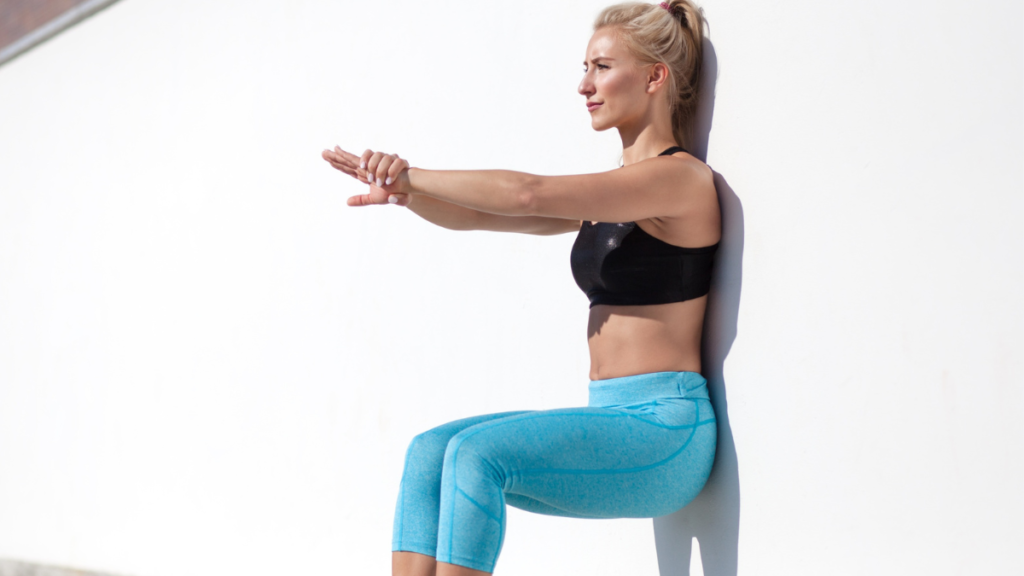
Wall sits primarily challenge the quadriceps, although the glutes, calves, hamstrings, and core also contribute to maintaining stability.
One reason wall sits are so effective is continuous muscle tension. Unlike traditional squats where tension varies throughout the movement, the muscles never receive a break during the hold. Blood flow becomes temporarily restricted, metabolites accumulate, and fatigue develops rapidly. That sustained effort stimulates muscular adaptations despite the absence of movement.
Wall sits can also benefit athletes recovering from knee injuries because they allow controlled loading without repetitive joint motion. Rehabilitation professionals often use carefully prescribed isometric exercises to restore strength while minimizing unnecessary irritation. Athletes in sports requiring prolonged force production also benefit. Skiers, cyclists, wrestlers, and field sport athletes frequently need to maintain strong lower body positions under fatigue. Wall sits help develop this quality.
The exercise also teaches discipline. There is no momentum, no bouncing, and no shortcut. Either the position is maintained or it is not.
Proper technique includes keeping the back flat against the wall, knees roughly over the ankles, thighs close to parallel with the floor, and the feet firmly planted. Leaning forward or resting the hands on the legs reduces the training effect.
Wall sits may appear boring, but they create impressive strength and endurance adaptations with minimal equipment.
L Sits
The L sit has a reputation for being brutally difficult despite requiring no movement whatsoever.

Holding the body above the floor with straight legs extended demands tremendous strength from muscles that many people rarely train directly.
The primary muscles involved include the rectus abdominis, transverse abdominis, hip flexors, quadriceps, shoulders, triceps, and scapular stabilizers. Maintaining body position also requires significant coordination between the upper and lower body.
Unlike traditional abdominal exercises that involve repeated spinal flexion, the L sit emphasizes anti extension and stabilization. The core works to resist movement while simultaneously supporting the weight of the legs.
Electromyography studies consistently show high levels of abdominal activation during demanding stabilization exercises compared with many conventional abdominal movements.
The shoulders also receive an exceptional training stimulus. Supporting body weight with locked elbows strengthens the stabilizing muscles surrounding the shoulder joint while improving scapular control. Gymnasts have relied on exercises like the L sit for decades because they develop body control, relative strength, and midline stability. Those qualities transfer into handstands, pull ups, muscle ups, climbing, and countless athletic skills.
The exercise is particularly valuable because it emphasizes relative strength rather than absolute strength. A person capable of lifting heavy weights may still struggle to hold an L sit if their core stability or shoulder endurance is lacking. Beginners often progress through bent knee variations before gradually extending one leg and eventually both legs.
Proper positioning includes depressed shoulders, locked elbows, straight knees, pointed or neutral feet, and an upright chest. Allowing the shoulders to shrug or the lower back to collapse significantly reduces effectiveness.
The reason so many people avoid L sits is simple. They immediately expose weaknesses in the core, hip flexors, shoulders, and overall body control. There is nowhere to compensate.
Front Squats
Front squats are often overshadowed by back squats because they are less forgiving and technically more demanding. That is exactly why they deserve attention.
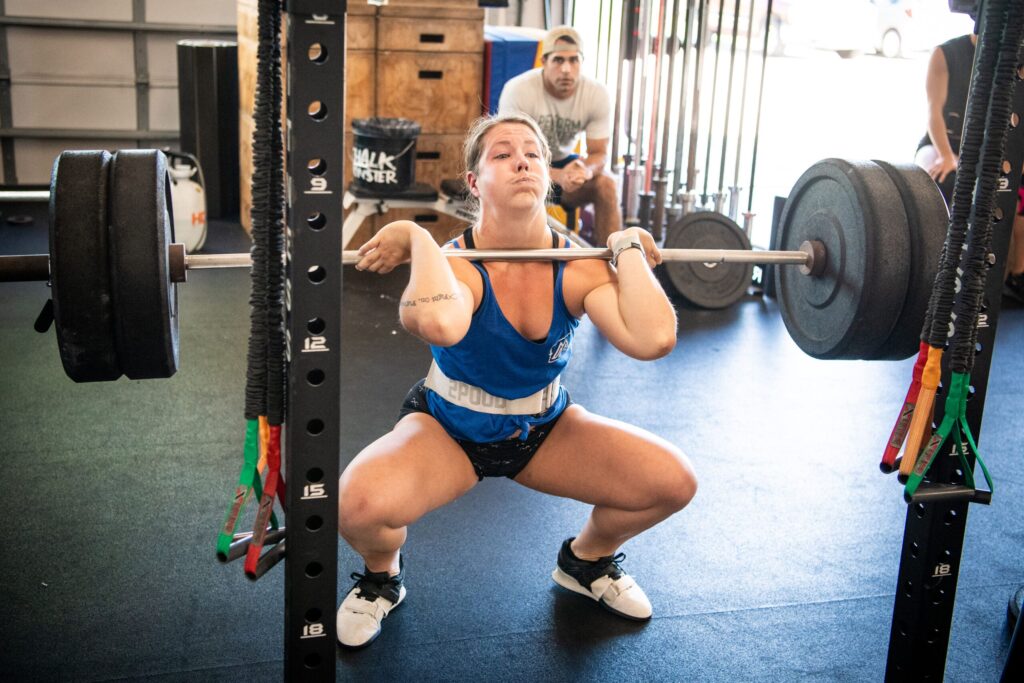
Holding the barbell across the front of the shoulders forces an upright torso throughout the movement. This position increases demands on the quadriceps, upper back, core, and thoracic spine while reducing forward lean.
Biomechanical research comparing front and back squats shows that both exercises effectively develop lower body strength. However, front squats place lower compressive forces on the knees while reducing stress on the lumbar spine due to the more upright posture.
The front squat also requires greater mobility in the wrists, shoulders, ankles, and thoracic spine. Lifters cannot compensate with excessive forward lean without risking loss of the bar.
Olympic weightlifters rely heavily on front squats because they directly improve the receiving position of the clean. Athletes in football, rugby, basketball, and track and field also benefit because front squats encourage explosive leg strength while reinforcing efficient movement mechanics. The core receives a tremendous challenge because the torso must resist forward collapse throughout every repetition. Unlike many isolated abdominal exercises, this stabilization occurs while the lower body produces substantial force.
Front squats also encourage balanced muscular development. The quadriceps work intensely while the glutes, hamstrings, spinal stabilizers, and upper back coordinate to maintain posture.
Many lifters dislike front squats because they expose mobility restrictions immediately. Tight wrists, stiff ankles, poor thoracic mobility, or weak upper back muscles become impossible to ignore.
Using crossed arms or lifting straps can temporarily help individuals develop technique while improving mobility over time. Maintaining high elbows, keeping the chest tall, and sitting between the hips rather than folding forward are essential for safe execution. Although front squats may require patience to master, they reward that effort with impressive gains in strength, posture, athletic performance, and movement quality.
Hollow Holds
At first glance, hollow holds seem almost too simple.

You lie on your back, lift your arms and legs slightly off the floor, and remain completely still. Within seconds, however, the abdominal muscles begin shaking as the entire trunk works to maintain spinal position.
The hollow hold is one of the foundational exercises in gymnastics because it teaches whole body tension. Rather than training isolated muscles, it teaches the body to function as a connected unit.
The exercise primarily targets the rectus abdominis, transverse abdominis, internal and external obliques, hip flexors, and deep spinal stabilizers. Research examining core stability consistently shows that exercises emphasizing spinal stiffness and controlled stabilization improve trunk endurance and contribute to athletic performance while reducing excessive spinal loading.
Maintaining a hollow position requires pressing the lower back gently into the floor while extending the arms overhead and the legs away from the body. As the limbs move farther from the center of mass, the leverage increases dramatically, making the hold substantially more difficult.
This position develops anti extension strength, which is essential for lifting, sprinting, jumping, throwing, and transferring force efficiently between the upper and lower body. Gymnasts use hollow holds because almost every advanced skill depends on maintaining a rigid body position while moving through space. For recreational athletes, improved trunk stiffness helps produce stronger movement patterns during squats, deadlifts, overhead pressing, pull ups, and sprinting.
Beginners can shorten the lever by bending the knees or keeping the arms alongside the body until they develop sufficient control.
The biggest mistake is allowing the lower back to arch away from the floor. Once this occurs, the core is no longer producing the desired stabilization, and unnecessary stress shifts toward the lumbar spine.
Hollow holds are uncomfortable because they eliminate momentum and force the core to generate uninterrupted tension. That challenge makes them one of the most effective bodyweight exercises for developing functional trunk stability.
Why the Exercises You Hate Often Deliver the Best Results
There is a reason these five exercises continue appearing in evidence based training programs across different sports and fitness levels.
- Burpees develop cardiovascular fitness, muscular endurance, and whole body coordination in very little time.
- Wall sits improve isometric strength, muscular endurance, and joint stability while placing continuous tension on the lower body.
- L sits build exceptional relative strength, shoulder stability, and core control that transfers into countless athletic movements.
- Front squats strengthen the entire lower body while reinforcing posture, mobility, and efficient movement mechanics.
- Hollow holds create trunk stiffness and body awareness that improve force transfer throughout the kinetic chain.
None of these exercises are enjoyable while performing them. They challenge both the body and the mind. They demand concentration, discipline, and consistency rather than entertainment.
The fact that they are difficult is exactly what makes them valuable. While every training program should be individualized, exercises that expose weaknesses often create the greatest opportunities for long term improvement.
Rather than avoiding the movements you dislike most, it is often worth asking whether those exercises are revealing exactly what your body needs to develop next.
Key Takeaways
| Exercise | Primary Benefits | Why People Hate It | Best For |
|---|---|---|---|
| Burpees | Cardiovascular fitness, muscular endurance, power, coordination | Full body fatigue develops quickly | Conditioning and athletic fitness |
| Wall Sits | Quadriceps strength, muscular endurance, isometric capacity | Continuous muscle tension with no rest | Lower body endurance and knee stability |
| L Sits | Core strength, shoulder stability, relative strength | Exposes weaknesses in the core and hip flexors | Bodyweight strength and gymnastics foundations |
| Front Squats | Lower body strength, posture, core stability | High mobility and technique demands | Athletic performance and functional strength |
| Hollow Holds | Core stability, anti extension strength, body control | Constant abdominal tension without movement | Trunk stability and force transfer |
References
- Behm, D.G., Drinkwater, E.J., Willardson, J.M. and Cowley, P.M. (2010) ‘Canadian Society for Exercise Physiology position stand: The use of instability to train the core in athletic and nonathletic conditioning’, Applied Physiology, Nutrition, and Metabolism, 35(1), pp. 109 to 112.
- Borms, D., Cools, A. and Maenhout, A. (2016) ‘Upper quadrant field tests and isokinetic upper limb strength in overhead athletes’, Journal of Athletic Training, 51(10), pp. 789 to 796.
- Contreras, B., Vigotsky, A.D., Schoenfeld, B.J., Beardsley, C. and Cronin, J. (2015) ‘A comparison of gluteus maximus, biceps femoris, and vastus lateralis electromyographic activity in the back squat and front squat’, Journal of Applied Biomechanics, 31(6), pp. 452 to 458.
- Gist, N.H., Freese, E.C., Cureton, K.J. and others (2014) ‘Effects of low volume, high intensity whole body calisthenics on army ROTC cadets’, Military Medicine, 179(7), pp. 766 to 772.
- McGill, S.M. (2010) Ultimate Back Fitness and Performance. 4th ed. Waterloo: Backfitpro Inc.
- McGill, S.M. (2016) Low Back Disorders: Evidence Based Prevention and Rehabilitation. 3rd ed. Champaign: Human Kinetics.