

Running has long been considered one of the best exercises for fat loss. It is simple, accessible, and effective for increasing calorie expenditure. However, when the goal is specifically reducing belly fat, running is not always the most efficient option.
It is important to understand that no exercise can directly target belly fat. Spot reduction is a myth that has been repeatedly disproven by scientific research. Fat loss occurs across the entire body based on energy balance, hormonal responses, genetics, and overall activity levels. That said, some forms of exercise create greater metabolic demands, preserve more muscle mass, increase post exercise calorie burn, and improve insulin sensitivity more effectively than steady state running. These factors can accelerate overall fat loss and help reduce stubborn abdominal fat.


Visceral fat, the deep fat that surrounds internal organs, is particularly concerning because it is strongly linked to cardiovascular disease, type 2 diabetes, metabolic syndrome, and chronic inflammation. Research consistently shows that certain forms of high intensity and resistance based exercise can reduce visceral fat more effectively than traditional endurance training.
Why Belly Fat Is Different
Before looking at the exercises, it is worth understanding why belly fat often seems harder to lose than fat elsewhere. Abdominal fat exists in two primary forms:
- Subcutaneous fat, which sits just beneath the skin.
- Visceral fat, which surrounds internal organs.
Want a 500lb Deadlift? Here are 4 Numbers You Need to Hit First
Visceral fat is metabolically active. It releases inflammatory compounds and hormones that can negatively affect health. Higher levels are associated with insulin resistance, elevated blood pressure, increased cholesterol levels, and greater risk of chronic disease.
Research shows that exercise is particularly effective at reducing visceral fat, even when body weight changes only modestly. This means people can significantly improve health and waist circumference through training, even without dramatic changes on the scale. The most effective workouts for reducing belly fat tend to share several characteristics:
- They recruit large amounts of muscle mass.
- They elevate heart rate significantly.
- They create a substantial calorie demand.
- They increase excess post exercise oxygen consumption.
- They help maintain or build lean muscle tissue.
The following exercises meet all of these criteria.
1. Burpees
Burpees are often hated for a reason. They are brutally effective.
This full body movement combines a squat, plank, push up, and vertical jump into one continuous exercise. Because nearly every major muscle group is involved, burpees generate a very high metabolic demand in a short period of time.
Why Burpees Burn More Fat Than Running
Steady state running primarily challenges the lower body and cardiovascular system. Burpees challenge the chest, shoulders, arms, core, glutes, quadriceps, hamstrings, and calves simultaneously.
This whole body involvement dramatically increases energy expenditure. High intensity exercises such as burpees also create a larger afterburn effect, known scientifically as excess post exercise oxygen consumption. This means the body continues burning additional calories after the workout has ended.
Research demonstrates that high intensity interval training can significantly reduce abdominal and visceral fat while requiring less total exercise time than traditional endurance training.
How to Perform Burpees
- Stand with feet shoulder width apart.
- Squat down and place your hands on the floor.
- Jump your feet backward into a plank.
- Perform a push up.
- Jump your feet back underneath your body.
- Explosively jump upward.
- Repeat immediately.

Sample Workout
Perform:
- 30 seconds of burpees
- 30 seconds rest
Repeat for 10 rounds.
This simple workout takes only 10 minutes but can rival much longer running sessions for calorie expenditure.
2. Kettlebell Swings
The kettlebell swing is one of the most powerful exercises for fat loss and athletic conditioning. Unlike many gym exercises that isolate a single muscle group, swings train the entire posterior chain, including the glutes, hamstrings, lower back, core, and upper back. The movement is explosive, rhythmic, and highly demanding on both muscular and cardiovascular systems.
Why Kettlebell Swings Are So Effective
Kettlebell swings combine resistance training with aerobic conditioning. This hybrid effect makes them uniquely effective for body composition improvement.
Research examining kettlebell training has shown substantial improvements in aerobic capacity, muscular endurance, and calorie expenditure. The explosive hip extension required for each repetition also develops powerful glutes and hamstrings while elevating heart rate rapidly. The continuous nature of swings creates a training effect similar to sprint intervals while simultaneously building strength.
How to Perform Kettlebell Swings
- Stand with feet slightly wider than shoulder width.
- Hold a kettlebell with both hands.
- Hinge at the hips and swing the bell between the legs.
- Explosively drive the hips forward.
- Allow the kettlebell to rise to chest height.
- Let the bell fall naturally and repeat.
The power should come from the hips, not the arms.
Sample Workout
Perform:
- 20 swings
- 30 seconds rest
Repeat for 10 rounds.
The workout is brief but extremely demanding.
3. Sprint Intervals
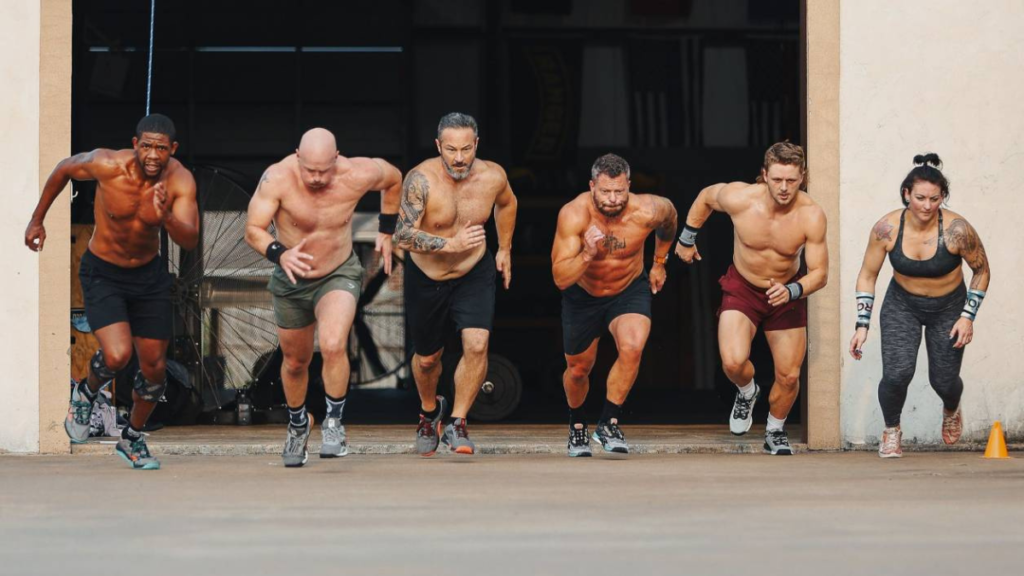
If there is one exercise that consistently outperforms steady state running for fat loss, it is sprinting. Sprint interval training involves short bursts of maximum effort followed by recovery periods. This approach has been extensively studied and repeatedly shown to reduce body fat and improve metabolic health.
Why Sprinting Beats Jogging
Although jogging burns calories during exercise, sprinting creates a much greater metabolic disturbance. Sprint training:
- Recruits fast twitch muscle fibers.
- Increases post exercise calorie burn.
- Improves insulin sensitivity.
- Preserves lean muscle mass.
- Elevates growth hormone production.
Studies comparing sprint intervals and moderate intensity endurance exercise often find similar or superior fat loss results despite much lower total training time. Sprint intervals are particularly effective for reducing visceral abdominal fat.

How to Perform Sprint Intervals
Find a track, field, hill, or stationary bike. Perform:
- Sprint for 20 seconds at near maximum effort.
- Recover for 90 seconds.
Repeat 8 to 10 times. Beginners should start conservatively and gradually increase intensity.
Safety Considerations
Because sprinting is highly demanding, proper warm ups are essential. Individuals with injuries or cardiovascular concerns should consult a healthcare professional before beginning sprint training.
4. Thrusters
Thrusters combine a front squat and an overhead press into a single movement. This exercise recruits nearly every major muscle group while driving heart rate through the roof. For fat loss, few exercises offer a better combination of strength development and cardiovascular challenge.
Why Thrusters Work
Thrusters create a unique blend of resistance training and conditioning. During each repetition the body must coordinate:
- Legs
- Glutes
- Core
- Shoulders
- Triceps
- Upper back
Because so many muscles work simultaneously, energy demand rises dramatically. Research consistently shows that resistance training helps preserve lean mass during fat loss. Maintaining muscle mass is critical because muscle tissue contributes significantly to resting metabolic rate. Compared with long duration running, thrusters may help preserve more muscle while still generating a substantial calorie burn.
How to Perform Thrusters
- Hold dumbbells or a barbell at shoulder height.
- Descend into a squat.
- Stand explosively.
- Use the upward momentum to press the weight overhead.
- Lower the weight back to shoulder level.
- Repeat.
Sample Workout
Perform:
- 15 thrusters
- 45 seconds rest
Repeat for 8 rounds. Use a weight that allows proper form while maintaining intensity.
5. Rowing
Rowing is one of the most underrated fat burning exercises available. Unlike running, rowing is a true full body exercise. Approximately 85 percent of the body’s muscles contribute during a rowing stroke. This broad muscular involvement increases calorie expenditure while reducing impact stress on joints.

Why Rowing Excels for Belly Fat Reduction
Many people assume rowing is primarily an upper body exercise. In reality, the legs provide most of the power. Each stroke engages:
- Quadriceps
- Hamstrings
- Glutes
- Core
- Back
- Shoulders
- Arms
This extensive recruitment elevates energy expenditure significantly. Research demonstrates that rowing can improve cardiovascular fitness while also supporting strength and muscular endurance development. The combination of resistance and aerobic work makes rowing highly effective for body composition improvements.
How to Perform Rowing Intervals
On a rowing machine:
- Row hard for 250 meters.
- Recover for 60 seconds.
Repeat 8 to 12 times. This format develops both aerobic and anaerobic fitness while maximizing calorie burn.
Why High Intensity Training Targets Visceral Fat
One reason these exercises often outperform traditional running is their effect on visceral fat. Visceral fat is particularly responsive to high intensity exercise. Researchers believe several mechanisms contribute to this effect:
- Increased catecholamine release.
- Improved insulin sensitivity.
- Enhanced fat oxidation.
- Greater post exercise energy expenditure.
- Increased muscle preservation.
High intensity workouts also tend to be more time efficient, making them easier to maintain consistently over the long term. Consistency remains the most important factor for sustainable fat loss.
The Role of Strength Training in Belly Fat Loss
Many people focus exclusively on cardio when trying to lose weight. This is often a mistake. Resistance training plays a critical role in body composition improvement because it helps preserve lean muscle mass during calorie deficits. When muscle mass is maintained, resting metabolic rate remains higher. This helps support long term fat loss and weight management.
Several studies have shown that combining resistance training with aerobic exercise produces superior body composition outcomes compared with aerobic training alone. The exercises on this list work particularly well because they combine cardiovascular demand with muscular loading.
Final Thoughts
Running remains an excellent exercise for health, endurance, and calorie burning. However, when the goal is reducing belly fat as efficiently as possible, several exercises may provide greater benefits. Burpees, kettlebell swings, sprint intervals, thrusters, and rowing all recruit more muscle mass, create larger metabolic demands, and generate greater post exercise calorie burn than traditional steady state running.
Combined with proper nutrition, resistance training, adequate sleep, and consistency, these exercises can help reduce body fat, improve metabolic health, and shrink waist circumference more effectively than endless miles on the road.
The key is not finding a magical belly fat exercise. The key is choosing movements that maximize energy expenditure, preserve muscle mass, and support long term adherence. Do that consistently, and the results will follow.
Bibliography
- Boutcher, S.H. (2011) ‘High intensity intermittent exercise and fat loss’, Journal of Obesity, 2011, pp. 1-10.
- Donnelly, J.E., Blair, S.N., Jakicic, J.M., Manore, M.M., Rankin, J.W. and Smith, B.K. (2009) ‘Appropriate physical activity intervention strategies for weight loss and prevention of weight regain for adults’, Medicine and Science in Sports and Exercise, 41(2), pp. 459-471.
- Falcone, P.H., Tai, C.Y., Carson, L.R., Joy, J.M., Mosman, M.M., McCann, T.R., Crona, K.P., Kim, M.P. and Moon, J.R. (2015) ‘Caloric expenditure of aerobic, resistance, or combined high intensity interval training using a kettlebell’, Journal of Strength and Conditioning Research, 29(10), pp. 2843-2848.
- Gillen, J.B. and Gibala, M.J. (2014) ‘Is high intensity interval training a time efficient exercise strategy to improve health and fitness?’, Applied Physiology, Nutrition, and Metabolism, 39(3), pp. 409-412.
- Irving, B.A., Davis, C.K., Brock, D.W., Weltman, J.Y., Swift, D., Barrett, E.J., Gaesser, G.A. and Weltman, A. (2008) ‘Effect of exercise training intensity on abdominal visceral fat and body composition’, Medicine and Science in Sports and Exercise, 40(11), pp. 1863-1872.
- Keating, S.E., Johnson, N.A., Mielke, G.I. and Coombes, J.S. (2017) ‘A systematic review and meta analysis of interval training versus moderate intensity continuous training on body adiposity’, Obesity Reviews, 18(8), pp. 943-964.
- Peterson, M.D., Sen, A. and Gordon, P.M. (2011) ‘Influence of resistance exercise on lean body mass in aging adults’, Medicine and Science in Sports and Exercise, 43(2), pp. 249-258.
- Schoenfeld, B.J. (2011) ‘The mechanisms of muscle hypertrophy and their application to resistance training’, Journal of Strength and Conditioning Research, 24(10), pp. 2857-2872.
- Slentz, C.A., Duscha, B.D., Johnson, J.L., Ketchum, K., Aiken, L.B., Samsa, G.P., Houmard, J.A., Bales, C.W. and Kraus, W.E. (2004) ‘Effects of the amount of exercise on body weight, body composition, and measures of central obesity’, Archives of Internal Medicine, 164(1), pp. 31-39.
- Willis, L.H., Slentz, C.A., Bateman, L.A., Shields, A.T., Piner, L.W., Bales, C.W., Houmard, J.A. and Kraus, W.E. (2012) ‘Effects of aerobic and resistance training on body mass and fat mass in overweight or obese adults’, Journal of Applied Physiology, 113(12), pp. 1831-1837.