

Big arms are often associated with impressive biceps, but the triceps actually make up roughly two thirds of the upper arm’s muscle mass. If your goal is to build noticeably larger arms, focusing on triceps development is one of the fastest ways to create that thicker, more muscular appearance.
The triceps brachii consists of three heads: the long head, lateral head, and medial head. Together, they are responsible for elbow extension and play an important role in pressing strength. Developing all three heads effectively requires more than simply adding a few pushdowns at the end of a workout. Exercise selection, training volume, range of motion, intensity, recovery, and nutrition all play major roles in maximizing growth.



Research over the past two decades has dramatically improved our understanding of hypertrophy. Scientists now know much more about the factors that stimulate muscle growth and how to structure training for optimal results. By applying these evidence based principles specifically to triceps training, you can accelerate your progress and build thicker arms more efficiently.
Here are ten science backed tips to help you grow bigger triceps faster.
Understand the Anatomy of the Triceps
Before discussing training methods, it is important to understand what you are trying to develop. The triceps brachii consists of three distinct heads. The lateral head sits on the outer portion of the arm and contributes significantly to the horseshoe appearance. The medial head lies deeper and assists with most elbow extension tasks. The long head is unique because it crosses both the shoulder and elbow joints.
This anatomical distinction matters because muscle length influences activation patterns. The long head is particularly challenged when the arms are positioned overhead because it becomes stretched at the shoulder joint. Research suggests that training muscles in lengthened positions may provide a powerful hypertrophic stimulus.
Understanding these differences allows you to choose exercises that effectively target all portions of the triceps rather than repeatedly stressing the same region.
Prioritize Compound Pressing Movements
Many lifters treat triceps exercises as accessories. While isolation work is valuable, compound movements should form the foundation of any serious arm building program. Bench presses, close grip bench presses, dips, and overhead presses all place significant loading demands on the triceps. These exercises allow the use of heavier loads than isolation exercises, which can contribute to greater overall mechanical tension.
Mechanical tension is considered one of the primary drivers of muscle hypertrophy. When muscles are exposed to progressively increasing loads over time, they adapt by becoming larger and stronger.
The close grip bench press deserves special attention. Compared with a traditional bench press, the narrower grip increases elbow extension demands and places more emphasis on the triceps. Similarly, parallel bar dips can generate substantial triceps activation while allowing significant loading.
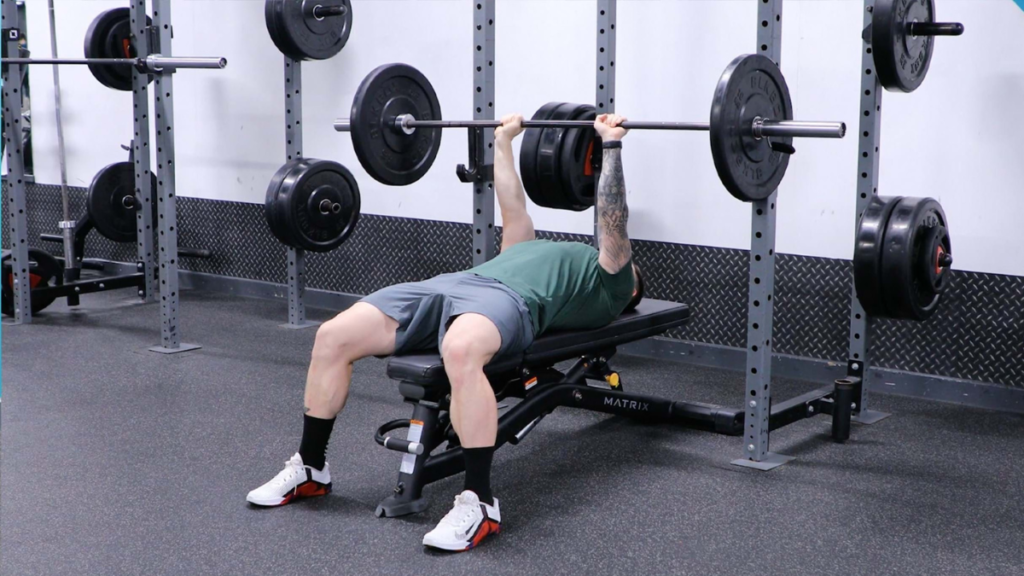
Many successful strength athletes develop impressive triceps primarily through years of heavy pressing. Isolation exercises then help maximize development and address weak points.
Best Compound Exercises for Triceps Growth
Close grip bench press remains one of the most effective overall builders because it combines heavy loading with high triceps involvement. Weighted dips provide excellent activation and allow progressive overload. Overhead presses contribute meaningful triceps stimulation while also developing the shoulders. Machine chest presses can provide additional triceps volume with lower stability demands.
Train the Long Head Through a Full Stretch
One of the most important recent developments in hypertrophy research involves training muscles at longer muscle lengths. The long head of the triceps responds particularly well to overhead exercises because the shoulder position places the muscle under greater stretch. Examples include overhead cable extensions, overhead dumbbell extensions, and incline skull crushers.
Several studies have demonstrated that exercises performed in stretched positions often produce superior hypertrophy compared with exercises emphasizing shortened muscle positions. When the long head is fully lengthened, passive tension increases within the muscle fibers. This appears to create a unique growth stimulus beyond what occurs during shorter range exercises.
For this reason, a triceps program built exclusively around pushdowns may leave growth potential untapped. Pushdowns are effective, but combining them with overhead movements creates more complete development.
Many lifters notice significant improvements in arm thickness after increasing the amount of overhead extension work in their routines.
Increase Weekly Training Volume
Muscle growth is strongly influenced by training volume. Volume is commonly defined as the total number of challenging sets performed for a muscle group each week. Research consistently shows a dose response relationship between volume and hypertrophy, up to an individual recovery limit.
For most trained individuals, approximately 10 to 20 challenging weekly sets per muscle group appears effective for maximizing growth. Some advanced lifters may benefit from even higher volumes.
Because triceps are involved in many pressing exercises, total workload can accumulate quickly. A chest and shoulder workout often provides substantial indirect triceps stimulation before any isolation work is performed. The key is to monitor total weekly exposure rather than focusing only on direct triceps exercises.
If progress has stalled, increasing weekly volume by a few sets may help stimulate additional growth. However, excessive volume can impair recovery and reduce performance. Finding the minimum effective dose that produces steady progress is usually more productive than constantly adding more work.
Train Close to Failure
One of the most important principles in modern hypertrophy research is effort. Studies indicate that muscle growth can occur across a wide range of repetition ranges when sets are performed sufficiently close to muscular failure. Whether you use six repetitions or twenty repetitions, the key factor is recruiting and fatiguing high threshold motor units.
Stopping too far from failure often reduces the hypertrophic stimulus because many muscle fibers remain underutilized. For triceps training, most sets should finish with approximately zero to three repetitions left in reserve. This level of effort provides substantial stimulation while allowing adequate recovery.
Isolation exercises are particularly well suited for training close to failure because the systemic fatigue is lower compared with heavy compound lifts.
For example, taking a set of cable pushdowns to near failure is generally safer and more practical than pushing a heavy close grip bench press to complete exhaustion. The combination of proper exercise selection and high effort creates an environment that encourages rapid muscle growth.
Use Multiple Rep Ranges
Many people become trapped in a single repetition range. Some lifters believe heavy sets of five repetitions are optimal. Others perform every exercise for fifteen or more repetitions. The evidence suggests that both approaches can be effective.
Research consistently shows that muscle hypertrophy can occur across a broad spectrum of repetition ranges provided effort remains high. Lower repetitions allow greater loading and mechanical tension. Moderate repetitions often balance tension and fatigue effectively. Higher repetitions can increase metabolic stress and provide additional volume with less joint strain.
For triceps development, combining different repetition ranges throughout the week may provide the most comprehensive stimulus. A close grip bench press might be performed for six to eight repetitions. Skull crushers may work well in the eight to twelve repetition range. Cable pushdowns can be highly effective for twelve to twenty repetitions. This variety helps ensure complete fiber recruitment while reducing overuse stress.
Focus on Progressive Overload
Without progressive overload, muscle growth eventually slows or stops. Progressive overload refers to gradually increasing training demands over time. This can occur through heavier weights, additional repetitions, more sets, improved technique, or greater range of motion.
The body adapts to stress remarkably efficiently. Once a workload becomes familiar, the stimulus for growth decreases. Tracking performance is therefore essential.
If you performed overhead cable extensions with 70 pounds for ten repetitions last month and can now complete twelve repetitions with the same load, progress has occurred. Similarly, increasing from 70 pounds to 80 pounds while maintaining repetition quality represents overload. Small improvements accumulate significantly over months and years.
Many lifters fail to maximize triceps growth because they perform the same exercises with the same weights for extended periods. Consistent progression provides the signal needed for continued adaptation.
Control the Eccentric Phase
The lowering portion of a repetition, known as the eccentric phase, plays an important role in hypertrophy. Research indicates that eccentric contractions can generate high levels of force while creating substantial muscle tension. Controlled lowering phases may increase muscle damage and enhance growth signaling.

For triceps exercises, allowing the weight to drop rapidly often reduces tension and decreases training quality. Instead, lower the load under control for approximately two to four seconds while maintaining proper positioning.
This approach is especially beneficial during skull crushers, overhead extensions, and cable movements where maintaining tension throughout the range of motion is important. Controlling the eccentric phase also improves technique consistency and reduces injury risk. Although excessively slow repetitions are generally unnecessary, deliberate control during the lowering phase can improve the effectiveness of each set.
Optimize Recovery and Sleep
Muscles do not grow during training. They grow during recovery. Resistance training provides the stimulus, but adaptation occurs afterward. Insufficient recovery can limit hypertrophy even when training quality is excellent.
Sleep is particularly important. During sleep, numerous anabolic processes support muscle repair and growth. Growth hormone secretion increases, protein synthesis occurs, and recovery systems function more effectively. Research consistently demonstrates associations between inadequate sleep and impaired muscle recovery, reduced performance, and poorer body composition outcomes.
Most adults should aim for seven to nine hours of high quality sleep per night. Recovery also includes managing training frequency and overall fatigue. Constantly training sore triceps without allowing adequate recovery may reduce long term progress. A balanced program that combines hard training with sufficient recovery typically produces the best results.
Eat Enough Protein and Calories
No discussion of muscle growth would be complete without nutrition. Muscle hypertrophy requires both training and nutritional support. Resistance exercise creates the stimulus, while dietary protein provides the amino acids necessary for repair and growth.
Current evidence suggests that protein intakes around 1.6 to 2.2 grams per kilogram of body weight per day support muscle growth in resistance trained individuals. Distributing protein across multiple meals may further enhance muscle protein synthesis.
Calories also matter. Building muscle is generally easier when energy intake supports recovery and adaptation. Although muscle can be gained during maintenance or even mild deficits under certain conditions, a modest caloric surplus often produces better hypertrophy outcomes. Quality food choices remain important. Lean proteins, fruits, vegetables, whole grains, dairy products, and healthy fats provide the nutrients needed for performance and recovery. Even the best triceps training program will underperform if nutrition is inadequate.
Train Triceps More Frequently
Frequency is often overlooked when designing arm training programs. Traditional bodybuilding routines sometimes train triceps directly only once per week. While this can work, research suggests that spreading volume across multiple sessions may offer advantages. Higher frequency allows more opportunities to stimulate muscle protein synthesis throughout the week. It can also improve training quality because fatigue is distributed more evenly.
For example, twelve weekly triceps sets may be more productive when divided across three sessions rather than performed all at once. A practical approach might involve triceps work after chest training, after shoulder training, and during a dedicated arm session. The goal is not necessarily to increase total volume dramatically. Instead, frequency helps improve volume distribution and exercise performance.
Many lifters find that training triceps two to three times weekly improves growth while maintaining manageable recovery demands.
Putting It All Together
Building thicker triceps quickly is not about discovering a secret exercise or magic training technique. The fundamentals remain remarkably consistent across decades of research.
Prioritize heavy compound movements to build strength and mechanical tension. Include overhead exercises that stretch the long head. Accumulate sufficient weekly volume while training close to failure. Use multiple repetition ranges and progressively increase training demands over time. Control the eccentric phase, recover properly, eat enough protein, and consider increasing training frequency.
When these evidence based principles are combined consistently, the triceps receive every major stimulus known to support hypertrophy. Over time, this leads to larger, stronger, and more impressive arms.
The athletes with the biggest triceps are rarely those searching for shortcuts. They are typically the ones who apply proven training principles consistently for months and years. By following the strategies outlined here, you can maximize your growth potential and build thicker triceps faster.
Key Takeaways
| Tip | Why It Works | Practical Application |
|---|---|---|
| Prioritize compound lifts | Creates high mechanical tension | Use close grip bench presses and dips |
| Train the long head stretched | Enhances hypertrophy stimulus | Include overhead extensions |
| Increase weekly volume | More growth opportunities | Aim for 10 to 20 challenging sets weekly |
| Train close to failure | Maximizes fiber recruitment | Finish most sets with 0 to 3 reps in reserve |
| Use multiple rep ranges | Targets different growth mechanisms | Combine heavy, moderate, and higher rep work |
| Apply progressive overload | Forces continued adaptation | Add weight, reps, or sets gradually |
| Control eccentrics | Increases muscle tension | Lower weights under control |
| Prioritize recovery | Supports adaptation and repair | Sleep 7 to 9 hours nightly |
| Eat enough protein | Supports muscle protein synthesis | Consume 1.6 to 2.2 g/kg daily |
| Increase training frequency | Improves volume distribution | Train triceps 2 to 3 times weekly |
References
- American College of Sports Medicine. (2009) ‘Progression models in resistance training for healthy adults’, Medicine & Science in Sports & Exercise, 41(3), pp. 687 to 708.
- Baz Valle, E., Balsalobre Fernández, C., Alix Figueroa, J. and Santos Concejero, J. (2022) ‘A systematic review of the effects of resistance training performed to repetition failure on muscular strength and hypertrophy’, Journal of Sports Sciences, 40(8), pp. 953 to 963.
- Brad Schoenfeld, B., Ogborn, D. and Krieger, J.W. (2017) ‘Dose response relationship between weekly resistance training volume and increases in muscle mass’, Journal of Sports Sciences, 35(11), pp. 1073 to 1082.
- Burd, N.A., Andrews, R.J., West, D.W.D., Little, J.P., Cochran, A.J.R., Hector, A.J., Cashaback, J.G.A., Gibala, M.J., Potvin, J.R., Baker, S.K. and Phillips, S.M. (2012) ‘Muscle time under tension during resistance exercise stimulates differential muscle protein sub fractional synthetic responses in men’, Journal of Physiology, 590(2), pp. 351 to 362.
- Grgic, J., Schoenfeld, B.J., Orazem, J. and Sabol, F. (2022) ‘Effects of resistance training performed to repetition failure or non failure on muscular strength and hypertrophy’, Journal of Sport and Health Science, 11(2), pp. 202 to 211.
- Maeo, S., Ando, Y., Kanehisa, H. and Kawakami, Y. (2021) ‘Muscular adaptations to training at long muscle lengths in resistance training’, Scandinavian Journal of Medicine & Science in Sports, 31(8), pp. 1615 to 1627.