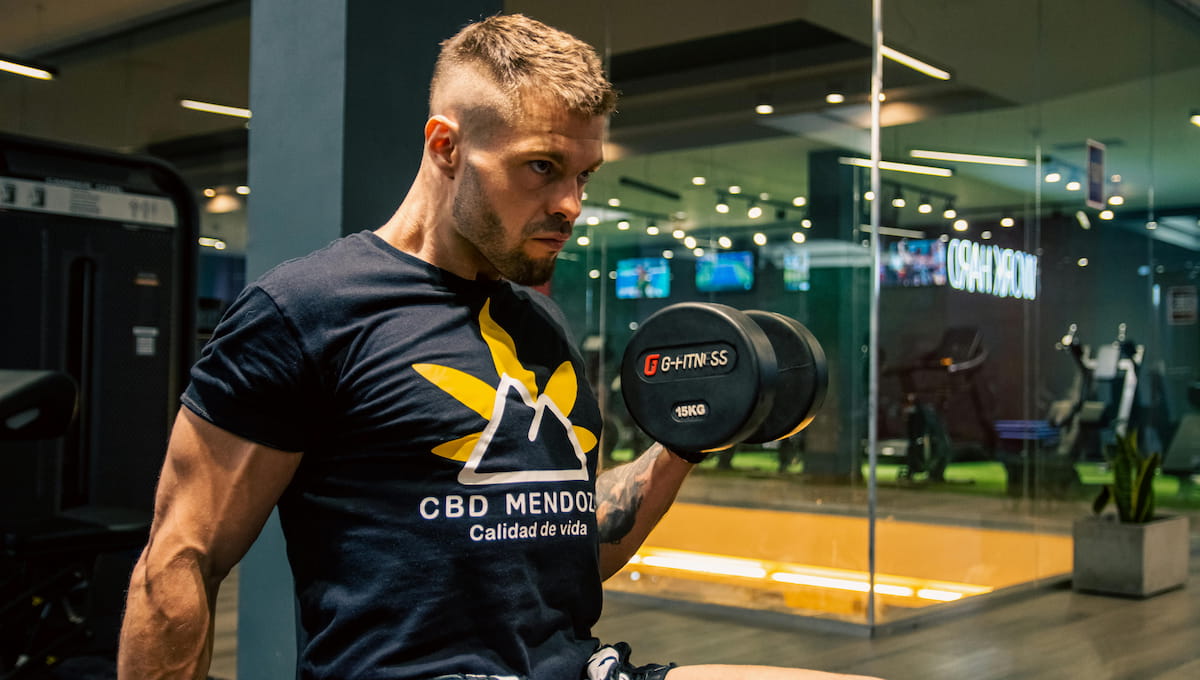


For many beginners, bicep curls are the first exercise they learn in the gym. They are simple, familiar, and satisfying. However, they are far from the only way to build impressive arms. In fact, many of the strongest athletes in sports like gymnastics, climbing, rowing, and CrossFit develop thick, muscular biceps while spending relatively little time performing traditional curls.
If your goal is to build bigger and wider biceps, compound pulling exercises can be just as effective, and in some cases even more effective, than endless sets of curls. These movements allow you to lift more weight, recruit more muscle mass throughout the upper body, and stimulate the biceps under heavy loads.


For beginners, this approach offers another advantage. Compound exercises teach coordination, improve overall strength, and build muscle across the back, shoulders, forearms, and core at the same time. Instead of isolating one muscle, you create a stronger foundation that supports long term progress. Here are three of the best beginner exercises for building impressive biceps without performing a single curl.
Why Compound Pulling Exercises Build Bigger Biceps
The biceps brachii performs two primary jobs. It flexes the elbow and helps rotate the forearm into a palm up position. It also assists with shoulder flexion and helps stabilize the shoulder during pulling movements.
Whenever you pull your body toward an object or pull an object toward your body, the biceps work alongside the larger muscles of the back. During heavy pulling exercises, the biceps often experience high levels of mechanical tension, which is considered one of the primary drivers of muscle growth.
5 Perfect Exercises for Every Beginner that Wants a Muscular and Strong Chest
Research consistently shows that muscle hypertrophy depends largely on sufficient training volume, progressive overload, and training close to muscular failure. Whether that tension comes from curls or compound pulling movements is less important than many people assume.
Studies using electromyography have also demonstrated high levels of biceps activation during exercises like chin ups and underhand rows, sometimes matching or exceeding traditional curling variations depending on grip and technique.
Exercise 1: Chin Ups
Why Chin Ups Are One of the Best Bicep Builders
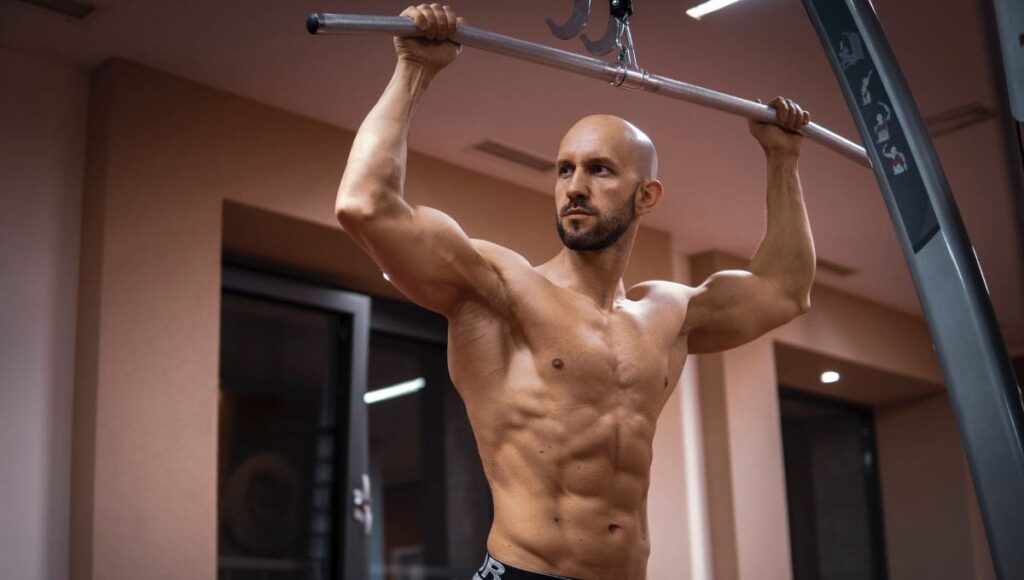
If you only performed one exercise to build your biceps without curls, chin ups would likely be the best choice. Unlike pull ups, chin ups use an underhand grip, placing the forearms in a supinated position. This aligns closely with the natural function of the biceps and significantly increases their contribution throughout the movement.

Research comparing different pulling exercises has repeatedly found that underhand chin ups produce greater biceps activation than overhand pull ups. Because you are lifting your entire bodyweight, the resistance placed on the biceps is often much greater than what beginners use during curls.
At the same time, chin ups also develop the latissimus dorsi, rhomboids, trapezius, rear deltoids, forearms, and grip strength. This creates a balanced upper body rather than simply larger arms.
How to Perform Chin Ups
- Grab the bar with your palms facing toward you at about shoulder width.
- Begin by pulling your shoulder blades down and back before bending your elbows.
- Drive your chest toward the bar while keeping your body under control.
- Lower yourself slowly until your arms reach full extension.
If you cannot yet perform a full chin up, use an assisted pull up machine or resistance bands. Eccentric only repetitions, where you slowly lower yourself from the top position, are also highly effective for building strength.
Exercise 2: Underhand Barbell Rows
Why Underhand Rows Grow the Biceps
Barbell rows are traditionally viewed as a back exercise, but changing to an underhand grip shifts a larger portion of the workload toward the biceps. The underhand grip allows greater elbow flexion while maintaining forearm supination throughout the movement. This places the biceps in a mechanically advantageous position while still allowing heavy loads.
Compared with isolated curls, underhand rows let beginners progressively overload the biceps with substantially more weight. Progressive overload remains one of the most important factors for long term muscle growth.
Another advantage is that rows strengthen the upper back muscles responsible for good posture. Many beginners spend hours sitting at desks, leading to rounded shoulders that reduce upper body aesthetics. Building the back alongside the biceps creates the appearance of wider, thicker arms.
How to Perform Underhand Rows
- Stand with your feet shoulder width apart while holding a barbell with an underhand grip.
- Hinge forward at the hips until your torso is close to parallel with the floor while maintaining a neutral spine.
- Pull the bar toward your lower ribs while squeezing your shoulder blades together.
- Lower the bar under control until your elbows reach full extension.
- Avoid using momentum or jerking the weight upward.
Exercise 3: Inverted Rows
Why Inverted Rows Are Perfect for Beginners
Many beginners struggle with chin ups because they cannot yet lift their bodyweight. Inverted rows offer an excellent alternative. Because your feet remain on the floor, you can easily adjust the difficulty by changing your body angle. The more horizontal your body becomes, the harder the exercise gets.
Using an underhand grip increases biceps involvement while allowing beginners to develop proper pulling mechanics before progressing to chin ups. Research on bodyweight resistance training has shown that exercises using relative body mass can produce substantial improvements in muscle size and strength when performed with sufficient intensity.
Inverted rows also improve scapular control, shoulder stability, and posture, making them an excellent foundation exercise.
How to Perform Inverted Rows
- Set a bar at approximately waist height inside a squat rack or Smith machine.
- Lie underneath the bar with your heels on the floor.
- Grip the bar using an underhand grip.
- Keep your body in a straight line from shoulders to ankles.
- Pull your chest toward the bar by driving your elbows backward.
- Lower yourself slowly until your arms are fully extended.
As you become stronger, lower the bar or elevate your feet to increase the difficulty.
Why These Exercises Build Wider Looking Arms
Many people assume that arm width comes only from larger biceps. In reality, the appearance of wider arms depends on the interaction between several muscles.
Heavy pulling exercises stimulate not only the biceps but also the brachialis and brachioradialis. The brachialis sits underneath the biceps and pushes it outward as it grows, making the upper arm appear thicker. The brachioradialis contributes significant size to the upper forearm while improving overall arm proportions.
These compound exercises also develop the lats and upper back. Wider lats create the visual illusion of larger arms because they increase shoulder width and improve the overall V shaped appearance of the upper body. Instead of focusing only on one muscle, beginners develop an entire frame that makes the arms stand out.
The Science Behind Muscle Growth
Regardless of the exercise you choose, muscle growth follows the same biological principles. Mechanical tension remains the primary stimulus for hypertrophy. As muscle fibers experience progressively greater loads, they adapt by increasing protein synthesis and growing larger over time.
Training volume also matters. Research suggests that approximately ten to twenty challenging sets per muscle group each week generally produces the greatest hypertrophy for most people. Intensity is equally important. Beginners do not need to train to complete muscular failure every set, but finishing each set with only one to three repetitions left in reserve appears highly effective.
Recovery completes the process. Muscle tissue grows between workouts rather than during them. Consuming sufficient dietary protein and allowing adequate sleep are both essential for maximizing results.
Final Thoughts
Bicep curls certainly work, but they are not essential for building bigger arms. For beginners, compound pulling exercises often provide a more efficient path because they train the biceps under heavy loads while simultaneously developing the back, shoulders, forearms, and grip.
Chin ups, underhand barbell rows, and inverted rows all place the biceps under significant mechanical tension while teaching movement patterns that carry over into countless other exercises. Combined with consistent training, progressive overload, adequate protein intake, and proper recovery, these three movements can build wider, stronger, and more muscular arms without a single set of curls.
If your goal is to develop impressive biceps while becoming stronger across your entire upper body, these exercises deserve a permanent place in your training program.
Key Takeaways
| Exercise or Principle | Why It Works | Beginner Tip |
|---|---|---|
| Chin Ups | High biceps activation while building the back and grip | Use bands or assisted machines if needed |
| Underhand Barbell Rows | Heavy loading stimulates biceps and upper back simultaneously | Focus on strict form and full range of motion |
| Inverted Rows | Adjustable bodyweight exercise that develops pulling strength | Make the exercise harder by lowering the bar or elevating your feet |
| Progressive Overload | Gradually increasing training demands drives muscle growth | Add repetitions or resistance over time |
| Protein Intake | Supports muscle protein synthesis and recovery | Aim for 1.4 to 2.2 g per kg of bodyweight daily |
| Recovery | Muscles grow between workouts | Prioritize sleep and allow adequate recovery time |
References
- American College of Sports Medicine. (2009). Progression models in resistance training for healthy adults. Medicine and Science in Sports and Exercise, 41(3), 687 to 708.
- Dankel, S.J., Mattocks, K.T., Jessee, M.B., Buckner, S.L., Mouser, J.G., Counts, B.R., Laurentino, G.C. and Loenneke, J.P. (2017). Training to fatigue and muscle growth. Sports Medicine, 47(10), 2087 to 2097.
- Gentil, P., Soares, S. and Bottaro, M. (2015). Single versus multi joint resistance exercises and muscle hypertrophy. Asian Journal of Sports Medicine, 6(2).
- Grgic, J., Schoenfeld, B.J., Orazem, J. and Sabol, F. (2022). Effects of resistance training performed to repetition failure or non failure on muscular strength and hypertrophy. Journal of Sport and Health Science, 11(2), 202 to 211.
- Morton, R.W., Murphy, K.T., McKellar, S.R., Schoenfeld, B.J., Henselmans, M., Helms, E., Aragon, A.A., Devries, M.C., Banfield, L., Krieger, J.W. and Phillips, S.M. (2018). A systematic review, meta analysis and meta regression of protein supplementation on resistance training induced gains in muscle mass and strength. British Journal of Sports Medicine, 52(6), 376 to 384.
- Schoenfeld, B.J. (2010). The mechanisms of muscle hypertrophy and their application to resistance training. Journal of Strength and Conditioning Research, 24(10), 2857 to 2872.
- Schoenfeld, B.J., Ogborn, D. and Krieger, J.W. (2017). Dose response relationship between weekly resistance training volume and increases in muscle mass. Journal of Sports Sciences, 35(11), 1073 to 1082.