

















10 Bicep Curl Variations Every Beginner Needs to Know

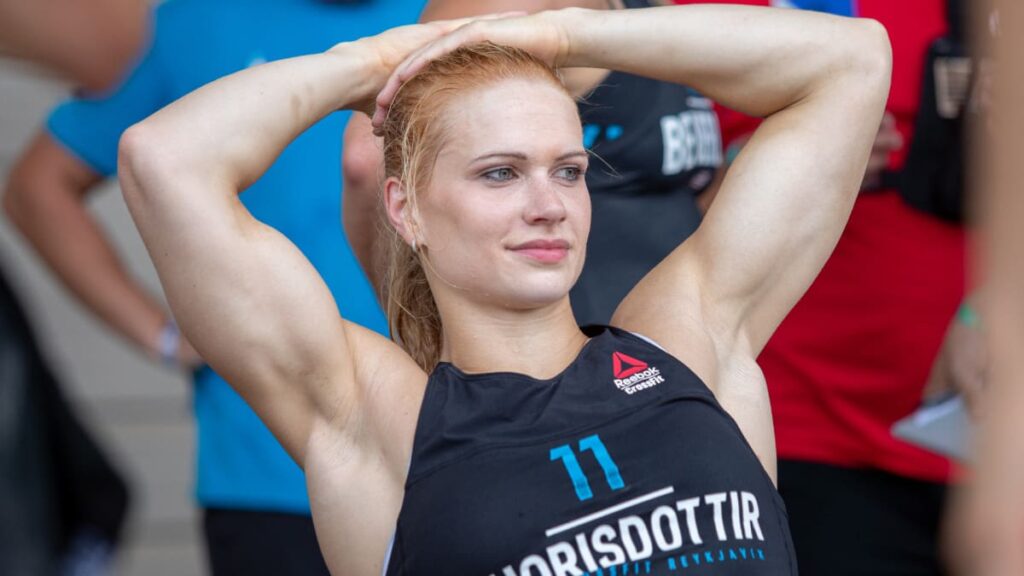
Curls are a great way to build bigger arms. Have a good look through our list, find a few new ones, brush up your skills with the ones you already know, and have fun with your training.
Why Different Curl Variations Matter for Beginners
Your upper arm appearance depends on three primary elbow flexors working together rather than just one isolated muscle belly. The biceps brachii features a long outer head and a short inner head, while the brachialis sits directly underneath the biceps to push the upper arm outward and upward, and the brachioradialis runs down into the upper forearm to add thickness around the elbow. Changing whether your palm faces upward, inward, or downward shifts how heavily each of those three muscles contributes to lifting the load.
Electromyography research examining curl variations demonstrates that forearm orientation and equipment type alter muscle recruitment across the biceps brachii and brachioradialis. Furthermore, recent exercise science comparing range of motion shows that emphasizing the initial, lengthened portion of a curl produces greater distal biceps growth and strength gains than focusing only on the top squeeze. Rotating through smart variations lets beginners train every angle safely while avoiding repetitive wrist or elbow strain.
The 10 Essential Bicep Curl Variations for Beginners
You certainly do not need to perform all ten of these exercises in a single workout, because doing too much volume in one session simply creates unnecessary soreness. Instead, choose two or three variations that complement each other and perform them twice per week with controlled lowering phases.
Overview of the 10 Best Bicep Curl Variations for Beginners
| Curl Variation | Equipment Needed | Primary Muscle Emphasis | Key Mechanical Advantage |
| Standing Alternating Dumbbell Curl | Dumbbells | Biceps Brachii (Both Heads) | Allows natural wrist supination and independent left and right arm focus |
| Incline Dumbbell Curl | Dumbbells and Incline Bench | Biceps Brachii (Long Head) | Places the shoulder in extension for a deep loaded stretch at the bottom |
| Dumbbell Hammer Curl | Dumbbells | Brachialis and Brachioradialis | Neutral grip protects wrists while building thick outer arm and forearm width |
| EZ Bar Curl | EZ Curl Bar | Biceps Brachii and Brachialis | Semi-supinated angled grip relieves wrist torque during symmetrical sets |
| Preacher Curl | Preacher Bench and EZ Bar or Dumbbells | Biceps Brachii (Short Head) | Braces the upper arm to eliminate body swing and overload the bottom stretch |
| Bayesian Cable Curl | Cable Machine | Biceps Brachii (Long Head) | Provides smooth constant tension while pulling the arm behind the torso |
| Standing Cable Rope Hammer Curl | Cable Machine with Rope | Brachialis and Brachioradialis | Combines wrist-friendly neutral mechanics with continuous cable resistance |
| Concentration Curl | Dumbbell and Bench | Biceps Brachii (Short Head) | Locks the elbow against the inner thigh for strict isolation and peak contraction |
| Spider Curl | Dumbbells or EZ Bar and Incline Bench | Biceps Brachii (Short Head) | Hanging arm position removes momentum and maximizes tension near peak flexion |
| Reverse-Grip Barbell or EZ Bar Curl | Barbell or EZ Curl Bar | Brachioradialis and Brachialis | Pronated palms-down grip builds forearm thickness and elbow stability |
1. Standing Alternating Dumbbell Curl
This classic staple teaches beginners how to coordinate elbow flexion with forearm supination, which means rotating your palm upward as you lift the dumbbell. Training one arm at a time helps you spot and correct side-to-side strength imbalances while keeping your focus sharp on clean form.
2. Incline Dumbbell Curl
Sitting back on a forty-five-degree incline bench positions your upper arms slightly behind your torso, placing the long head of the biceps into an elongated stretch before you even start curling. Research on initial range-of-motion loading highlights how challenging elbow flexors in this stretched position drives superior muscle adaptations.
3. Dumbbell Hammer Curl
Holding dumbbells with your palms facing each other shifts substantial mechanical work onto the brachialis and brachioradialis muscles. Electromyographic studies on forearm rotation confirm that neutral grip angles alter elbow flexor recruitment while offering a remarkably comfortable position for beginners with sensitive wrists.
4. EZ Bar Curl
The cambered waves of an EZ curl bar place your hands at a semi-supinated angle that takes sharp rotational stress off your wrists and elbows compared to a straight barbell. Because both hands hold a single bar, beginners can focus on smooth, symmetrical repetitions without worrying about uneven arm paths.
5. Preacher Curl
Resting the backs of your upper arms against an angled preacher pad prevents your elbows from drifting backward and eliminates hip momentum completely. This locked-in setup forces your biceps to generate pure muscular tension right out of the challenging bottom stretch.
6. Bayesian Cable Curl
Standing slightly forward of a low cable pulley pulls your working arm behind your body, mimicking the deep stretch of an incline dumbbell curl while adding smooth, uninterrupted cable tension. Unlike free weights where gravity drops off at the very top and bottom, cables keep resistance steady across the entire movement arc.
7. Standing Cable Rope Hammer Curl
Attaching a braided rope to a low pulley combines the joint-friendly neutral grip of a hammer curl with constant cable resistance. Flaring the rope ends slightly outward at the top of each repetition delivers an intense contraction across your brachialis and upper forearms.
8. Concentration Curl
Sitting on a bench and bracing the back of your working upper arm firmly against your inner thigh removes all torso sway from the equation. Beginners who struggle to feel their biceps working during standing curls often experience an immediate mind-muscle connection with this strict unilateral variation.
9. Spider Curl
Lying chest-down against an incline bench lets your arms hang straight down toward the floor in front of your torso. Because gravity pulls directly downward at the top of the lift, spider curls create intense peak tension when your elbows are fully bent while preventing any backward leaning.
10. Reverse-Grip EZ Bar Curl
Gripping an EZ bar with your palms facing downward heavily challenges the brachioradialis and forearm extensors alongside the underlying brachialis. Using lighter weights with strict wrist alignment strengthens your grip and builds balanced lower-arm development that supports all your heavier pulling exercises.
How Beginners Should Program These Variations
Trying to cram five or six curl variations into one marathon arm session will only leave your elbows cranky and stall your recovery. Meta-analytic evidence on resistance training frequency shows that training a muscle group twice per week produces significantly superior muscle growth compared to once-weekly training. Pick two complementary variations per session, such as an incline or Bayesian curl for stretched long-head tension paired with a hammer or preacher curl, and perform three sets of ten to fifteen controlled repetitions.
The Forgotten Leg Exercise That Builds Strength Without a Squat Rack
Landmark research comparing resistance training loads also proves that moderate weights lifted close to muscular failure stimulate the exact same hypertrophy as heavy weights. Keep your lowering phase slow over two to three seconds, avoid swinging your torso, and gradually add repetitions before reaching for heavier weights.
Key Takeaways
| Training Principle | Actionable Beginner Strategy | Scientific Benefit |
| Grip and Angle Variety | Rotate supinated, neutral, and stretched-arm curl variations | Targets the biceps heads, brachialis, and brachioradialis for balanced arm thickness |
| Range of Motion | Control the lowering phase and emphasize the bottom stretched position | Promotes greater distal biceps hypertrophy and strength adaptations |
| Load and Effort | Use moderate weights in the 10 to 15 rep range near muscular failure | Drives full muscle growth while protecting wrists and elbows from momentum strain |
| Weekly Frequency | Perform 2 to 3 curl variations across two weekly workouts | Doubles weekly muscle protein synthesis signals without causing excessive fatigue |


References
- Marchetti, P.H., Junior, J.R.S., Leon, R.C., et al., 2018. Differences in electromyographic activity of biceps brachii and brachioradialis during dumbbell and barbell curls. Journal of Human Kinetics, 65(1), pp.1-10.
- Pedrosa, G.F., Simões, M.G., Figueiredo, M.O.C., Lacerda, L.T., Schoenfeld, B.J., Lima, F.V., Chagas, M.H. and Diniz, R.C.R., 2023. Training in the initial range of motion promotes greater muscle adaptations than at final in the arm curl. Sports, 11(2), p.39.
- Schoenfeld, B.J., Grgic, J., Ogborn, D. and Krieger, J.W., 2017. Strength and hypertrophy adaptations between low- vs. high-load resistance training: a systematic review and meta-analysis. Journal of Strength and Conditioning Research, 31(12), pp.3508-3523.
- Schoenfeld, B.J., Ogborn, D. and Krieger, J.W., 2016. Effects of resistance training frequency on measures of muscle hypertrophy: a systematic review and meta-analysis. Sports Medicine, 46(11), pp.1689-1697.
Robbie Wild Hudson
Editor-In-Chief at BOXROX. I come from a background of rugby and weightlifting. Growing up in the English Lake District, I spent a great deal of time swimming in its stunning lakes and rivers. In 2015 my brothers and I became the first people to swim the 145km length of the River Eden, from source to mouth, in 9 days. We also swam the Corryvreckan whirlpool, the third largest in the world, and Crossfit is a huge part of my training for these events.
More from Robbie Wild Hudson