





























3 Best Dumbbell Movements Beginners Need for Wider Biceps

Big arms are often an important goal for new lifters in the gym. If you want to bulk up yours, then these three movements are a great place to start.
How Beginners Can Build Real Width Safely
If you are brand new to strength training, your biggest advantage is that your muscles respond rapidly to smart mechanical tension, provided you keep your joints happy and your technique clean. Jumping straight to heavy dumbbells before your connective tissue and motor control adapt usually leads to swinging, shoulder hitching, or elbow irritation. Controlled movements with moderate weights allow you to feel the target muscles working without turning every set into a full-body heave.
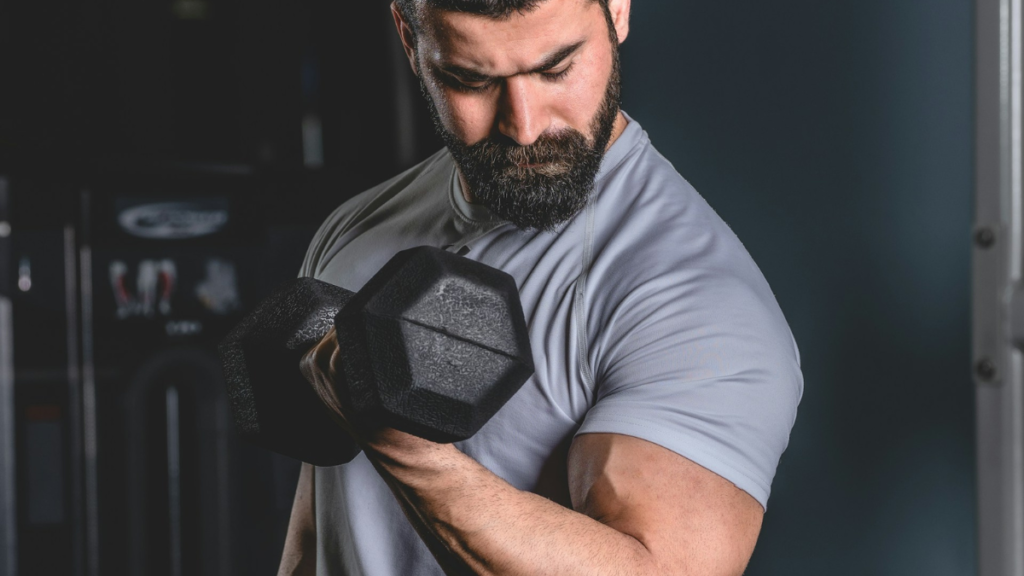
Studies comparing resistance training loads confirm that lighter and moderate weights can stimulate muscle growth comparable to heavier loads when sets are taken close to muscular failure. Furthermore, meta-analytic evidence on training frequency indicates that training a muscle group twice per week supports superior hypertrophy compared to training it only once per week. Pairing sensible weekly frequency with exercises that challenge your arms through a deep stretch gives beginners a clear, sustainable path to wider-looking arms.
Beginner Dumbbell Routine for Wider Biceps and Arm Thickness
| Exercise | Primary Target | Sets | Reps | Rest | Key Execution Cue |
|---|---|---|---|---|---|
| Incline Dumbbell Curl | Biceps Brachii (Long Head) | 3 | 10 to 12 | 90 sec | Lean back on an incline bench and let arms hang straight down to stretch the long head |
| Dumbbell Hammer Curl | Brachialis and Brachioradialis | 3 | 10 to 15 | 90 sec | Keep palms facing each other and curl smoothly without letting elbows drift forward |
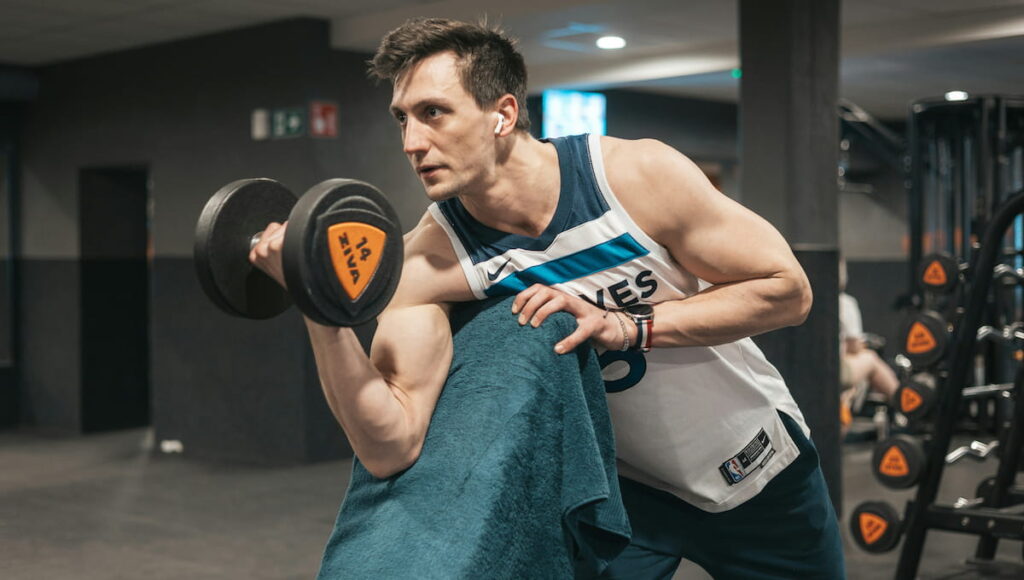
| Chest-Supported Concentration Curl | Biceps Brachii (Short Head) | 3 | 10 to 12 | 90 sec | Brace your working arm against your inner thigh or bench and supinate smoothly at the top |
The 3 Best Dumbbell Movements for Wider Biceps
Each exercise in this trio addresses a distinct biomechanical angle so your upper arms gain thickness and width from every viewing perspective. Perform these movements twice per week with at least forty-eight hours between sessions, keeping your lowering phase smooth and controlled rather than rushing through reps.
1. Incline Dumbbell Curl
Leaning back on an incline bench places your shoulder slightly behind your torso, which puts the long head of the biceps brachii into a deeper stretch at the bottom of every repetition.
Biomechanical and electromyography analyses note that positioning the arm slightly extended behind the body increases tension on the long head at longer muscle lengths. Because you are seated against the bench, you cannot use hip drive to cheat the weight up, forcing your biceps to do the work cleanly from the stretched starting position.
2. Dumbbell Hammer Curl
Holding the dumbbells with a neutral, palms-facing-each-other grip shifts emphasis toward the brachialis and brachioradialis, two muscles that add substantial width along the outer and lower portion of the upper arm.
Electromyography research on curl variations highlights how forearm orientation influences the interplay between the biceps brachii and brachioradialis across the movement. Many beginners find hammer curls easier on their wrists than palms-up curls, making them an ideal staple for building thick, sturdy arms early on.
3. Concentration Curl
Bracing your elbow against your inner thigh or a bench eliminates body English and isolates the elbow flexors with strict control.
Starting with a smooth curl and rotating your palm upward as you lift engages forearm supination alongside elbow flexion, helping round out the front and inner contour of the upper arm. Research on initial versus final range of motion in arm curls further underscores the value of controlling the lengthened bottom phase rather than bouncing out of the stretch.
How to Progress Without Stalling
Progressing as a beginner does not mean grabbing the heaviest dumbbells on the rack on day one and letting your form fall apart. A practical approach is double progression, where you pick a weight you can lift cleanly for ten controlled repetitions with a couple of good reps left in reserve. Over successive workouts, add one or two repetitions per set until you reach twelve to fifteen clean reps, then move up to the next dumbbell size and start back near ten reps.
Is the Bayesian Cable Curl Better Than Regular Curls for Growing Your Biceps?
Pairing steady repetition progression with two sessions per week gives your muscles frequent growth signals while leaving plenty of recovery time between workouts. Stay patient with small weight jumps, keep your shoulders relaxed away from your ears, and focus on feeling each muscle lengthen and contract through a full, controlled range of motion.
Key Takeaways
| Principle | Practical Action | Why It Matters |
|---|---|---|
| Target All Width Contributors | Combine incline curls, hammer curls, and concentration curls | Builds the biceps heads plus the brachialis and brachioradialis for fuller arm width |
| Respect Lengthened Positions | Lower weights under control and pause briefly before curling up | Supports strength and hypertrophy gains from the stretched portion of the movement |
| Train Twice Weekly | Perform your dumbbell arm routine two days per week with rest in between | Increases weekly growth opportunities while keeping per-session fatigue manageable |
| Progress Through Reps First | Build from 10 reps up to 12 to 15 reps before increasing dumbbell weight | Preserves strict form and reduces the risk of joint strain as a beginner |
References
- Marchetti, P.H., Junior, J.R.S., Leon, R.C., et al., 2018. Differences in electromyographic activity of biceps brachii and brachioradialis during dumbbell and barbell curls. Journal of Human Kinetics, 65(1), pp.1-10.
- Pedrosa, G.F., Simões, M.G., Figueiredo, M.O.C., Lacerda, L.T., Schoenfeld, B.J., Lima, F.V., Chagas, M.H. and Diniz, R.C.R., 2023. Training in the initial range of motion promotes greater muscle adaptations than at final in the arm curl. Sports, 11(2), p.39.
- Schoenfeld, B.J., Ogborn, D. and Krieger, J.W., 2016. Effects of resistance training frequency on measures of muscle hypertrophy: a systematic review and meta-analysis. Sports Medicine, 46(11), pp.1689-1697.
Robbie Wild Hudson
Editor-In-Chief at BOXROX. I come from a background of rugby and weightlifting. Growing up in the English Lake District, I spent a great deal of time swimming in its stunning lakes and rivers. In 2015 my brothers and I became the first people to swim the 145km length of the River Eden, from source to mouth, in 9 days. We also swam the Corryvreckan whirlpool, the third largest in the world, and Crossfit is a huge part of my training for these events.
More from Robbie Wild Hudson