

























How Quickly Do You Actually Lose Muscle When You Stop Going to the Gym?

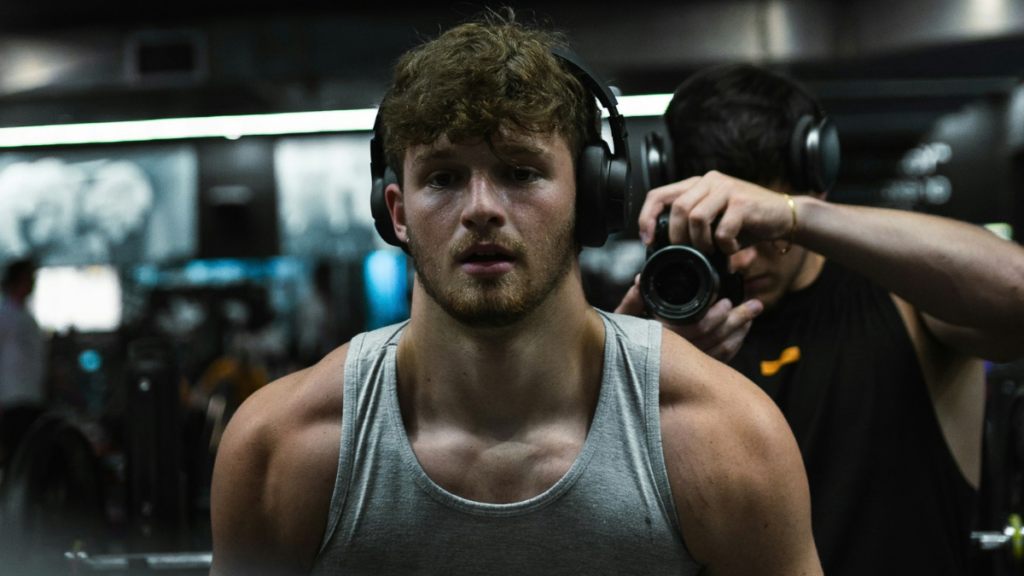
Every dedicated lifter knows that sinking feeling when life throws a curveball and keeps you away from the barbell for a week or two. Whether you are heading off on vacation, recovering from a stubborn cold, or buried under work deadlines, staring in the bathroom mirror after missing a few sessions can make you swear your arms and shoulders are shrinking right before your eyes.
But what is the reality? How quickly do you actually lose muscle when you aren’t training? Let’s find out.
Why Your Muscles Look Smaller Before You Actually Lose Tissue
During the first seven to ten days after you stop lifting weights, your muscles often appear noticeably softer, flatter, and slightly smaller in the mirror. That rapid visual change has almost nothing to do with losing actual muscle protein, and everything to do with intracellular water and stored muscle glycogen.

Resistance training encourages your muscles to store extra glycogen along with roughly three grams of water per gram of carbohydrate, plus mild post-workout cellular swelling that keeps muscles looking full and pumped.
When you stop training for a week or two, muscle glycogen stores and local fluid retention gradually drop back toward normal resting levels. Because glycogen and water make up a substantial portion of muscle volume, your tape measure might dip slightly even though your actual contractile proteins remain intact. Understanding that temporary fluid shift prevents you from panicking over normal fluctuations during a short break.
The Real Timeline of Muscle and Strength Loss
Exercise science research examining detraining periods shows that measurable loss of actual skeletal muscle cross-sectional area typically does not begin until roughly two to three weeks of complete inactivity.
Controlled studies comparing continuous resistance training with periodic training breaks demonstrate that taking two or three weeks off from lifting produces virtually identical long-term muscle hypertrophy and strength gains over a multi-month program compared to training without interruption. In fact, a short planned break can even help resensitize your muscles to mechanical tension and clear accumulated joint fatigue.

Once you pass the three-week mark without any resistance stimulus, true muscle atrophy gradually starts picking up speed, especially if you are also sitting all day or eating too little protein. Research on training cessation indicates that neural drive and maximal strength hold steady for up to three or four weeks before declining, whereas high-rep muscular endurance fades a little sooner due to shifts in aerobic enzymes and capillary support. Total limb immobilization, such as wearing a cast after an injury, accelerates muscle loss dramatically within days, which is very different from simply skipping the gym while staying active on your feet.
Evidence-Based Timeline of What Happens When You Stop Lifting Weights
| Time Away From the Gym | Primary Physiological Change | Impact on Muscle Size and Strength | Practical Takeaway for Lifters |
| 1 to 2 Weeks Off | Muscle glycogen and intracellular water decrease slightly | Muscles look flatter, but real contractile muscle and strength remain intact | Relax and enjoy your vacation or deload without worrying about muscle loss |
| 3 to 4 Weeks Off | Early declines in muscle fiber size and neural efficiency begin | Slight drop in strength and early, modest loss of actual muscle tissue | Ease back in with moderate volume and lighter loads to avoid severe soreness |
| 5 to 8 Weeks Off | Noticeable reduction in muscle cross-sectional area and work capacity | Measurable declines in both muscle size and maximal strength | Rebuild progressively over two to four weeks using familiar compound lifts |
| 8 Weeks or Longer | Significant detraining toward pre-training baseline levels | Substantial loss of size and strength, though cellular myonuclei persist | Muscle memory helps you regain lost size much faster than building it initially |
How Little Training It Takes to Keep Your Gains
If you are traveling, swamped at work, or unable to follow your normal four-day or five-day gym split, you do not need to resign yourself to losing muscle. Sports science research examining minimal effective training doses shows that maintaining existing muscle mass and strength requires dramatically less volume than building new muscle from scratch.
Walking Faster vs Walking Longer: Which Is Better for Your Heart?
Performing just one-third to one-ninth of your usual weekly working sets, as long as you keep your training intensity reasonably high, is enough to preserve muscle size in younger adults for months.
1. Keep Protein Intake High During Time Off
Even when you cannot touch a dumbbell, eating adequate daily protein supports muscle protein synthesis and helps blunt muscle breakdown during periods of reduced activity. Aiming for roughly 1.6 to 2.2 grams of protein per kilogram of body weight each day gives your body the amino acids it needs to protect existing lean mass.

2. Use Minimal Maintenance Sessions When Busy
If you can squeeze in just one brief twenty-minute session per week with heavy dumbbells, resistance bands, or challenging bodyweight exercises pushed close to muscular failure, you can hold onto your gains effortlessly. Maintaining intensity matters far more than piling on high set counts when your goal is preservation.
3. Lean on Muscle Memory When You Return
Whenever you do take an extended break and lose noticeable size, you will not be starting over from square one when you step back into the gym. Studies on muscle memory show that strength training increases the number of myonuclei inside muscle fibers or leaves lasting epigenetic adaptations that allow previously trained muscles to grow back dramatically faster upon retraining.
Key Takeaways
| Training Factor | Evidence-Based Reality | Practical Action for Lifters |
| True Atrophy Timeline | Actual muscle tissue loss generally takes 2 to 3 weeks of complete rest to begin | Treat breaks under two weeks as harmless recovery rather than muscle loss |
| Early Visual Flatness | First-week shrinkage reflects lower muscle glycogen and water, not lost protein | Stay hydrated, eat normally, and avoid panicking over temporary mirror changes |
| Maintenance Dose | Roughly one-third of normal volume at high effort preserves muscle for months | Perform one brief, hard full-body workout per week during busy travel periods |
| Retraining Speed | Cellular muscle memory helps regain lost muscle far faster than initial growth | Return gradually over two weeks to prevent extreme soreness and rebuild quickly |
References
- Bickel, C.S., Cross, J.M. and Bamman, M.M., 2011. Exercise dosing to retain resistance training adaptations in young and older adults. Medicine and Science in Sports and Exercise, 43(7), pp.1177-1187.
- Gundersen, K., 2016. Muscle memory and a new cellular model for muscle atrophy and hypertrophy. Journal of Experimental Biology, 219(2), pp.235-242.
- McMaster, D.T., Gill, N., Cronin, J. and McGuigan, M., 2013. The development, retention and decay rates of strength and power in elite rugby union, rugby league and American football: a systematic review. Sports Medicine, 43(5), pp.367-384.
- Morton, R.W., Murphy, K.T., McKellar, S.R., Schoenfeld, B.J., Henselmans, M., Helms, E., Aragon, A.A., Devries, M.C., Banfield, L., Krieger, J.W. and Phillips, S.M., 2018. A systematic review, meta-analysis and meta-regression of the effect of protein supplementation on resistance training-induced gains in muscle mass and strength in healthy adults. British Journal of Sports Medicine, 52(6), pp.376-384.
- Ogasawara, R., Yasuda, T., Ishii, N. and Abe, T., 2013. Comparison of muscle hypertrophy following 6-month of continuous and periodic strength training. European Journal of Applied Physiology, 113(4), pp.975-985.
Robbie Wild Hudson
Editor-In-Chief at BOXROX. I come from a background of rugby and weightlifting. Growing up in the English Lake District, I spent a great deal of time swimming in its stunning lakes and rivers. In 2015 my brothers and I became the first people to swim the 145km length of the River Eden, from source to mouth, in 9 days. We also swam the Corryvreckan whirlpool, the third largest in the world, and Crossfit is a huge part of my training for these events.
More from Robbie Wild Hudson